Gran Meliá Iguazú
Resort · €€€€The only hotel within the Argentine park — formerly the Sheraton — with rooms facing the falls directly and the catwalks beginning at the door.
25°41′S 54°26′W
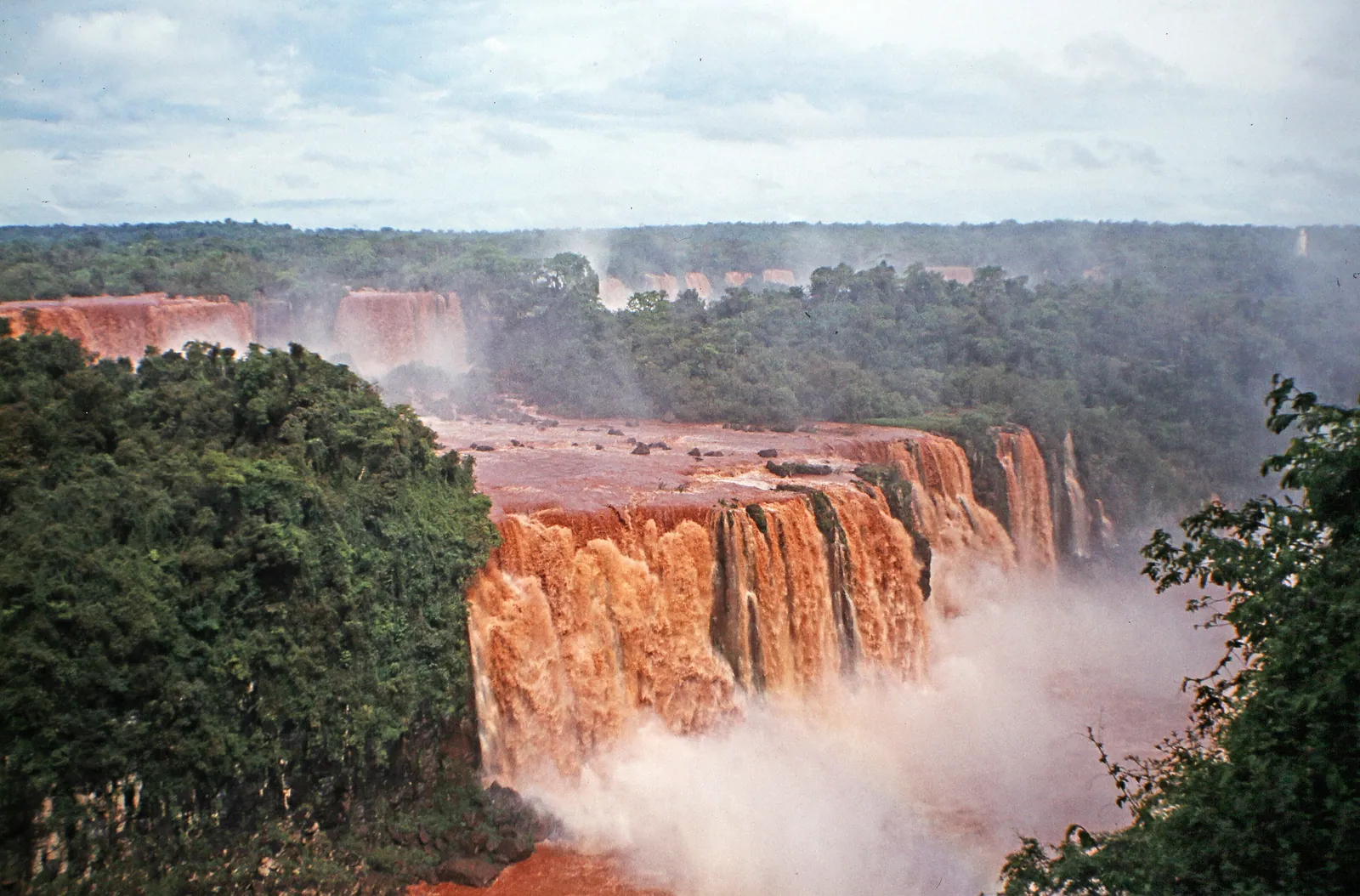
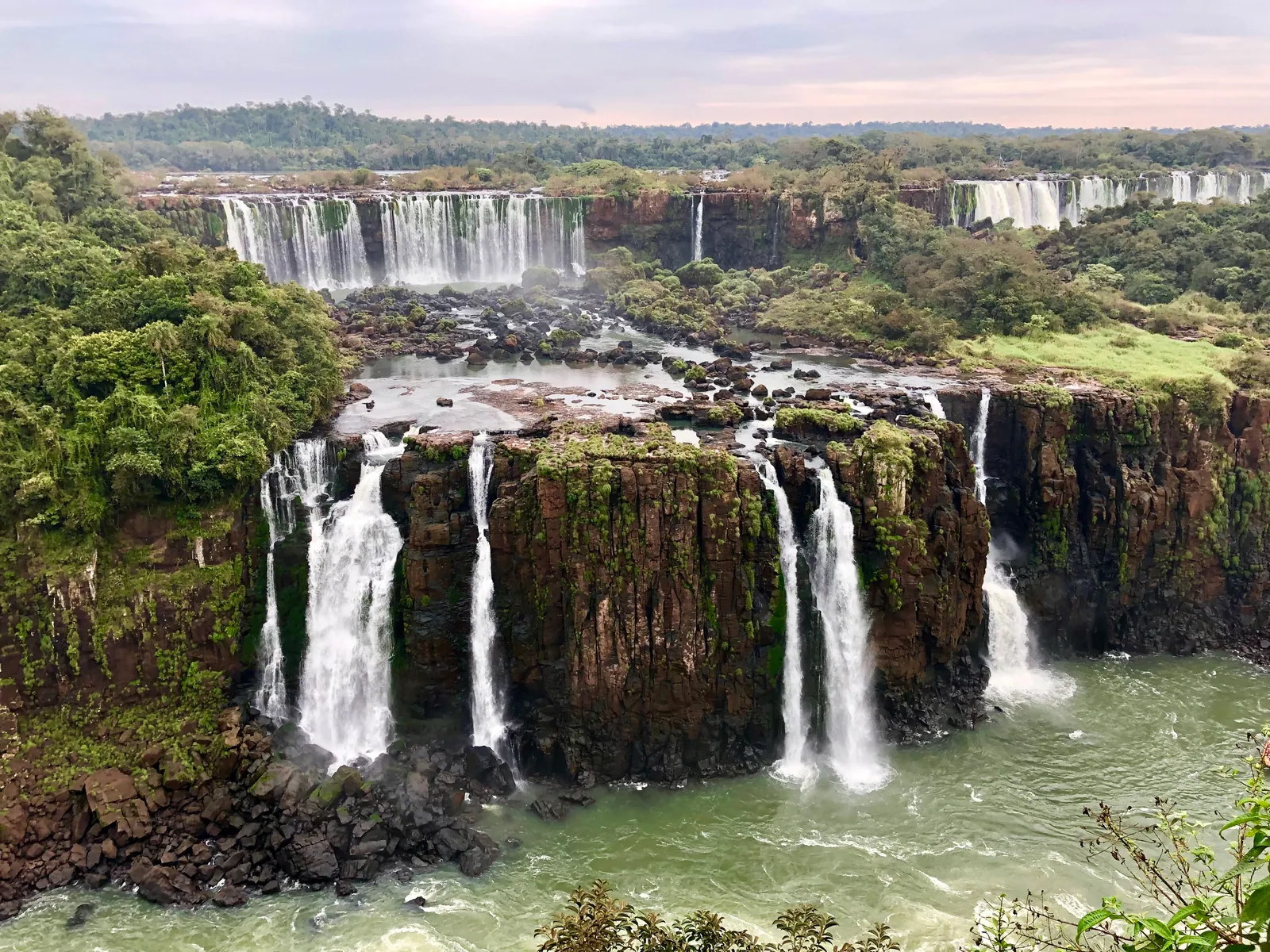
Iguazú Falls is an enormous system of about 275 waterfalls on the Iguazú River, on the border of Argentina and Brazil. Its great cataract is the Devil’s Throat (Garganta del Diablo), a horseshoe of thundering water. The surrounding national parks on both sides are UNESCO World Heritage Sites.
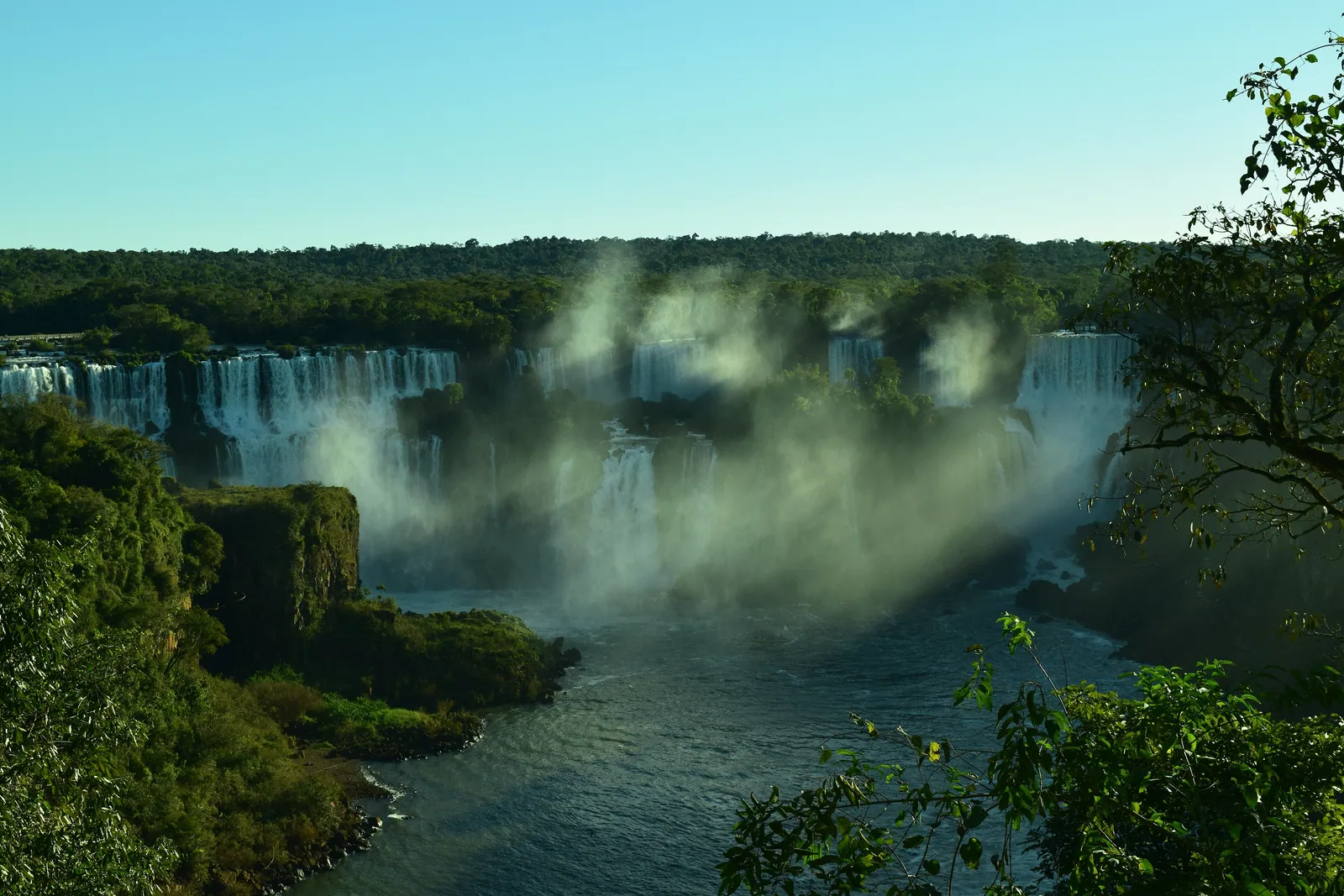
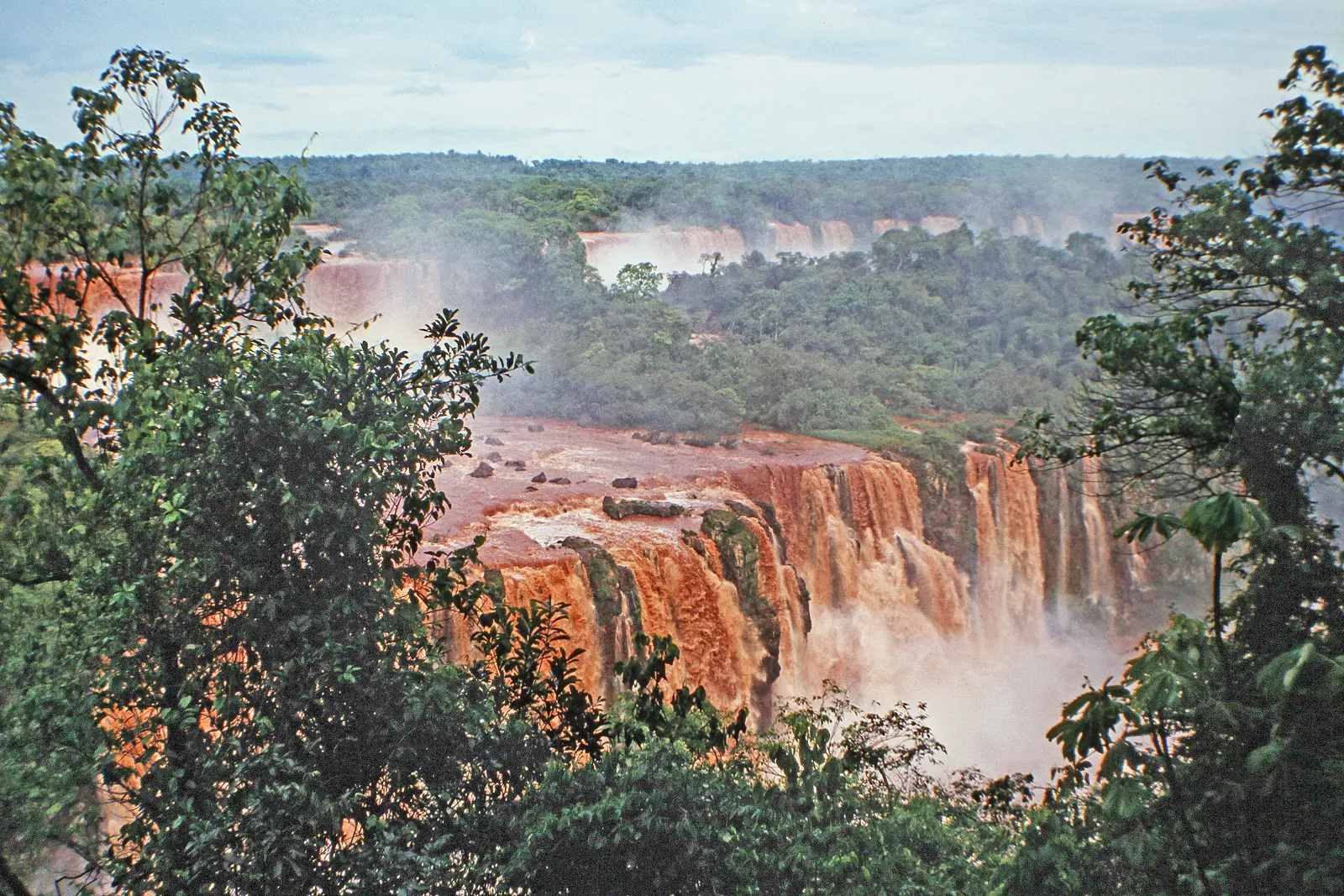
Iguazú is less a waterfall than a landscape coming apart. Where the Iguazú River reaches a fault line in the basalt, it shatters into a curtain of cataracts nearly three kilometres wide — somewhere around 275 individual falls, divided by forested islets, plunging up to eighty metres into a permanent cloud of spray. The Guaraní called it y guasú, “great water”, and no later name has improved on it.
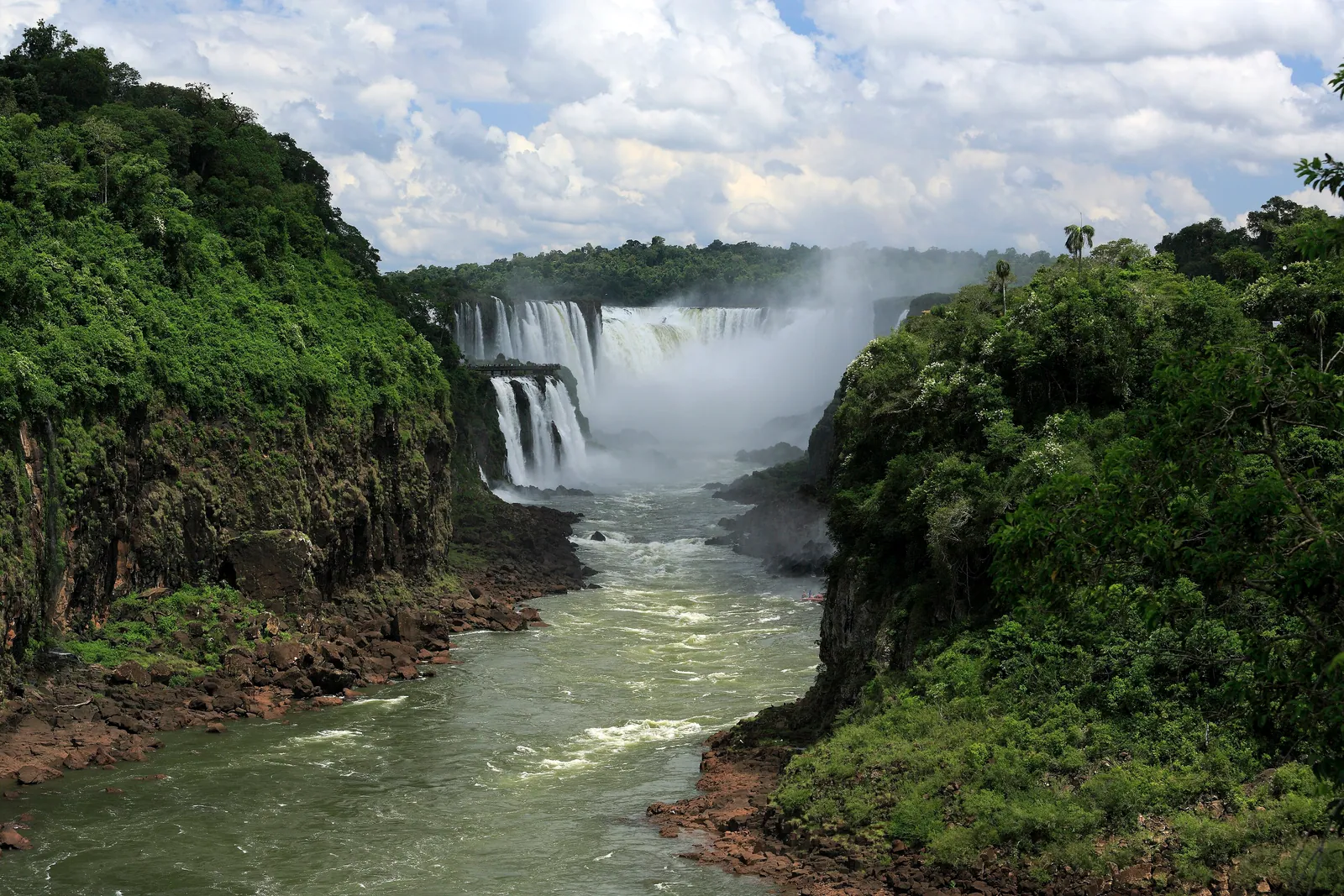
The falls straddle a border, and that is the secret to visiting them well. The Argentine side delivers the immersion: a web of steel catwalks that carry you above, beside and almost into the water, ending at the lip of the Devil’s Throat. The Brazilian side delivers the revelation: a single panoramic walkway that holds the whole vast amphitheatre in one sweeping view. Around both lies the Atlantic rainforest — loud with toucans, butterflies and the bandit-faced coatis that patrol every path.
Ride the ecological jungle train and walk the long catwalk to the rim of the Garganta del Diablo, where half the river vanishes into roaring spray below your feet.
Spend a full day in Argentina among the catwalks and a half-day in Brazil for the panorama. Together they show the falls as no single side can.
On the Argentine side, a boat carries you up the rapids and straight under a cataract — a brief, drenching, exhilarating encounter with the water’s full force.
A short film to set the scene — sourced from YouTube and credited to its maker.
Hand-picked places to sleep, from the iconic to the characterful — each chosen for position as much as polish.
The only hotel within the Argentine park — formerly the Sheraton — with rooms facing the falls directly and the catwalks beginning at the door.
A pink Portuguese-colonial landmark and the only hotel inside the Brazilian park, with the panoramic trail to itself once the day visitors leave.
An intimate retreat of fourteen stilted villas in the rainforest, each with a private plunge pool, a guide and a 4x4 for unhurried, tailored days.
The sights that earn their fame — and a few the crowds miss.
The largest cataract — a U-shaped chasm where the river falls in a deafening, ever-rising cloud of spray. Reached by catwalk from the Argentine side.
Kilometres of steel catwalks, served by the ecological jungle train, that lead above and beneath the falls for the closest possible encounters.
A single cliffside path on the Brazilian side that frames the entire wall of cataracts in one wide view, ending on a platform amid the spray.
Protected Atlantic forest around the falls, alive with toucans, brilliant butterflies, capuchin monkeys and the inquisitive coatis that roam the trails.
From landmark restaurants to the small rooms only locals mention.
A relaxed buffet and à la carte room inside the Brazilian park, best enjoyed for a long lunch with the rainforest just beyond the windows.
A classic Puerto Iguazú parrilla serving wood-fired beef, river fish and regional Misiones cooking — the natural place to end an Argentine-side day.
A polished Puerto Iguazú table specialising in surubí and other Paraná river fish, with an open kitchen and a thoughtful list of Argentine wines.
| Location | The Iguazú River, on the Argentina–Brazil border in South America |
|---|---|
| Famous for | The Devil’s Throat (Garganta del Diablo) and a horseshoe of around 275 cataracts |
| Recognition | UNESCO World Heritage Sites — Iguazú National Park (1984) and Iguaçu National Park (1986) |
| Gateway towns | Puerto Iguazú in Argentina and Foz do Iguaçu in Brazil |
| Setting | Protected subtropical Atlantic rainforest, rich in birds and wildlife |
| Borders met | The Triple Frontier, where Argentina, Brazil and Paraguay meet |
Both, if you can. The Argentine side has far more trails and puts you right among the falls, including the walkway to the Devil’s Throat — plan a full day there. The Brazilian side is smaller but gives the grand panoramic view in a half-day. Seeing only one means missing half the experience.
Two to three days is ideal. Give one full day to the Argentine park and its many catwalks, a half-day to the Brazilian panorama, and keep time for an early start at the Devil’s Throat or a boat ride. A single rushed day cannot cover both sides well.
Spring and autumn — roughly March to May and September to November — bring warm, comfortable weather and healthy water flow. Summer is hot and very humid with the heaviest rainfall, while winter is mild and pleasant. The falls are spectacular year-round; only rare droughts or floods change the picture.
Two airports serve the falls: Puerto Iguazú in Argentina and Foz do Iguaçu in Brazil, each a short drive from its national park. Both towns sit at the Triple Frontier, where Argentina, Brazil and Paraguay meet, and crossing between the two countries is straightforward by road.
The Devil’s Throat, or Garganta del Diablo, is the largest and most powerful cataract at Iguazú — a U-shaped gorge where roughly half the river’s flow plunges some eighty metres at once. A long catwalk on the Argentine side carries you to its very edge, into the rising spray.
Travel here as a chapter of a grand journey, or as a trip of its own. We will tailor it to your dates and pace.