Field knowledge for the long way round.
Everything our planners and guides have learned, written down — 372 in-depth pieces on altitude and packing, the Andes and the Silk Road, wildlife, food, dark skies, and the craft of slow travel itself.
Read before you go — or simply to travel from your chair.
Filter by what you are looking for. Every piece is researched, sourced and written to genuinely help.
Aswan, Philae and Abu Simbel: Egypt's Southern Frontier
Where Egypt once ended and Nubia began, the Nile narrows at Aswan past granite islands and rescued temples. A guide to the gentlest of Egypt's great cities and the colossi that were lifted from a rising lake.
Cairo, Old and New
Pharaonic, Coptic, Islamic and modern — Cairo holds four cities in one. A guide to making sense of the largest metropolis in Africa and the Arab world, layer by layer.
Cape Town and Table Mountain: A City Beneath a Flat-Topped Giant
Few cities are defined by a single landform the way Cape Town is by Table Mountain. Here is how the mountain shapes the city, when to climb it, and how to read the famous cloud that spills over its edge.
Chobe and the Okavango Delta: Botswana's Two Great Wildernesses
Botswana protects more wilderness per capita than almost any country on Earth — and its two great ecosystems, the flooded channels of the Okavango and the elephant-thick floodplains of Chobe, offer profoundly different ways to encounter African wildlife.
Choosing Your Serengeti Safari Season
There is no bad time for a Serengeti safari, only trade-offs. Here is how the dry and wet seasons differ — in wildlife, weather, crowds and cost — so you can match the season to the journey you want.
Climbing Kilimanjaro: Africa's Roof, One Step at a Time
Kilimanjaro is the highest point on the African continent and one of the Seven Summits — yet it requires no technical climbing. What it demands instead is time, patience, and the hardest lesson altitude teaches: slowness is strength.
Crossing the Strait of Gibraltar, Spain to Morocco
Fourteen kilometres of fast blue water separate Europe from Africa at their nearest point. Here is what the Strait of Gibraltar actually is, how the crossing works, and why arriving in Morocco by sea changes the journey.
Desert-Adapted Wildlife of Namibia: How Animals Live Where It Does Not Rain
Elephants that walk vast distances between waterholes, beetles that drink fog, lions that hunt the coast — the wildlife of the Namib has solved the hardest problem of all. Here is how they do it.
Driving the Garden Route: Forest, Coast and Lagoon
The Garden Route threads roughly 300 kilometres of South Africa's southern coast through indigenous forest, mountain passes and a string of lagoons. Here is what makes it green, and how to travel it without rushing past the best of it.
Ethiopian Coffee and the Buna Ceremony: The Birthplace of the Bean
Coffee almost certainly originated in the Ethiopian highlands, and Ethiopia still drinks it as a ritual rather than a habit. Here is the story of the bean and a guide to the buna ceremony.
Jemaa el-Fnaa and the Souks of Marrakech
The great square of Marrakech and the covered markets that spill north from it are the beating heart of the medina. Here is how the souks are organised, what Jemaa el-Fnaa becomes after dark, and how to enjoy both well.
Kruger and the Private Reserves: South Africa's Wildlife Heartland
The greater Kruger ecosystem is one of the largest protected wildlife areas in Africa — and the private reserves that share its unfenced western border offer a style of safari, and a quality of guiding, that has set the standard for the continent.
Lamu and the Swahili Coast: Africa's Other Civilisation
For a thousand years, the East African coast was the meeting place of Africa, Arabia, Persia, and India — a maritime world of monsoon traders, coral-stone cities, and dhow captains that produced one of the continent's most sophisticated urban civilisations. Lamu is its best-preserved survivor.
Nubia and the Temples of Lake Nasser
The flooding of ancient Nubia behind the Aswan High Dam created the world's largest artificial reservoir — and prompted one of history's great rescue operations to save the monuments that would have been lost beneath it.
Over the High Atlas to the Edge of the Sahara
South of Marrakech the land rises into the High Atlas and then falls away toward the desert. Here is what lies along that route — the mountain passes, the Berber valleys, the kasbah trails and the dunes beyond.
Safari Camps and Lodges Explained
From permanent stone lodges to mobile tented camps that move with the herds, where you sleep shapes your whole safari. Here is how the main kinds of Serengeti accommodation differ, and which suits which traveller.
Safari Photography and the Etiquette of the Game Drive
Good safari photographs and good safari behaviour are the same thing. Here is how to make better images on the Serengeti plains while putting the wildlife and your fellow travellers first.
Sailing the Nile by Dahabiya
Before the cruise ship there was the dahabiya — a small, wind-driven sailing boat that carried the first travellers upriver. Here is why we still choose it, and what days under sail between Luxor and Aswan are like.
Sossusvlei and Deadvlei: Climbing the Red Dunes of the Namib
The dunes around Sossusvlei are among the tallest on Earth, and the white clay pan of Deadvlei holds nine-hundred-year-old trees. Here is how the landscape formed, when its light is best, and how to walk it well.
Staying in a Riad in Marrakech
A riad is the traditional courtyard house of the Moroccan medina, and staying in one is the truest way to sleep in Marrakech. Here is what a riad is, how it works, and why it suits a slow journey.
Tangier, the First City of Morocco
For travellers crossing from Spain, Tangier is the threshold of Africa — a white city on the strait that has been a meeting point of cultures for three thousand years. Here is how to read it on arrival.
The Ancient Kingdom of Aksum: Obelisks, Emperors and the Ark of the Covenant
Aksum was one of the great powers of the ancient world — a trading empire that connected the Mediterranean to India and Arabia and whose obelisks still stand in the northern highlands of Ethiopia today.
The Balloon Safari at Dawn
Lifting off the Serengeti plains in the first light of day is the rarest perspective a safari can offer. Here is how a dawn balloon flight works, what it shows you that a vehicle cannot, and what to expect from the experience.
The Big Cats of the Serengeti
Lion, leopard and cheetah share the Serengeti but live utterly different lives. Here is how to tell them apart, where each is found, and how their contrasting strategies shape what you will see on a game drive.
The Cape Winelands: Stellenbosch, Franschhoek and the Valleys Between
The valleys behind Cape Town have made wine for more than three centuries, in a setting of whitewashed gables and blue mountains. Here is how the winelands work, what grows there, and how to taste them well.
The Cradle of Humankind: Lucy and the Ethiopian Rift
The Ethiopian rift has yielded some of the oldest and most famous fossils of our ancestors, including Lucy. Here is why this landscape preserves human origins so well, and what its great discoveries tell us about where we come from.
The Crafts and Artisans of Marrakech
Behind the souks of Marrakech is a living world of workshops where leather, metal, wood and tile are still worked by hand. Here is a guide to the city's great crafts and the people who keep them alive.
The Danakil Depression: Earth's Hottest Inhabited Landscape
The Danakil Depression in northeastern Ethiopia is one of the lowest, hottest and most geologically violent places on Earth — a landscape of lava lakes, sulphur fields and salt flats that sits at the junction of three tectonic plates.
The Ethiopian Calendar and Its Festivals: A Country Seven Years Behind
Ethiopia keeps its own calendar — thirteen months, a New Year in September, and a date some seven to eight years behind the one most travellers carry. Here is how the calendar works and the great highland festivals it governs.
The Gardens of Marrakech
In a city at the edge of an arid plain, gardens are not decoration but an art form. From the famous Majorelle to the centuries-old Menara, here are the green spaces of Marrakech and how to read them.
The Great Migration, Month by Month
The wildebeest migration is not an event but a year-long circuit, and the herds are somewhere different every month. Here is where the great herds move across the Serengeti through the calendar, and what each season offers a traveller.
The Great Rift Valley Explained: A Continent Pulling Apart
The Great Rift Valley is not a single valley but a continent-scale fracture where Africa is slowly tearing itself in two. Here is what is happening beneath the highlands, and why it shaped Ethiopia's lakes, volcanoes and human story.
The Masai Mara: Kenya's Great Game Reserve and Its People
The Masai Mara is the Kenyan half of the greatest wildlife spectacle on Earth — and also the homeland of the Maasai, whose cattle culture, distinctive dress and complex relationship with the land add a human dimension that no safari here can ignore.
The Medina of Marrakech, Explained
Marrakech's old city is a walled medieval medina, a World Heritage site, and one of the great urban survivals of the Islamic world. Here is what it is, how it is organised, and how to read it on the ground.
The Namib: Understanding the Oldest Desert on Earth
The Namib has been arid for tens of millions of years, kept dry by a cold ocean current and watered, strangely, by fog. Here is how the world's oldest desert works, and why that age shapes everything in it.
The Ngorongoro Crater: A World Within a Wall
The Ngorongoro Crater is the largest intact volcanic caldera on Earth, and one of the densest concentrations of wildlife anywhere. Here is how this extraordinary natural amphitheatre formed, and what it holds.
The Omo Valley: Ethiopia's Living Mosaic of Peoples
In the remote south of Ethiopia, the Omo River valley holds one of the greatest concentrations of distinct peoples anywhere on earth — each with its own language, cattle culture, body art and ceremonial life, and each living in ways that have changed slowly over centuries.
The Pyramids of Giza, Explained
Three pharaohs, one plateau, and the only Wonder of the ancient world still standing. Here is what the Pyramids of Giza actually are, who built them, and how to read the necropolis when you arrive.
The Rock-Hewn Churches of Lalibela: A City Carved Downward
At Lalibela, eleven medieval churches were not built up from the ground but cut down into it — sculpted from solid volcanic rock. Here is how they were made, what they mean, and how to walk among them with care.
The Simien Mountains and the Gelada: A Highland of Cliffs and Grass-Eating Primates
The Simien Mountains rise in a wall of eroded basalt above the highlands, home to the gelada — the world's only grass-grazing primate — and wildlife found nowhere else. Here is what shaped this landscape.
The Skeleton Coast: Namibia's Shore of Wreck and Fog
Stretching five hundred kilometres along Namibia's northern Atlantic shore, the Skeleton Coast is one of the most forbidding and beautiful edges of the African continent — a place where the cold Benguela Current drives fog onto burning desert, and where the bones of ships and whales still bleach in the dunes.
The Temples of Luxor and Karnak
Ancient Thebes left two of the greatest temples on Earth, joined by an avenue of sphinxes. Here is how Karnak and Luxor differ, what to look for in each, and why they were built where they were.
The Valley of the Kings
For five centuries the pharaohs of Egypt's New Kingdom were buried not under pyramids but deep inside a desert valley behind Luxor. Here is why they hid their tombs, what is painted on the walls, and how to visit.
Three Thousand Years of Ancient Egypt: A Primer
Cleopatra lived closer in time to us than to the builders of the Great Pyramid. A short, clear primer on how ancient Egypt was organised — its kingdoms, dynasties and the long arc from the first pharaoh to the last.
Travelling the Ethiopian Highlands: A Practical Companion
The Ethiopian highlands sit high, cool and culturally distinct — a roof of Africa with its own calendar, cuisine and rhythm. Here is a practical companion to climate, altitude, food, etiquette and the seasons of highland travel.
Victoria Falls and the Zambezi: The Smoke That Thunders
Victoria Falls is not the tallest or widest waterfall on Earth, but by the measure that counts — a single uninterrupted sheet of falling water — it is the largest. Here is how it works, season by season.
What the Rift Valley Lakes Hold: A Chain of Water on the Valley Floor
Strung along the floor of the Ethiopian rift lies a chain of lakes — some fresh, some intensely alkaline — that draw flamingos, hippos and pelicans. Here is what fills these basins and why neighbouring lakes can be so different.
When to Visit Egypt: A Season-by-Season Guide
Egypt has essentially two seasons — warm and very hot — but the choice of month shapes everything from desert comfort to crowds at the tombs. A clear guide to timing a journey along the Nile.
Where and When to See the River Crossings
The migration's river crossings are the most dramatic wildlife spectacle in Africa — and the hardest to plan for. Here is how the crossings work, which rivers matter, and what it takes to actually witness one.
Where Two Oceans Meet: The Cape of Good Hope and Cape Agulhas
Two famous capes mark the southern tip of Africa, and travellers often confuse them. Here is which is which, where the Atlantic and Indian oceans truly meet, and how to read this storied, wind-scoured coast.
Zanzibar: Stone Town and the Spice Island
Zanzibar is where the Indian Ocean trade routes converged for centuries — Arab, Persian, Indian, Portuguese and Swahili cultures layering one over the next in a labyrinth of carved doors and coral-stone lanes.
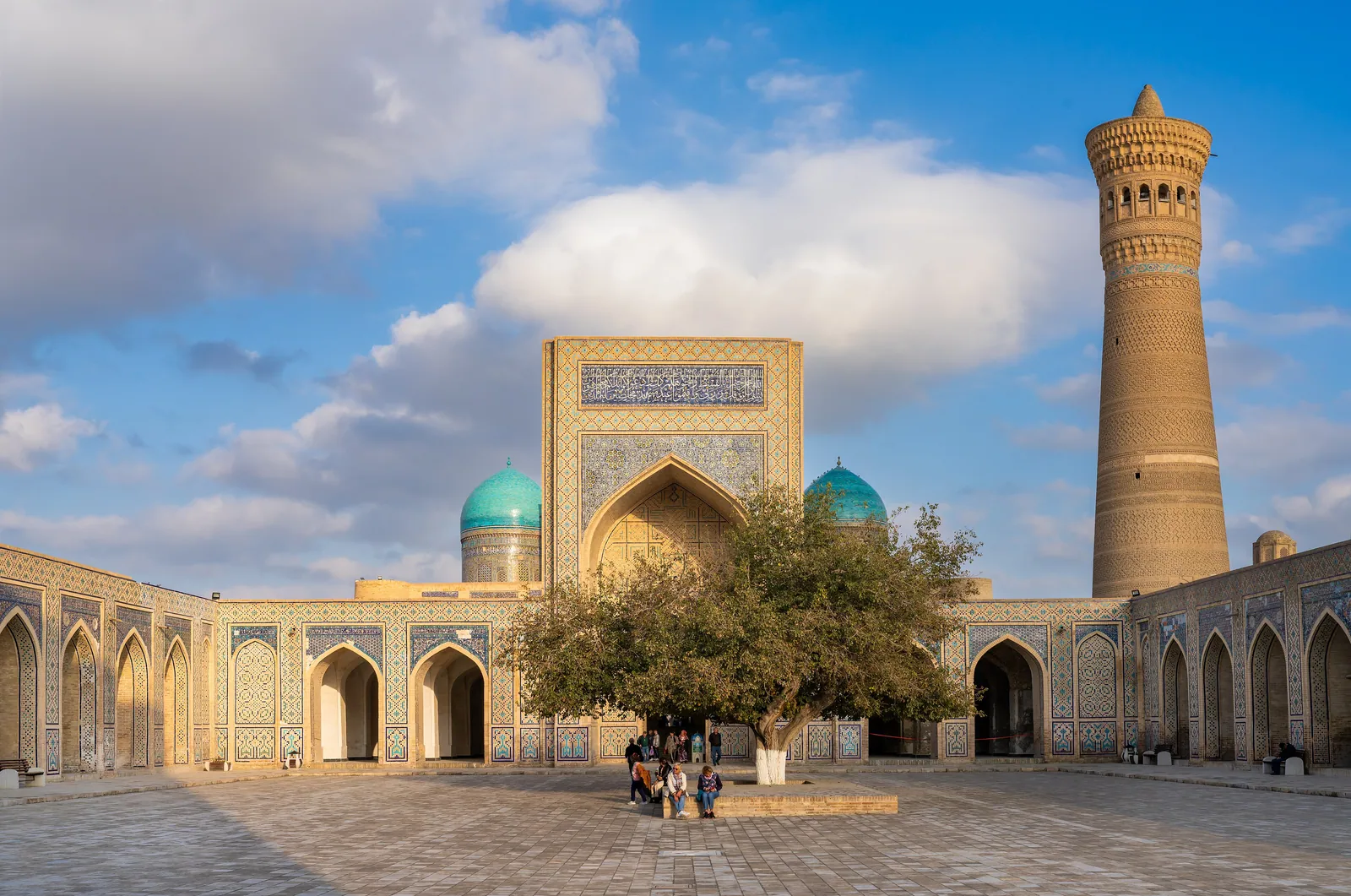
A Walk Through the Old Town of Bukhara
Bukhara is the most complete medieval city in Central Asia — a living old town of mosques, trading domes and a thousand-year-old minaret. Here is a walking route through it, monument by monument, in the order they make sense.
Beating the Crowds at Kyoto's Famous Sites
Kyoto's most photographed places can be overwhelming by mid-morning — and almost serene two hours earlier. A practical strategy for the famous sites: when to go, what to skip, and how to find the quiet city behind the postcards.
Bhutan: the Last Himalayan Kingdom
Bhutan opened to tourism only in 1974 and has since managed visitors with a deliberate policy designed to protect its Buddhist culture and pristine environment. What that means for the traveller is a Himalayan country of monasteries, fortresses and mountain vistas that remains, in the deepest sense, itself.
Cave Churches and Underground Cities: The Hidden Cappadocia
Cappadocia's strangeness runs downward as well as up. For centuries people carved homes, frescoed churches and entire subterranean cities into the soft rock — a whole civilisation lived inside the landscape.
Cherry Blossom or Autumn: Choosing Your Kyoto Season
Kyoto has two glorious peaks — the pale flood of cherry blossom in early April and the red-gold fire of maples in late November. How to choose between them, and what the quieter seasons offer instead.
Day Trips from Kyoto: Nara, Uji and Osaka
Three rewarding places lie within an hour of Kyoto — Nara, an even older capital; Uji, the home of green tea; and Osaka, Japan's exuberant kitchen. How to choose, and how to use a day.
Dunhuang and the Mogao Caves
In the Gobi Desert at the edge of China, Buddhist monks carved and painted five hundred caves over a thousand years — then sealed one library chamber so completely that it was not opened again for nine centuries.
Georgia, the Cradle of Wine
Wine has been made in Georgia for some eight thousand years — longer than anywhere else on Earth. Here is the story of the qvevri, the country's living wine culture, and why the journey east passes through it.
Gion and the Geisha Districts, Explained
Kyoto’s geiko and maiko are skilled performing artists, not a tourist attraction — and the lantern-lit lanes they work in deserve respect, not pursuit. A clear-eyed guide to the geisha districts, what they are, and how to visit them well.
Hagia Sophia and the Layered Faiths of Istanbul
For nearly fifteen centuries one building has stood at the centre of Istanbul, serving in turn as cathedral, mosque, museum and mosque again. Hagia Sophia is the city's whole history compressed into a single dome.
Issyk-Kul and Kyrgyz Nomad Culture: a Sea in the Mountains
Lake Issyk-Kul, one of the world's largest alpine lakes, sits at 1,600 metres in the Tian Shan of Kyrgyzstan, surrounded by peaks above 4,000 metres and by a nomadic culture that has survived the Soviet era, independence and the arrival of the modern world with its essential character intact.
Istanbul, Where Two Continents Meet
Istanbul is the only great city built on two continents, divided and joined by a single strait of water. Here is how the Bosphorus shapes a place that has been the capital of three empires.
Japan's Onsen Towns: Hakone, Beppu, and Kinosaki
Japan's hot-spring culture is among the most sophisticated in the world — an entire civilisation of bathing, inn-keeping and thermal geography that has shaped Japanese ideas of leisure, health and beauty for over a thousand years. Three towns in particular reveal what the onsen experience is at its finest.
Kaiseki and the Kyoto Table
Kyoto’s cuisine is the most refined in Japan — a tradition of seasonal multi-course meals, temple vegetarian cooking and everyday home dishes. A guide to kaiseki, what to expect at the table, and how to eat well across a Kyoto week.
Khiva: The Walled City of the Desert
Inside its mud-brick walls, Khiva is the most concentrated old town on the Silk Road — a complete medieval city you can cross in twenty minutes. Here is what the walled Itchan Kala holds, and how it came to be so intact.
Ladakh: the High Desert of the Indian Himalaya
Perched between the Himalayas and the Karakoram at altitudes above 3,500 metres, Ladakh is a Tibetan Buddhist kingdom folded into the Indian state of Jammu and Kashmir — a land of monasteries, prayer flags, cold desert and some of the most extraordinary mountain scenery on Earth.
Lodge-to-Lodge Trekking in the Himalaya, Explained
You can walk for days through the highest mountains on Earth and sleep each night in a warm room with a hot meal. Here is how teahouse trekking works, and why it suits a slow-travel journey.
Mongolia and the Great Steppe: a Journey into the World's Last Nomadic Heartland
Mongolia is the world's second-largest landlocked country and among the most sparsely populated — a place where the medieval world of the horse, the ger and the open horizon survives into the present with a force that is nothing short of astonishing.
Mountain Monasteries and the Buddhist Himalaya
Across the high Himalaya, whitewashed monasteries cling to ridges and cliffs, alive with prayer flags, butter lamps and the deep note of the horn. A respectful traveller's guide to the living Buddhism of the mountains.
Mountain Peoples and the Tradition of High Hospitality
In the high mountains of Asia, a guest is something close to sacred. A guide to the peoples of the Himalaya and the Tian Shan — and to receiving their hospitality with the grace it deserves.
Staying in a Ryokan: The Traditional Japanese Inn
A ryokan is not a hotel with tatami floors — it is a tradition of hospitality with its own rhythm of baths, meals and quiet. A first-timer’s guide to a night in a Japanese inn.
Tbilisi: Old City, Junction of Worlds
Perched above the Mtkvari river, Tbilisi's old city is one of the most atmospheric in the Caucasus — a district of wooden balconies, Persian bathhouses, Orthodox churches and a mosque, built by a city that has always sat between empires.
The Art of the Japanese Garden
A Kyoto garden is not a display of flowers but a composition — of stone, water, moss and borrowed mountains, designed to be read slowly. A short guide to the four great garden types, and how to look at them properly.
The Best Seasons in the Himalaya: A Month-by-Month Guide
The Himalaya has two reliable windows and one great obstacle. A clear-eyed guide to the mountain year — when the air is clearest, when the monsoon closes the valleys, and when the rhododendrons bloom.
The Blue-Tile Architecture of the Silk Road, Explained
Why are the domes of Samarkand and Bukhara so intensely blue, and how were the tiles actually made? A short field guide to the ceramic architecture that defines Uzbekistan's oasis cities.
The Caravanserai: The Inn That Made the Silk Road Work
A fortified inn spaced roughly a day's march apart across thousands of kilometres of desert and mountain — the caravanserai was the infrastructure of the Silk Road, and some of the finest still stand.
The Caucasus Mountains and the Road to Kazbegi
The Greater Caucasus is one of Europe's last great mountain frontiers. A drive north from Tbilisi to Kazbegi and the church beneath Mount Kazbek is the simplest way to stand among them.
The Dawn Balloons of Cappadocia
On a still morning, hundreds of hot-air balloons rise over the valleys of Cappadocia at first light. Here is why they fly here, what the experience is really like, and how to do it well.
The Fergana Valley: Heartland of the Silk Road
Ringed by three countries and watered by mountain rivers, the Fergana Valley was the Silk Road's most fertile engine — famous for its horses, its silk, and the craftsmen who never stopped working.
The Georgian Supra: A Feast Explained
The supra is the Georgian feast — a table of khachapuri and khinkali, a stream of toasts led by a tamada, and an entire philosophy of hospitality. Here is how it works, and how to be a good guest.
The Hammam and the Grand Bazaar: Istanbul's Old Rituals
Two of Istanbul's oldest institutions still work much as they did under the sultans — the Turkish bath and the covered market. Here is how to use both with confidence, and what they reveal about the city.
The Karakoram Highway: the Road That Crosses the Roof of the World
The Karakoram Highway threads between the highest mountain ranges on Earth — the Himalayas, the Karakoram and the Hindu Kush — connecting Pakistan to China through the Khunjerab Pass at 4,693 metres. It is the highest paved international border crossing in the world, and the most dramatic road journey in Asia.
The Khumbu and the Great Peaks of the Himalaya
The Himalaya holds all fourteen of the world's 8,000-metre peaks, and the Khumbu valley sits beneath the greatest of them. A traveller's guide to the giants — how they were formed, what they are called, and how to see them well.
The Pamir Highway: Roof of the World
The M41 crosses Tajikistan at an average altitude above 4,000 metres — the world's second-highest road, threading a plateau of glaciers, yak herders and abandoned Soviet outposts through the heart of the Pamir mountains.
The Registan of Samarkand, Explained
Three vast madrasas around a single public square, built across two and a half centuries. Here is how to read the Registan of Samarkand — what each building is, who raised it, and why it remains the most famous square in Central Asia.
The Shah-i-Zinda Necropolis of Samarkand
Behind the Registan, an alley of tombs climbs a hill in Samarkand — a thousand years of tiled mausolea for generals, queens and holy men, and some of the most extraordinary mosaic work on Earth.
The Temples of Kyoto Worth Your Time
Kyoto has some two thousand temples and shrines, and no traveller should attempt them all. This is a considered shortlist — the dozen sites that reward a slow visit, and how to string them into days that make sense.
The Tian Shan: Central Asia's Mountains of Heaven
North of the Himalaya, a second great range walls off Central Asia — the Tian Shan, the 'mountains of heaven'. A guide to its high pastures, its nomad summers and the Silk Road passes that crossed it.
The Trans-Mongolian Railway: Crossing a Continent by Train
The Trans-Mongolian branch of the Trans-Siberian railway connects Moscow to Beijing across 7,621 kilometres of steppe, taiga, desert and mountain — passing through Russia, Mongolia and China in a journey of six to seven days that remains one of the great train experiences on Earth.
Timur and the Timurid Renaissance
A conqueror who built a capital and a dynasty that turned it into one of the great cultural moments in history. Here is the story of Timur and the Timurid renaissance that gave Samarkand its monuments.
Travelling Uzbekistan Today: A Practical Primer
The Silk Road cities are far easier to reach than most travellers expect. A practical primer on getting around Uzbekistan today — the fast trains, the visa rules, when to go, and how the three oasis cities link up.
Uzbek Food and the Silk Road Teahouse
Plov cooked in cauldrons, bread that is never cut, kebabs, dumplings and endless green tea. A guide to what you will eat in Uzbekistan — and to the chaikhana, the teahouse that has anchored oasis-city life for centuries.
Walking Without Summits: What a Gentle Mountain Journey Is Like
You can travel deep into the high mountains of Asia without ever climbing a peak or facing a technical step. A portrait of the unhurried mountain journey — and why it may be the better way to see the heights.
What the Silk Road Actually Was
It was never a single road, and silk was only part of the cargo. Here is what the Silk Road truly was — a two-thousand-year web of overland routes that carried goods, faiths, diseases and ideas between China and the Mediterranean.
Xi'an: The Eastern End of the Silk Road
Beyond the Himalaya and the Tian Shan, the great road came down at last to Xi'an — the Tang-dynasty capital the caravans treated as journey's end. A guide to the city where China met the world.
Bali's Ritual Year: Galungan, Nyepi and the Calendar of Offerings
Bali runs on two interlocking calendars, and the result is a festival almost every day somewhere on the island. But three celebrations stand apart — Galungan, Kuningan and the Day of Silence — and they reveal everything that makes Balinese culture extraordinary.
Barranquilla's Carnaval: Colombia's Great Atlantic Festival
The Carnaval de Barranquilla is the world's second-largest carnival and UNESCO Intangible Heritage — four days of cumbia, mapalé, Congos and the Battle of Flowers that celebrate Colombia's Caribbean soul with unrestrained joy.
Ceviche and the Cooking of Peru's Pacific Coast: the Ocean as Larder
Ceviche is Peru's most famous dish, but the cooking of the Peruvian coast is far more: a convergence of three thousand years of fishing culture, coastal chillies and the most productive cold-water ocean in the Pacific.
Diwali: the Festival of Lights Across India
Diwali is India's most celebrated festival — five days of diyas, fireworks, sweets and family that transforms every city and village. But Diwali is not one festival: it is many, layered differently across regions, faiths and centuries.
Eating Across a Ninety-Day Journey: How the Palate Travels
On a journey that crosses continents over three months, food is not a series of meals but an arc. Here is how your appetite changes, and how to eat in a way that sustains you to the end.
Eight Festivals Worth Planning a Journey Around
Some festivals are worth more than a detour — they are worth building a whole journey's calendar around. Eight great gatherings from across our routes, what makes each one matter, and how to time your travels to meet them.
Holi: India's Festival of Colour that Dyes a Nation
For two days each spring, India stops and erupts in clouds of coloured powder. Holi is the most jubilant Hindu festival of the year, and experiencing it in the country is an intensity few journeys can prepare you for.
How Lima Became One of the Great Food Cities of the World
In a single generation Lima went from an overlooked capital to a city food lovers cross oceans for. The story runs through cold Pacific currents, four hundred years of migration, and a kitchen finally proud of its own pantry.
Kaiseki and the Japanese Table: A Meal Read Like a Season
Kaiseki is Japan's most refined meal — a multi-course progression that treats the season, the tableware and the diner as parts of one composition. Here is how to read it, and eat it well in Kyoto.
Meeting Local Communities, and Doing It Well
A genuine encounter with a local community can be the heart of a journey — or an awkward intrusion. The difference is in how it is arranged. A guide to community visits done with care, and to spotting good practice.
Moroccan Food and the Tagine: Slow Cooking in a Conical Pot
The tagine is both a dish and the clay pot it is named for — a piece of desert engineering that turns tough cuts and humble vegetables tender and fragrant. It is the doorway into the Moroccan table.
Music as a Way Into a Culture
You do not need a shared language to be moved by a song. A guide to the living musical traditions along our journeys — Andean panpipes, flamenco, Silk Road maqam — and how to find the real thing.
Oaxacan Cuisine and the Seven Moles: Mexico's Most Complex Table
Oaxaca's cooking is among the most intricate in the Americas — anchored by seven distinct mole sauces, markets full of chile smoke and chocolate, and a culture of mezcal and tlayudas that has barely changed in centuries.
Semana Santa: Processions, Silence and Devotion in Seville and Antigua Guatemala
Semana Santa is perhaps the most intense expression of Baroque Catholicism anywhere in the world. In Seville and in Antigua Guatemala, the processions combine art, grief, community and history in a week that brings both cities to a standstill.
Senegalese Teranga: Hospitality, Thieboudienne and the Table of West Africa
Teranga — the Wolof word for hospitality — is not merely a courtesy in Senegal, it is a governing value. It shapes how the table is set, who is invited to eat, and why the national dish feeds a city from a single pot.
Street Food Worth Seeking on the Journeys
Some of the finest, most characterful eating on a grand journey happens at a cart, a grill or a market stall. A guide to the street food worth crossing a city for — and how to eat it with confidence.
The Argentine Asado: Fire, Ritual and the Parrilla as Social Institution
The asado is Argentina's Sunday ceremony — a practice of slow fire, precise cuts and deep time that functions simultaneously as social institution, language of hospitality and expression of national identity.
The Art of Being a Respectful Guest
A grand journey crosses many cultures, each with its own ideas of courtesy. A practical guide to the etiquette that travels well — dress, photography, sacred places, the table — so you arrive everywhere as a welcome guest.
The Ethiopian Table: Injera, Spice and the Shared Plate
Ethiopian cuisine is one of the most distinctive on Earth — a spongy sour flatbread, a battery of long-simmered stews, and a way of eating from one plate, by hand, that turns every meal into an act of sharing.
The Festivals of Japan: A Seasonal Calendar
Japan keeps a festival for every season — fire and float, lantern and drum. A calendar of the great matsuri, what they mean, and how to time the Japanese chapter of a journey to meet one.
The Food of the Andes: Eating at the Roof of the Americas
Long before it fed the world, the Andes was one of the most inventive food laboratories on Earth. The mountain table — built on potatoes, maize, grains and freeze-dried ingenuity — still feeds Cusco and the Sacred Valley today.
The Great Festivals of the Andes: Inti Raymi and Beyond
Across the Andean year, the highlands stage festivals that braid Inca cosmology with Catholic liturgy into something wholly their own. A guide to the calendar — from the sun festival of Cusco to the great pilgrimage of the glaciers.
The Japanese Tea Ceremony: Silence, Wabi and the Art of Being Present
The Japanese tea ceremony — chanoyu — is simultaneously a performing art, a spiritual practice and the world's most refined act of hospitality. It is not about the tea; it is about the moment.
The Market as a Way to Understand a Place
Walk into a food market anywhere on a grand journey and you are reading the place directly — its land, seasons, history and appetites laid out on tables. Here is how to use a market as a traveller's compass.
The Regional Kitchens of Italy: Why There Is No Such Thing as Italian Cuisine
Italy has no national cuisine: it has twenty regions with culinary traditions as distinct from one another as Milanese risotto is from Bolognese ragù. Understanding that diversity is understanding Italy.
The Vietnamese Table: Pho, Bánh Mì and the Art of Balance
Vietnamese cooking is among the most elegant in the world — light, herbal, insistently fresh, built on the balance of five flavours and the art of eating in the street.
The World's Great Markets and Bazaars
A market is the fastest way to read a city — its food, its crafts, its rhythms of buying and bargaining. A guide to the great markets and bazaars along our journeys, and how to understand them.
Traditional Crafts and the Artisans Who Keep Them Alive
A handmade object carries the hours and the knowledge of its maker. A guide to the great living crafts along our journeys — the looms, kilns and forges — and to buying in a way that helps the artisan.
Turkish Meze and the Spreading Table: How Turkey Eats Together
The Turkish table begins long before the main course — with meze, a spreading architecture of small dishes that transforms every meal into an hours-long act of sharing, conversation and pleasure.
Uzbek Plov and the Silk Road Table
On the old Silk Road, one dish carries the weight of celebration and hospitality: plov, the rice cooked in a great iron cauldron. It is the centre of the Central Asian table, and a way into a crossroads cuisine.
A Field Guide to the Highest Places on Our Journeys
From a 3,400-metre Andean capital to a 5,000-metre Tibetan pass, a clear-eyed survey of where our six grand journeys climb highest — what each altitude feels like, and how the itineraries reach it kindly.
A Honeymoon That Crosses the World
For couples who want their honeymoon to be a journey rather than a resort, a grand journey offers weeks of shared discovery to begin a marriage. Here is how to plan one — and how to keep the romance intact across a long route.
A Twelve-Week Training Plan for a Trekking Journey
Three months is enough time to arrive genuinely ready for a walking journey — if those weeks are used well. Here is a clear, progressive plan, week by week, that turns ordinary fitness into trail-ready fitness.
Accessible Travel: Planning a Grand Journey with Reduced Mobility
Reduced mobility does not have to mean reduced ambition. With the right research, the right questions and the right operators, travellers with physical limitations can reach places that surprise everyone — including themselves.
Acclimatisation, Day by Day: Your First Week in Thin Air
What is actually happening inside you on day one, day three and day seven at altitude — and the small, deliberate things to do on each of them so the high country feels like a pleasure rather than a trial.
Altitude Across the Generations: Children, Older Travellers and Thin Air
Whether a journey to the high Andes or the Tibetan plateau suits an eight-year-old or an eighty-year-old — a clear field guide to how age really affects acclimatisation, and what each end of the family needs.
Altitude Medication, Explained: What the Pills Do and Do Not Do
Acetazolamide, dexamethasone, nifedipine, ibuprofen — a plain-language guide to the drugs associated with high-altitude travel, what each is genuinely for, and why none of them replaces a sensible ascent.
Backing Up Your Photos on the Road: How to Never Lose a Journey's Worth of Images
A memory card failure in a remote location, or a stolen bag at an airport, can erase months of irreplaceable images. A simple three-point backup system prevents that — and it takes less effort than most photographers expect.
Balance and Stability for Uneven Ground
Trails are rarely smooth. Loose rock, tree roots, scree and stream crossings ask for a sense that gyms seldom train: balance. Here is why it matters on a journey, and how to sharpen it before you go.
Beating Jet Lag Across Many Time Zones
A journey that spans continents also spans your body clock. Here is how jet lag really works, and the small, evidence-based habits that help you arrive ready to travel rather than ready for bed.
Booking Flights for a Multi-Leg Journey: Open Jaws, Connections and Seat Strategy
Flying to one city and home from another, with several connection points in between, unlocks far better journeys than a round trip — and the booking is simpler than it looks.
Crossing Hemispheres: Following the Southern Summer
A grand journey that crosses the equator turns the calendar upside down. Here is how to think about seasons that reverse beneath you — and why a well-planned route lets you travel inside a single, endless summer.
Dry Season and Wet Season in the Tropics
Near the equator there is no summer or winter — only the wet and the dry. What the two seasons really mean for a traveller, why the wet is more rewarding than its reputation, and how to choose between them.
Eating and Drinking Safely on the Road, Without Missing the Best of It
Local food is one of the deepest pleasures of a long journey, not a hazard to be endured. A few clear habits let you eat adventurously across continents while keeping your stomach firmly on your side.
Fabrics and Laundry on a 90-Day Journey
On a journey of months, the fabrics you choose decide how little you can pack — because the right ones can be washed in a sink and worn again by morning. A guide to materials, washing on the road, and a wardrobe that renews itself.
Fierce Sun, Hard Frost: The Other Hazards of High Country
Altitude sickness gets the attention, but the high mountains test travellers in quieter ways — punishing ultraviolet light, a forty-degree swing between noon and midnight, dry air and brilliant glare. A field guide to staying comfortable up high.
Footwear for the Long Trek: Choosing Shoes for an Expedition Journey
More journeys are spoiled by the wrong shoes than by any other piece of gear. A practical guide to choosing, breaking in and pairing footwear for weeks of trails, cities and changing ground.
Fuel for Thin Air: Eating and Drinking Well at Altitude
Why the high mountains change what your body wants from a meal and a glass of water — a substantial, practical guide to hydration, carbohydrates, the flat appetite of altitude, and the long debate over coca and alcohol.
Gear You Can Leave at Home
Most packing advice tells you what to bring. This is the other list — the well-meant gear that quietly weighs a journey down, and why the bag you do not pack is often the wiser one.
How Fit Do You Really Need to Be?
The honest answer is: fitter than for a beach holiday, far less fit than for a marathon. Here is a frank guide to the level our journeys actually ask of you, and how to tell where you stand.
How Multi-Country Visas Work on a Long Journey
A grand journey may cross a dozen borders in as many weeks. Visas are rarely difficult, but they reward order and forethought. Here is how to think about entry rules across a whole itinerary.
How to Acclimatise to High Altitude
Altitude is the single biggest physical variable on an Andean or Himalayan journey — and the most manageable. Here is how the thin-air world works, and the simple habits that let you enjoy it.
How Weather Works on a Multi-Month Journey
On a journey of seventy or ninety days you do not have a forecast — you have a climate, and several of them. How to think about weather across a long trip, and when to plan rather than guess.
Keeping Your Documents Safe on a Long Journey
Passport, visas, insurance, tickets, cards: a long journey runs on paper and data. A simple system for storing, copying and backing it all up turns a lost wallet into a minor setback.
Language Basics for Multi-Country Travellers
You do not need to speak Uzbek, Amharic and Japanese to travel through Central Asia, Ethiopia and Japan. You need about a dozen words in each, and the right attitude for the rest.
Luggage Allowances and Airline Rules on a Long Journey
A ninety-day journey uses four or five different airlines, each with its own weight limits. The traveller who understands the rules before packing never stands at a counter reordering their bags.
Making Friends on a Small-Group Departure
On a long journey, the eight or ten people you travel with become part of the experience itself. A guide to the social life of a small-group departure — how friendships form, why the group size matters, and how to be a good companion on the road.
Malaria and Insect-Borne Illness: Sensible Protection on a Long Journey
Mosquitoes and ticks are the world's most consequential travel companions you would rather not have. Here is how to think clearly about malaria and other insect-borne illnesses, and the layered defence that works.
Managing Prescription Medications on a Grand Journey
Carrying the right drugs through a dozen countries — in the right quantities, within the rules, and without running out — is a solvable problem. Here is how to approach it before you leave.
Money and Cards Across Many Currencies
A long journey may pass through eight or ten currencies. Knowing what to carry, which card to use and how to avoid quiet fees keeps your money working as hard as you do.
Monsoons, Trade Winds and the Rhythms of Asia
Half the world's weather runs on great seasonal winds — the monsoons that once drove the sailing trade and still govern when to travel. A guide to the wind systems that shape an Asian journey.
One Bag, Many Climates: Packing Light for a Long Journey
It feels impossible to pack a single bag for desert heat, mountain cold and a polar shore. It is not. The trick is to stop packing for places and start packing a small, deliberate kit that recombines.
Packing a Travel Medical Kit That Earns Its Place
A good travel medical kit is small, well-chosen and personal — not a field hospital. Here is a room-by-room checklist for assembling one that handles the everyday and supports you when a pharmacy is far away.
Packing for Antarctica: A Polar Kit List
Antarctica is colder and windier than its summer temperatures suggest, yet packing for it is surprisingly precise. A clear, item-by-item guide to dressing for the ice — and to what the ship will hand you when you arrive.
Packing for the Desert: Sun, Heat and the Cold That Follows
Deserts ask travellers to pack for two climates in one place — a fierce, bright heat by day and a surprising chill by night. A field guide to dressing for the Atacama, the Sahara and the dry lands our journeys cross.
Planning a Journey Around One Unmissable Event
Sometimes a journey turns on a single moment — a migration river crossing, the cherry blossom front, a total eclipse. How to build a long itinerary around one fixed event without letting the rest of the trip suffer for it.
Preparing Your Body for a Cold-Water Polar Journey
A polar journey asks less of your stamina than of your tolerance for cold, motion and confined space. Here is how to prepare your body and mind for Antarctica, the polar night and the Southern Ocean.
Reading the Signs: Recognising and Responding to Altitude Sickness
A practical field guide to the three faces of altitude illness — from the common, mild headache to the rare emergencies — with the symptoms that distinguish them and the clear, unglamorous rule that keeps every traveller safe.
Reading the Weather While You Travel
Apps give you a forecast; experience gives you a read. Here is how to understand weather in the field — in mountains, deserts and polar latitudes — and why the guide's eye often beats the algorithm.
Recovering Well Between the Big Days
On a long journey, the skill is not surviving one hard day — it is being ready for the next one. Here is how to recover overnight and between stages, so that day ten feels as good as day two.
Sleeping Well on a Long Journey: Rest, Recovery and the Art of Sleeping Anywhere
On a journey of weeks or months, poor sleep is cumulative — and cumulative sleep debt makes every other challenge harder. Here is how to protect your rest across time zones, overnight transport and unfamiliar beds.
Staying Comfortable on Long Flights and Long Road Days
A grand journey involves real hours in seats — aircraft, vehicles, trains. Here is how to stay comfortable, circulate well and arrive at each new place feeling fresh rather than crumpled.
Staying Connected: eSIMs, Wifi and Your Phone Abroad
A long journey through many countries no longer means going dark. Here is how eSIMs, local SIMs and wifi compare — and how to stay reachable without a punishing roaming bill.
Staying Well in Heat and Strong Sun
From the Saharan light of Marrakech to the high glare of the Atacama, heat and sun are constant travelling companions in much of the world. Here is how to enjoy them without letting them wear you down.
Strengthening Your Knees and Ankles for Long Descents
It is the descents, not the climbs, that ache the next morning. Here is why going down is so hard on the body, and the targeted strength work that protects knees and ankles before you travel.
Taking Children on a Grand Journey
A months-long journey across the world can be the formative experience of a childhood — or a hard slog for a child too young for it. Here is how to judge whether your children are ready, and how to travel well with them when they are.
The Best Time to Take Each Grand Journey
Every one of our six grand journeys has a season when it is at its finest — and the right month is rarely an accident of the calendar. Here is when each journey comes into its own, and why.
The Case for Shoulder Season Travel
The weeks on either side of peak season are quietly the best time to travel — thinner crowds, softer light, kinder prices and a landscape in transition. A defence of the shoulder months, and how to read them.
The Daypack: What to Carry Every Day
Your duffel holds the journey; your daypack holds the day. A practical look at the one bag you carry on your back every morning — how to choose it, and the small kit that should live inside.
The Layering System, Explained
On a journey that crosses high passes, polar shores and cold desert nights, you cannot pack a coat for every climate. You pack a system instead — three or four layers that combine to meet almost any weather on Earth.
The Long Layover as Destination: How to Turn a Transit Stop into a Journey
A ten-hour stopover in Istanbul, Singapore or Doha is not dead time — it is an invitation. Here is how to leave the terminal, see something real, and arrive at your onward destination with a story to tell.
The Long Night: Sleeping Well at Altitude
Why the first nights high are often the hardest part of an Andean or Himalayan journey — the strange breathing, the 3 a.m. wakefulness — and what genuinely helps you rest in thin air.
The Multigenerational Grand Journey: Three Generations, One Route
Bringing grandparents, parents and children on the same long journey is among the most rewarding ways to travel — and among the most particular to plan. Here is how to build a journey that genuinely works for everyone aboard.
Tipping and Gratuities Around the World
Tipping is one of travel's quiet anxieties: every country has its own unwritten rules, and a long journey crosses many of them. A clear guide to gratuities, region by region.
Training Your Legs and Lungs for Altitude Walking
You cannot train away thin air — but you can arrive at altitude with a body that copes with it gracefully. Here is what fitness can and cannot do for the high country, and how to build the right kind.
Travel Insurance for a Grand Journey: Reading the Fine Print
A long, multi-country journey is not an ordinary holiday, and an ordinary travel policy may not cover it. Here is how to read a policy properly — and the cover that genuinely matters when you are far from home.
Travelling as a Couple for Ninety Days
Three months on the road together is a different proposition from a fortnight away. It can be the best thing a partnership ever does — if you go in honest about what a long journey asks of two people sharing every day.
Travelling Solo on a Grand Journey
A long escorted journey is one of the most rewarding ways to travel alone — company when you want it, solitude when you need it, and none of the logistical weight. Here is how solo travel actually works on a journey of months.
Travelling Well in Your Seventies and Beyond
A grand journey is entirely within reach in later life — and is often best appreciated then. A practical, encouraging guide to choosing the right journey, preparing your health, and travelling the long way around in your seventies and after.
Travelling While Pregnant: A Practical Guide to Journeys Before, During and Just After
Pregnancy does not have to end ambitious travel — but it requires honest planning, medical clearance, and a different kind of flexibility. Here is what to know before you book.
Travelling with a Chronic Health Condition
Diabetes, asthma, heart disease, autoimmune conditions: a managed chronic condition is not a reason to stay home. It is a reason to plan carefully — and then travel with confidence.
Vaccinations for a Multi-Continent Journey: A Calm Planning Guide
A grand journey can carry you through a dozen disease environments in a single season. Here is how to think about vaccinations early, sensibly and without alarm — so the medical admin is finished long before you pack.
Walking Yourself Fit: The Everyday Method
You do not need a gym membership or a training app to prepare for a walking journey. You need the most natural exercise there is, done with a little structure. Here is how to walk yourself ready.
What a Long Journey Actually Costs: A Budget Beyond the Price
The headline price of an escorted journey is the largest number you will see — but rarely the last. Here is an honest account of what to budget beyond it, so the real total holds no surprises.
What to Read and Watch Before a Great Journey: Building Context Before You Arrive
The traveller who arrives with context sees differently. A handful of books and films, chosen carefully, can transform what would have been scenery into meaning — and meaning into memory.
When the Light Is Best: A Traveller's Guide to Seasonal Light
Light is the most overlooked variable in timing a journey. How the sun's angle, the season and the latitude shape what you see — and how to choose months and hours when the world looks its finest.
When Your Stomach Rebels: Managing Travellers' Tummy Upset
Even careful travellers sometimes have an off day. Here is what travellers' diarrhoea actually is, how to treat the ordinary case calmly, and the clear signs that mean it is time to ask for help.
Which Grand Journey Suits Your Life Stage
Our six grand journeys differ not only in geography but in what they ask of a traveller. A clear-eyed guide to which journey fits a young family, a retired couple, a solo traveller in their thirties — or anyone in between.
Your Passport: Blank Pages, Validity and Entry Rules
The passport is the one document a journey cannot proceed without — and the one most often caught out by a quiet rule. Here is how validity, blank pages and condition really work at a border.
48 Hours in Cusco: A Slow Two Days at Altitude
Cusco rewards the unhurried. Here is how to spend a first two days in the old Inca capital — gentle enough to let your body adjust to 3,400 metres, full enough to fall for the city.
A Field Guide to the Markets of the Cusco Highlands
The market is the oldest institution in the Andes — older than the Inca, older than money. A practical guide to the great markets around Cusco: which day, what to look for, and how to shop with respect.
Andean Weaving and the Towns That Keep It Alive
In the highlands above Cusco, cloth has always carried meaning as well as warmth. A guide to the backstrap loom, the natural dyes, the weaving towns and how to recognise — and buy — the real thing.
Bariloche and the Argentine Lake District: Patagonia's Northern Edge
San Carlos de Bariloche anchors a landscape of glacier-carved lakes, ancient beech forests and snow-capped volcanoes that stretches north through Neuquén Province — one of the most scenically extravagant corners of the Andes.
Beyond the Inca Trail: Salkantay, Lares and Choquequirao
When the Classic Inca Trail is sold out — or when you want something wilder, higher or quieter — three superb alternatives lead toward Machu Picchu. Here is how to choose between them.
Colca Canyon and the Condor Flight: Peru's Great Gorge
Twice as deep as the Grand Canyon in places, Colca is one of the world's deepest gorges and the place where Andean condors — among the largest flying birds on Earth — can be watched from a few metres, riding the thermals at eye level.
Cusco, the Layered City: Reading Five Centuries in the Streets
When Spain conquered Cusco in 1533 it did not erase the Inca capital — it built on top of it. The result is a single city of two civilisations, and reading its layers is the key to the place.
Dawn at El Tatio: The World's Highest Major Geyser Field
Why the Atacama's great geyser field is visited in the freezing dark, what actually happens when the sun comes up, and how to do the early start well — the cold, the altitude and the steam.
Eating in the Andes: The Highland Larder of Cusco
The food of the Cusco highlands is one of the world’s great mountain cuisines — built on thousands of native potatoes, ancient grains, river trout and a deep tradition of cooking with the earth itself.
El Chalten and the Trails Below Mount Fitz Roy
Argentina's self-styled trekking capital sits at the foot of Mount Fitz Roy, and its great virtue is simple: the trails begin in the village. You walk out of town toward Patagonia's most famous granite.
Flamingos and Blue Water: The Altiplanic Lagoons of the Atacama
Above 4,000 metres the driest desert on Earth holds deep-blue lakes and feeding flamingos. A guide to the altiplanic lagoons, the three flamingo species, and how life survives in such a hostile place.
How to Read Inca Stonework
The walls of Cusco are not just old — they are a language. Learn to read Inca masonry and you can date a wall at a glance, tell sacred from ordinary, and see why the stones still stand.
Huayna Picchu or Machu Picchu Mountain — Which Summit to Climb
Two peaks rise straight out of the citadel, and a combination ticket lets you climb one. They could hardly be more different. Here is an honest comparison to help you choose — or skip both.
Iguazu Falls: Two Countries, One Cascade
The largest waterfall system on Earth straddles the border of Argentina and Brazil, and seeing it from both sides is not a luxury — it is a different experience each time.
Incahuasi: The Cactus Island in a Sea of Salt
In the middle of the Salar de Uyuni stands a rocky island crowded with giant cacti and built from ancient coral. The story of Incahuasi — once a real shoreline, now a viewpoint over a vanished lake.
La Paz and El Alto: A City in the Sky
Bolivia’s great altiplano metropolis spills down a canyon and across a high plateau, joined by cable cars that double as public transport. A guide to La Paz and El Alto — geography, altitude and the things worth your time.
Lake Titicaca, the Uros and the Island of the Sun
The highest large navigable lake on Earth holds floating reed islands, an Inca origin myth and villages little changed by time. A guide to Titicaca — its scale, its peoples and the places worth your days.
Machu Picchu Tickets and Circuits, Untangled
Timed entry, numbered circuits, capped daily numbers and add-on mountains: the ticketing of Machu Picchu confuses almost everyone. Here is a clear guide to how the system works and which ticket to choose.
Mendoza and the High-Altitude Vineyards: Argentina's Wine Country at the Foot of the Andes
Mendoza produces some of the world's most celebrated Malbec from vineyards pressed up against the snow-line of the Andes — a wine culture of serious depth set inside a landscape of astonishing mountain drama.
Ollantaytambo: The Living Inca Town
At the head of the Sacred Valley stands the only Inca town whose original street grid is still inhabited. Its fortress, its canals and its stones tell the story of an empire that never finished building.
Perito Moreno: The Glacier That Advances
Most of the world's glaciers are retreating. Perito Moreno, in Argentine Patagonia, is famously not — and every few years it builds an ice dam across a lake until the water breaks through in a spectacle decades in the making.
Pumas, Guanacos and Condors: The Wildlife of Patagonia
Patagonia's open steppe is one of the best places on Earth to watch large wild animals in plain sight. Meet the guanaco herds, the recovering puma, the soaring condor and the birds of the far southern grasslands.
Rainbow Mountain and the Wilds Beyond Machu Picchu
Machu Picchu is the centrepiece, but the region around it holds the striped slopes of Vinicunca and the remote Vilcabamba range — the last refuge of the Inca. A guide to the high country beyond the citadel.
Reading Valle de la Luna: The Atacama's Moon Valley
The Valley of the Moon is the Atacama's classic first evening — but its salt ridges and folded rock tell a long geological story. A field guide to what you are actually looking at, and how to watch the light.
Sacsayhuaman and the Inca Monuments Above Cusco
On the hills above Cusco stand four Inca monuments that most visitors rush past in a morning. Read them slowly and the city below becomes legible in a way it was not before.
San Pedro de Atacama: Base Camp for the High Desert
Every Atacama journey turns on one small adobe village. Here is how San Pedro works as a base — its altitude, its rhythm, where to eat, and why you radiate out from it rather than rush through it.
Sleeping on Salt: The Hotels Built from the Salar
On the edge of the Salar de Uyuni, a handful of hotels are built almost entirely of salt — walls, floors, furniture and all. How the salt-block hotels work, what a night in one is like, and why they exist.
The Andean Festival Calendar: Cusco’s Living Year
Cusco keeps one of the richest festival calendars in the Americas, where Inca ritual and Catholic feast days have fused into something wholly Andean. A month-by-month guide to the celebrations worth planning a journey around.
The Bolivian Yungas: Descending from the Altiplano to the Amazon
Within a few hours' drive of La Paz, Bolivia drops from 4,000-metre altiplano into subtropical cloud forest and then into lowland Amazon basin. Nowhere else on the continent compresses so many climate zones into so short a distance.
The Carretera Austral: Chile's Road to Nowhere — and Everywhere
Chile's Southern Highway threads nearly 1,300 kilometres through rainforest, glaciers and fjords that have no other land connection to the world — a route so remote and so beautiful that it rewrites a traveller's understanding of the word 'edge'.
The Classic Inca Trail, Explained
Four days, forty-three kilometres and a finish line unlike any other. Here is how the most famous trek in the Americas actually works — the permits, the passes, the cloud forest and the gate at Intipunku.
The Coloured Lagoons of the Eduardo Avaroa Reserve
South of the salt flat lies a high desert of red, green and white lakes, geysers and flamingos. A guide to the Eduardo Avaroa reserve — why the lagoons change colour, and what it takes to travel there.
The Lenga Beech Forests of Patagonia
The southern beech forests that cloak the lower flanks of Patagonia's mountains are the hidden scenery of every great walk — and in autumn they turn a colour that stops people mid-stride.
The Lithium Beneath the Salt: Uyuni’s Other Treasure
Beneath the Salar de Uyuni lies one of the largest lithium resources on Earth — the metal that powers electric cars and phones. A traveller’s guide to the science, the stakes and what it means for the salt flat.
The Lost City That Was Never Lost: A History of Machu Picchu
Built in the fifteenth century, abandoned within a hundred years and famously brought to the world's attention in 1911 — yet local families farmed its terraces all along. The real story of Machu Picchu.
The O Circuit: The Full Loop of Paine
The O Circuit wraps the entire Paine massif — seven to nine days, a wild and lonely back side, and the John Garner Pass above the great Grey Glacier. It is the harder, quieter sibling of the W.
The Patagonian Wind, Explained
Travellers remember Patagonia's wind long after the glaciers blur. It is not bad luck or freak weather — it is geography. Here is why the far south blows so hard, and how to walk with it rather than against it.
The Quebrada de Humahuaca: Argentina's Painted Gorge
A UNESCO World Heritage canyon in Argentina's far northwest, the Quebrada de Humahuaca is ten thousand years of Andean civilisation painted in ochre, burgundy and violet across mountains that defy a photographer's colour calibration.
The Sacred Valley, Town by Town
Most travellers see the Sacred Valley in a single hurried day. Slow down, and the Urubamba reveals a chain of distinct towns — each with its own Inca past, market, microclimate and reason to linger.
The Salar de Atacama: Chile's Great Salt Flat
Chile's largest salt flat is a vast crust of white set between volcanoes — a feeding ground for flamingos, a reservoir of lithium, and one of the strangest landscapes in the Atacama. What it is, and how to read it.
The Southern Patagonian Ice Field: Patagonia's Frozen Interior
The third-largest freshwater ice reserve outside the polar regions stretches across the Andes between Chile and Argentina, feeding the glaciers that define the Patagonian landscape. Most visitors see only its edges — and they are staggering.
The Train to Machu Picchu: How the Journey Actually Works
There is no road to Machu Picchu. For travellers who are not trekking, the way in is a spectacular narrow-gauge railway through the Urubamba gorge. Here is how the route, the stations and the connections fit together.
The Uyuni Mirror: When the Salt Flat Becomes a Sky
The Salar de Uyuni’s famous mirror is not a year-round phenomenon — it is a brief, weather-dependent gift. Here is exactly how the reflection forms, when to chase it, and what it asks of a traveller.
The W Trek: Walking the Heart of Torres del Paine
The W is the most loved multi-day walk in Chilean Patagonia — three valleys, three landmark views, and roughly 80 kilometres of trail. Here is how the route works, what each day asks, and how to walk it well.
Torres del Paine, Season by Season
There is no single best time to visit Torres del Paine — only trade-offs. A clear-eyed look at the park through the southern year: daylight, wind, crowds, wildlife and what each season asks of a traveller.
Under the Clearest Sky: Stargazing and the Great Atacama Observatories
The Atacama has the darkest, driest, steadiest skies on Earth — which is why the world built its telescopes here. What makes the desert sky so good, and how a traveller can spend a night beneath it.
Ushuaia and the End of the World
The southernmost city on Earth sits on the Beagle Channel, hemmed by mountains and sea. It is the last town of the Americas, the gateway to Antarctica, and far more than a place to merely pass through.
Wet Season or Dry Season: Choosing Your Salar de Uyuni
The same salt flat offers two completely different journeys depending on when you arrive — a flooded mirror or a cracked white desert. A clear-eyed comparison to help you choose the one you actually want.
When to Visit Machu Picchu — the Right Month and the Right Hour
Dry season or green season, first light or late afternoon: the timing of your visit shapes the crowds, the weather and the mood of the citadel. A practical guide to choosing both the month and the hour.
When to Visit the Atacama: A Season-by-Season Guide
The Atacama is a rare year-round destination — but each season has its own character. A month-by-month look at temperature, the brief summer rains, the night sky and the crowds, to help you choose well.
Why the Atacama Is the Driest Place on Earth
Some Atacama weather stations have never recorded rain. The dryness is no accident — it is the work of two mountain ranges, a cold ocean current and the planet's circulation. The science, explained simply.
A Trip and a Journey Are Not the Same Thing
We use the words as if they were interchangeable. They are not. The difference between a trip and a journey is small in the dictionary and enormous in experience — and knowing it changes how you choose to travel.
Crossing Borders by Land: What an Overland Frontier Teaches
A flight makes a border invisible; a land crossing makes it the most interesting hour of the day. Here is how overland frontiers work — the procedures, the patience, and what crossing on foot teaches.
Editing and Curating the Record of a Journey
A grand journey can produce ten thousand photographs and no story. The real work begins after you come home: backing up, choosing ruthlessly, sequencing, and turning a flood of files into a record you will actually return to.
Expedition Ships Explained: What a Polar Vessel Really Is
An expedition ship is not a small cruise liner. It is a specialised tool for reaching places without ports — built to a different brief, crewed differently, run on a different idea of what a voyage is for.
Ferries and Small Boats: The Working Water of a Journey
Not every voyage needs a ship. The humble ferry, the launch, the river crossing — these working boats carry locals as much as travellers, and they are often where a journey finds its most honest moments.
How Overland Travel Changes What You See
Travelling by land does not just change how long a journey takes. It changes what the journey is made of — the things you notice, the way places connect, the kind of memory you carry home.
Keeping a Written Travel Journal
A photograph records what a place looked like; a journal records what it was like to be there. Here is how to keep a written record across a long journey — what to write, when, and why the small entries matter most.
Learning a Few Words of the Local Language
You will never be fluent before you leave. But a handful of well-chosen words, learned with honest intention, does something to a journey that no phrase book can fully explain.
Managing Expectations on a Wild Journey
The gap between the journey you imagine and the journey you get is where disappointment lives — or where wonder does. How to set expectations that make a wild trip better, not smaller.
Overtourism and the Art of Not Adding to It
When too many visitors converge on too few places, everyone loses. Here is what overtourism really is, why it happens, and how to travel so you relieve the pressure rather than join it.
Photographing People, with Respect
A portrait made with consent and care is among the finest things you can bring home. A photograph taken from a distance, of someone unaware, is rarely either kind or good. Here is how to do the first and avoid the second.
Photographing the Great Landscapes
A mountain that overwhelms you in person can look strangely flat in a photograph. Here is how to make a landscape image hold the scale, depth and feeling of standing there, from Patagonian granite to Silk Road dunes.
Photographing Wildlife from a Vehicle or a Ship
On safari in the Great Rift or among the whales of Beyond the Blue, your hide is a moving one. Here is how to photograph animals well from a vehicle or a deck, and why fieldcraft beats focal length.
Reading a Map Is a Way of Dreaming
A map is the only book you can read in any direction, and the only one whose ending you write yourself. An essay about the map as an instrument of imagination — and why a journey begins long before departure.
Reading the Landscape from a Moving Vehicle
A window on a slow overland journey is not a screen to look past. It is a text — layered, continuous, and legible to anyone who learns a little of its grammar.
Returning to a Place You Already Know: The Second Journey
The first visit gives you the surface. The second visit, arriving with less urgency and no checklist, gives you the place itself. Why going back is often the bolder and more rewarding choice — and what it requires of the traveller.
Solitude and Company on a Long Expedition
A journey of weeks places you in close company with a small group for longer than most friendships are tested. How to be good company, how to find the solitude you need, and why the two are not in conflict.
Staying Calm When Things Go Wrong
A missed connection, a lost bag, a sudden illness far from home. On a long journey something will go wrong — and how you meet that moment matters more than the moment itself. A field guide to keeping your head.
Talking to Strangers on a Long Journey
Fast travel removes the conditions that make a conversation with a stranger possible. A slow journey restores them — and with them one of the oldest and richest pleasures of going somewhere.
The Art of the Long Travel Day
Every grand journey contains them: the fifteen-hour transfers, the dawn flights, the long roads between wonders. Here is how to turn the hardest days of an expedition into days you do not dread.
The Camera Worth Carrying Across the World
On a journey of many weeks and many climates, the right camera is the one you will actually lift to your eye. Here is how to choose a kit that is light enough to live with and good enough to keep.
The Carbon Question, Without the Greenwash
Long-haul travel has a real climate cost, and no offset erases it. Here is an honest framework for that cost — where it sits, what genuinely reduces it, and how to decide whether a journey is worth it.
The Freighter Passage: The Slowest Way Across the Sea
Every day, thousands of container ships cross the world's oceans carrying the goods of global trade. A small number of them carry passengers — and for the traveller willing to spend two or three weeks at sea with no entertainment but the horizon, it remains one of the most profound journeys available.
The Golden Hour, and Learning to Read the Light
Photographers talk endlessly about the golden hour, but light is a subject all day long. Here is a field guide to the great hours of light, the blue hour few use well, and how to plan a journey around them.
The Long Lunch: Eating Slowly on a Journey
The meal table is not a refuelling stop. On a slow journey it is the deepest form of cultural encounter available — and the one most easily rushed away.
The Money Trail: Where Your Spending Actually Lands
Tourism moves vast sums, but a surprising share never reaches the places visited. Here is how to follow the money — what leakage is, where it happens, and how a traveller can steer more of their spending into local hands.
The Night Sky: A Field Guide to Astrophotography
Few places on Earth hold darkness like the Atacama Desert or the Bolivian altiplano. This is a practical guide to photographing the Milky Way and the stars on a grand journey — the planning, the settings and the patience.
The Other Side of the World
It is one of the oldest phrases in travel and one of the least examined. What do we really mean by the far side of the Earth, and why does it still pull at us in the jet age?
The People Who Carry the Journey
Behind every grand journey is a workforce of guides, drivers, porters and cooks whose conditions rarely reach a brochure. Here is why their fair treatment is the truest test of a responsible trip.
The Pilgrimage: Walking Toward Something
The pilgrimage is the oldest form of purposeful travel: a journey defined not by destination alone but by the act of walking itself. What the great pilgrimage routes of the world still offer, to the devout and the secular alike, is harder to name — and more worth seeking.
The Privilege of the Long Road
A journey of months is a rare and fortunate thing — of time, of money, of a passport that opens doors. An honest essay about the privilege long travel rests on, and what a traveller owes in return.
The Quiet Value of a Rest Day
On a long journey the day with nothing on it is the day that does the most work. Why rest days are not gaps in an itinerary but the structure that holds it together.
The Rules That Keep Antarctica Wild
Antarctica has no government, yet it is among the most carefully governed places a traveller can visit. Here is how the Treaty and the IAATO framework actually work, and why their rules deserve a traveller's wholehearted cooperation.
The Sleeper Train: Romance and Reality
A night train promises the most efficient kind of travel — you sleep, the miles pass, you wake somewhere new. The reality is more nuanced and, handled well, more rewarding. Here is how to ride one well.
The Slow Boat Up the Nile: Travelling Egypt Under Sail
Before the engine, travellers saw Egypt from the deck of a sailing boat moving with the wind and the current. It is still the truest way to read the river.
The True Size of the Earth
We know the planet's circumference to the metre, and have almost no feeling for it at all. An essay about scale — and why the Earth's true size can only be learned slowly, with the body.
The World's Great Train Journeys, and What Makes Them Great
A great rail journey is not simply a scenic one. It is a route where the train is the only honest way to understand the land it crosses — and a handful of lines truly earn the word.
Travelling by Bicycle: The Road at Human Scale
No other form of travel places you so precisely at the speed of the world. On a loaded bicycle, landscape becomes intimate, distance regains its meaning, and the gap between traveller and place closes almost entirely.
Travelling Lightly in Fragile Places
Deserts, reefs, high paramo and polar coast share a quality: they recover slowly, or not at all. Here is a field guide to moving through fragile country so that the next traveller, and the place itself, inherit it intact.
Travelling With the Weather, Not Against It
On a grand journey the sky is not an obstacle to be defeated but a partner to be read. Here is how experienced travellers stop fighting the weather and start working with it.
Travelling Without a Phone: The Radical Act of Being Unreachable
The smartphone has become so embedded in how we travel that imagining a journey without one can feel almost impossible. It is not. And what returns when you set it aside — even for a week, even in part — is worth understanding.
Watching Wildlife Without Harming It
Wildlife tourism can fund conservation or quietly degrade it, and the difference often comes down to behaviour at the sighting. Here is how to be a guest among wild animals rather than a disturbance.
What “Expedition-Grade” Really Means
The phrase is on every jacket label and brochure. Stripped of marketing, expedition-grade describes a real standard — for kit, for planning, and for the people who run a journey. Here is what it actually asks for.
What Ninety Days Away Does to a Person
A fortnight away is a rest. Three months away is something else entirely — long enough to change not just your mood but your sense of who you are. This is an essay about what a long absence actually does.
What Responsible Travel Actually Means
The phrase is everywhere and means almost nothing until you pin it down. Here is a working definition — what responsible travel asks of a traveller, what it does not, and why honest limits matter more than comfortable labels.
What We Lost When Travel Became Fast
Speed gave us the world cheaply and quickly, and we are right to be grateful. But the jet also quietly removed the middle of the journey — and it is worth asking what went missing in the gap.
When Boredom Becomes Attention
Modern life has largely abolished boredom, and this turns out to have been a loss. On a slow journey, the enforced idleness of a long road day or a becalmed afternoon is where attention goes deepest.
When the Plan Changes — and Why That Is Often the Best Part
A changed plan is the moment most travellers brace for disappointment. Veterans of long journeys have learned the opposite reflex — because the detour, the delay and the diversion are where so many of the best stories begin.
Why a Flexible Itinerary Is a Feature, Not a Flaw
A schedule with give in it is not an unfinished plan — it is a better one. Why the best grand journeys are designed with slack, and how that built-in flexibility protects the things you came for.
Why Arriving Slowly Matters
An arrival is not a single moment but a process — and modern travel has compressed it almost to nothing. An essay in defence of the slow approach, and of letting a place reveal itself before you stand in it.
Why We Travel Overland When We Could Fly
A flight erases the distance between two places; an overland journey insists you experience it. Here is the case for the slower line on the map — what it costs, and what it gives back.
A Day of Zodiac Landings in Antarctica
On an Antarctic voyage the real adventure happens off the ship, in small inflatable boats called Zodiacs. Here is how a day of landings and cruises unfolds, from the morning briefing to the evening recap.
Choosing an Antarctic Expedition Ship
The ship is the single biggest decision of an Antarctic voyage — it shapes how much time you spend ashore, what the days feel like, and what the trip costs. Here is how to read the choices.
Crossing the Drake Passage: The Sea That Guards Antarctica
The Drake Passage is the stretch of ocean every Antarctic voyage must earn — roughly two days of open water between Cape Horn and the peninsula. Here is what the crossing is really like, and how to meet it well.
Fiji: The Archipelago of a Thousand Colours at the Heart of the Pacific
Fiji is not one island but more than three hundred, scattered across the South Pacific among tropical reefs, cloud forests, kava ceremonies and a Fijian hospitality that travellers recall with more clarity than any beach.
Fiordland and Milford Sound: The Drowned Valleys of the South
Milford Sound is the most photographed corner of New Zealand, and the wettest. Here is how its cliffs and waterfalls were made, how to read its restless weather, and why the rain is the point.
Fly the Drake: The Air-Cruise Route to Antarctica
Some Antarctic voyages skip the famous sea crossing entirely, flying travellers over the Drake Passage to meet the ship in the South Shetlands. Here is how the fly-cruise works, what it saves, and what it asks in return.
Greenland: The Ice Continent and the Living Inuit Culture
Greenland is the world's largest island and holds the planet's second ice sheet, but it is also home to an Inuit culture that has spent four thousand years adapting human ingenuity to one of Earth's most extreme environments.
How Polynesians Settled the Pacific
Long before the European Age of Sail, voyagers from the western Pacific found and settled nearly every habitable island across a third of the globe — including Rapa Nui, the hardest of all to find. This is how they did it.
How the Antarctic Treaty and IAATO Protect the Continent
Antarctica belongs to no country and runs on an unusual idea: a continent reserved for peace and science. Here is how the Antarctic Treaty and the tourism body IAATO keep it safe — and what that means for travellers.
How to Reach Easter Island
It is one of the most isolated inhabited places on Earth, yet getting there is simpler than its reputation suggests — though it rewards planning. Here is the practical picture, from flights to entry rules to how long to stay.
Knowing the Penguins of the Antarctic Peninsula
Three penguin species dominate the Antarctic Peninsula — gentoo, chinstrap and Adelie — and learning to tell them apart deepens every landing. Here is a field guide to their looks, calls, colonies and changing fortunes.
Orongo and the Birdman Cult
After the age of the moai came something stranger and just as remarkable: a yearly contest for a single sacred egg, decided on a knife-edge clifftop, that chose the island's ruling figure. This is the story of the tangata manu.
Palau and Micronesia: The Crystal Ocean of the Western Pacific
Palau has the most biodiverse reefs in the northern Pacific, a jellyfish lake with no natural predators found nowhere else on Earth, and a history of submarine warfare that turns every dive in the western Pacific into an encounter between the living and the dead.
Raja Ampat and the Coral Triangle: The Richest Sea on Earth
The Coral Triangle holds more marine life than anywhere else on the planet, and Raja Ampat sits at its glittering centre. Here is what makes this Indonesian archipelago so extraordinary.
Rano Raraku: The Quarry Where the Moai Were Born
Almost every moai on Easter Island came from a single volcanic crater. Walk its slopes and you find the great workshop of Rapa Nui caught mid-task — hundreds of statues at every stage, including the largest ever attempted.
Rethinking the Collapse of Rapa Nui
For decades Easter Island was told as a parable of self-destruction — a society that wrecked its own environment and crashed. Recent research tells a more careful, and more humane, story. Here is what changed.
Samoa and the Heart of Polynesia: Fa'a Samoa, Life as Ceremony
Samoa — the two island groups that divide the central Pacific — is where Polynesian culture lives with the most integrity. The fa'a Samoa, the Samoan way, is a system of communal values, dance and hospitality that has survived intact through two centuries of outside contact.
Sea Ice and Icebergs: Reading the Frozen Ocean
The ice around Antarctica is not a single thing — it is a world of shifting forms, from vast tabular bergs to the crunching grease of a new-forming sea. Learning to read it transforms every moment spent in the Southern Ocean.
Seabirds of the Southern Ocean: Albatrosses, Petrels and the Wind
The Drake Passage and the waters around Antarctica host the greatest concentration of seabirds on Earth. Learning to identify them — and understanding how they live — transforms days at sea into continuous natural history.
Snorkelling the Pacific Reefs: A Practical Guide for Travellers
You do not need a dive certificate to meet the Pacific's reefs. Here is how to snorkel comfortably and safely, what to expect on a coral reef, and how to leave it unharmed.
South Georgia: The Wildlife Kingdom at the Edge of Antarctica
South Georgia is the most wildlife-dense landmass on Earth, a mountain spine rising from the Southern Ocean that is home to millions of seabirds, vast colonies of king penguins and the final chapter of Shackleton's great journey.
Stewart Island / Rakiura: Where New Zealand Goes Wild
Across the Foveaux Strait from the South Island, Rakiura is New Zealand's third island and one of its best-kept secrets — a national park of forest, beach and birdlife where the kiwi still walks after dark.
Svalbard and the High Arctic: At the Uttermost North
Less than a thousand kilometres from the North Pole, the Svalbard archipelago brings together polar bears, tidewater glaciers, the midnight sun and a history of explorers and whalers that saturates every fiord.
Swimming with Humpback Whales in Tonga
Between July and October, humpback whales gather in the warm waters of the Vava'u and Ha'apai island groups to breed and calve. For a short season, carefully regulated in-water encounters offer one of the most extraordinary wildlife experiences in the Pacific.
Tapati Rapa Nui: The Island's Great Festival
Every February, Easter Island holds a two-week celebration of its own culture — a contest of dance, song, carving, body paint and astonishing physical feats. This is what the Tapati is, and how to experience it well.
The Antarctic Season, Month by Month
Antarctica is open to travellers for roughly five months a year, and each part of the season has its own character. Here is how November through March unfolds — ice, light and wildlife — so you can choose your window.
The Great Walks of New Zealand: A Field Guide to the Eleven
New Zealand's Great Walks are its premier multi-day trails — engineered, hut-served and booked out months ahead. Here is what the network is, how the eleven differ, and how to choose the one that suits you.
The Islands of the South Pacific, Compared
Fiji, French Polynesia, the Cook Islands, Samoa, Tonga, Vanuatu — the South Pacific is not one destination but many. Here is how its island groups differ, and which suits which traveller.
The Living Culture of the Rapa Nui People
Easter Island is too often spoken of in the past tense, as a place of vanished builders. It is nothing of the kind: the Rapa Nui are a living Polynesian people, their language, dance and carving very much present.
The Marquesas: The Most Dramatic Islands in the Pacific
Remote, volcanic and barely touched by mass tourism, the Marquesas Islands are the wildest corner of French Polynesia — towering black basalt, living tattoo culture and valleys that were colonised by people who had sailed from the other side of the ocean.
The Moai of Rapa Nui, Explained
They are among the most recognised sculptures on Earth, yet most of what people believe about the moai is half-right at best. Here is what these great stone figures actually are, who made them, and what they were for.
The New Zealand Subantarctic Islands: The Forgotten Southern Arctic
South of the 46th parallel, New Zealand's subantarctic islands are a World Heritage wilderness inhabited only by millions of seabirds, penguins, seals and sea lions. Few expeditions in the Pacific are as remote or as wild.
The Ross Sea and the Deep Antarctic: The Last Wild Ocean
The Ross Sea — declared the world's largest marine protected area in 2016 — is the ultimate frontier of Antarctic exploration: an ocean of ice, active volcanoes and wildlife that has never learned to fear human beings.
Tjukurpa: The Anangu and the Living Meaning of Uluru
Uluru is not a monument but a living cultural landscape, cared for by the Anangu for tens of thousands of years. Here is how to understand their custodianship — and how to be a respectful guest.
Uluru and the Red Centre: Reading the Heart of Australia
Uluru is the most recognisable landform in Australia and far older than the desert around it. Here is how the great rock was formed, what surrounds it, and how to experience the Red Centre well.
Whales of the Southern Ocean
Few sights on an Antarctic voyage match a whale rising beside the ship. Here is which species gather around the peninsula, why they come, when to see them, and how they are recovering from a darker history.
When to Travel: Seasons Across the Pacific and the Outback
New Zealand's mountains, the Australian Outback and the tropical Pacific each run on their own calendar — and the seasons are inverted from the north. Here is how to time a journey across all three.
African Elephants: The Mind and Society of the Largest Land Animal
Elephants are not simply large animals — they are deeply social, cognitively complex, and ecologically essential. Here is what science and long observation have revealed about the inner life of the greatest creature walking the African savanna.
Birds of Paradise of New Guinea: the Most Extravagant Birds on Earth
New Guinea's birds of paradise have evolved the most elaborate plumage and the most complex courtship displays in the avian world — the result of millions of years without mammalian predators and an abundance of fruit.
Birdwatching on the Grand Journeys: A Continent-Crossing Guide
Every grand journey is also a birding journey, planned or not. Here is what to look for from the Andes to the African rift to the Silk Road — and how a pair of binoculars changes the way you travel.
Day Hikes or Long Treks: Which Kind of Walker Are You?
A string of great day walks and a single multi-day trek are two different ways to meet a landscape on foot. Each has real advantages. Here is an honest comparison to help you choose the one that suits how you travel.
Earth's Most Extreme Places, Compared
The driest, the highest, the coldest, the darkest, the deepest — the planet's records cluster in a handful of wild places. A comparative tour of Earth's extremes, and why so many of them lie on a single journey.
Ethical Wildlife Encounters: A Traveller's Code
Watching wild animals is a privilege that carries responsibilities. Here is a clear, practical code for encountering wildlife well — keeping animals safe, supporting real conservation, and knowing which experiences to refuse.
How to Read a Trail Grade
Easy, moderate, strenuous — trek gradings sound precise but mean different things to different people. Here is how to read a walk's difficulty honestly, using the four numbers that actually predict how a day will feel.
Lemurs and the Wildlife of Madagascar: the World's Wildest Island
Madagascar split from continental Africa roughly 160 million years ago and evolved its wildlife in complete isolation. More than 90 percent of its species exist nowhere else on Earth.
Light Pollution and the Vanishing Night
Most people alive today have never seen the Milky Way. Light pollution has quietly erased the night sky from a third of humanity's view — and explains why a truly dark sky has become a destination worth travelling for.
Mountain Gorilla Trekking: Bwindi, the Volcanoes, and an Hour That Changes Everything
Sitting in a forest clearing ten feet from a silverback mountain gorilla is one of the most profound wildlife encounters on Earth — and one of the most carefully managed. Here is how gorilla trekking works, why it matters, and what to expect on the day.
Orangutans of Borneo: the Thinking Ape in the Oldest Forest
Borneo's rainforest is among the oldest on Earth, and the orangutan — solitary, deliberate, disconcertingly human — is its most intimate encounter.
Penguins of the Southern Journeys: A Field Guide to the Colonies
Penguins are the great seabirds of the southern hemisphere, and a journey from Patagonia to Antarctica passes through their world. Here are the species you will meet, the colonies that hold them, and how to watch with care.
Polar Bears of the Arctic: Svalbard and the Ice Edge
The polar bear is the Arctic made animal — a creature so precisely adapted to sea ice that its fate and the fate of the ice are one. Svalbard is where the world comes to see them.
Reading the Southern Night Sky
The Southern Hemisphere holds the richest sky on the planet — the bright galactic centre, two companion galaxies and a constellation that genuinely works as a compass. A traveller's guide to finding your way around it.
The Amazon Rainforest and Its Wildlife: Inside the Greatest Forest on Earth
The Amazon holds around 10 percent of all species on Earth in less than 1 percent of its surface. Understanding why — and how to enter it — changes the way you see the living world.
The Art of Patient Wildlife Watching
Seeing wildlife well is a skill, not a stroke of luck. Here is the quiet craft of field watching — how to look, how to wait, and how to let the wild world come to you.
The Aurora: Where and When to See It
The northern and southern lights are not random magic — they follow the Sun, the seasons and the geography of Earth's magnetic field. Here is how the aurora works, and how to put yourself reliably beneath it.
The Galápagos: Darwin's Living Laboratory, Still at Work
The Galápagos Islands gave Darwin the evidence he needed to frame a theory of life. The animals that convinced him are still there, still evolving, and still utterly unafraid of the humans who come to watch them.
The Great Walk on Each of the Six Grand Journeys
Every one of our journeys has a walk at its heart — the trail that lets you meet its landscape on foot. Here is the signature walk of each route, what it asks, and the season that brings out its best.
The Milky Way Through the Year
Our galaxy does not look the same in every season — the bright core rises and sets with the calendar. A month-by-month guide to when, and from where, the Milky Way is at its most spectacular.
The Night Sky From the Edge of Space
Rise 35 kilometres in a stratospheric balloon and the sky changes character entirely — black by day, undimmed by air, fringed by the thin blue line of the atmosphere itself. What the view is really like.
The Okavango Delta: Wildlife of the World's Greatest Inland Wetland
Each year a river from Angola floods into the Kalahari and vanishes — leaving behind a maze of channels, islands, and lagoons that sustains one of Africa's richest concentrations of large wildlife. Here is how the delta works, and what lives in it.
The Pantanal and the Jaguar: South America's Wildest Wetland
The Pantanal is the largest tropical wetland on Earth and the best place in the world to see wild jaguars — up close, unhurried, on the water, in daylight.
The River Crossings of the Mara: Anatomy of a Wildlife Spectacle
The wildebeest crossing the Mara River is the most dramatic moment of the great migration. Here is how a crossing unfolds, why the herds gather and hesitate, and how to witness it with patience and respect.
The Snow Leopard: Ghost of the Himalaya
The snow leopard may be the world's least-seen large cat — a pale, thick-furred predator that patrols the rock and ice above the treeline, hidden in plain sight against the stone. Here is the animal, its habitat, and what it takes to find one.
The Wildebeest Migration Explained: The Engine of the Serengeti
More than a million wildebeest move in an endless loop across the Serengeti, and the whole ecosystem turns with them. Here is how the migration works, what drives it, and why it matters far beyond the spectacle.
The Wildlife of Patagonia: Guanacos, Pumas and the Condor's Country
Patagonia's wildlife is shaped by wind, distance and open space. Here is what lives at the end of the Americas — from the herds of the steppe to the great cat that hunts them.
The World's Best Dark-Sky Places
A genuinely dark night sky is now one of the rarest landscapes on Earth — and one of the most moving. Here are the places where the stars still come down to the horizon, and what makes each one exceptional.
The World's Great Animal Migrations: An Atlas of Movement
Migration is the planet's oldest answer to a changing season. From a million wildebeest on the Serengeti to a butterfly that crosses a continent, here is a traveller's atlas of the great journeys other animals make.
The World's Great Multi-Day Walks: A Field Guide
Some trails have become shorthand for the regions they cross. Here is a working guide to the canonical multi-day walks of the world — what each one is, how long it takes, and the season that suits it.
Tigers of India: Ranthambore and the Last Wild Tigers
India holds more than 70 percent of the world's wild tiger population, yet a sighting still demands patience, luck, and the right guide. Inside the reserves where Project Tiger turned the tide.
Train for a Trek by Walking: The Trail Is the Best Gym
The most effective preparation for a great walk is not the gym — it is walking. Here is why trail-specific training works better, and how to build genuine walking fitness in the months before a journey.
Trekking Without a Heavy Pack: How Supported Walking Works
You can walk for days through remote mountains carrying nothing but water, layers and a camera. Supported trekking moves your gear for you — and on thin air, a light pack is what keeps the walking joyful.
Walking the Simien Escarpment: Ethiopia's Great Traverse
Along the roof of Ethiopia runs one of the world's most extraordinary and least-walked trails — a high traverse above thousand-metre cliffs, through the home of the gelada. Here is how the Simien trek works, day by day.
Whale Sharks: The Gentle Giants of the Warm Ocean
The whale shark is the largest fish alive — a slow, filter-feeding giant that aggregates in warm tropical and subtropical seas to feed on plankton blooms. Here is what brings them together, where to find them, and how to swim responsibly with the biggest fish on Earth.
Whales and Where to See Them on the Grand Journeys
The great whales are the largest animals ever to have lived, and several of our journeys cross their waters. Here is which whales to look for, when, and how to read the sea for a distant blow.
What Makes a Walk Great
A great walk is more than a beautiful one. The trails travellers remember for a lifetime share a handful of qualities — of landscape, rhythm and arrival — and knowing them helps you choose well.
Why the Atacama Has the Clearest Skies on Earth
The world builds its greatest telescopes in one desert in northern Chile. The reasons are a precise stack of geography, ocean currents and atmospheric physics — and understanding them changes how you look up.
No articles in that category yet — choose another.
Reading is the beginning of every journey.
When the articles have done their work, our planners turn the dreaming into a route across the world.