Explora Patagonia
All-inclusive · €€€€The original luxury lodge inside Torres del Paine, on a private spit of land facing the Cuernos. The all-inclusive model covers daily guided explorations.
50°56′S 73°24′W
Patagonia is the vast, sparsely populated southern tip of South America, shared by Chile and Argentina. Its emblem is Torres del Paine National Park in Chile — a 1,810-square-kilometre wilderness of granite towers, glaciers and turquoise lakes, established in 1959 and named a UNESCO Biosphere Reserve in 1978.
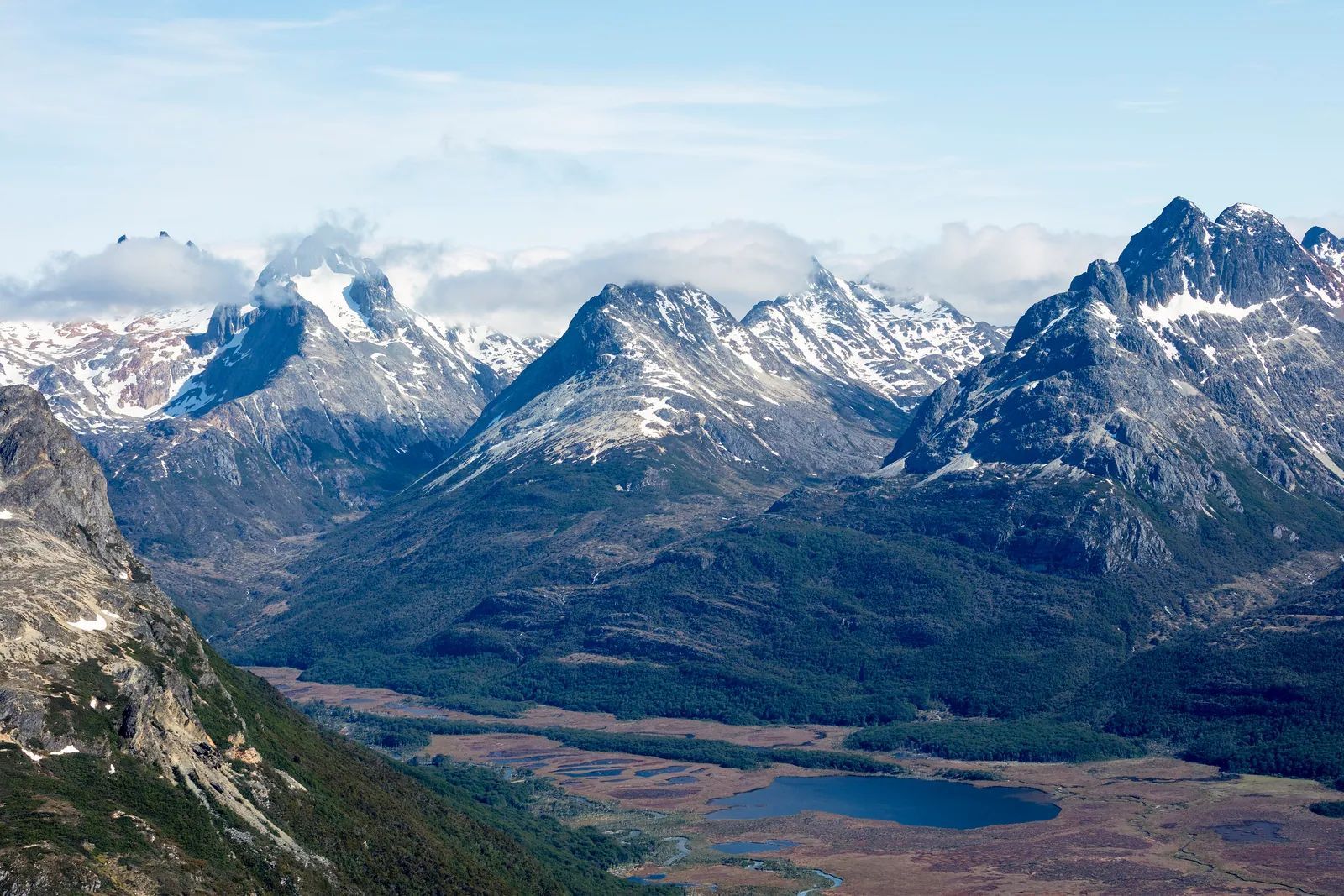
Patagonia is less a country than a mood — a thin, wind-scoured wedge of land at the bottom of the Americas where the Andes finally break apart into fjords, ice fields and islands. It is shared between Chile and Argentina, and for most travellers its centre of gravity is Torres del Paine, the Chilean national park whose three granite towers have become the symbol of the whole region.
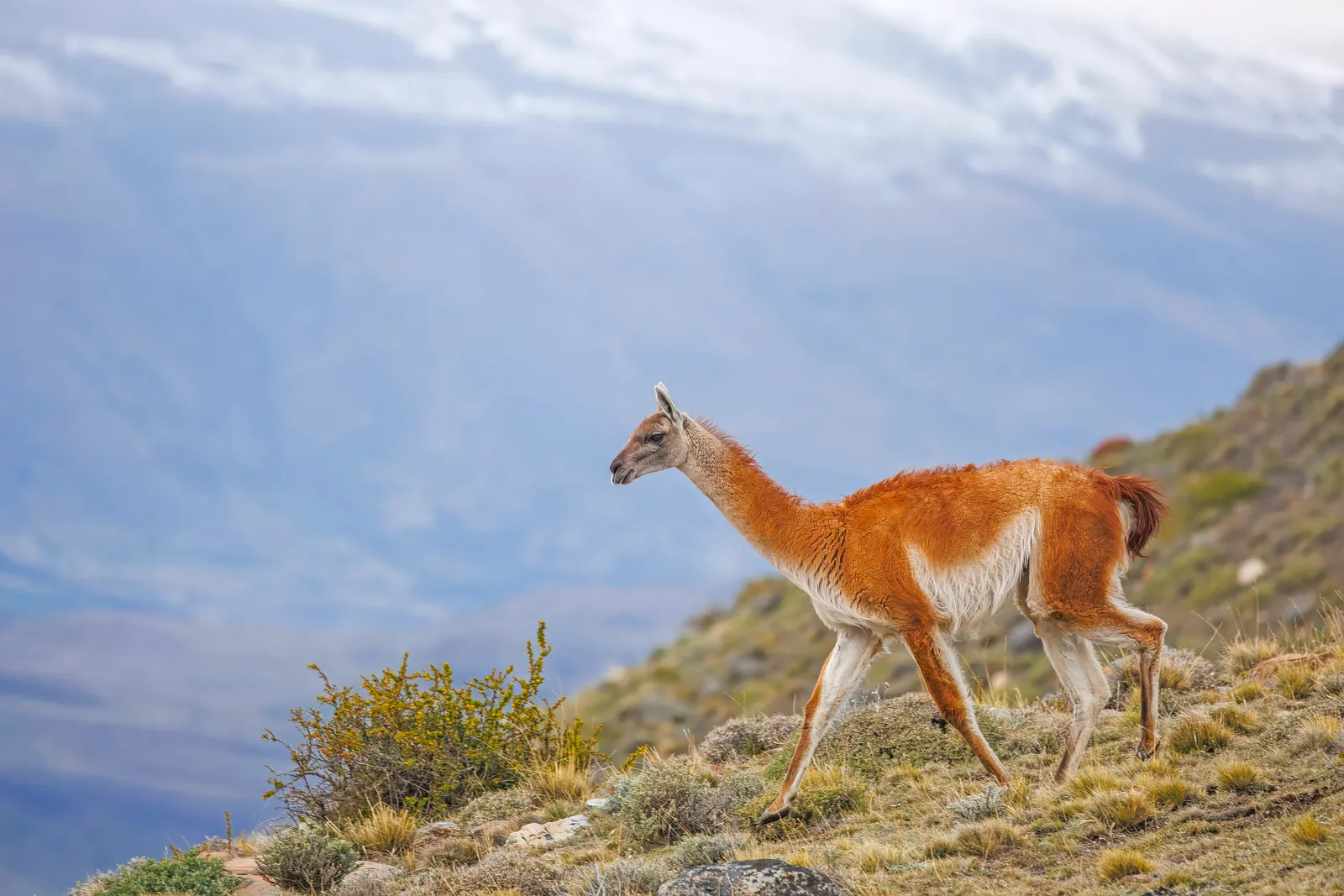
What makes Patagonia extraordinary is its scale and its emptiness. Glaciers calve into milk-blue lakes; condors ride thermals over guanaco herds; and the wind — the famous Patagonian wind — is a constant companion that travellers either learn to love or never forget. The good news is that you can experience all of it from warm, well-run lodges, returning each evening from the trail to a fire and a glass of Carmenère.
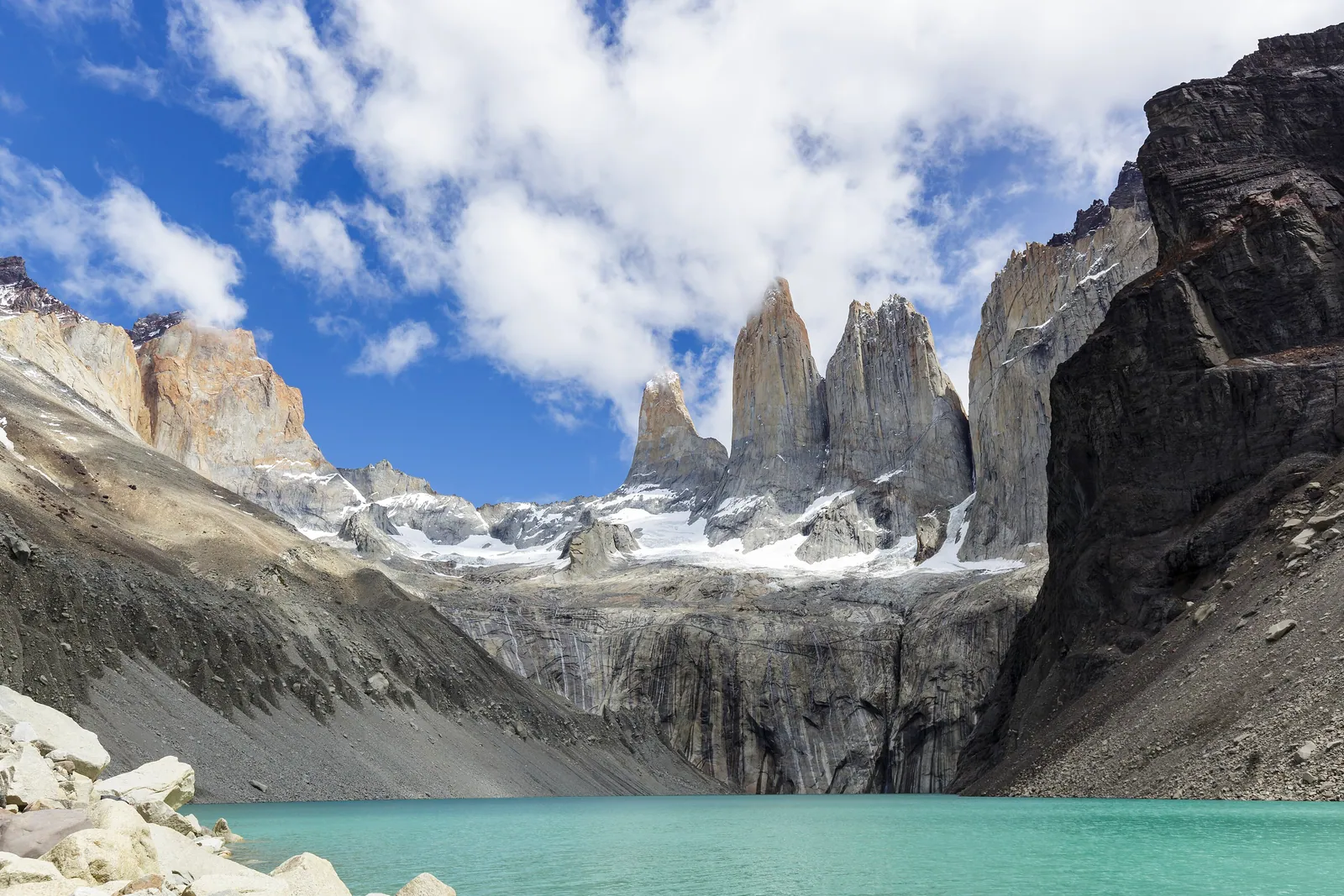
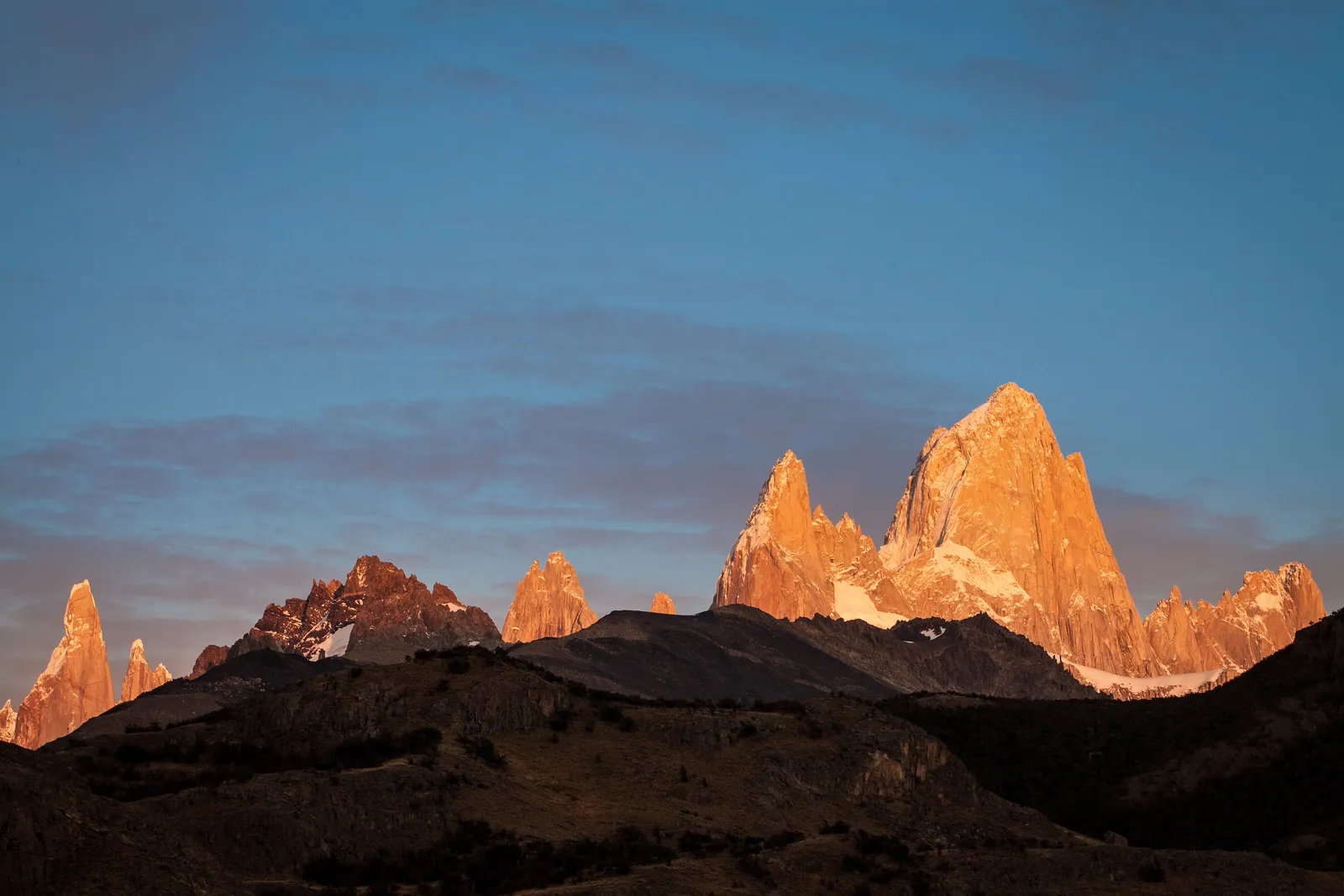
The classic day hike climbs through forest and moraine to a glacial lake directly beneath the three Torres — best reached for sunrise, when the granite turns molten orange.
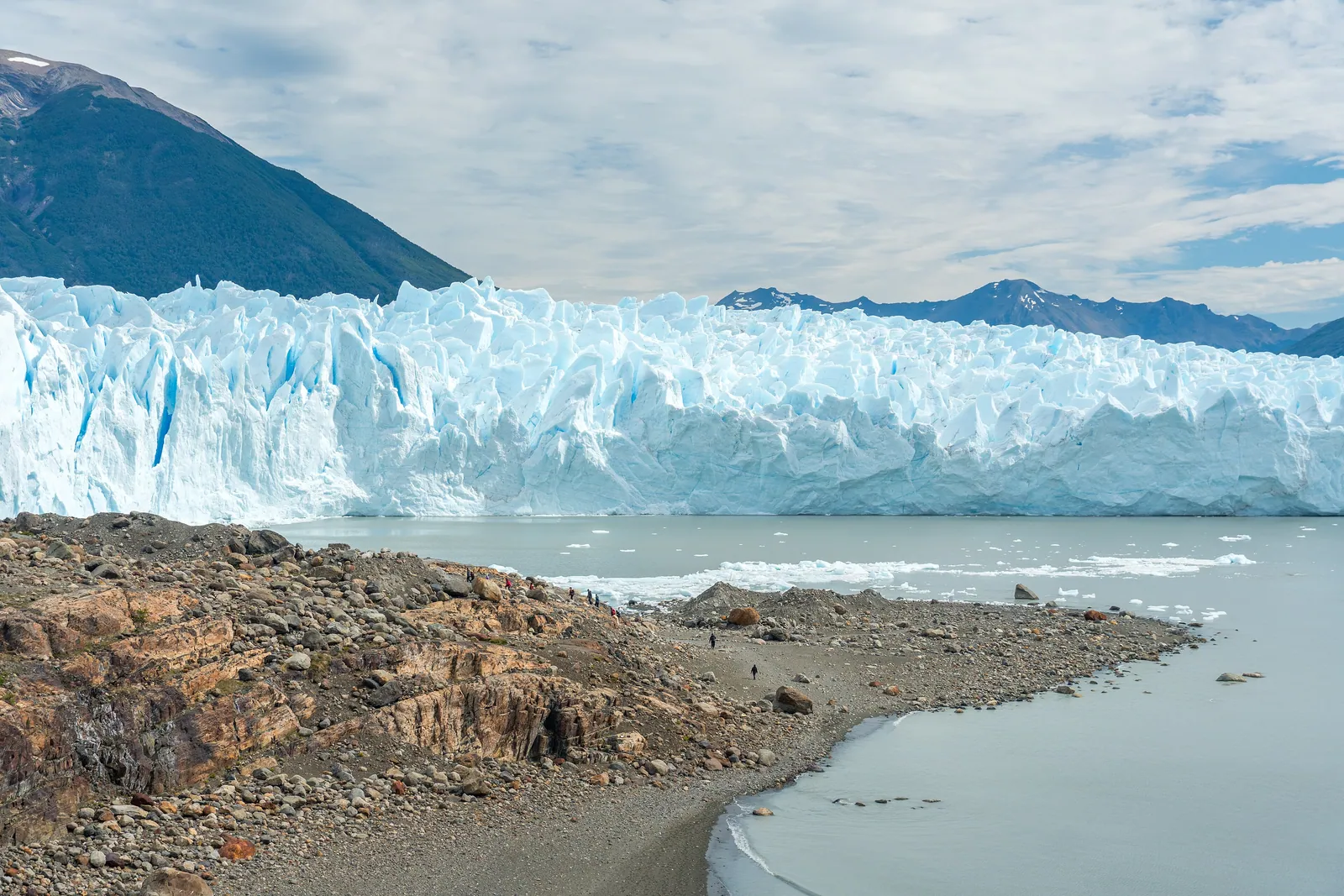
A wall of ice flowing off the Southern Patagonian Ice Field. You can hike to viewpoints, kayak among the icebergs, or walk on the glacier itself with guides.
In Argentine Patagonia, the Perito Moreno glacier is one of the few on Earth still advancing — and it regularly calves house-sized blocks of ice with a sound like thunder.
A short film to set the scene — sourced from YouTube and credited to its maker.
Hand-picked places to sleep, from the iconic to the characterful — each chosen for position as much as polish.
The original luxury lodge inside Torres del Paine, on a private spit of land facing the Cuernos. The all-inclusive model covers daily guided explorations.
A low, sculptural lodge that seems to grow out of the steppe, with floor-to-ceiling views of the massif and a superb spa.
Sustainable geodesic domes in the heart of the park — the most characterful way to sleep close to the towers without sacrificing comfort.
The sights that earn their fame — and a few the crowds miss.
The signature Torres del Paine day hike — roughly 19 km return, climbing to the glacial lake beneath the three towers. Demanding but achievable for fit walkers.
A hanging valley between the Cuernos and the ice field, ringed by avalanche-prone walls. The central day of the W trek and many travellers’ favourite.
The park’s great river of ice. Viewpoints are an easy walk; kayaking among the bergs and guided ice-walks are unforgettable add-ons.
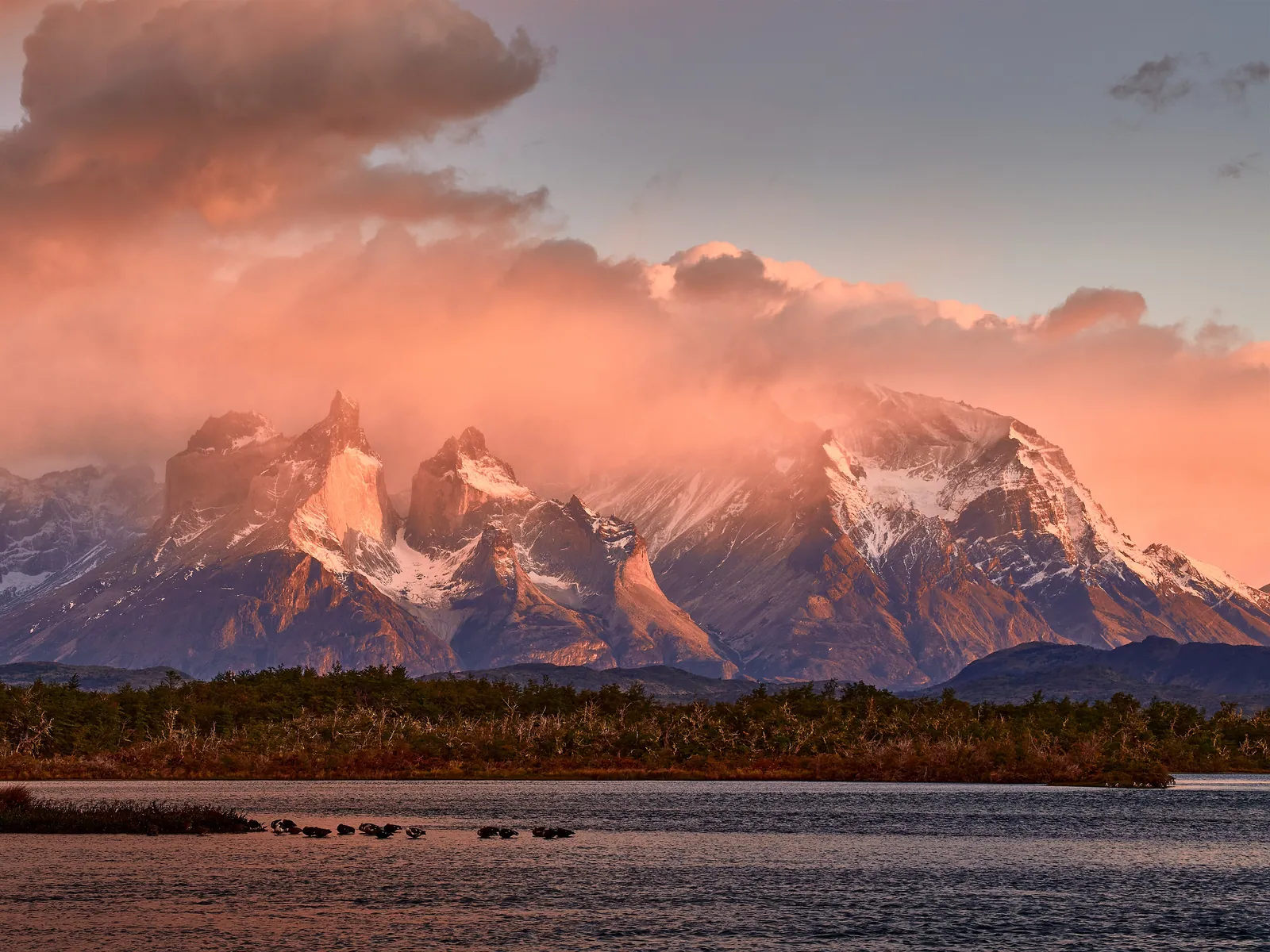
A thundering waterfall between two lakes and the postcard view of the Cuernos del Paine — accessible to everyone, in under an hour on foot.
From landmark restaurants to the small rooms only locals mention.
Daily-changing menus built around Patagonian lamb, southern hake and Chilean wine — the best table inside the park.
In Puerto Natales, a restaurant built from shipping containers serving the region’s prized king crab (centolla) at its freshest.
An improbable, much-loved Puerto Natales fusion of East African spice and Patagonian produce — the town’s standout dinner.
| Location | Magallanes Region, southern Chile — and across the border, Argentine Patagonia |
|---|---|
| Park | Torres del Paine National Park, 1,810 km², established 1959 |
| Status | UNESCO Biosphere Reserve since 1978 |
| Signature treks | The W (around 80 km, 4–5 days) and the O Circuit (around 110 km, 7–9 days) |
| Gateway town | Puerto Natales, Chile — about two hours from the park |
| Wildlife | Guanaco, puma, Andean condor, huemul deer, lesser rhea |
Patagonia is a chapter of Andes to Antarctica.
The Patagonian summer, from November to March, is the main season — long days, the most settled weather, and all trails and ferries operating. December to February is warmest and busiest. Shoulder months, October and April, bring autumn colour or spring snow, fewer people, and a real chance of weather closing some routes.
The W trek is the classic route through Torres del Paine — roughly 80 kilometres over four to five days, taking in the three signature sights: the base of the towers, the French Valley and Grey Glacier. The O Circuit adds the remote, quieter back side of the massif, making a full loop of about 110 kilometres over seven to nine days.
No. While the trails have campsites and refugios, Viajes Globales travellers walk the routes by day and return to comfortable lodges or domes each evening. You can experience the entire W without ever carrying a tent or a heavy pack.
Genuinely windy. In spring and summer, gusts on exposed sections can exceed 100 km/h, which is part of the region’s character. Trails are routed and timed to manage it, lodges are sheltered, and a windproof outer layer is the single most important thing to pack.
Yes, and it is well worth it. Torres del Paine in Chile and El Calafate with the Perito Moreno glacier in Argentina are about five hours apart by road, with a straightforward border crossing. Most of our Patagonia itineraries combine the two.
Travel here as a chapter of a grand journey, or as a trip of its own. We will tailor it to your dates and pace.