Kachi Lodge
Luxury domes · €€€€Six geodesic suite-domes raised on a deck at the foot of the Tunupa volcano — the most comfortable and characterful way to wake up on the salar.
20°08′S 67°29′W
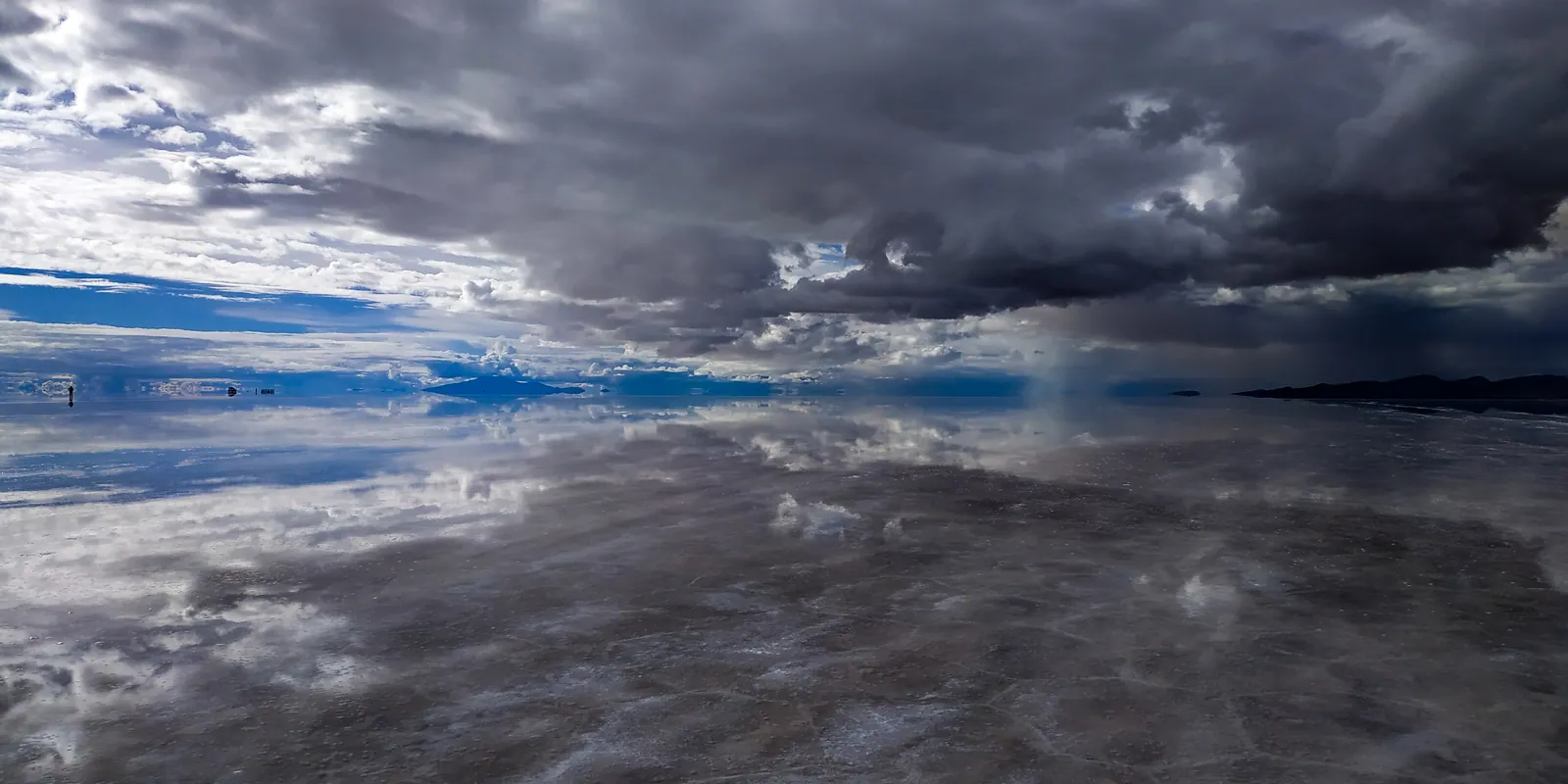
The Salar de Uyuni is the largest salt flat on Earth, covering about 10,582 square kilometres of south-western Bolivia at an altitude of 3,656 metres. It is the dried bed of a prehistoric lake, and after rain a thin sheet of water turns its surface into the world’s largest natural mirror.
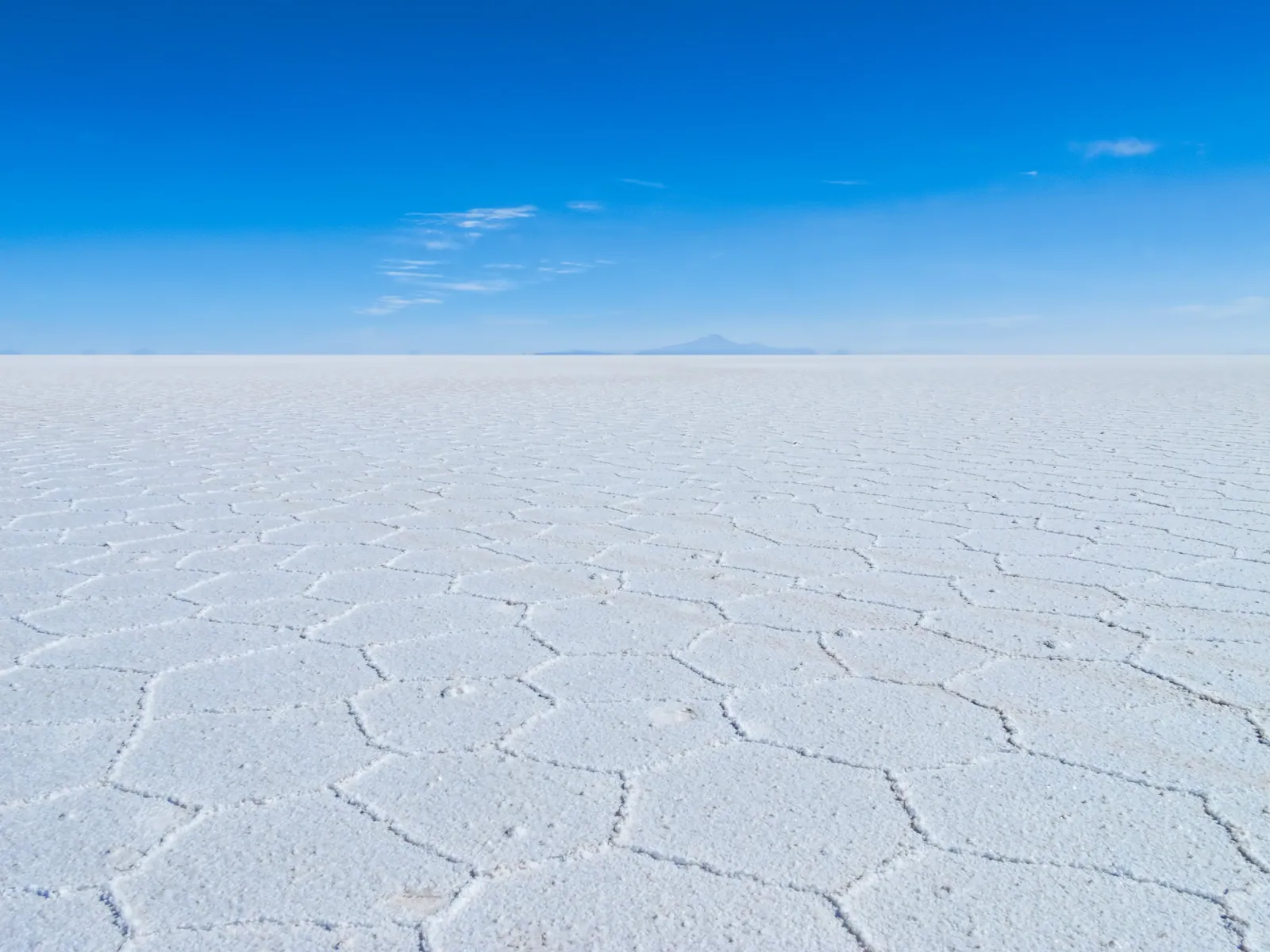
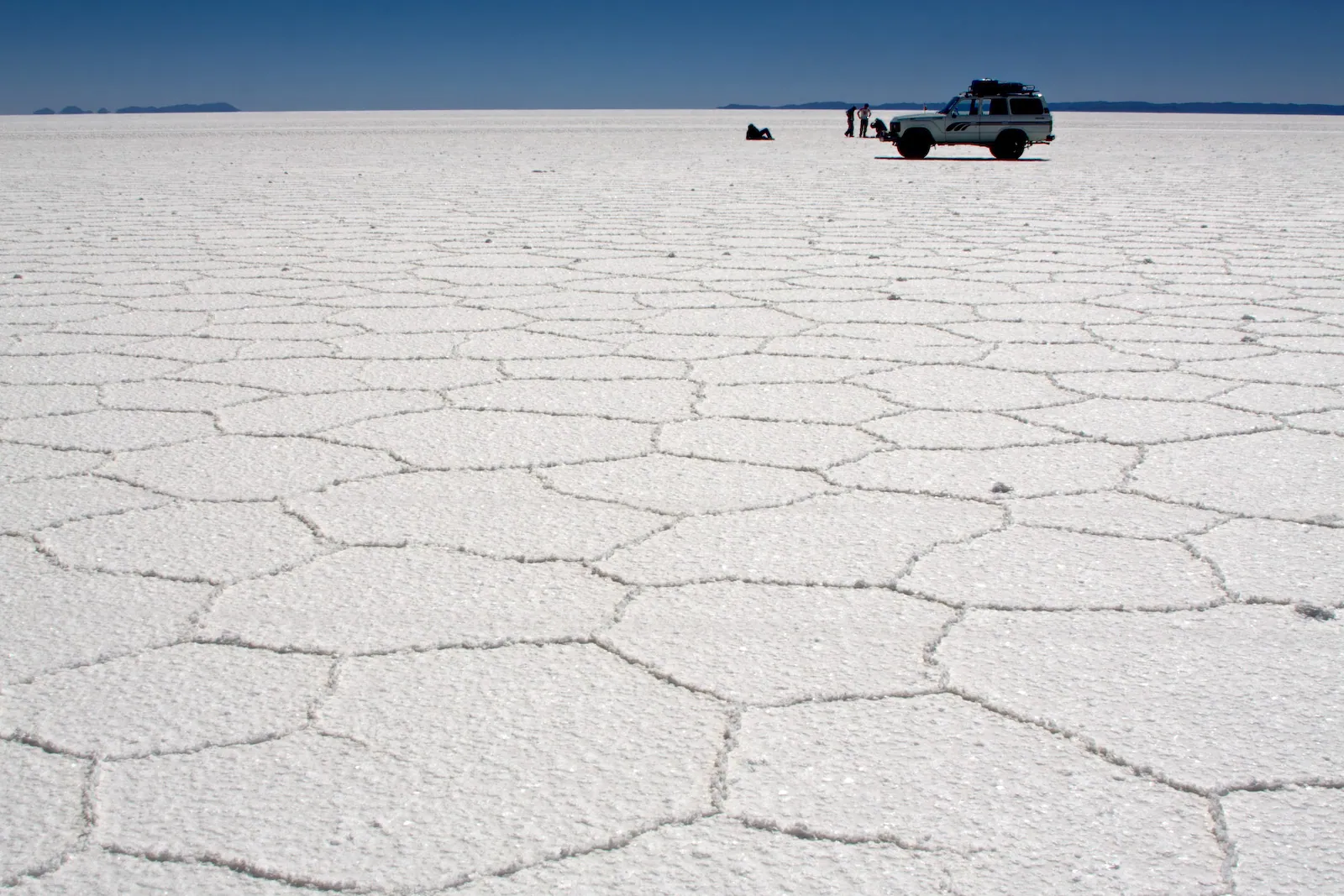
There is no other landscape quite like the Salar de Uyuni. It is a perfectly flat, blinding-white plain the size of a small country, sitting more than three and a half kilometres above sea level on the Bolivian altiplano. In the dry season it cracks into a honeycomb of salt hexagons; in the wet season a few centimetres of water settle on top and turn the entire salar into a mirror so complete that the horizon disappears and travellers appear to walk through the sky.
Beyond the spectacle, the salar is a working landscape — quarried for salt, and holding one of the largest lithium reserves on the planet beneath its crust. A visit usually pairs the flats with the surreal country to the south: the cactus-covered Incahuasi island, a steam-and-mineral desert of coloured lagoons, flamingos and geysers in the Eduardo Avaroa reserve.
From roughly December to April, a thin layer of water turns the salar into a flawless mirror. Sunrise and sunset here are among the most surreal sights on Earth.
A rocky outcrop in the middle of the white, covered in giant Trichocereus cacti centuries old — the strangest desert island you will ever stand on.
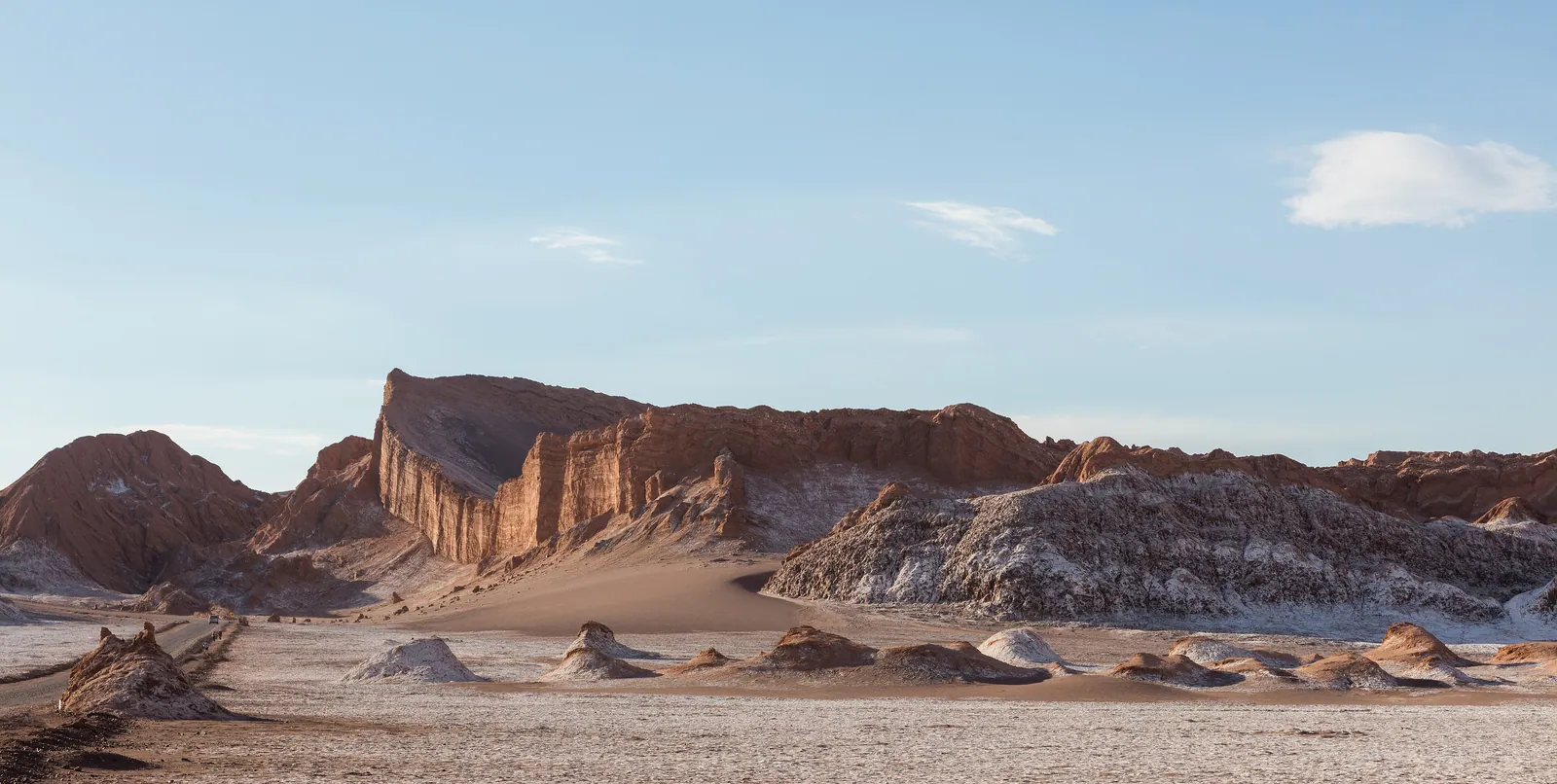
South of the salar, the Eduardo Avaroa reserve holds the blood-red Laguna Colorada and the green Laguna Verde, ringed by three species of flamingo.
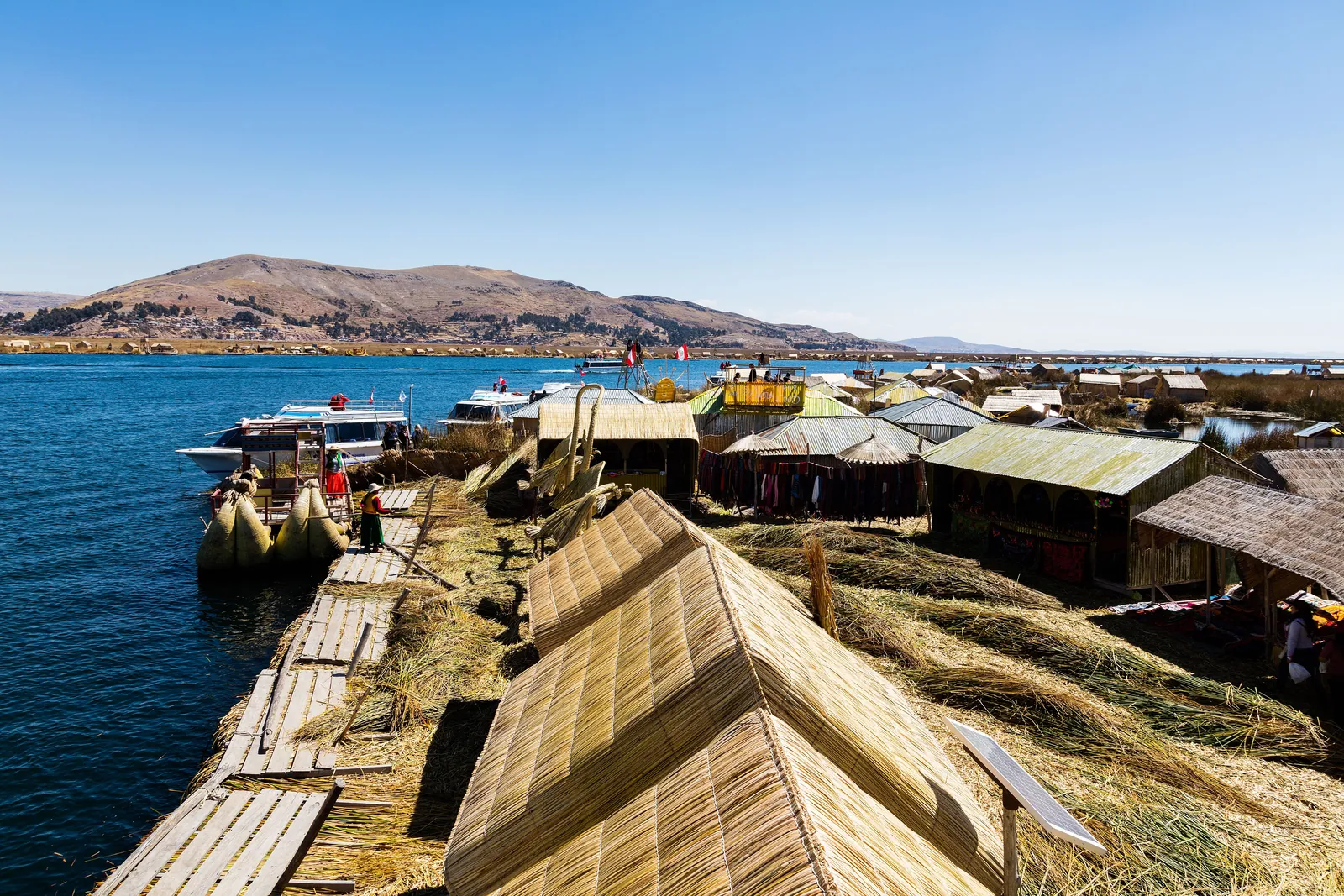
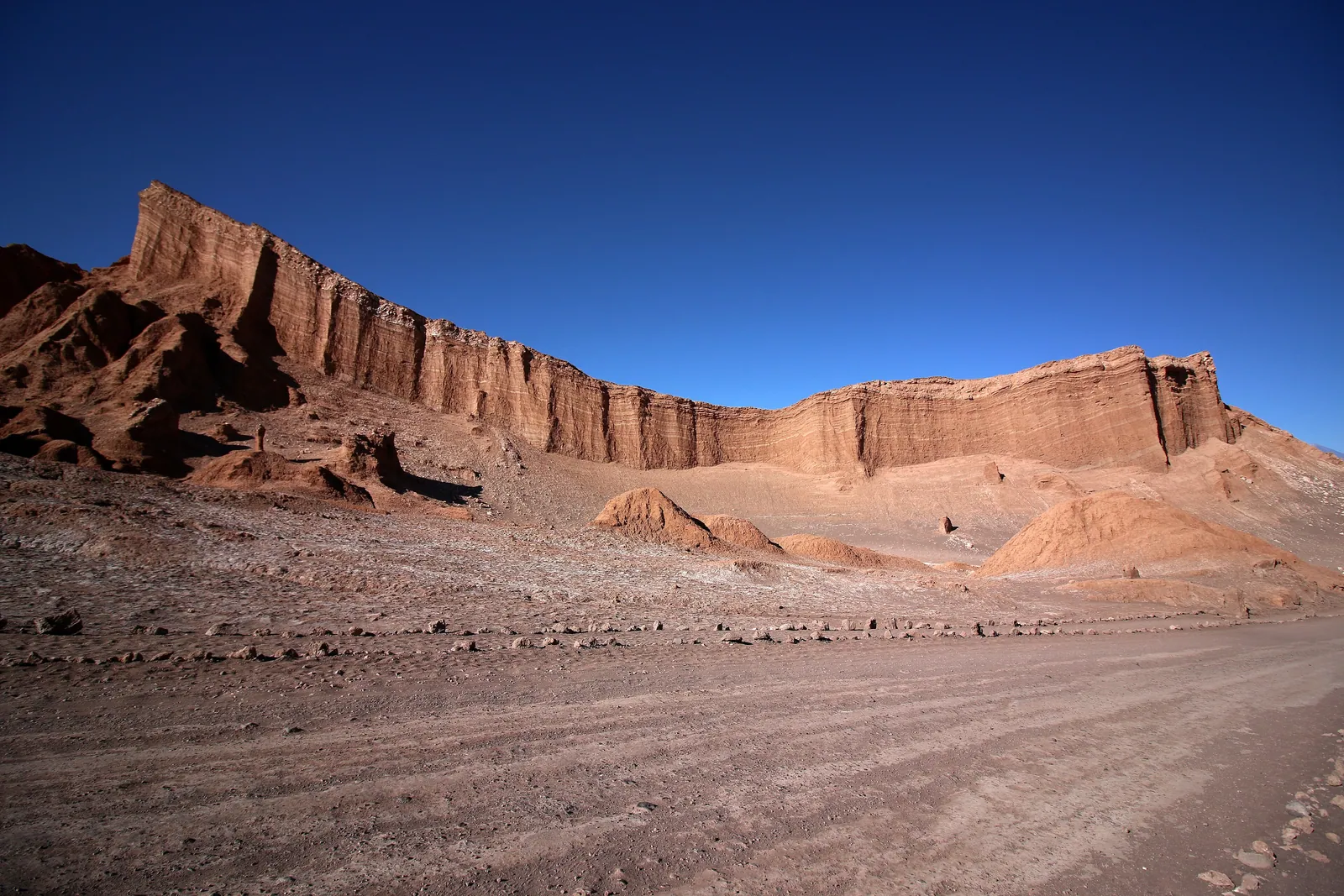
A short film to set the scene — sourced from YouTube and credited to its maker.
Hand-picked places to sleep, from the iconic to the characterful — each chosen for position as much as polish.
Six geodesic suite-domes raised on a deck at the foot of the Tunupa volcano — the most comfortable and characterful way to wake up on the salar.
The original hotel built almost entirely of salt blocks — walls, floors, furniture — with a salt-domed spa and wide views over the flats.
A larger salt-built hotel set slightly above the flats, with panoramic windows that make the most of sunrise over the white.
The sights that earn their fame — and a few the crowds miss.
A coral-rock island in the centre of the salar, studded with giant cacti and laced with short walking trails and 360-degree views over the white.
The high desert south of the salar — Laguna Colorada, Laguna Verde, the Sol de Mañana geysers and the wind-carved Árbol de Piedra.
On the edge of Uyuni town, the rusting hulks of 19th-century steam locomotives abandoned when the mining boom collapsed.
The dormant volcano on the salar’s northern rim — climb partway for the widest possible view of the flats, and visit the nearby mummy caves.
From landmark restaurants to the small rooms only locals mention.
Contemporary Bolivian cooking under a dome on the salt, developed with influence from La Paz’s acclaimed Gustu restaurant.
A reliable, warm dinner in Uyuni town — quinoa, llama steak and Andean soups to take the edge off the altiplano cold.
An improbable and beloved Uyuni institution inside the Toñito Hotel — genuinely good wood-fired pizza at 3,600 metres.
| Location | Potosí Department, south-western Bolivia, on the altiplano |
|---|---|
| Size | About 10,582 km² — the largest salt flat in the world |
| Altitude | 3,656 metres (11,995 feet) above sea level |
| Origin | The dried bed of the prehistoric Lake Tauca |
| Mirror effect | After rain, roughly December to April |
| Gateway | Uyuni town — reached by flight or overnight train from La Paz |
Salar de Uyuni is a chapter of Andes to Antarctica.
The mirror effect happens in the wet season, roughly December to April, when rain leaves a thin sheet of water on the salt. The effect is most reliable from January to March. Outside that window, from May to November, the salar is dry and you see the classic white hexagonal salt crust instead.
The salar is reached from the town of Uyuni. There are daily flights from La Paz (about 50 minutes) and a slower but scenic overnight train. Some travellers arrive overland on a three-day 4x4 route from San Pedro de Atacama in Chile, crossing the coloured-lagoon deserts on the way.
It can be. The salar sits at 3,656 metres and the deserts to the south rise above 4,500 metres. Spend a couple of days acclimatising in La Paz or the Atacama beforehand, take it slowly on arrival, drink plenty of water, and tell us in advance if you have any heart or respiratory conditions.
A single full day captures the salt flats themselves, including Incahuasi Island and a sunset. To include the spectacular coloured lagoons, geysers and flamingos of the Eduardo Avaroa reserve to the south, allow three days — which is also the classic overland route to or from Chile.
Beneath its crust, the Salar de Uyuni holds one of the largest lithium reserves on Earth — a metal essential to modern batteries. It is also a critical breeding ground for flamingos and a key calibration target for Earth-observation satellites, because its surface is so vast, flat and bright.
Travel here as a chapter of a grand journey, or as a trip of its own. We will tailor it to your dates and pace.