Singita Grumeti
Safari lodge · €€€€A celebrated cluster of lodges and camps on a private reserve bordering the park, where the western herds pass and conservation funds the land itself.
2°20′S 34°50′E
Serengeti National Park is a vast protected savanna in northern Tanzania, a UNESCO World Heritage Site, famous as the stage of the Great Migration of roughly two million wildebeest, zebra and gazelle that circle continuously between the Serengeti and Kenya's Maasai Mara. Spanning some 14,750 square kilometres of plains, woodland and granite kopjes, it holds one of the densest concentrations of large predators on Earth.
The Serengeti is less a place than a rhythm. Its name comes from the Maasai word siringet — “the land that runs on forever” — and from a vehicle on the open plains the horizon does exactly that, an unbroken line of gold grass under an enormous sky. Beneath that stillness the ecosystem is in constant motion: the herds following the rains, the predators following the herds, the whole machinery of an African savanna working as it has for well over a million years.
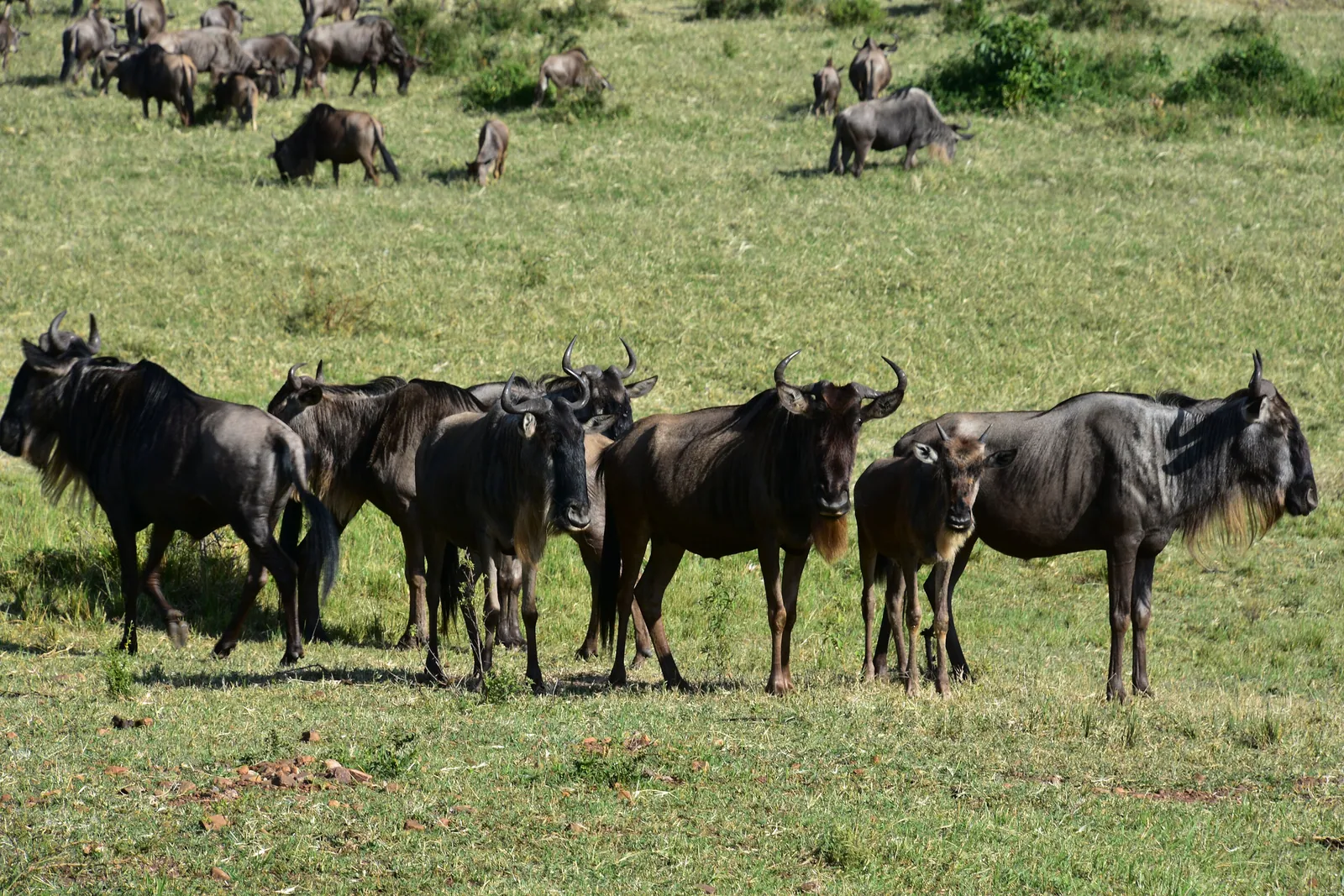
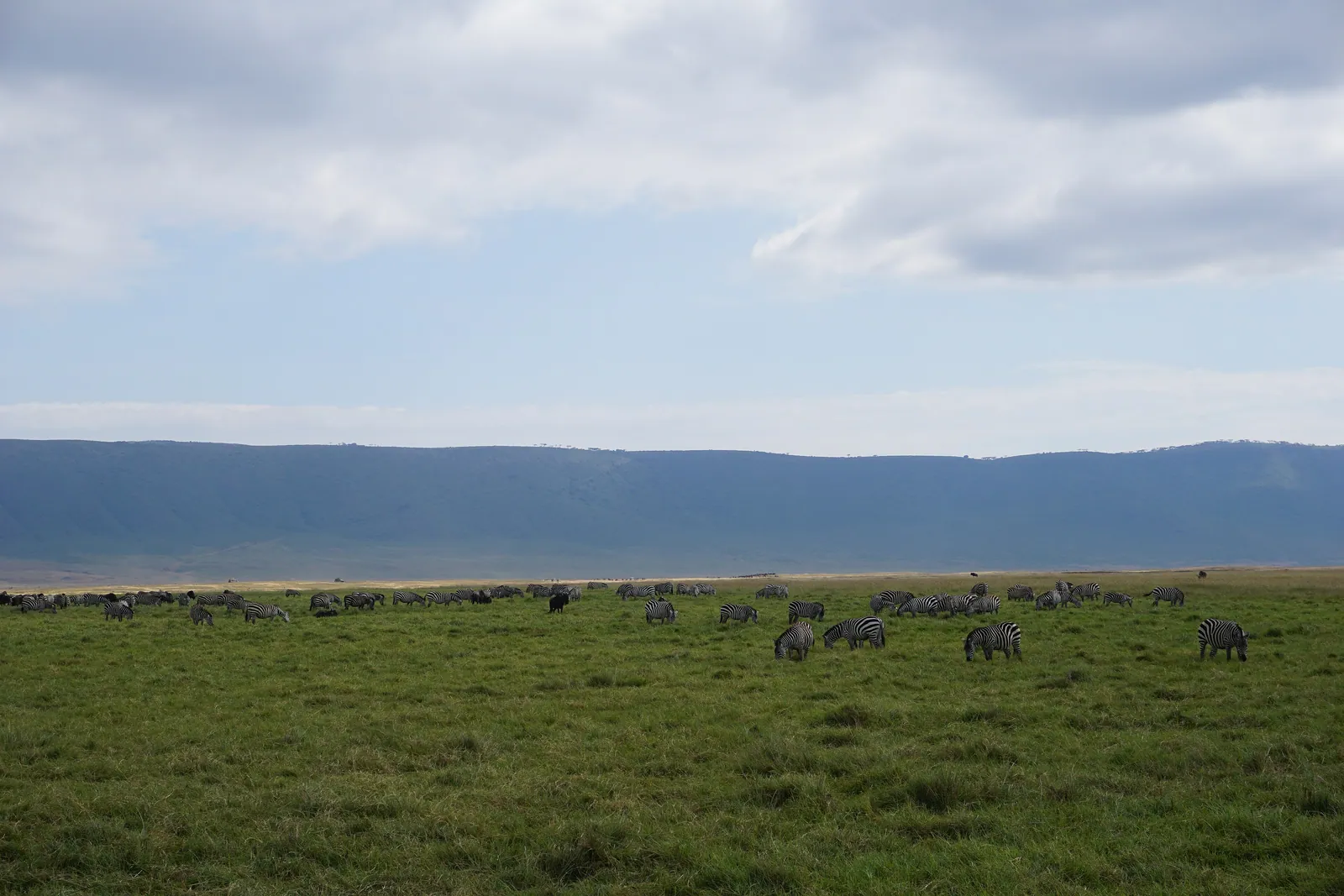
What sets the Serengeti apart is not a single sight but a continuous, living spectacle. Roughly 1.3 million wildebeest, joined by several hundred thousand zebra and gazelle, move clockwise through the year — calving on the southern short-grass plains around February, trekking north through the western corridor, and braving the crocodile-filled Mara and Grumeti rivers between July and October. Travel slowly here and you stop chasing checklists. You learn to read the grass, the wind and the alarm calls, and the plains begin to reveal themselves.
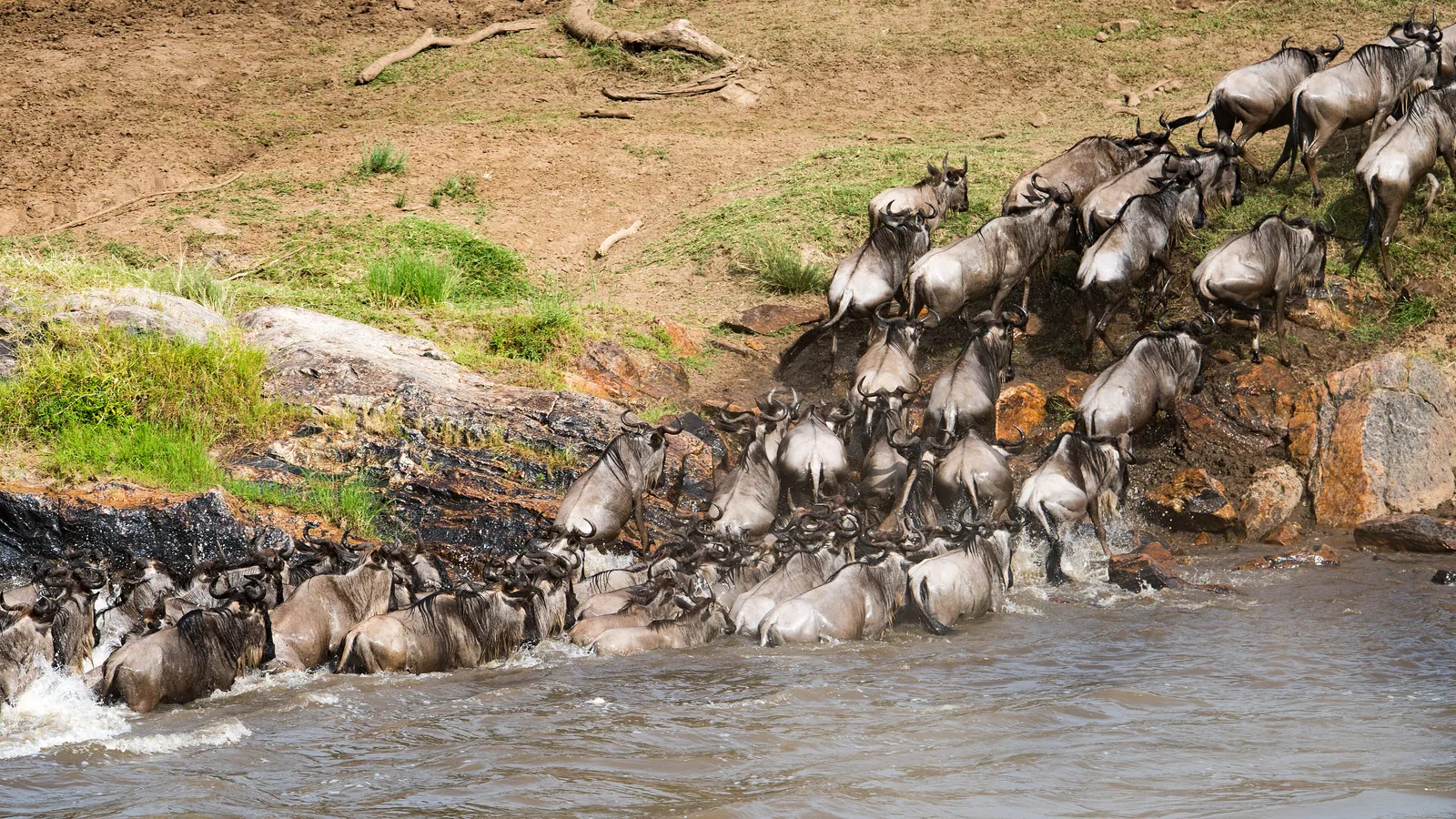
Between July and October the herds mass on the Mara and Grumeti banks, then plunge across in a chaos of dust, current and crocodiles — the migration's most charged moment.
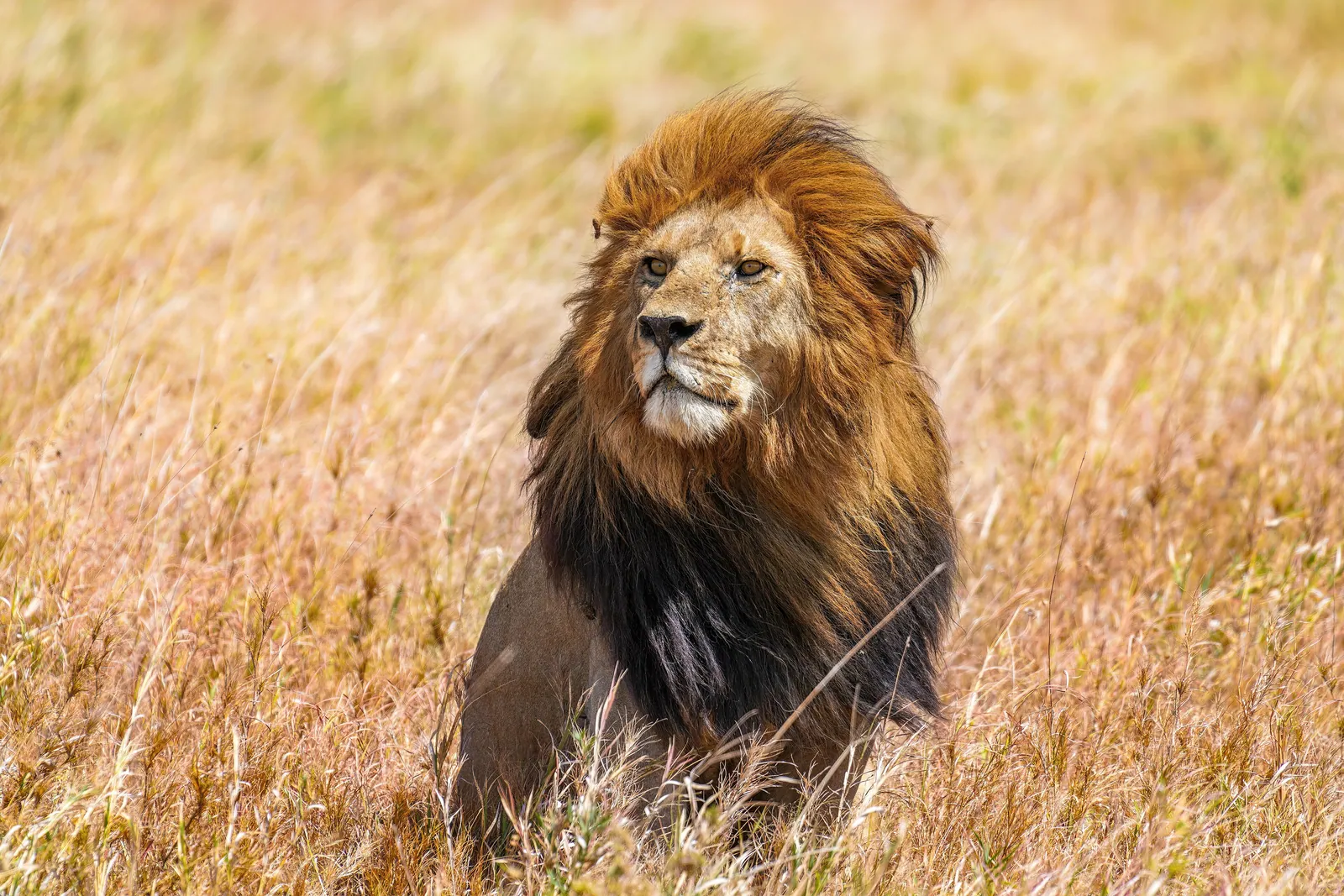
The river-fed Seronera Valley holds resident lion prides, leopards draped in sausage trees and cheetahs hunting the plains — exceptional big-cat viewing all year.
Lift off at first light and drift silently over the plains as the sun comes up, the herds moving below — followed by a Champagne bush breakfast on the grass.
A short film to set the scene — sourced from YouTube and credited to its maker.
Hand-picked places to sleep, from the iconic to the characterful — each chosen for position as much as polish.
A celebrated cluster of lodges and camps on a private reserve bordering the park, where the western herds pass and conservation funds the land itself.
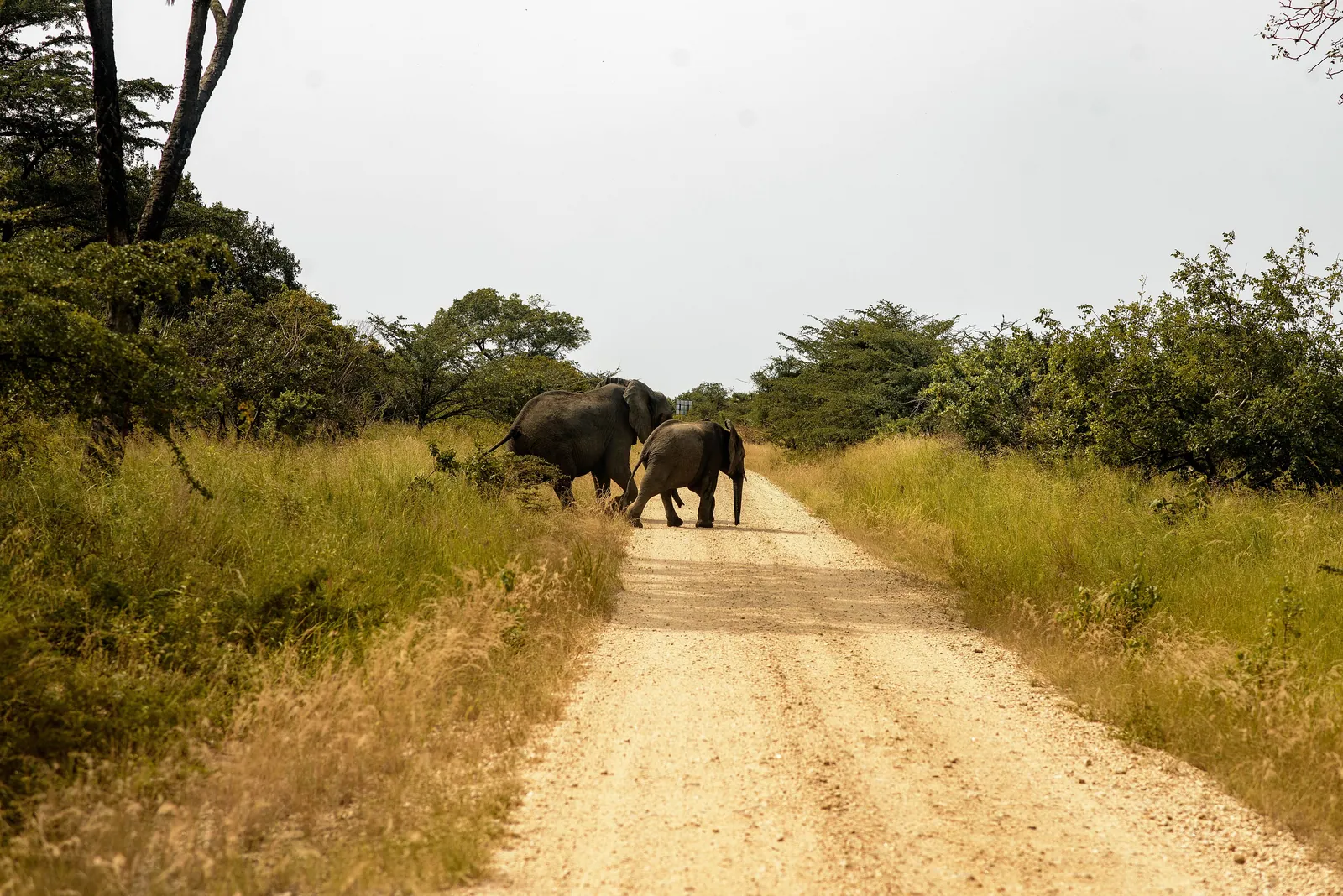
A polished lodge built around a waterhole that elephants visit by day — an easy, comfortable base for first-time safari travellers in the central plains.
A classic mobile camp that moves several times a year to stay close to the herds — canvas tents, hot bucket showers and the sounds of the plains at night.
The sights that earn their fame — and a few the crowds miss.
The continuous circuit of nearly two million animals — culminating in the dramatic Mara and Grumeti river crossings between July and October.
A vast, intact volcanic caldera on the Serengeti's doorstep — a natural enclosure holding lions, elephants, flamingos and endangered black rhino.
The park's well-watered heart, with resident game all year and some of the finest reliable lion, leopard and cheetah sightings in Africa.
A sunrise flight over the plains, drifting low over grazing herds before a celebratory bush breakfast served on the savanna.
From landmark restaurants to the small rooms only locals mention.
Tables and folding chairs set out on the grass after an early game drive — coffee, fruit and hot dishes from a camp box, eaten with the herds in view.
Most meals are taken communally under canvas — a candlelit, multi-course dinner of fresh, often locally sourced cooking, shared with fellow guests and guides.
The day's close: a drink poured from the vehicle on a granite outcrop or plain, watching the light fade and the night shift of the savanna begin.
| Location | Northern Tanzania, bordering Kenya's Maasai Mara |
|---|---|
| Established | Gazetted as a national park in 1951 |
| Famous for | The Great Migration and one of Africa's highest predator densities |
| Recognition | UNESCO World Heritage Site (1981); part of a biosphere reserve |
| Landscape | Short-grass plains, acacia woodland, riverine forest and granite kopjes |
| Gateway | Arusha, via Kilimanjaro International Airport and bush airstrips |
The Serengeti is a chapter of The Great Rift.
Roughly July to October, when the herds reach the Grumeti and especially the Mara River in the northern Serengeti. Crossings are unpredictable and weather-driven — they cannot be scheduled — so basing yourself in the north during these months and allowing several days gives the best chance of witnessing one.
It rewards visitors year-round, but the dry season from late June to October offers the easiest wildlife viewing and the northern river crossings. The southern plains are spectacular from late January to March, during the wildebeest calving. The long rains, around April and May, are quieter and greener but some camps close.
Most travellers fly into Kilimanjaro International Airport near Arusha, then reach the park either by light aircraft to a bush airstrip or by road through the Ngorongoro highlands. Light flights are quicker and reveal the scale of the plains; the drive lets you take in the Crater and Maasai country along the way.
Plan at least three nights inside the park, and ideally four or more. The Serengeti is enormous, and time lets you settle into its rhythm rather than rush between sightings. Many itineraries pair it with two nights at the Ngorongoro Crater for a classic week in northern Tanzania.
For many travellers, yes. A dawn balloon flight offers a silent, aerial perspective on the plains and the herds that no vehicle can match, finishing with a bush breakfast. It is a notable added cost and must be booked ahead, but it is one of the Serengeti's most memorable experiences.
Travel here as a chapter of a grand journey, or as a trip of its own. We will tailor it to your dates and pace.