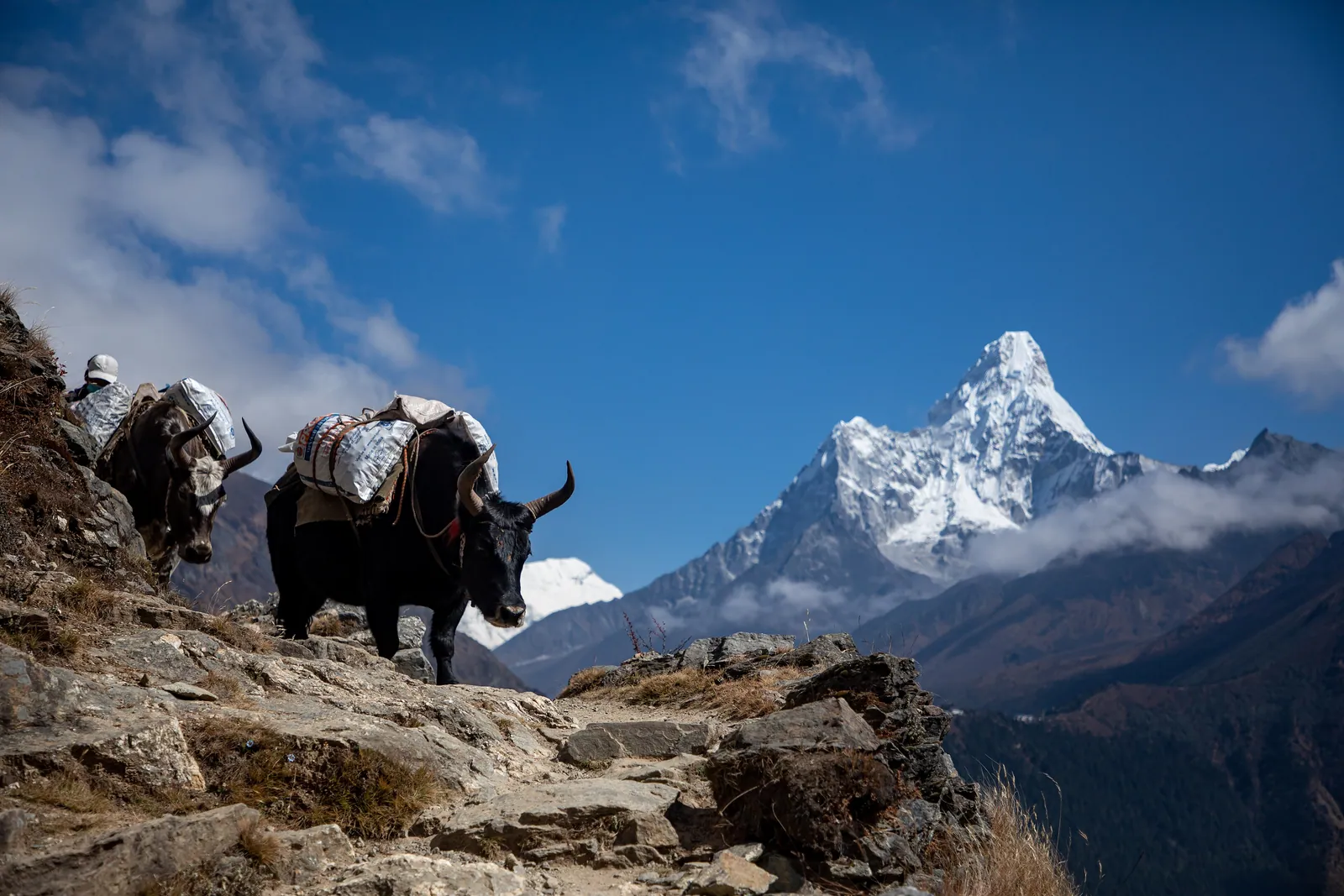
Walking Without Summits: What a Gentle Mountain Journey Is Like
You can travel deep into the high mountains of Asia without ever climbing a peak or facing a technical step. A portrait of the unhurried mountain journey — and why it may be the better way to see the heights.
There is a common assumption that the great mountains belong only to climbers — that to be among the high peaks of Asia you must summit something, suffer for it, and possess hard-won technical skill. It is not true. A gentle mountain journey reaches the heart of the heights on foot and by road, with no climbing, no exposure and no heavy load, and it is open to ordinary, reasonably fit travellers.
This is the kind of mountain travel a Viajes Globales journey is built around. The reward is not a summit photograph but something quieter and, many travellers find, deeper: time spent inside the mountain world at a human pace.
What 'gentle' actually means
A gentle mountain journey is defined by what it leaves out. There is no technical ground — no rope, ice axe or crampons, nothing that requires mountaineering skill. There is no summit objective and therefore no pressure of a weather window or a deadline. The walking is done on established paths and tracks, the daily distances are modest, and your luggage is carried for you, so you walk with only a daypack.
What remains is still genuinely the high mountains: ridge viewpoints, high passes crossed by road, valleys beneath enormous peaks, villages and monasteries at altitude. 'Gentle' describes the manner of travel, not a lesser destination. You reach real heights — simply by walking up to them slowly rather than assaulting them.
The rhythm of an unhurried day
An unhurried mountain day has a shape that the body settles into quickly. You start after a proper breakfast, walk through the cool morning at a pace set deliberately slow — slow enough to talk, to stop, to look — and break for a long lunch. The afternoon is short, and you arrive with light and energy still in hand.
That spare margin is the whole philosophy. It leaves room for the things that make mountain travel memorable: a conversation with a herder, an hour watching cloud move off a peak, an unplanned detour to a monastery. A journey timed to a summit cannot afford these. A gentle one is built around them.
Altitude, paced kindly
The real physical variable in the high mountains is not steepness but altitude — the thinner air of the heights. A gentle journey takes this seriously by pacing the ascent. It climbs in steps, limits how much sleeping height is gained each day, and builds in rest days on arrival into high country, so the body has time to adjust.
On The Long Way East, which reaches the Tibetan plateau and road passes above 5,000 metres, the high sections are approached only after extended acclimatisation lower down, and the passes are crossed by day rather than slept on. Guides carry oximeters and oxygen and monitor every traveller. The altitude is real; the pacing is what makes it comfortable.
Who a gentle journey suits
This style of travel suits a wide range of people: those who love mountains but have no wish to climb, those returning to active travel later in life, those who simply prefer to experience a place rather than conquer it. What it asks is steady aerobic fitness — the ability to walk for several hours on consecutive days — which most people can build in a few months of regular preparation.
It is not, to be honest, for everyone. A traveller whose pleasure lies specifically in technical challenge and summits will find a gentle journey too unhurried. But for the far larger group who want the mountains themselves — the air, the scale, the cultures of the high valleys — without risk or hardship, it is the form of travel that delivers them.
Why slow may be the better way to see the heights
There is a quiet argument that the unhurried mountain journey is not a compromise but an upgrade. A climber on a peak sees the summit; a slow traveller in the valleys sees the mountain — its villages, its weather, its monasteries, the life lived in its shadow. The summit-seeker measures success in metres gained. The slow traveller measures it in things noticed.
This is the conviction behind every Viajes Globales mountain stage. We do not sell summits, and we do not rush. We arrange the heights to be reached gently, savoured, and left without strain — because the mountains, given time, reward attention far more than ambition.
Quick answers
Can I experience the high mountains without climbing or technical skills?
Yes. A gentle mountain journey reaches ridge viewpoints, high passes and valleys beneath great peaks entirely on established paths and roads, with no rope, no climbing and no technical ground. It requires steady aerobic fitness — the ability to walk several hours on consecutive days — but no mountaineering experience. This is how Viajes Globales mountain stages are designed.
How is the altitude managed on a gentle mountain journey?
By pacing. The itinerary climbs in steps, limits the sleeping height gained each day, and includes rest days on arrival into high country so the body can adjust. On The Long Way East, the high passes above 5,000 metres are reached only after extended acclimatisation and crossed by day, with guides carrying oximeters and oxygen and monitoring every traveller.
Who is a gentle mountain journey not suitable for?
It is less suited to travellers whose enjoyment depends specifically on technical mountaineering, summit objectives or hard physical challenge — the unhurried pace will feel too relaxed. It also still requires basic fitness for several hours of walking on consecutive days. For most people who want the mountains without risk or hardship, however, it is an excellent fit.
Let the reading become a route.
When an article sparks something, our planners are the next step. Tell us what you are dreaming of.