Balance and Stability for Uneven Ground
Trails are rarely smooth. Loose rock, tree roots, scree and stream crossings ask for a sense that gyms seldom train: balance. Here is why it matters on a journey, and how to sharpen it before you go.
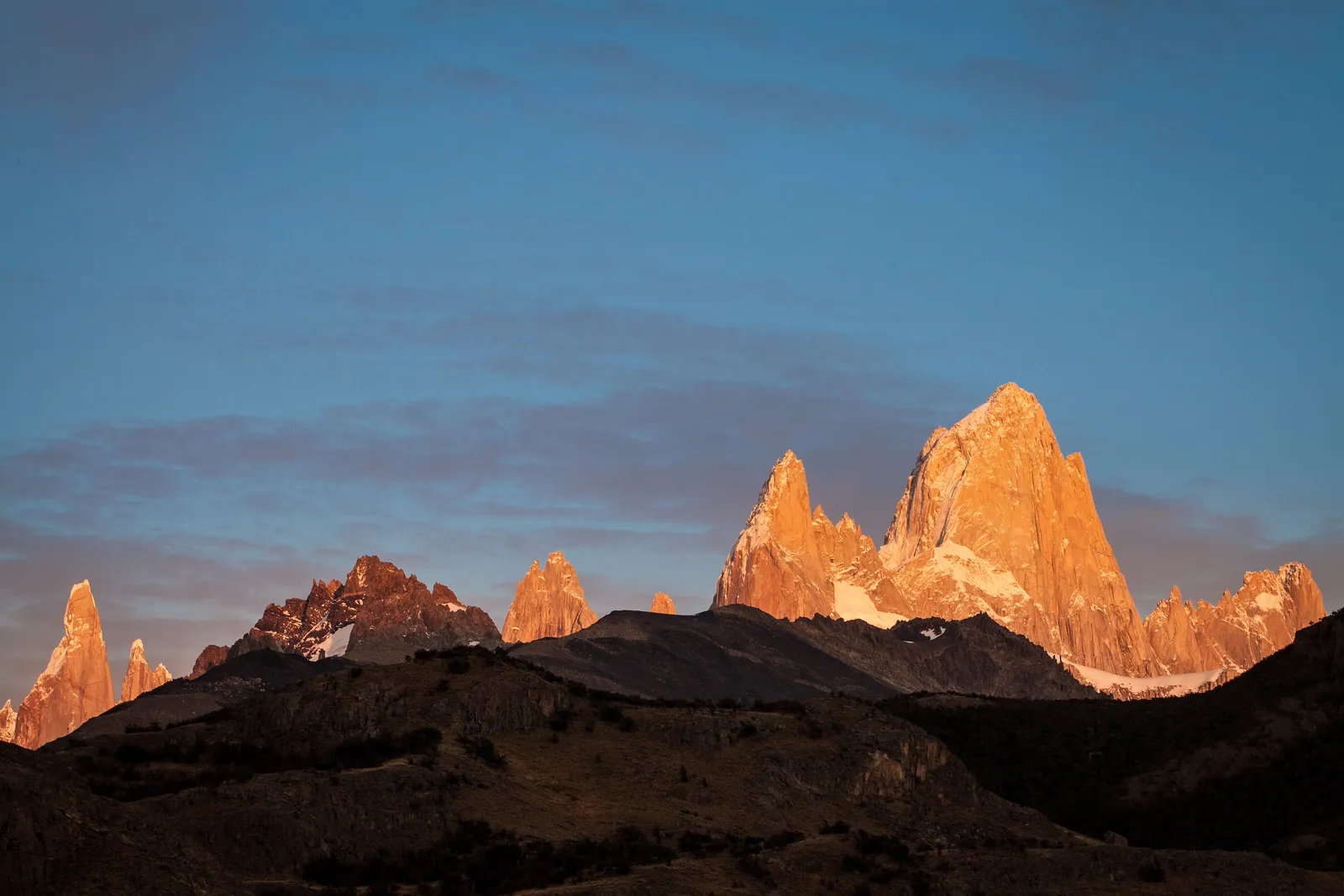
Most preparation for a walking journey concentrates on the engine — the legs, the lungs, the stamina. Yet on the actual trail, a different quality often decides how confident and safe a traveller feels: balance. The paths of Andes to Antarctica, the volcanic ground of The Pacific Arc and the mountain tracks of The Silk Road Reborn are uneven, shifting and three-dimensional, and they reward a body that can correct itself instantly.
Balance is not a fixed gift you either have or lack. It is a trainable skill, built on reflexes that sharpen with practice and fade with neglect — which is why it is worth deliberate attention before a journey, particularly as we get older. This article explains how balance works and offers simple, equipment-free ways to improve it at home. If you are prone to falls or have an inner-ear or neurological condition, raise it with your doctor first.
Why uneven ground demands more than fitness
On a smooth pavement, walking is almost automatic — your body has the pattern memorised and barely thinks about it. On a trail, every footfall is slightly different: a tilted rock, a hidden root, a patch of loose scree, a soft verge. Each one is a small, unplanned challenge to your equilibrium, and your body must detect and correct it in a fraction of a second.
That correction draws on three systems working together: your inner ear, which senses the position of your head; your eyes; and proprioception, the steady stream of feedback from sensors in your muscles, joints and the soles of your feet. The fitter of these systems are, and the better they are coordinated, the more surely you move on rough ground. Pure leg strength and stamina, valuable as they are, cannot substitute for this.
The foundation: single-leg balance
The most useful balance exercise is also the simplest: standing on one leg. Every step you take on a trail is, briefly, a moment of single-leg support, so training that moment directly is time well spent. Begin by standing on one leg on firm ground, holding for as long as you comfortably can, and work towards a steady thirty seconds on each side.
Once that is easy, raise the difficulty progressively. Close your eyes, which removes vision and forces the inner ear and proprioception to do more. Stand on a folded towel, a cushion or a pillow to introduce an unstable surface. Add gentle movement — slow head turns, or passing an object from hand to hand — to mimic the distraction of walking while looking around. Done daily, while waiting for the kettle, this quietly transforms your steadiness.
Dynamic balance: moving over changing ground
Standing balance is the foundation, but trails demand balance in motion. Add exercises that challenge your equilibrium while you move. Heel-to-toe walking — placing each foot directly in front of the other along an imaginary line — trains a narrow, controlled gait. Slow, deliberate lunges in different directions teach your body to stabilise as your centre of gravity shifts.
Step-ups and step-downs onto a low bench, performed with control and a pause at the top, rehearse the up-and-down of a rocky path. As you grow steadier, perform these slightly faster or with a small daypack, because a journey asks for balance while carrying a load. The aim is a body that stays composed not when it is still, but when it is moving over ground that keeps changing beneath it.
Training on real terrain
Exercises at home build the underlying capacity; only real ground builds the real skill. In the weeks before your journey, deliberately walk on the most varied, uneven terrain you can reach — woodland paths threaded with roots, rocky tracks, grassy slopes, shingle, gentle scree. Let your feet and reflexes learn the genuine, unpredictable texture of a trail.
Walk some of this terrain with the daypack you will carry, since a load shifts your balance point and changes how corrections feel. If your journey includes stream crossings or boulder-strewn sections, seek out modest versions to practise on. There is no better preparation for uneven ground than uneven ground itself — repeated until moving over it feels unremarkable rather than precarious.
Footwear, poles and pacing on the trail
Good balance on the day is supported by good equipment and good habits. Well-fitted footwear with a grippy, intact sole and appropriate ankle support gives your feet a stable, sensitive platform. Trekking poles, used properly, turn a two-point stance into a four-point one and are a genuine aid on loose or exposed ground — train with them so their use is instinctive.
Habits matter as much as gear. On uneven ground, slow down: most slips happen when a tired or hurried walker stops placing their feet with care. Look ahead to plan your line, but place your eyes on your feet at the moment you commit to a tricky step. Our guides set an unhurried pace over rough terrain for exactly this reason. Trained reflexes, sound footwear and patient placement together make the most broken trail feel secure.
Quick answers
My balance has got worse with age. Can I really improve it?
Yes. Balance declines with age partly because we stop challenging it, and it responds well to training at any age — research on older adults consistently shows that regular balance exercise improves stability and reduces falls. A few minutes of single-leg and dynamic balance work most days, built up gradually, makes a real and noticeable difference within a few weeks. If you have had falls or feel unsteady, ask your doctor to check for treatable causes first.
Are trekking poles a sign of poor balance?
Not in the least. Trekking poles are standard equipment for experienced trekkers of every ability. On uneven, loose or exposed ground they add two extra points of contact, improving stability and confidence and reducing load on the knees during descents. Using poles is sound practice, not a confession of weakness. If your journey includes rough terrain, we recommend training with them in advance.
What is the single best exercise if I only have time for one?
Single-leg standing, made progressively harder. Start on firm ground with your eyes open, then progress to eyes closed and then to standing on a cushion. It directly trains the moment of single-leg support that every trail step involves, needs no equipment, and can be done in odd minutes through the day. Ideally pair it with regular walking on genuinely uneven terrain, which trains dynamic balance that standing alone cannot.
Let the reading become a route.
When an article sparks something, our planners are the next step. Tell us what you are dreaming of.