Bariloche and the Argentine Lake District: Patagonia's Northern Edge
San Carlos de Bariloche anchors a landscape of glacier-carved lakes, ancient beech forests and snow-capped volcanoes that stretches north through Neuquén Province — one of the most scenically extravagant corners of the Andes.
Stand at the lakeside esplanade of Bariloche and you face a view that still, after thousands of repeat viewings in photographs, manages to surprise: the steely deep-blue of Lago Nahuel Huapi, the dark belt of coihue forest on the far shore, and behind it the snow-covered pyramid of Cerro Tronador — a dormant volcano at 3,491 metres, its flanks trailing the white braids of multiple glaciers. The Alps come to mind immediately and are immediately inadequate as a comparison. The Argentine Lake District is larger, wilder, and denser with the particular silence of a landscape that carries no European memory at all.
The region's two pillars are natural beauty and outdoor recreation, but a third quality distinguishes it from the more-visited Patagonian parks further south: accessibility. Bariloche is a city of over 130,000 people, connected to the rest of Argentina by regular flights and an overnight bus from Buenos Aires, with a restaurant culture and craft beer scene that would hold its own in any South American capital. This combination — serious mountain wilderness within an hour of a very comfortable town — makes the Lake District one of the most rewarding bases in all of Patagonia, and one of the most underestimated by travellers who equate remoteness with quality.
The land: Nahuel Huapi and the national park
Parque Nacional Nahuel Huapi, established in 1934 as Argentina's first national park, covers more than 717,000 hectares of Andean and pre-Andean landscape on both sides of the continental divide. Its centrepiece is the lake of the same name — a fjord-shaped, glacier-carved body of deep cold water stretching more than 100 kilometres from east to west, its shores cutting into finger-bays and peninsulas, its surface changing colour with the light from silver to slate to a deep, saturated blue. The lake holds several islands large enough to support their own ecology; Isla Victoria, accessible by a short boat crossing, carries a stand of arrayan trees — a native myrtle with cinnamon-coloured, spiralling bark that gives the forest the quality of a stage set from another age.
The Circuito Chico — the short circuit — is the classic orientation drive or cycle around the lake's southern shore, passing through villa-and-garden suburbs, stands of cypress and coihue, and several beaches where the water, for a few weeks in summer, is almost warm enough to swim. The longer Circuito Grande adds the Paso Cardinal Samoré crossing into Chile — a border pass through high beech forest that opens onto the Chilean lake district and the town of Osorno on the far side — and is one of the most beautiful overland routes in South America, passable in a day.
The peaks: hiking and climbing above the treeline
The mountains above Bariloche offer a spectrum of alpine experience. Cerro Catedral, 19 kilometres from town, is the most important ski resort in South America by some measures — its vertical drop, lift infrastructure and the sheer quality of its piste skiing place it alongside European mid-tier resorts — and in summer it transforms into a trekking hub, with gondola access to high-alpine terrain and a network of refugios (mountain huts) that allows multi-day walks between huts without carrying a heavy tent. The walk from the Refugio Lynch to Refugio Frey is particularly celebrated: it crosses a pass above the treeline and descends to a cirque lake of intense pale-green colour framed by granite spires.
Cerro Tronador, the region's highest peak and the defining landmark of the landscape, is a full-day excursion on a gravel road along the Río Manso that ends at a car park from which trails lead to the Ventisquero Negro — the Black Glacier, named for the volcanic rock dust that darkens its lower face — and to viewpoints above the multiple glaciers descending from the summit. The sound is as memorable as the sight: the glacier calves small seracs regularly, and the ice-fall echoes down the valley long after the piece has broken. Guided glacier walks on the upper slopes are available for those with appropriate experience.
The forest: coihue, cypress and the temperate south
The forests of the Lake District are Patagonia's most biodiverse, shaped by the same westerly moisture that creates the temperate rainforests of southern Chile. The dominant tree is the coihue (Nothofagus dombeyi), a southern beech that can live several hundred years and reaches heights that give the forest a cathedral quality — tall, pillared, with a canopy that filters light into patterns of green and gold. Mixed with it are the ciprés de la cordillera, the patagonic cypress, and in wetter valleys stands of arrayán so dense and so strange in their spiralling amber bark that they seem transplanted from a fairy tale. The arrayan forest on Isla Victoria is one of the most frequently photographed natural scenes in Argentina.
The forest floor is dense with ferns, mosses and the fierce thorned bush locally called calafate, whose purple-black berries are eaten directly from the branch and have given rise to the regional legend that whoever eats the calafate will return to Patagonia. The bird life of the forest is rich: the black-and-white Magellanic woodpecker, among the largest woodpeckers on the continent, excavates nesting holes in dead coihue trunks; the Patagonian sierra finch and the white-crested elaenia are year-round residents. In autumn, when the southern beeches turn gold and amber, the forest becomes almost unbearably beautiful.
The towns: Bariloche, Villa La Angostura and the lake circuit
Bariloche itself is larger and more urban than most Patagonian destinations, its centre built in an Alpine chalet style — stone, dark timber, gabled roofs — that is partly Swiss and German immigrant heritage and partly deliberate tourist invention from the 1930s. It is the chocolate capital of Argentina, a claim that local chocolatiers take with complete seriousness: the main street, Calle Mitre, holds dozens of shops selling tablets, truffles and hot chocolate of very high quality. The craft beer scene is equally serious, anchored by a handful of taprooms producing Belgian and German-style ales using the pure glacial water of the region — a combination with the chocolate that requires no convincing.
Villa La Angostura, 80 kilometres north along the lake shore, is smaller, quieter and more refined: a resort village of timber architecture set at the point where Lago Nahuel Huapi narrows toward the Correntoso River, with a restaurant culture disproportionate to its size and the trailhead for the Parque Nacional Los Arrayanes — a 12-kilometre return walk along a narrow peninsula of arrayan forest that is one of the most singular short hikes in South America. The larger circuit continues north through Neuquén Province to San Martín de los Andes, another lake town framed by Cerro Chapelco, and to the Lanín National Park, where the perfectly conical Volcán Lanín dominates the horizon with Fuji-like composure.
Crossing into Chile: the Lakes Route and beyond
One of the great overland journeys of South America is the Lakes Route — the Cruce Andino — from Bariloche to Puerto Montt in Chile, a two-day passage combining bus and lake ferries across Lago Nahuel Huapi, Lago Frías, Lago Todos los Santos (the Chilean side, a lake of extraordinary jade-green clarity, ringed by volcanoes) and finally the Reloncaví Estuary into Puerto Montt. The crossing is a classic, operated for over a century in various forms, and the combination of lake light, reflected volcanoes and the gradual transition from Argentine aridity to Chilean rainforest is a sensory experience that has no equivalent on this continent.
The crossing can be done in either direction and is easily combined with the Chilean Lake District's own pleasures — the port town of Puerto Varas on Lago Llanquihue, framed by the Osorno and Calbuco volcanoes; the island of Chiloé to the south, its wooden palafito houses and network of UNESCO-listed churches; and the northern entry to the Carretera Austral for travellers continuing south. The Bariloche region is not a destination to be visited in isolation; it sits at the northern hinge of the most dramatic stretch of the South American Andes, and its connections offer an architecture for a journey that can expand in almost any direction.
When to go and how to read the seasons
The Lake District is rewarding in every season, which is one of its advantages over the more weather-sensitive southern Patagonia. Summer (December to February) is warm, long-dayed and busy, with hiking conditions at their best and the lake water at its most swimmable; it is also the time when Bariloche is fullest and the most popular trails are crowded. Autumn (March to April) brings the transformation of the southern beeches — the lenga and ñire turn scarlet and gold in a display that, in years of slow-arrival winter, can last from late March into May — and the crowds thin noticeably after the school-holiday peak.
Winter (June to September) is ski season, when Cerro Catedral fills with Argentine and Brazilian skiers and Bariloche takes on an après-ski character that is its own kind of lively. Spring (October to November) is the quietest and most intimate period: trails are often snowbound at high altitude but the lower forest is spectacular with wildflowers, and the mountains are still well-dusted with snow above the tree line. Our journeys through the Lake District tend to favor autumn — the light, the colour and the quality of the air in April are among the finest things the southern Andes offer.
Quick answers
How does the Argentine Lake District compare to Torres del Paine or El Chaltén?
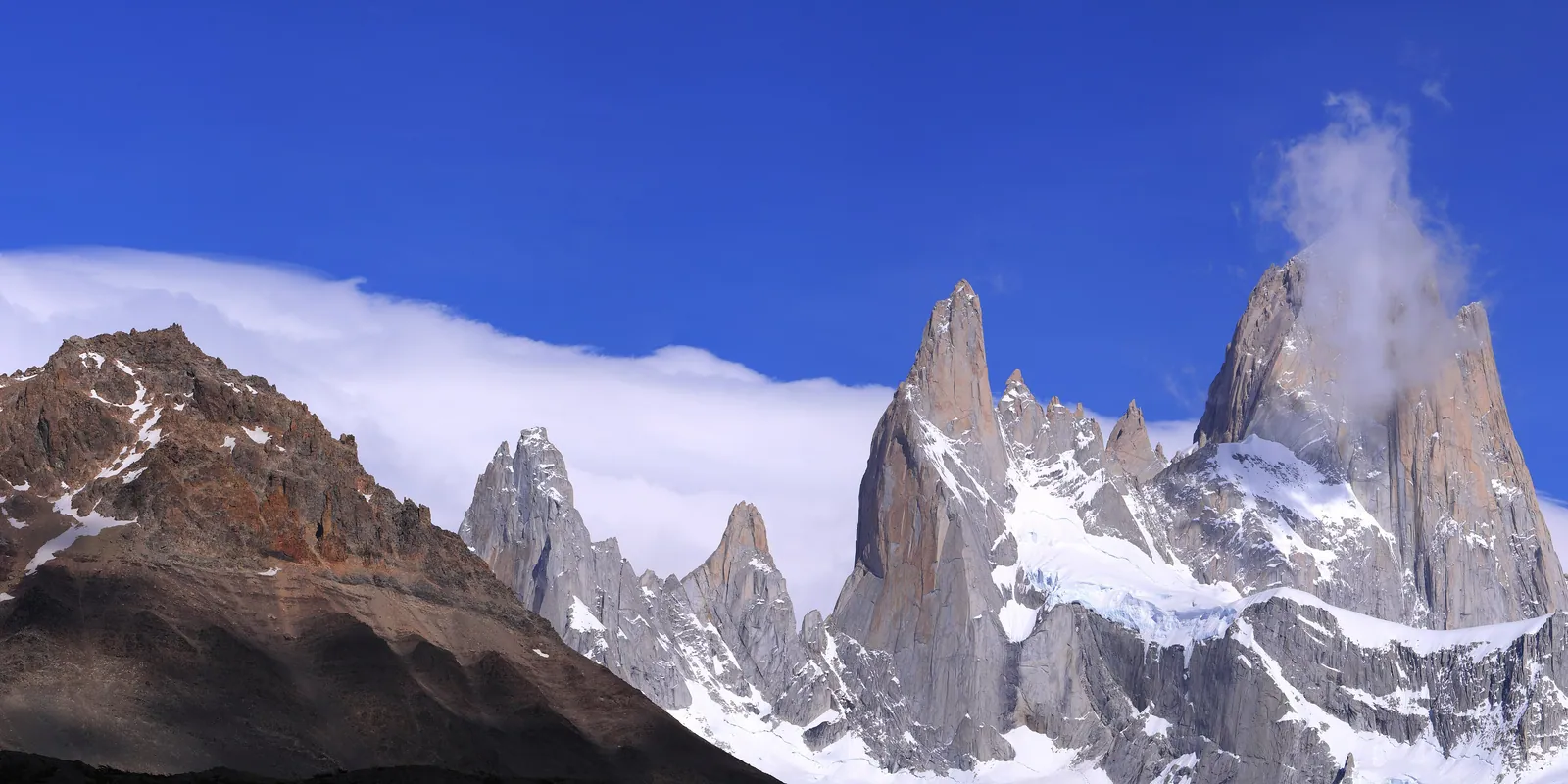
They are complementary rather than interchangeable. Torres del Paine and El Chaltén offer the most dramatic granite peaks in Patagonia and a wilder, more remote experience. The Lake District is gentler, greener and more accessible, with more varied activities (skiing, cycling, lake crossings, forest walks) and a much stronger town infrastructure. Many travellers visit both as part of a Patagonia circuit, typically using Bariloche as a comfortable base to begin or end the journey.
What is the best hiking in the Bariloche area?
The hut-to-hut circuit in the Cerro Catedral massif is the most rewarding multi-day option, with the Refugio Frey circuit (one to two nights) and the Refugio Italiano–Refugio San Martín traverse being the highlights. For day walks, the ascent of Cerro López and the Ventisquero Negro trail below Cerro Tronador are essential. The walk through the arrayan forest on Isla Victoria and the Los Arrayanes circuit from Villa La Angostura are gentler but equally memorable.
Is the Lakes Route crossing to Chile worth doing?
It is one of the classic South American journeys and is worth doing for the scenery alone, particularly the crossing of Lago Todos los Santos with the Osorno Volcano reflected in its jade-green water. Allow two days minimum and book ahead in summer. It is operated by Cruce Andino and includes overnight accommodation in Peulla on the Chilean side. The crossing can be booked as a one-way journey into the Chilean Lake District.
When does the autumn colour peak in the Lake District?
The lenga beech typically turns colour from early April in the higher elevations, moving down through the forest through the month. At valley level, peak colour usually falls between mid-April and early May, though it varies year to year with temperature and the date of first frost. March and early April see the beginnings of the colour at altitude; late April is the most consistently rewarding time for the classic autumn landscape.
Let the reading become a route.
When an article sparks something, our planners are the next step. Tell us what you are dreaming of.