When to Visit Machu Picchu — the Right Month and the Right Hour
Dry season or green season, first light or late afternoon: the timing of your visit shapes the crowds, the weather and the mood of the citadel. A practical guide to choosing both the month and the hour.
There is no single best time to visit Machu Picchu — there is only the time that best fits what you want from it. The decision has two layers: which season you travel in, and which hour of the day you walk through the gate. Each genuinely changes the experience.
In short: the May-to-September dry season offers the most reliable weather and the largest crowds; the green season trades occasional rain for soft light, lush terraces and more breathing room. And within any day, the first and last entry hours are quieter and more atmospheric than the busy late morning.
The dry season: May to September
The Andean dry season runs roughly May through September and is the classic window for Machu Picchu and for trekking. Days are typically bright, skies are clear, and the Inca Trail and high passes are at their most dependable. It is the safe choice for anyone who wants their photographs and their footing assured.
The trade-off is people. June through August is peak season across the whole region; the site is busiest, entry slots and Inca Trail permits sell out earliest, and Cusco itself is at its liveliest. Mornings can be cold — frost is possible at the citadel near dawn — even as the afternoons turn warm and brilliant.
The green season: October to April
From October to April the region is greener, warmer and wetter. Rain becomes steadily more likely, peaking from December to March, and the Classic Inca Trail closes for the whole of February. But rain in this part of the Andes often means dramatic morning cloud burning off rather than all-day downpour.
The rewards are real: the terraces are vivid green, orchids are in flower, the light is soft, and visitor numbers are lower outside the Christmas and Easter peaks. For travellers who can carry good waterproofs and accept some flexibility, the green season can be the more beautiful and more peaceful Machu Picchu.
The shoulder months
April–May and September–October are the quiet sweet spots. They sit on the edges of the dry season, so the weather is usually still good while the crowds have thinned and prices have eased.
These shoulder months are the considered traveller's choice: much of the reliability of high season without its density. Trail permits and entry slots, while still worth booking ahead, are less brutally contested than in July and August.
The right hour of the day
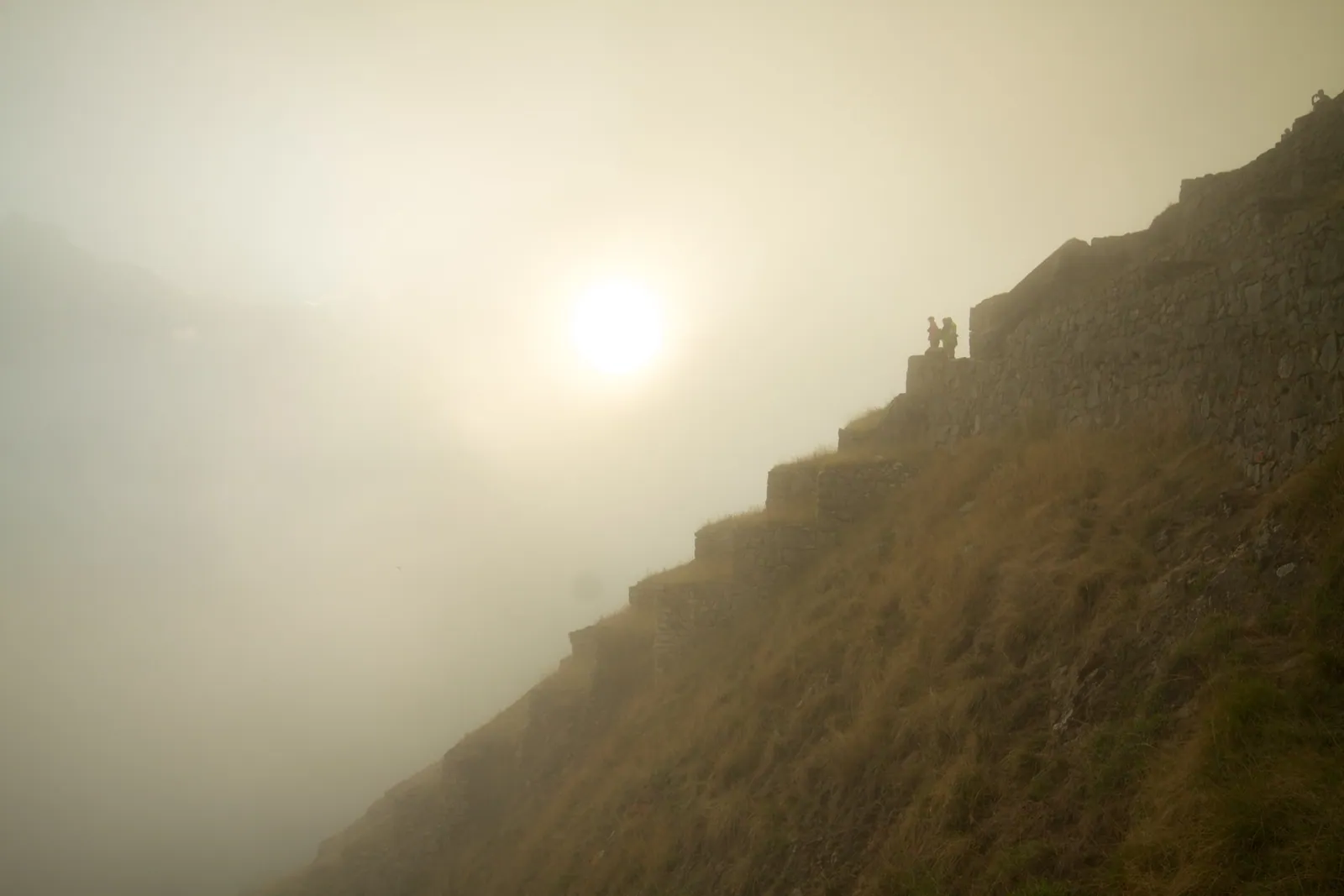
Machu Picchu's mood shifts hour by hour. The earliest entry slots often coincide with mist still draped across the peaks — atmospheric, though it can briefly hide the citadel before it lifts. Mid-to-late morning is the busiest and brightest stretch, with the strongest sun and the most people on the circuits.
Late-afternoon entries, in the final hours before closing, are a quietly excellent option: warmer light, thinning crowds, and the long shadows that flatter the stonework. There is a reason photographers favour the first and last light over the flat glare of midday.
Timing within a longer journey
On a slow-travel route the season is partly chosen for you by the wider journey. Andes to Antarctica is built around the southern dry season, which aligns the reliable Machu Picchu months with the right conditions further south in Patagonia and on the way to the white continent.
Within that, the precise entry hour is worth deliberate thought. We favour pairing a calm early or late slot at the citadel with unhurried time in the Sacred Valley beforehand — so the visit feels contemplative rather than squeezed between a train and a crowd.
Quick answers
What is the best month to visit Machu Picchu?
For reliable weather, the dry-season months of May to September are safest, with April–May and September–October offering similar conditions and fewer crowds. The green season, October to April, is wetter but lusher and quieter. There is no universally best month — only the one that matches your tolerance for rain versus crowds.
Is Machu Picchu open year-round?
Yes, the citadel itself is open all year, including through the rainy season. The Classic Inca Trail, however, closes for the whole of February for maintenance. In February the site can still be reached by train, so a Machu Picchu visit remains possible even when the trail is shut.
What time of day is best to see Machu Picchu?
The first and last entry slots are the most rewarding. Early entries can bring atmospheric mist, while late-afternoon entries offer warm light and thinning crowds. The late-morning hours are the brightest but also the busiest, so an early or late slot generally gives a calmer, more photogenic visit.
Let the reading become a route.
When an article sparks something, our planners are the next step. Tell us what you are dreaming of.