Ceviche and the Cooking of Peru's Pacific Coast: the Ocean as Larder
Ceviche is Peru's most famous dish, but the cooking of the Peruvian coast is far more: a convergence of three thousand years of fishing culture, coastal chillies and the most productive cold-water ocean in the Pacific.
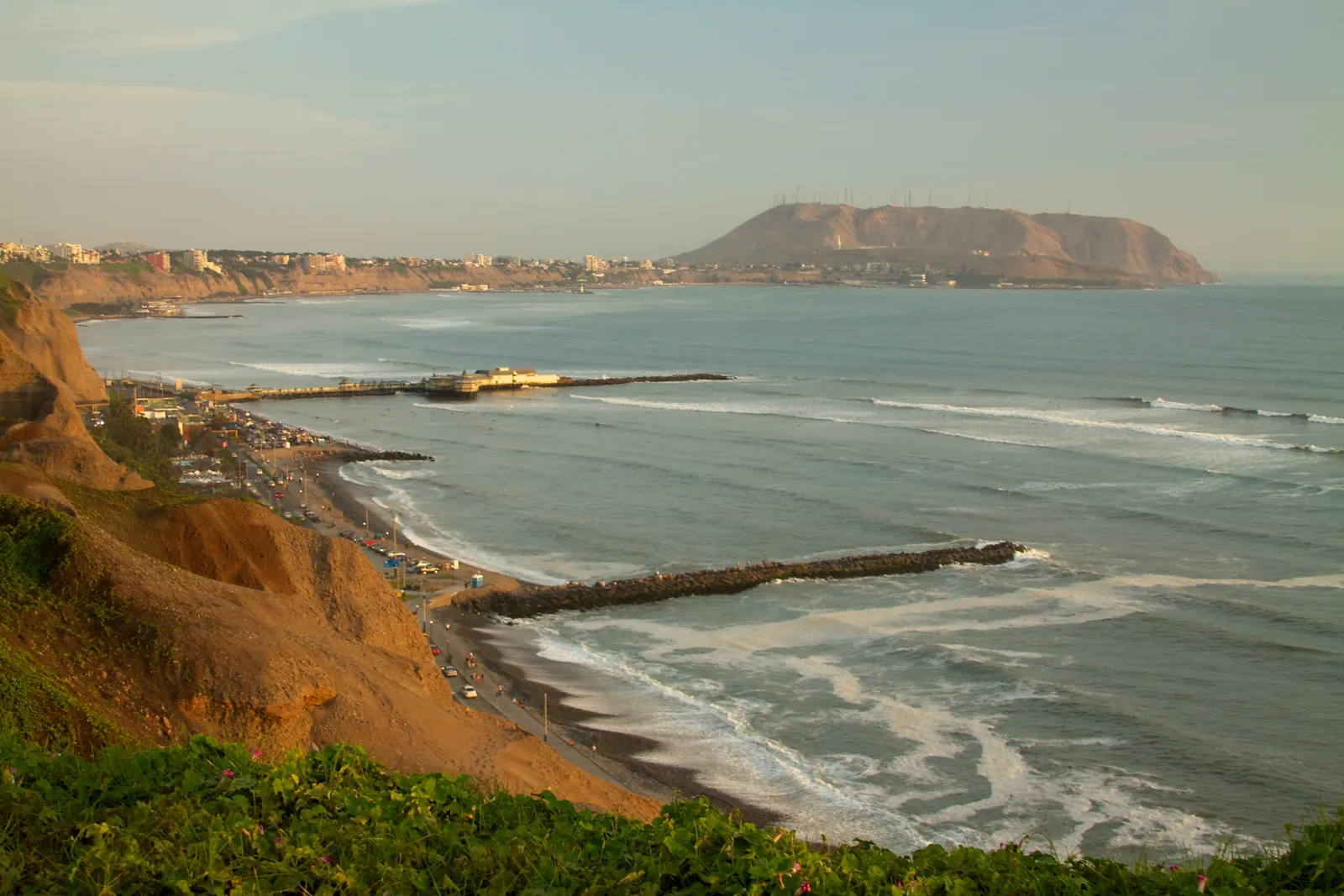
The Pacific Ocean off the coast of Peru is one of the most biologically rich bodies of water in the world. The Humboldt Current — a mass of cold water upwelling from Antarctic depths along the entire western coast of South America — carries nutrients from the ocean floor to the surface, creating one of the most productive marine ecosystems on the planet. This accident of geography and oceanography explains in part why Lima has become the gastronomic capital of Latin America: it has the best fish on the continent, raised in cold, rich waters, and a three-thousand-year tradition of coastal peoples who have known how to transform it into one of the most elegant cuisines in the world.
Ceviche is the most famous expression of that tradition. In its simplest form, it is raw fish cut into pieces, marinated in fresh lime juice, seasoned with ají limo (a fragrant, hot Peruvian chilli), thin-sliced red onion, salt and coriander. The lime does not cook the fish in a thermal sense but partially denatures its proteins — a process called cold cooking — changing its texture and opacity while leaving its marine flavour intact. The liquid that remains in the bottom of the bowl — the leche de tigre, tiger's milk — is valued in Peru as much as the dish itself.
Ceviche: history, technique and the nuances of acid
Ceviche has a history of more than two thousand years on the Peruvian coast. The Mochica and Chimú cultures of northern Peru were already preparing fish marinated in acidic juices — probably chicha, the fermented maize drink — centuries before the arrival of the Spanish. The lime, the most acidic citrus available today, came with the Spanish colony in the sixteenth century and transformed the recipe. The Spanish also contributed the onion. The Japanese influence of the Nikkei community — Japanese immigrants who arrived in Peru in the late nineteenth and early twentieth centuries — refined the cuts and reduced marination times: Nikkei ceviche marinates the fish for seconds rather than hours, preserving an almost raw texture.
The correct technique for classic ceviche is a matter of time and temperature. The fish must be absolutely fresh — caught that day — and very cold. The lime must be good quality, juicy and acidic without bitterness. The ají limo is added whole or in thin slices to perfume rather than overpower. And the marination time is brief — between two and five minutes for ceviche al momento — because the goal is for the fish to be translucent on the outside and raw within, not cooked. The best cevicheros in Lima prepare ceviche as it is ordered, not in advance.
Tiradito, leche de tigre and the sibling dishes
Ceviche has a family. Tiradito is its closest relative: fish sliced thin (direct Nikkei influence, similar to sashimi) and served with leche de tigre but without onion, with the chilli arranged decoratively over the slices. It is more delicate, cleaner in texture, closer to Japanese raw fish in concept but unambiguously Peruvian in flavour. Mixed ceviche combines fish with seafood — octopus, squid, prawns, concha negra (a dark-shelled bivalve high in iron and a true acquired taste) — richer and more assertive.
Leche de tigre — the marination juice of the ceviche with lime, ají, fish and salt — is in Lima a dish in its own right, served in a glass as an aperitif or even as a hangover cure (believed to cure a resaca, though no scientific evidence supports this). Sophisticated cevicheros prepare it with a little extra blended fish for body, and some add a splash of pisco. The cóctel de mariscos, made with river prawns and concha negra in leche de tigre with a little ketchup and avocado, is the most popular version at Lima's markets and street stalls.
The coastal chillies and their role in the kitchen
Peruvian cooking is built on its native chillies in the same way that Oaxacan cooking is built on its own, and Peru's coastal chillies are unlike anything else in the world. Ají amarillo — the most important chilli in all of Peruvian cooking — is a brilliant orange when ripe, with a fruity flavour, moderate heat and an aroma that has no equivalent in any other cuisine. It is the soul of many ceviche versions, the ingredient that gives colour and personality to huancaína sauce (for papas a la huancaína), and the axis of countless stews.
Ají limo, preferred for ceviche, is more aromatic and hotter than ají amarillo, smelling almost of tropical fruit with a sharp heat that goes directly to the palate. Ají panca — dried, nearly black with notes of chocolate and tobacco — is used primarily in stews and marinades: the Arequipa-style adobo de cerdo, seco de cordero, the anticucho (a brochette of heart marinated in ají panca). The rocoto, red and round like a small pepper but far hotter, is the chilli of the south: Arequipa's cooking uses it for the filling of its famous rocoto relleno, perhaps the most beautiful and technically demanding dish in the Arequipa kitchen.
Lima as gastronomic capital: from Nikkei to Gastón
Lima is today recognised as one of the five best food cities in the world, and that recognition has a recent and specific history. In the 1980s and 1990s, during the period of political violence from the Shining Path and economic instability, Lima's gastronomy was not a priority. What changed was the return of a generation of Peruvian chefs trained in Europe: the most influential of all, Gastón Acurio, returned from Paris in the early 1990s and opened Astrid y Gastón with a vision of elevating popular Peruvian cooking to the level of haute cuisine without disconnecting it from its market roots.
What Acurio and his contemporaries — Virgilio Martínez (Central), Mitsuharu Tsumura (Maido), Pía León (Kjolle) — achieved was not the importation of European techniques dressed in Peruvian ingredients: it was the reverse. They started from the markets, the chillies, the Andean tubers, the Pacific fish and the knowledge of home cooks, and developed a new cuisine that is entirely Peruvian in substance and modern in technique. The restaurant Central, which has occupied top positions on the World's 50 Best Restaurants list, organises its tasting menu by altitude: each course corresponds to a Peruvian ecosystem, from the ocean floor to the Andes above 4,000 metres.
Lima's markets: Surquillo and the neighbourhood kitchen
The best cooking in Lima is not necessarily in the most famous restaurants. Mercado Número Uno de Surquillo — the most celebrated neighbourhood market in Lima, a short walk from Miraflores — is where the chefs of Central and Astrid y Gastón buy their ingredients. It is also the place where a visitor can understand in one hour why Lima eats so well: the chilli stalls, with dozens of varieties fresh and in paste; the potato stalls, with heirloom varieties in colours and textures impossible to find in any supermarket in the world; the ceviche stalls that open from eight in the morning.
The Mercado Central, in Lima's historic centre, adds the Chinese dimension — Lima has the oldest Chinatown in Latin America, the result of Chinese labour migration to Peru in the nineteenth century — with stalls selling wonton, arroz chaufa (the Chinese-Peruvian fried rice that has become part of the criolla canon) and locally fermented soy sauces. This layering of culinary cultures — criolla, Andean, Japanese, Chinese, African — is what makes Lima's cooking so extraordinarily varied and, in the best sense, so unpredictable.
How to eat in Lima: where to go and what to order
The most useful rule for eating well in Lima is to arrive hungry at midday, when Peruvian cooking is at its best. Ceviche is a midday dish in Peru — it is a morning and lunchtime food, not dinner, because the fish must be from that day — and the best cevicheros in the city have waiting lines at half past twelve. La Pescadería del Mercado de Surquillo, La Mar (Gastón Acurio's excellent but pricier cevichería), El Mercado and the cevicheros of the Central Market are all reference points.
For haute cuisine, Central and Maido require reservations months in advance and cost what the world's best restaurants cost. But the heart of Lima's gastronomy is not at that summit: it is in the hundreds of fondas, picanterías and cevicherías of the city's neighbourhoods, where the daily lunch menu costs what a coffee costs in Europe and delivers pleasure of comparable intensity. In our journeys along the Peruvian coast, a midday stop at a port market — ceviche prepared with the morning's catch while the gulls circle over the harbour — is invariably one of the moments our travellers mention months later.
Quick answers
Is it safe to eat ceviche in Peru?
Yes, at establishments with high customer turnover and good cold-chain management. Ceviche prepared with absolutely fresh fish from that day and consumed immediately presents very low microbiological risk. Stalls with slow turnover or fish from the previous day are riskier. Lima's most popular cevicherías are entirely safe; in smaller cities, following local diners is the best guide. Mixed ceviche with cooked seafood (boiled octopus and prawns) is safer than pure raw fish ceviche for sensitive stomachs.
What time of day is ceviche eaten in Lima?
Ceviche in Peru is a midday dish. Cevicherías open between eleven in the morning and five in the afternoon, not for dinner: the fish must be from that day, and Peruvian culinary protocol holds that ceviche is eaten fresh, not from the previous night's refrigerator. Asking for ceviche at nine in the evening at a serious Peruvian restaurant is like asking for a reheated croissant: technically possible but culturally incorrect.
What is leche de tigre and what makes it special?
Leche de tigre is the marination liquid of ceviche: lime juice, raw fish juices, ají, onion and salt, sometimes with a little blended fish to give body. Its flavour is simultaneously sour, spicy, salty and deeply marine, and in Lima it is drunk as a short aperitif or served as an independent dish. It is popularly attributed the ability to cure hangovers, which is why it is available at many markets from early in the morning.
How does Peruvian ceviche differ from other Latin American versions?
Ceviche exists in variations along the entire Pacific coast of Latin America, from Mexico to Chile, but the Peruvian version is the most internationally recognised for its technical precision and freshness. Ecuadorian ceviche uses partially cooked fish and adds tomato and orange juice; Mexican versions are closer to a seafood cocktail with tomato sauce. Colombian coastal ceviche resembles the Ecuadorian. Peruvian ceviche is distinguished by its brief marination, the purity of fish flavour and the centrality of ají amarillo and ají limo.
Are there noteworthy Peruvian restaurants outside Lima?
Yes. Arequipa has one of Peru's proudest and most independent regional cuisines: the Arequipa picantería, with its adobos, its river prawn chupe and its rocoto relleno, is different from Lima's cooking and very much worth seeking out on its own terms. Cusco has high-quality new Andean cooking restaurants, including Virgilio Martínez's Mil at the Maras salt terraces. The northern coast — Trujillo, Chiclayo — has a ceviche different from Lima's, with more Arab influence (Arab migration to northern Peru is historically significant) and the famous northern cabrito as a land dish.

Let the reading become a route.
When an article sparks something, our planners are the next step. Tell us what you are dreaming of.