Choosing Your Serengeti Safari Season
There is no bad time for a Serengeti safari, only trade-offs. Here is how the dry and wet seasons differ — in wildlife, weather, crowds and cost — so you can match the season to the journey you want.
Travellers often ask when the Serengeti is at its best, hoping for a single answer. There isn't one. The Serengeti rewards visitors every month of the year; what changes between seasons is the balance of wildlife viewing, weather, crowds and price. The honest question is not when is it best, but which set of trade-offs suits you.
Tanzania's year has two broad rhythms: a dry season, roughly late June to October, and a wet season, roughly November to May, itself split into the short rains of November and December and the longer rains of March to May. Each shapes the safari differently. Decide what you most want — easy game viewing, the calving, river crossings, green landscapes, lower cost, fewer people — and the season chooses itself.
The dry season, late June to October: classic game viewing
The long dry season is the postcard safari. With little rain, water sources shrink, vegetation thins, and animals concentrate around the remaining rivers and waterholes — which makes general game viewing easier and more reliable than at any other time. The grass is short, sightlines are long, and predators are easier to spot.
This is also when the migration is in the northern Serengeti and the Mara River crossings take place, broadly August to October. The trade-offs are real: this is the peak season, so it brings the highest prices and the most vehicles, and the landscape is at its dustiest and most bleached. For a first safari focused on dependable wildlife, though, it is the safest bet.
The short rains, November and December: green and uncrowded
The short rains arrive around November, typically as brief afternoon showers rather than all-day downpours. They transform the country: the plains green almost overnight, dust settles, and the light turns rich. The herds respond by streaming south towards the calving grounds, so the migration is visibly on the move.
This is an underrated window. The rain rarely disrupts a safari seriously, crowds are well below the dry-season peak, prices are gentler, and the landscape is at its most photogenic. For travellers willing to accept a passing shower in exchange for green plains and fewer vehicles, late November and December are a quietly excellent choice.
The calving season, January to March: birth on the plains
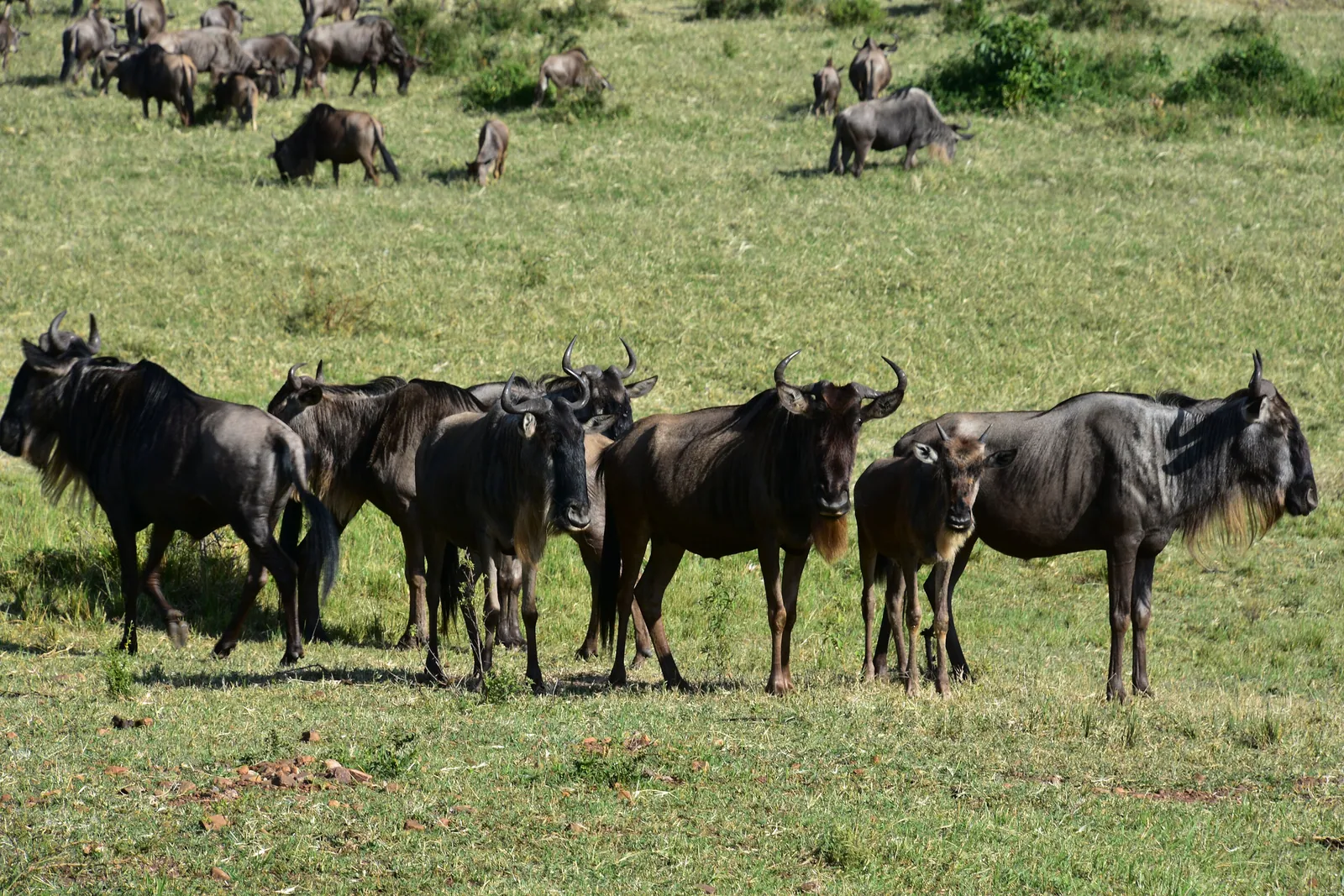
From January into March the herds gather on the short-grass plains of the southern Serengeti and Ndutu, and around February some 400,000 wildebeest calves are born within a few short weeks. It is the most concentrated calving event of any large mammal, and it draws every predator on the plains into the open.
For wildlife drama this period rivals the river crossings. The plains are green, the light kind, and the density of newborns and the predators that follow them makes for extraordinary viewing. Brief showers are possible but the long rains have not yet set in, so this is among the finest all-round seasons to travel.
The long rains, March to May: the quiet, green low season
The long rains, broadly March through May, are the wettest part of the year, with April typically the peak. Showers are longer and heavier, some roads turn muddy, a few camps close, and the herds are dispersed and harder to pin down as they move north through tall grass.
This is the genuine low season, and it is not for everyone — but it has distinct rewards. The country is lush and dramatic, the air clean, the birdlife abundant with many species in breeding plumage, the vehicles few, and the prices at their lowest. For a return traveller, or anyone who values solitude and green landscapes over guaranteed sightings, the long rains can be the most atmospheric time of all.
Matching the season to your journey
Reduced to essentials: come in the dry season, late June to October, for the easiest classic game viewing and the northern river crossings, accepting peak prices and crowds. Come January to March for the calving spectacle and superb predator action. Come November to December for green plains and fewer people at a gentler price. Come March to May for solitude, lushness and low-season value, accepting rain and dispersed herds.
Remember too that the migration follows the rain, so these windows shift by weeks from year to year. On The Great Rift journey, the Serengeti leg is scheduled to meet the herds at a rewarding phase for its season, and our guides track current conditions rather than the calendar alone. Whichever season you choose, the Serengeti will not disappoint — it will simply show you a different face.
Quick answers
What is the best month for a Serengeti safari?
There is no single best month — it depends on your priorities. For the easiest classic game viewing and the northern river crossings, choose July to October. For the calving and intense predator action, choose January to March. For green landscapes, fewer crowds and lower prices, choose November to December or the rainy March-to-May low season.
Is it worth visiting the Serengeti in the rainy season?
Yes, for the right traveller. The short rains of November and December bring green plains and far fewer crowds with only brief showers. The long rains of March to May are wetter and the herds more dispersed, but the landscape is lush, birdlife is rich, vehicles are few and prices are lowest. The wet season trades some reliability for atmosphere and value.
When does the Serengeti have the fewest crowds?
The long rains, roughly March to May, are the quietest time, with the lowest prices and the fewest vehicles. The short rains of November and December are also well below the peak. The busiest, most expensive period is the dry season from July to October, when the river crossings draw the largest numbers of visitors.
Let the reading become a route.
When an article sparks something, our planners are the next step. Tell us what you are dreaming of.