Crossing Hemispheres: Following the Southern Summer
A grand journey that crosses the equator turns the calendar upside down. Here is how to think about seasons that reverse beneath you — and why a well-planned route lets you travel inside a single, endless summer.
When a journey crosses the equator, the seasons flip. Leave the Northern Hemisphere in its autumn and you may step off the plane into a Southern Hemisphere spring. December is high summer in Patagonia and deep winter in Central Asia; July is the dry-season heart of an East African safari and the wettest month in much of South Asia. A journey that ignores this gets cold and wet; one that understands it can chase fair weather right around the world.
The practical lesson is simple. On any route that changes hemisphere, do not picture one season for the whole trip. Picture a sequence of local seasons, and judge each leg by where it sits in its own hemisphere's year. Done well, this is one of slow travel's quiet luxuries: the chance to follow summer rather than endure winter.
Why the seasons reverse
The reversal is not about distance from the sun — Earth's orbit barely varies that. It is about tilt. The planet leans about 23.5 degrees on its axis, and as it circles the sun, first one hemisphere and then the other is angled toward the light. When the Northern Hemisphere is tilted sunward in June, it has summer; the Southern Hemisphere, tilted away, has winter. Six months later the arrangement is exactly reversed.
This is why a traveller flying from Madrid to Santiago in December swaps a short, cool day for a long, warm one. It is not a quirk to be tolerated but a tool to be used: the same tilt that gives the Northern Hemisphere a bleak January gives the south its glorious one.
The tropics play by different rules
Near the equator the four-season model breaks down. There the sun is high all year, days and nights stay close to twelve hours, and temperature varies little month to month. What changes instead is rainfall: tropical regions run on wet seasons and dry seasons rather than summer and winter.
This matters on any journey that passes through equatorial latitudes between its temperate legs. The Great Rift, The Pacific Arc and parts of The Long Way East all cross zones where the question is not how cold but how wet. A route that times its tropical legs to their dry seasons, and its temperate legs to their summers, can stay comfortable end to end — but the two halves of that calculation are genuinely different sciences.
How our equator-crossing journeys are sequenced
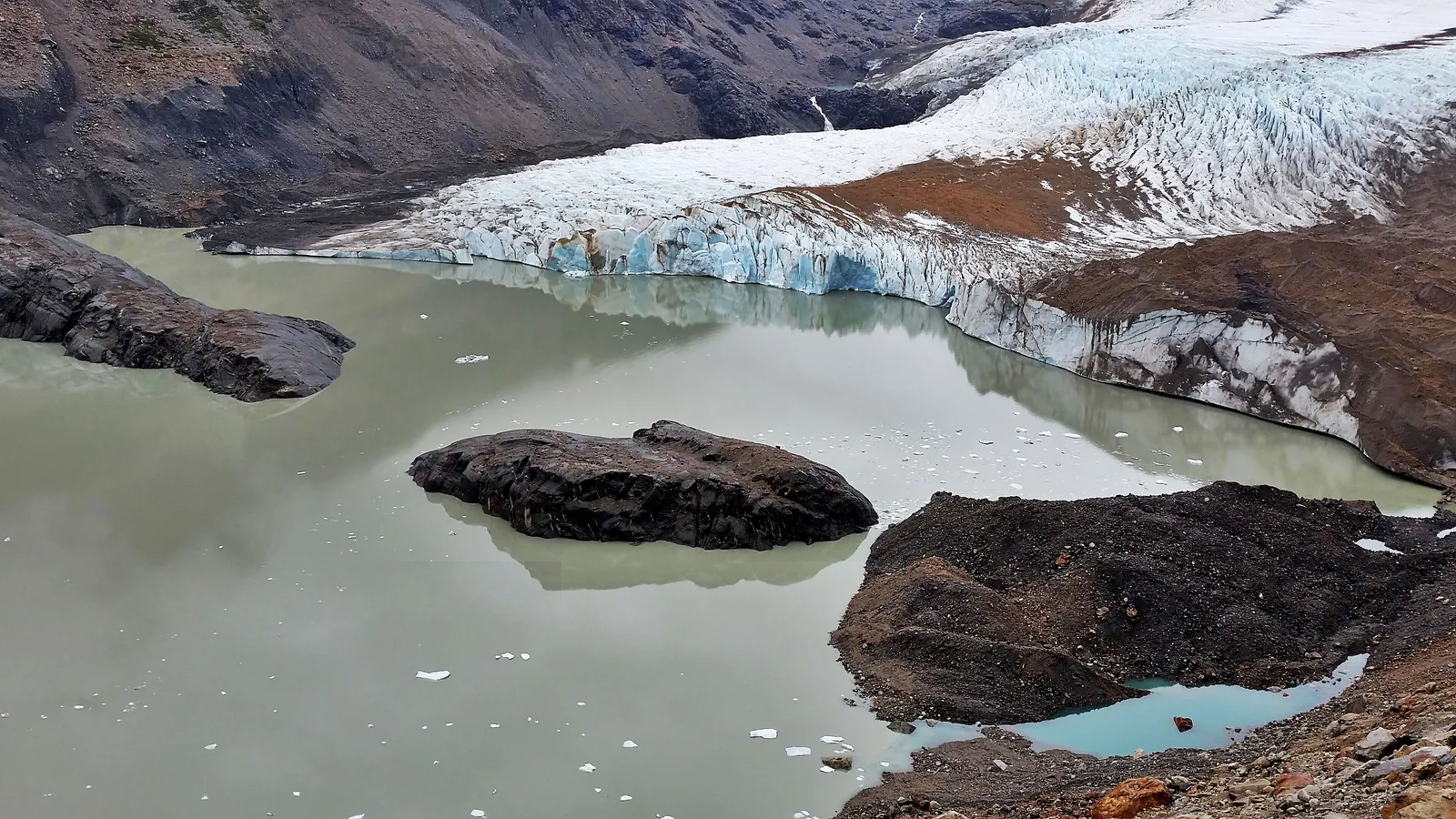
Andes to Antarctica is the clearest example of seasonal design. It runs December to March, deep in the austral summer, because that is the only window the Antarctic Peninsula is reachable at all — and the same months happen to give Patagonia its long days and the high Atacama its clear, dry skies. The whole journey rides one southern summer from the Andes to the ice.
The Pacific Arc, swinging from Latin America across the Pacific into New Zealand and the Southern Hemisphere, is likewise weighted toward the austral summer of roughly November to March, with its tropical island legs slotted into their local dry seasons. In each case the itinerary is not a straight line drawn on a map and then dated; it is a path drawn to follow good weather, then dated to match.
What this means for packing and the body
A hemisphere-crossing journey is, by definition, a multi-climate journey, and it asks for a layering system rather than a single wardrobe. You may need genuine cold-weather kit for the Antarctic Peninsula or a high Andean pass, and light, breathable clothing for a tropical or desert leg, sometimes within the same fortnight. The art is packing for range without packing heavy.
There is a bodily adjustment too. Crossing several time zones brings jet lag, and arriving from winter into a strong summer sun calls for immediate care — sunscreen, a hat, water — before your body has caught up with the new latitude. None of this is difficult, but it rewards a traveller who has thought about the year ahead rather than just the journey ahead.
Planning your own crossing
If you are choosing when to travel on a route that changes hemisphere, anchor your decision to the leg that has the narrowest window. Antarctica is the obvious anchor: its season is short and fixed, so an Andes to Antarctica journey is built outward from it. Other journeys anchor to a migration, a monsoon or a blossom front.
Once the anchor leg is fixed, the rest of the route is arranged around it, and the reversed seasons become an asset. The reward for getting it right is considerable: a journey that begins in one hemisphere's spring and ends in another's, having skipped winter altogether. Our team builds each itinerary around exactly this logic, so the seasons work for you rather than against you.
Quick answers
If I leave in the Northern Hemisphere winter, will I be cold the whole trip?
Not on a well-planned equator-crossing journey. Because the Southern Hemisphere's seasons are reversed, the Northern Hemisphere winter is the southern summer — so a December departure can lead straight into the long, warm days of Patagonia or New Zealand. The trick is matching each leg to its own hemisphere's season, which is precisely how journeys like Andes to Antarctica and The Pacific Arc are timed.
Do seasons reverse everywhere south of the equator?
The summer-winter reversal applies to temperate latitudes — places far enough from the equator to have a real seasonal swing in temperature and day length. Close to the equator, in the tropics, there is little temperature change across the year; instead the calendar is divided into wet and dry seasons. A journey crossing both zones has to plan for both systems separately.
How should I pack for a journey that crosses hemispheres?
Pack a layering system rather than a single-climate wardrobe. A hemisphere-crossing journey can move from genuine cold — an Antarctic landing or a high Andean pass — to tropical or desert heat within a short span. Layers let you cover the full range without excess weight, and we send detailed packing guidance once your journey and departure date are confirmed.
Let the reading become a route.
When an article sparks something, our planners are the next step. Tell us what you are dreaming of.