Day Hikes or Long Treks: Which Kind of Walker Are You?
A string of great day walks and a single multi-day trek are two different ways to meet a landscape on foot. Each has real advantages. Here is an honest comparison to help you choose the one that suits how you travel.
There are two distinct ways to walk through a wild landscape, and travellers often assume the multi-day trek is the more serious of them. It is not. A series of strong day hikes, each returning to a comfortable base, and a single committing multi-day trek are simply different instruments — and the better choice depends far more on how you like to travel than on how fit or adventurous you are.
The short answer: choose day hikes if you value comfort, flexibility and the freedom to opt in each morning; choose a multi-day trek if you want the immersion and rhythm that only come from walking continuously into a landscape and sleeping within it. This is the longer answer, with the trade-offs laid out plainly.
The case for day hikes
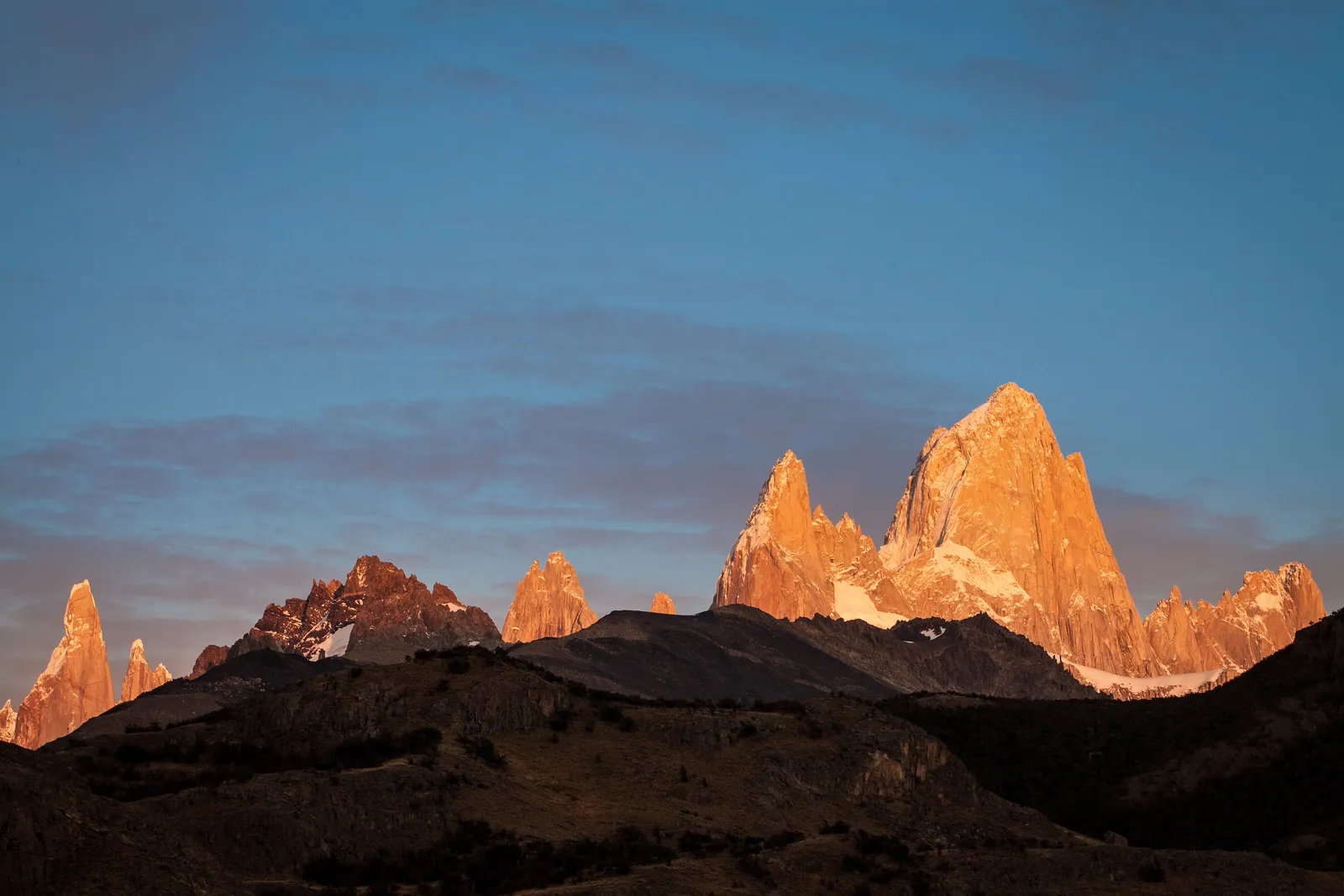
A day-hike approach keeps a comfortable base — a hotel, a lodge, a town — and walks out from it. El Chalten in Argentine Patagonia is the model: from one welcoming village you can walk to Laguna de los Tres beneath Fitz Roy one day, Laguna Torre the next, and rest or explore on the third, sleeping each night in a real bed with a hot shower and a proper dinner.
The advantages are concrete. You carry only a daypack, always. You can read the weather each morning and choose your walk to match it. You can take a day off without derailing anything. And you can calibrate effort day by day — a big walk followed by an easy one. For travellers who want wild country without committing every night to it, this is a genuinely excellent way to walk.
The case for the multi-day trek
A multi-day trek walks continuously through a landscape, sleeping along the route — in refugios on the W, in lodges in the Himalaya, in supported camps on the Inca alternatives. You cannot do this from a base, because the whole point is to reach places no base can touch: the far side of a mountain range, a valley two days' walk from the nearest road.
What the trek offers is immersion. By the third morning the body has settled, the daily rhythm has become second nature, and you are simply living in the landscape rather than visiting it. You see the country change hour by hour and dawn to dawn. There is also a narrative to a trek — a beginning, a high point, an arrival — that a collection of day walks, however fine, does not quite assemble.
Comfort, effort and the honest trade-offs
Day hikes win clearly on comfort: every night is a real bed, every evening a hot shower, and your luggage never moves with you. A multi-day trek asks you to accept simpler, sometimes basic accommodation and consecutive days of effort with no rest day in the middle. That continuity is the source of both its reward and its demand.
Fitness requirements overlap more than people expect. A hard day hike — say, the 20-plus kilometres to Laguna de los Tres and back — can be more strenuous than an easy day on a trek. The real difference is recovery: on a trek you must be ready to walk again tomorrow, and the day after. If you can comfortably hike a full day on consecutive days at home, either style is open to you.
Why a grand journey often uses both
Our journeys are not built around a single mode. Andes to Antarctica pairs the multi-day W Trek in Chile with day walks from El Chalten in Argentina, so you experience the immersion of a continuous trek and the flexibility of a base in the same trip. The Long Way East folds gentle lodge-to-lodge Himalayan trekking between the cities of the route.
This deliberate mixing is part of slow travel. A continuous trek every week would exhaust most travellers; nothing but day hikes would never deliver the deep immersion of a real traverse. The best journeys alternate — a committing walk, then gentler days, then a string of day hikes — so each style stays a pleasure rather than a grind.
A simple way to decide
Ask yourself two questions. First, how much do you value a comfortable bed and a hot shower at the end of every day? If the answer is a great deal, lean toward day hikes. Second, do you want to reach places that simply cannot be visited and returned from in a day? If yes, you need a multi-day trek, and the simpler accommodation is the price of admission.
There is no wrong answer, and no hierarchy. A traveller who walks ten brilliant day hikes across a journey has not had a lesser experience than one who completed a single trek. They have had a different one. Knowing which you are saves you from committing to a style that will quietly work against the way you like to travel.
Quick answers
Is a multi-day trek harder than day hiking?
Not necessarily on any single day — a strenuous day hike can be tougher than an easy trekking day. The real difference is that a trek asks you to walk again the next day, and the day after, without a rest. It also means simpler accommodation along the route. If you can hike a full day on consecutive days at home, both styles are within reach.
Can I do a multi-day trek if I prefer comfortable accommodation?
Lodge-to-lodge trekking in the Himalaya offers a comfortable middle ground: warm dining rooms, hot meals and a private room each night, though bedrooms are unheated and standards simplify with altitude. The W is walked refugio to refugio with beds and meals. If a hot shower every single night is essential to you, a day-hike base may suit you better.
Does a grand journey make me choose one or the other?
No. Our journeys deliberately use both. Andes to Antarctica combines the multi-day W Trek with day walks from El Chalten, and other routes weave gentle multi-day trekking between days based in towns and lodges. Alternating the two styles is what keeps each one enjoyable across a long trip rather than wearing.
Let the reading become a route.
When an article sparks something, our planners are the next step. Tell us what you are dreaming of.