Diwali: the Festival of Lights Across India
Diwali is India's most celebrated festival — five days of diyas, fireworks, sweets and family that transforms every city and village. But Diwali is not one festival: it is many, layered differently across regions, faiths and centuries.
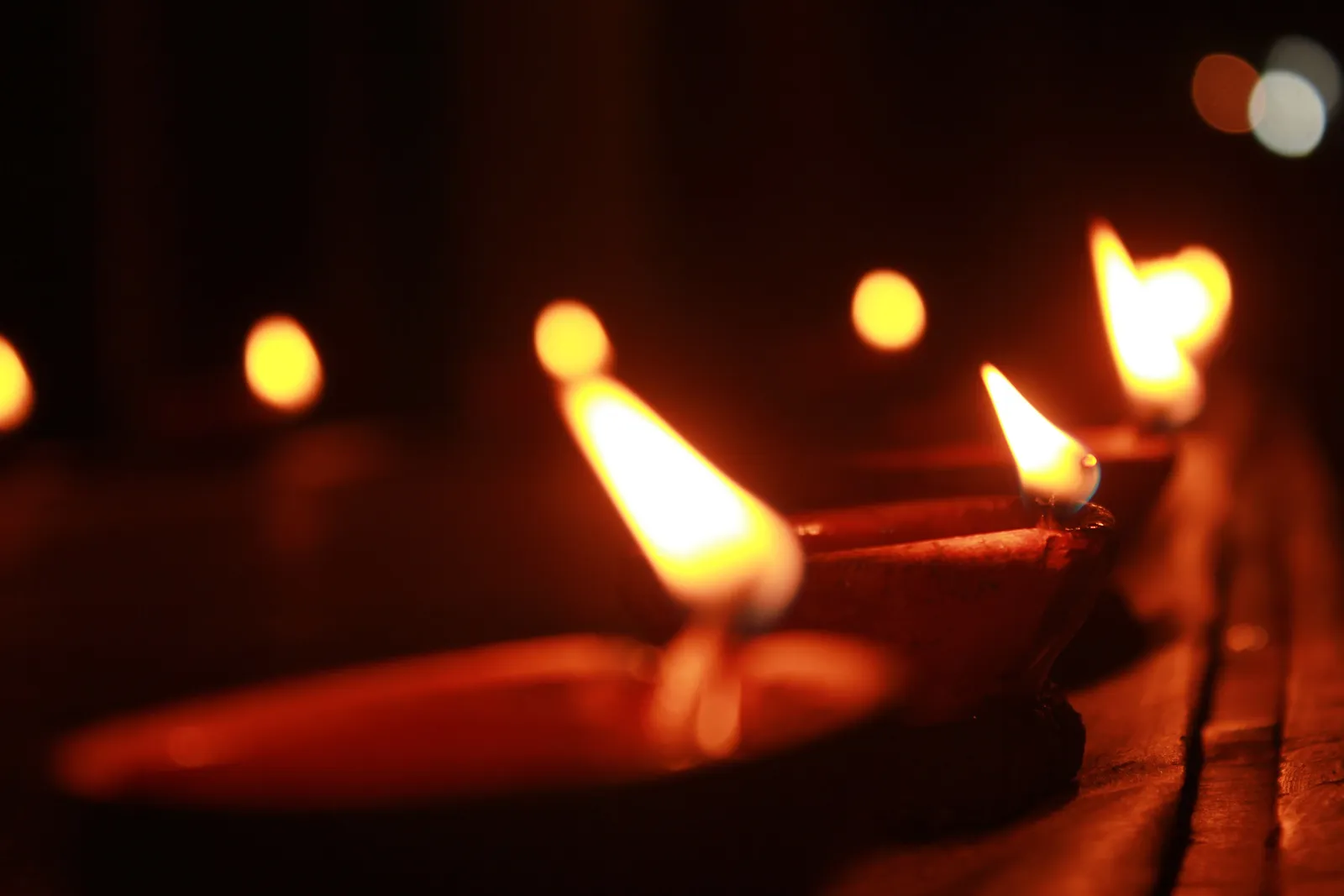
Stand on any rooftop in Varanasi, Jaipur or Delhi on the night of Diwali and you will understand immediately why it is called the Festival of Lights. The darkness fills with diyas — small clay oil lamps, set on every windowsill, doorstep and riverbank — and with fireworks that rise in every direction at once, and with the sound of families gathering beneath a sky that has been made, temporarily, incandescent. It is one of the most visceral sensory experiences that travel can offer.
But Diwali is not a single celebration. It is a five-day festival whose meaning, stories and rituals vary significantly across India's regions, communities and faiths. Hindus celebrate the return of the god Rama to Ayodhya; in Bengal it is the worship of the goddess Kali. Jains mark the liberation of Mahavira; Sikhs commemorate Bandi Chhor Divas, the release of Guru Hargobind from imprisonment. Understanding this complexity does not diminish the experience — it deepens it, because it reveals a country that has learned to celebrate the same week in many different ways at once.
The five days and what they mean
Diwali falls on the new moon of the Hindu lunar month of Kartika, placing it in October or November of the Gregorian calendar; the exact date shifts each year. The festival spans five days, each with its own name and significance. Dhanteras, the first day, is associated with wealth and health: families buy gold, silver or new utensils, and small diyas are lit at dusk. Naraka Chaturdashi, the second day, marks the defeat of the demon Narakasura by Krishna and his wife Satyabhama.
The third day — Diwali proper — is the most important. On the new moon, the darkest night of the lunar month, Lakshmi, the goddess of wealth and prosperity, is said to visit clean, welcoming homes, and the great lighting of diyas and the bursting of firecrackers reach their peak. The fourth day varies by region — Govardhan Puja in the north, the new year in Gujarat. The fifth day, Bhai Dooj, celebrates the bond between brothers and sisters, with sisters applying tilak to their brothers' foreheads.
How the festival looks in different places
Diwali in Varanasi, the sacred city on the Ganges, centres on Dev Deepawali — a festival of the gods held fifteen days after Diwali on Kartika Purnima — when the ghats are lined with hundreds of thousands of diyas reflected in the river, but Diwali itself also transforms the city: the temples are illuminated, the ghats are lit, and fireworks burst over the water. Jaipur in Rajasthan is spectacular for the decoration of its havelis and the scale of the fireworks over the old city.
In Kolkata, the Diwali season coincides with Kali Puja, when the dark goddess Kali — destroyer of evil — is worshipped in elaborately decorated temporary shrines called pandals. The Amritsar Diwali, celebrated at the Golden Temple in a tradition dating to the seventeenth century, involves the illumination of the entire Harmandir Sahib complex with tens of thousands of lights reflected in the sacred pool, making it one of the most visually extraordinary celebrations in India.
Sweets, gifts and the commerce of celebration
No festival in India is as thoroughly woven into the economy of sweetness as Diwali. The weeks before Diwali see mithai shops — sweet shops — operating at full tilt, with families buying elaborately packaged boxes of barfi, laddoo, gulab jamun and kaju katli to give as gifts to relatives, neighbours, colleagues and clients. It is the peak season for confectioners, and the sheer range of regional sweets is staggering.
Sweet giving goes in every direction: employers give bonuses, neighbours exchange plates of mithai, business partners send gifts. The gifting culture extends to dry fruits, nuts and, increasingly, luxury products — gold, electronics, clothing — making Diwali the largest shopping season in India, sometimes compared in economic scale to the Christmas retail surge in Western countries. For the traveller, the mithai shops in the days before Diwali are a sensory experience in themselves: the stacked trays, the aromas of ghee and cardamom, the queues of families making their selections.
Light, darkness and the meaning beneath the celebration
The core symbolism of Diwali — the triumph of light over darkness, of knowledge over ignorance, of good over evil — is shared across all the communities that celebrate it, even when the specific stories differ. The clay diya is a very old technology: small, cheap, made from the earth itself, it has served as the festival's symbol for millennia precisely because it is available to everyone. You do not need wealth to light a diya, and no diya outshines another.
This egalitarian quality is part of what makes Diwali so unusually cohesive for a festival that spans so many regions and religions. The act of bringing light into darkness on the same night, in villages and cities across the subcontinent, creates a rare sense of shared occasion — one that a traveller arriving in India during Diwali can feel immediately and almost physically, before they understand a single word of the mythology behind it.
The question of fireworks
Diwali fireworks are a subject of genuine tension in contemporary India. The smoke from millions of firecrackers, concentrated in a short period, contributes to serious air quality problems in cities like Delhi, where post-Diwali air pollution spikes are well documented. Courts have imposed restrictions on the sale and use of certain kinds of fireworks, and there is a growing public conversation — particularly among urban, younger Indians — about the environmental cost of traditional celebrations.
For a traveller, the fireworks are part of the experience, but understanding the context matters. The most atmospheric Diwali celebrations are increasingly those that centre on diyas and lights rather than pyrotechnics: the ghats of Varanasi, the Golden Temple in Amritsar, the haveli-lined streets of Jaipur's old city. These are celebrations of light rather than noise, and they are both more beautiful and less harmful.
Travelling well in India during Diwali
Timing a journey to Diwali requires real advance planning. India is extremely busy in the weeks before and during the festival: trains and buses are fully booked, hotels fill months ahead, and domestic airfares rise sharply. Book accommodation and travel well in advance, particularly for the main night, and choose your city with care based on the experience you are seeking.
A few courtesies go a long way. Accepting a mithai when offered is a warm gesture; refusing food at Diwali is a social awkwardness best avoided. Ask before photographing family celebrations or puja rituals in private homes. And be prepared for noise: in most Indian cities, the fireworks on Diwali night are genuinely loud and run until late. A traveller who arrives with patience, flexibility and curiosity will find that Diwali is one of the most generous windows into Indian family and community life that the calendar offers.
Quick answers
When does Diwali fall, and how do I find the date?
Diwali falls on the new moon (amavasya) of the Hindu lunar month of Kartika, which places it between mid-October and mid-November in the Gregorian calendar. The date shifts each year; it is easy to find the correct date for a given year by searching for the Hindu festival calendar or the official date published by the Government of India. If you are planning a journey around Diwali, confirm the date for the specific year you intend to travel.
Which city is best for experiencing Diwali?
Each city offers something different. Varanasi is unsurpassed for the diya-lit ghats along the Ganges and the spiritual weight of the celebration. Jaipur offers spectacle in the old city. Amritsar's Golden Temple is one of the most beautiful Diwali sights in the world. Delhi and Mumbai are large and festive but also heavily affected by fireworks pollution. For a quieter, more community-centred experience, smaller cities and towns in Rajasthan or Gujarat are particularly welcoming to visitors.
Is Diwali a public holiday in India?
The main day of Diwali is a national public holiday in India, and the days around it are major holidays in most states. Banks, government offices and many businesses close. Shops, however, are often busier than usual, particularly for sweets, gifts and fireworks. Transport is heavily used, so book trains, buses and flights well in advance if your travel falls around the festival period.
Do Sikhs celebrate Diwali?
Yes, though the Sikh celebration has a distinct historical foundation. Bandi Chhor Divas — the Day of Liberation — marks the return of the sixth Sikh Guru, Guru Hargobind, from imprisonment at the Gwalior Fort in 1619. He is said to have secured the release of fifty-two other captive princes by the ingenious method of having them hold the tails of his robe, allowing only those he could bring with him to leave. The Golden Temple in Amritsar is illuminated to mark this event, coinciding with the Hindu celebration of Diwali on the same night.
Let the reading become a route.
When an article sparks something, our planners are the next step. Tell us what you are dreaming of.