Expedition Ships Explained: What a Polar Vessel Really Is
An expedition ship is not a small cruise liner. It is a specialised tool for reaching places without ports — built to a different brief, crewed differently, run on a different idea of what a voyage is for.
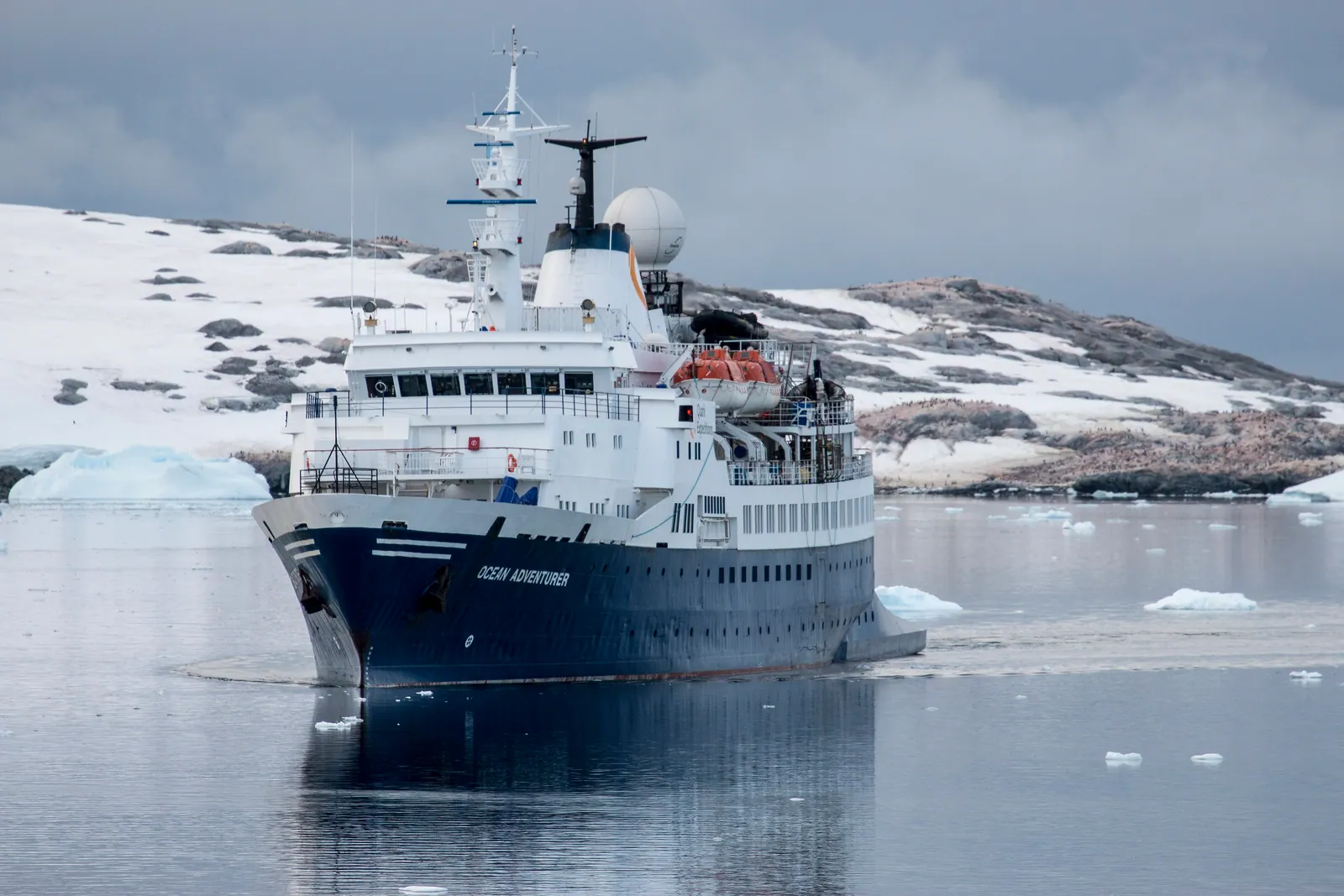
An expedition ship is best understood by what it is for: reaching coastlines that have no harbour, no jetty and no town. Antarctica, the high Arctic, remote island chains — these places cannot be visited the way a Mediterranean port is visited. The ship must carry its own means of getting passengers ashore, withstand ice and weather, and operate where there is no infrastructure to fall back on. Everything distinctive about these vessels follows from that.
This matters because the word cruise invites the wrong picture. An expedition voyage is not a scaled-down version of a large-ship holiday; it is a different category of travel, with smaller numbers, a working bridge culture and a daily plan that bends to ice and wildlife rather than a printed schedule. For the Antarctic leg of Andes to Antarctica, understanding the ship is understanding the journey.
Built to a different brief
Expedition ships are small by cruising standards — often carrying somewhere between fifty and two hundred passengers, rather than the thousands a large liner holds. That is not a luxury choice; it is a regulatory and practical one. In Antarctica, the guidelines that govern tourism limit how many people may be ashore at a site at once, so a smaller ship simply works better. Smaller numbers also mean the ship can land everyone, rather than rotating crowds.
The hulls are built or strengthened for ice. A true ice-strengthened vessel has a reinforced hull, protected propellers and rudder, and the power to push through brash ice and loose pack — distinct from a dedicated icebreaker, which is built to break solid sheet ice and which most tourist expeditions do not require. Stabilisers, ample fuel range and robust navigation round out a design meant for self-sufficiency far from help.
The Zodiac: how you actually get ashore
Because expedition destinations have no docks, the ship carries its own fleet of landing craft — almost always Zodiacs, the rugged inflatable boats that have become the signature of polar travel. Passengers board them from a platform at the ship's side, a few at a time, and are run ashore onto beaches and ice edges, or simply cruised slowly among icebergs and wildlife when no landing is possible.
This is why expedition travel is hands-on in a way liner cruising is not. You will step into a small boat, possibly in cold spray, and make a wet landing onto a shingle beach. It is straightforward and well supported — the crew manage every boarding — but it explains the gear lists, the boot rooms and the briefings. The Zodiac is not an excursion add-on; it is the only door to the destination.
The expedition team, and why it is large
A liner is run by a hotel department; an expedition ship is run, in spirit, by its expedition team. Alongside the ship's officers there is a substantial team of naturalists, historians, glaciologists, ornithologists and experienced polar guides — sometimes one for every dozen or so passengers. They drive the Zodiacs, lead the landings, give the lectures and read the ice and weather.
This staffing is the heart of the value. The voyage is not a transit between sights; it is a continuously interpreted experience, in which a penguin colony or a glacier face comes with the knowledge to understand it. On Andes to Antarctica the strength of the expedition team is one of the things we weigh most heavily when choosing a vessel, because it is what turns a crossing into an education.
A schedule written by ice and weather
Perhaps the largest mental adjustment is this: an expedition voyage has no fixed daily itinerary in the way a port-to-port cruise does. There is a plan, but it is provisional. The captain and expedition leader decide each day's landings based on ice conditions, swell, wind and where the wildlife is. A planned site may be swapped at breakfast for a better one; a superb opportunity may appear and be seized.
This is a feature, not a failure. The flexibility is exactly what lets the ship find the best of the day rather than grind through a brochure. Travellers who board expecting certainty can find it disconcerting; travellers who understand that the unpredictability is the point tend to have the better voyage. The ship goes where the day is best.
Comfort, regulation and responsibility
Modern expedition ships are comfortable — well-appointed cabins, good food, observation lounges and lecture theatres — but comfort is in service of the expedition rather than the reverse. The day is built around being outside and ashore, and the ship is the warm, well-found base you return to, not the destination itself.
Responsible operation is non-negotiable in polar regions. Reputable Antarctic operators belong to IAATO, the industry association whose guidelines govern landing numbers, wildlife distances, biosecurity and the cleaning of boots and clothing to prevent the transfer of seeds and disease. When we select a ship for the Antarctic leg of a journey, IAATO membership and a serious environmental record are baseline requirements, not extras — because the privilege of visiting these places depends on not damaging them.
Quick answers
How is an expedition ship different from a cruise ship?
It is a different category of vessel. Expedition ships are small — typically tens to a couple of hundred passengers — with ice-strengthened hulls, a fleet of Zodiac landing craft, and a large team of naturalists and guides rather than a conventional entertainment programme. They are built to reach places with no ports, and the voyage is organised around going ashore and observing wildlife, not around the ship itself.
Do I need to be fit or experienced to join an expedition voyage?
No special experience is needed, but a reasonable level of mobility helps. You will climb in and out of Zodiacs from a platform, make wet landings onto beaches, and walk on uneven shingle, snow or rock. The crew assist at every step. The Antarctic leg of Andes to Antarctica is suitable for active travellers of a wide age range; our pre-departure information sets out exactly what to expect.
Why doesn't the ship follow a fixed daily itinerary?
Because polar conditions will not allow it. Ice, swell, wind and the movement of wildlife change daily, so the captain and expedition leader plan each day's landings as conditions permit. This flexibility is a strength: it lets the ship seek out the best of each day rather than commit to a site that may be unreachable or inferior. A provisional plan is the only honest plan in these waters.
Let the reading become a route.
When an article sparks something, our planners are the next step. Tell us what you are dreaming of.