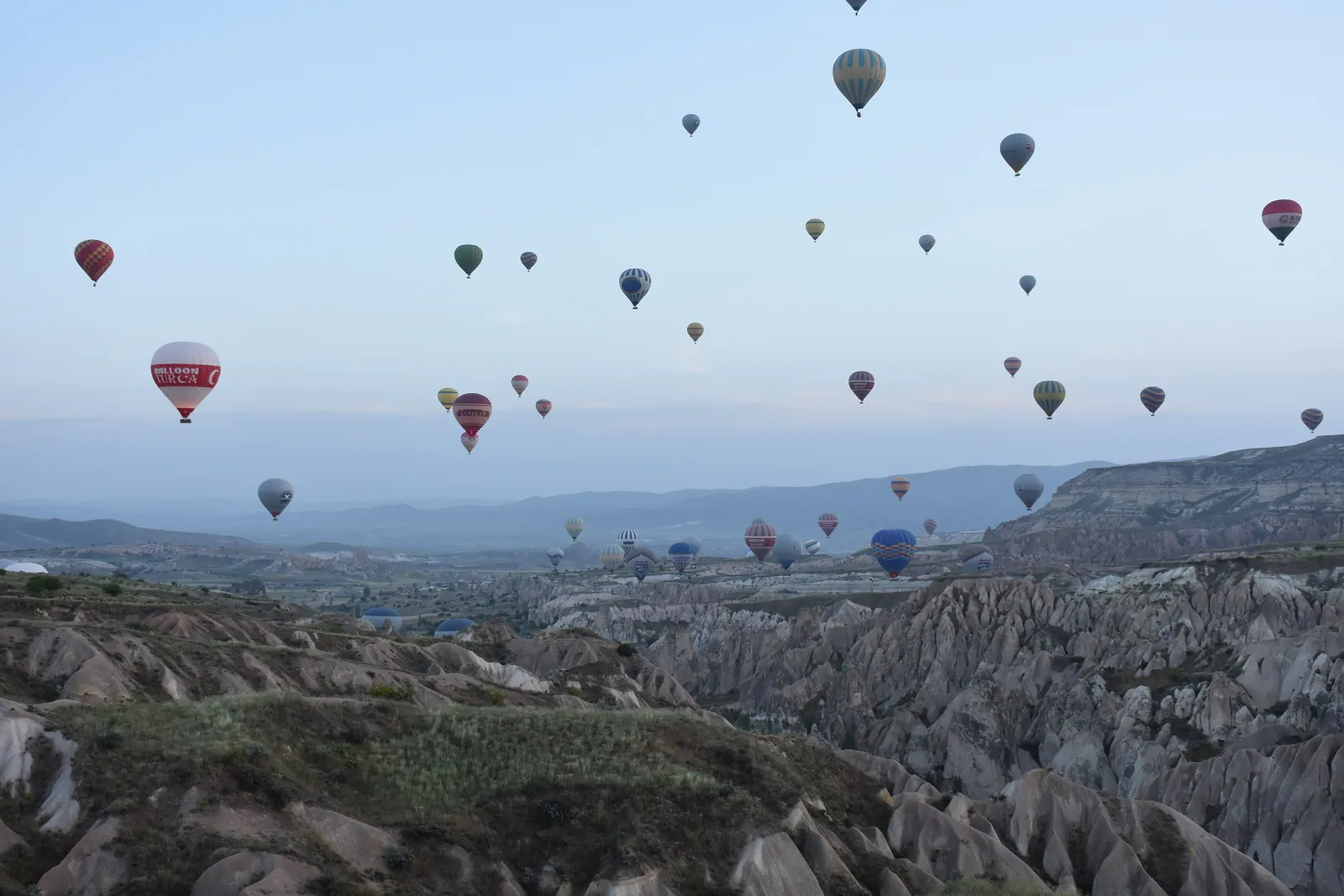
How Weather Works on a Multi-Month Journey
On a journey of seventy or ninety days you do not have a forecast — you have a climate, and several of them. How to think about weather across a long trip, and when to plan rather than guess.
On a weekend away, weather is a forecast you can check. On a grand journey of seventy or ninety days, it is something else entirely. You will pass through many climate zones, possibly cross the equator, perhaps change hemisphere — and no forecast reaches that far. What you can know in advance is not the weather but the climate: the typical conditions for each region in each month.
The shift in mindset is the whole point. Stop trying to predict the weather of a journey and start planning around its climates instead. Choose the route's season well, pack for range rather than for a guess, and keep enough flexibility to absorb the days that surprise you. Do that, and weather becomes a texture of the journey rather than a worry.
Weather is a forecast; climate is a pattern
Weather is the state of the atmosphere on a given day — this afternoon's temperature, tomorrow's chance of rain. It is genuinely predictable only a few days out. Climate is the long-run average: what a place is typically like in March versus October, how much it usually rains, how cold the nights normally get. Climate is knowable years ahead.
A long journey is planned on climate. We cannot tell you whether it will rain on your eleventh day in the highlands, but we can tell you that the highlands in that month are typically dry, cool and clear — and that is the information that actually shapes a route, a packing list and a sensible set of expectations.
One journey, many climate zones
A grand journey routinely strings together climates that have nothing in common. Andes to Antarctica alone runs through high-altitude tropics in the Andes, one of the driest deserts on Earth in the Atacama, the wind-scoured temperate south of Patagonia, and the polar maritime climate of the Antarctic Peninsula — within a single itinerary.
This is why a long trip cannot be summed up in one word like hot or wet. Each leg has its own character, and the useful question is always local: what is this region, in this month, normally like? A journey's practical materials answer that leg by leg, and reading them that way is far more reliable than imagining an average for the whole.
The decisions that are worth making in advance
Some weather decisions must be made early, because they cannot be fixed later. The biggest is the season of the journey itself — and on our journeys that is largely done for you, since each departure window is chosen to place every leg in its best season. Antarctica's short window, the East African dry seasons and the Central Asian shoulder months are all baked into the calendar.
The second early decision is your kit. Because a long journey spans climates, it asks for a layering system that covers cold, heat, sun and rain without becoming a heavy bag. Get the season and the layers right before you leave, and you have handled the part of weather that planning can actually control.
The decisions best left to the day
Much of weather management on a long journey happens in the moment, and is best handled by the people on the ground. Expedition voyages to Antarctica reorder each day around wind, ice and swell; mountain guides shift a walking start to dodge afternoon cloud; a safari adjusts its hours to the heat. This is not improvisation born of poor planning — it is the correct response to conditions that only reveal themselves on the day.
For the traveller, the right posture is flexibility rather than anxiety. A good itinerary leaves a little slack — a spare window, an alternative for a weathered-out viewpoint — so a difficult day can be absorbed without unravelling the trip. Treat the day's weather as your guide's problem to solve, and your own job as simply being ready.
Microclimates and altitude: the local surprises
Even within a single region, weather is rarely uniform. Altitude is the great variable: temperature falls by roughly 6.5 degrees Celsius for every thousand metres you climb, so a warm valley and a cold pass can sit a single morning's walk apart. Mountains make their own weather, often cloudier and wetter on one flank than the other.
Deserts swing hard between day and night, sometimes by 20 degrees or more, because dry air holds little heat after dark. Coasts and large lakes moderate extremes; interiors exaggerate them. None of this is unpredictable in principle — it is simply local — and a journey that has been routed by people who know these microclimates will keep surprising you far less than the raw map suggests.
How we plan a long journey around weather
Our approach has three layers. First, we set each journey's departure dates so every major leg falls in its climatically best season — the single most powerful weather decision, made once, in advance. Second, we send detailed, leg-by-leg guidance on what to expect and how to pack, so you arrive equipped for the real range of the route.
Third, we build itineraries with enough flexibility for guides and expedition leaders to adapt on the day, and we brief travellers to expect that adaptation as a normal part of the journey. Plan the climate, pack for the range, stay flexible on the day: across seventy or ninety days, that is what reliably turns weather from a hazard into part of the story.
Quick answers
Can you tell me what the weather will be on a specific day of my journey?
No reliable forecast extends more than about a week or two ahead, so for a journey planned months in advance we work from climate rather than weather. We can tell you what each region is typically like in your travel month — average temperatures, the usual rainfall, how cold the nights tend to be — and that climatic picture is what shapes the route, the packing list and your expectations.
How do I pack for a journey that crosses so many climates?
Use a layering system rather than separate single-climate wardrobes. Layers let you cover cold, heat, sun and rain across a long, varied route without a heavy bag, adding or shedding pieces as the climate changes beneath you. Once your journey and departure date are confirmed we provide detailed, leg-by-leg packing guidance so nothing is left to guesswork.
What happens if bad weather disrupts part of the journey?
Our itineraries are built with flexibility for exactly this. Guides and expedition leaders adjust the day's plan around conditions — reordering an Antarctic landing, shifting a walking start, changing safari hours — and many days carry an alternative or some slack. A difficult weather day is absorbed and worked around rather than allowed to unravel the trip, which is one reason an escorted journey handles weather better than independent travel.
Let the reading become a route.
When an article sparks something, our planners are the next step. Tell us what you are dreaming of.