Issyk-Kul and Kyrgyz Nomad Culture: a Sea in the Mountains
Lake Issyk-Kul, one of the world's largest alpine lakes, sits at 1,600 metres in the Tian Shan of Kyrgyzstan, surrounded by peaks above 4,000 metres and by a nomadic culture that has survived the Soviet era, independence and the arrival of the modern world with its essential character intact.
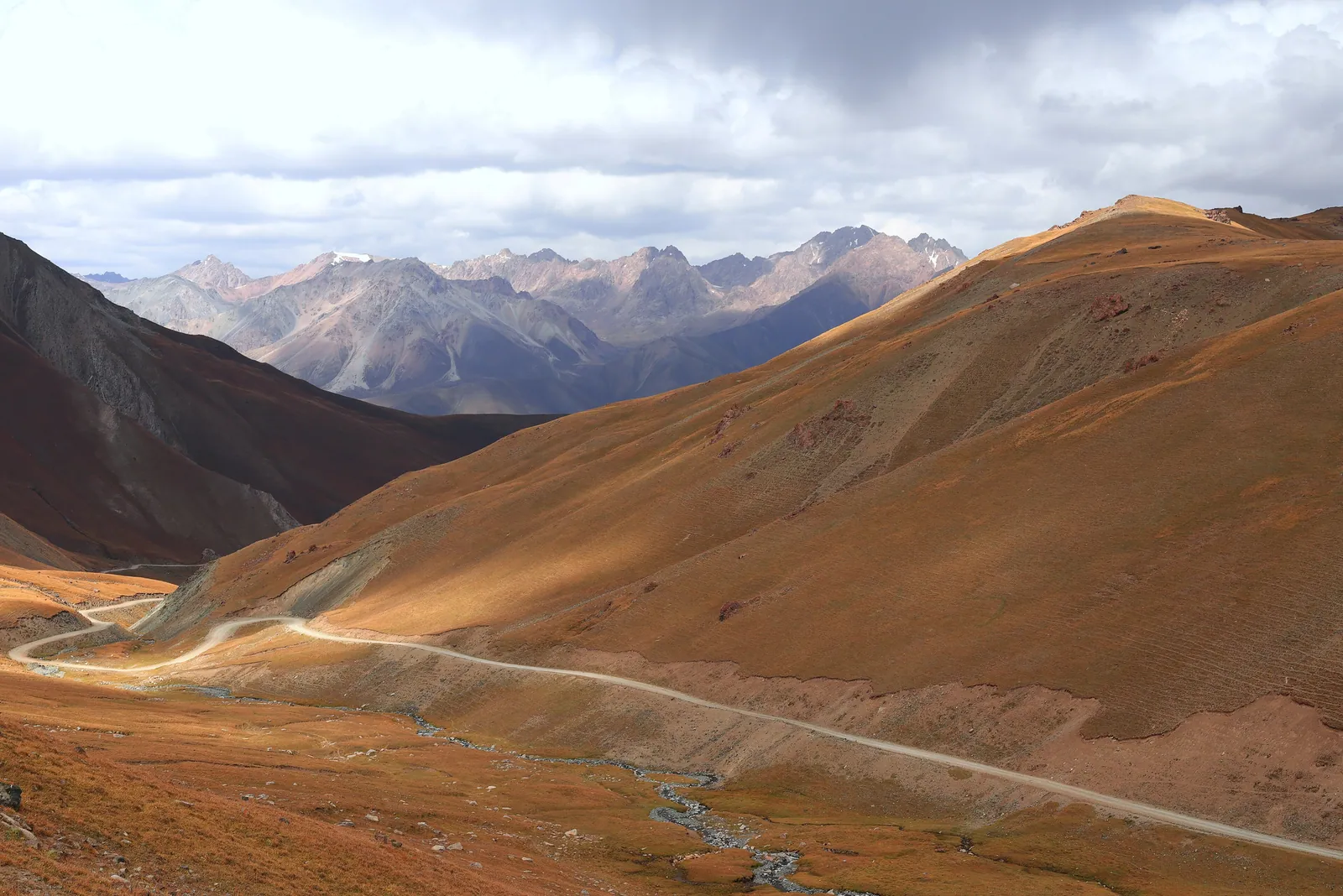
The Kyrgyz call it the Warm Sea, and the name is earned: Issyk-Kul — which means 'warm lake' in Kyrgyz — is so deep that it never freezes, even through the severe Central Asian winters that lock every river and smaller body of water in ice for months. It is the second largest alpine lake in the world by volume (after Titicaca), and it sits in a setting so dramatic that it looks less like a lake than a piece of sky fallen to earth: the Tian Shan's snow-capped ridges framing it on three sides, the water shifting from turquoise to dark blue to steel-grey depending on the hour, the wind, and which way you are facing.
Kyrgyzstan is the least-visited of the Central Asian republics, and one of the most rewarding. Unlike its neighbours to the west — Uzbekistan with its unmissable Silk Road cities, Kazakhstan with its oil wealth and vast steppe — Kyrgyzstan offers something harder to package and easier to miss: a largely nomadic heritage still lived, a landscape of savage beauty that has barely been touched by extractive industry, and a people whose hospitality is not performance but the logic of survival in a world where the next valley might be a day's ride away. To travel here is to enter a version of Central Asian life that the Timurid cities, for all their magnificence, cannot offer.
The lake and its shores
Issyk-Kul is roughly 180 kilometres long and 60 kilometres wide, with a maximum depth of 668 metres. It sits in a basin between the Terskey Ala-Too range to the south and the Kungey Ala-Too to the north, at an elevation where the air is clear and strong and the distances have a lucidity that lowland landscapes rarely achieve. The northern shore is the more developed: the town of Cholpon-Ata holds a summer resort strip that draws Kyrgyz and Russian holidaymakers, and the Bronze Age petroglyphs at the open-air museum outside the town — thousands of rock carvings of ibex, hunting scenes and riders — constitute an archive of the region's deep past that predates any written record.
The southern shore is quieter, the villages smaller, the mountains closer and more dramatic. The road following the southern shore passes through the Juku Valley and the Barskoon Gorge, where waterfalls cascade from the heights and yurt camps appear in summer meadows above the treeline. Karakol, the largest town on the lake and the regional centre, holds an unexpected collection of historical architecture: a Chinese mosque built without a single nail in 1910, a Russian Orthodox wooden church, and a Sunday animal market of the kind that has largely vanished from Central Asia — a muddy, teeming gathering where cattle, horses and sheep are traded by Kyrgyz farmers in the same manner their grandfathers used.
The yurt and the nomadic year
The Kyrgyz yurt (boz ui, or 'grey house') is structurally similar to the Mongolian ger and has the same origin in the nomadic practice of seasonal movement between pastures. The frame is a lattice of curved wooden poles (kerege) supporting a circular roof frame and central wheel (tunduk), covered with layers of compressed wool felt. A skilled family can erect or dismantle a yurt in under two hours. The tunduk — the circular skylight at the top — has become the national symbol of Kyrgyzstan: it appears on the flag, representing the hearth and the family, and it has a cosmological significance in Kyrgyz tradition that extends well beyond its functional role as smoke vent and light source.
The Kyrgyz nomadic year historically involved moving between winter quarters (kystoo) in the valleys and summer pastures (jailoo) in the high mountain meadows above the treeline, driving the family's sheep, horses, cattle and yaks. This system of transhumance survives, reduced but intact, in much of Kyrgyzstan: in June, families pack their yurts onto horses and trucks and move to the jailoo, remaining there until September when the snows close the high passes. The summer jailoo camps — small clusters of white yurts in mountain meadows at 3,000 to 3,500 metres, with horses grazing on slopes that rise directly to glaciers — are among the most beautiful and peaceful scenes in all of Central Asia.
Bishkek: the Soviet capital and its surprises
Bishkek, the capital of Kyrgyzstan, was built from scratch by Russian colonisers in the 1860s and retains the wide boulevards, linear parks and heavy monumental architecture of its Soviet phase with a certain cheerful shamelessness. Ala-Too Square, with its perpetually guarded independence monument and surrounding government buildings, is the ceremonial centre; the Osh Bazaar, a few kilometres west, is the real one — a sprawling market where the entire Kyrgyz food culture is on display: dried fruits, spices, fermented mare's milk in plastic canisters, horsemeat sausage, handmade felt goods and the stacked flatbreads that are the staple of the nomadic table.
The State Historical Museum, housed in the monumental building on Ala-Too Square formerly dedicated to Lenin (whose statue stood outside until 2003), provides the essential context for understanding Kyrgyz history from the Bronze Age pastoral cultures through the Kyrgyz Khaganate to Russian conquest in the 1870s and the Soviet period. Bishkek is a transit city for most visitors — a day is ample — but its restaurants and cafes serve a cuisine shaped by the intersection of nomadic, Uzbek, Russian and Dungan (Chinese Muslim) traditions that is more interesting and varied than its international profile would suggest.
Horseback through the Tian Shan
Kyrgyzstan's mountains are genuinely exceptional for trekking and horse travel: the Tian Shan ranges offer high-altitude passes, glacial valleys, clear rivers and an absence of crowds that is increasingly rare in mountain destinations worldwide. The Song Köl plateau, a high-altitude lake at 3,016 metres in the central Tian Shan, is the most visited of Kyrgyzstan's jailoo areas: in summer it fills with yurt camps, and the combination of wide flat meadows, glittering lake and surrounding ridges with their herds of horses produces an image of the nomadic world at its most ideal. The circuit ride around Song Köl, two to four days by horse, is among the finest rides in Central Asia.
The Naryn Valley, south of Song Köl, is broader and more arid — a landscape of clay badlands and walnut forests that looks east toward China and reminds the traveller that this is genuine Central Asian interior, far from any coast. The horse culture here is deep: the annual World Nomad Games, held in Kyrgyzstan every two years, include mounted sports — kok-boru (a game played with a sheep carcass over two goal posts), mounted wrestling and tiyin emmei (mounted coin-picking) — that are extraordinary to watch and demonstrate a relationship between rider and horse that has been refined over an extraordinarily long period of time.
Food, felt and the hospitable table
Kyrgyz cuisine is the food of people who have lived outdoors through extreme cold for millennia: it is dense, warming and built primarily around lamb, horse meat and dairy. Beshbarmak — 'five fingers', meaning it is eaten by hand — is the dish of hospitality and celebration: broad flat noodles covered with boiled lamb and broth, served on a communal platter. The host carves the sheep's head (the most prized offering to honoured guests) and distributes the pieces according to an etiquette of seniority and respect. Qurut, dried balls of sour yogurt, are carried as provisions on journeys; kumiss (fermented mare's milk) is offered at every yurt.
Kyrgyz felt crafts — the shyrdak (a felted rug made from patterns of coloured felt cut and stitched together) and the ala-kiyiz (a felted rug of swirled colour patterns) — are among the finest textile traditions of Central Asia. They are made almost exclusively by women and represent a knowledge that passes mother to daughter: the patterns are not decorative but communicative, recording family history, regional affiliation and status. Several women's cooperatives around Issyk-Kul and in Bishkek produce these works at a quality that makes them among the most worthwhile purchases a traveller can make in Central Asia — and among the most useful, since a shyrdak placed on a stone floor transforms any cold room into a warm one.
Practical matters and when to go
The Kyrgyz travel season runs from late May to late September, with July and August the warmest and most accessible months. June is excellent for the jailoo camps — the grass is fresh, the rivers are full of snowmelt, and the families have just arrived in the highlands. September brings the harvest atmosphere of the lower valleys and the descent from the jailoo, with a melancholy beauty to the emptying summer pastures. Winters are severe and most mountain travel is impractical, though Bishkek and the Issyk-Kul shore are accessible year-round.
Kyrgyzstan requires no visa for citizens of many countries, including most European nationals and Americans, for stays of up to thirty or sixty days (check current regulations as these change). The currency is the Kyrgyz som; card acceptance is improving in Bishkek but cash remains essential outside the capital. The primary practical challenge of Kyrgyz travel is transport: shared taxis (marshrutki) and occasional buses connect the main towns, but reaching the mountain areas requires a hired four-wheel-drive vehicle with a local driver — the same arrangement that makes a guide essential, since the guide is often the driver and always the key to opening yurt doors.
Quick answers
What is a jailoo and how do I visit one?
A jailoo is a high mountain summer pasture, typically between 2,500 and 3,500 metres elevation, where Kyrgyz nomadic families graze their animals from June to September. Visiting a jailoo means staying in the yurt camps that appear on these pastures in summer — either purpose-built tourist camps with basic but comfortable facilities or, on more adventurous itineraries, with actual herding families who host travellers informally. The experience involves waking to the sound of horses, eating qurut and flatbread, drinking kumiss, helping (or watching) with animal tasks, and sleeping in a yurt under skies with no light pollution. It is one of the most rewarding travel experiences in Central Asia.
Is Kyrgyzstan a safe destination?
Kyrgyzstan is generally safe for travellers. It has a reputation for a more open political culture than some of its Central Asian neighbours, and the tourism infrastructure, while basic, is honest and welcoming. The main practical risks are logistical — mountain terrain, river crossings, and the isolation of some areas — rather than security-related. Standard precautions apply in Bishkek, particularly around the Osh Bazaar. Check current government advisories before travel and be aware that border areas with certain neighbours have had periodic tensions.
What is the World Nomad Games?
The World Nomad Games is an international festival of nomadic sports and culture held in Kyrgyzstan every two years, most recently in the Cholpon-Ata area on the northern shore of Issyk-Kul. The games bring together athletes from Central Asian countries and beyond to compete in traditional mounted sports (kok-boru, mounted wrestling, tiyin emmei), archery, eagle hunting demonstrations, and cultural events including music, crafts and food. It is a remarkable spectacle — a concentrated version of the nomadic sporting traditions that are practised locally year-round, staged at genuine international scale.
Can I buy quality Kyrgyz felt crafts, and how do I identify them?
Quality shyrdak and ala-kiyiz are produced by women's cooperatives around Issyk-Kul, in Karakol and in Bishkek. The best pieces are made from 100% wool felt, with patterns that are cut and stitched (shyrdak) or swirled during the felting process (ala-kiyiz) rather than printed or glued. Look for even stitching, tight construction and the weight that indicates real wool. Cooperative-made pieces come with documentation of the maker. Prices are negotiated; a large high-quality shyrdak is a significant item, but significantly less expensive than comparable textile art elsewhere in Asia.
Is Issyk-Kul suitable for swimming?
Yes — the northern shore of Issyk-Kul has sandy beaches and warm water (reaching 20°C or above in July and August) that make it a genuine swimming lake. The southern shore is cooler and less developed. The lake has a very slight salt content and, being permanently ice-free, a stable thermal character. The beach towns of the north shore (Cholpon-Ata, Bosteri, Chyrpykty) are popular with domestic tourists in summer; foreign visitors who prefer quiet are better served by the southern shore or the smaller bays to the east.
Let the reading become a route.
When an article sparks something, our planners are the next step. Tell us what you are dreaming of.