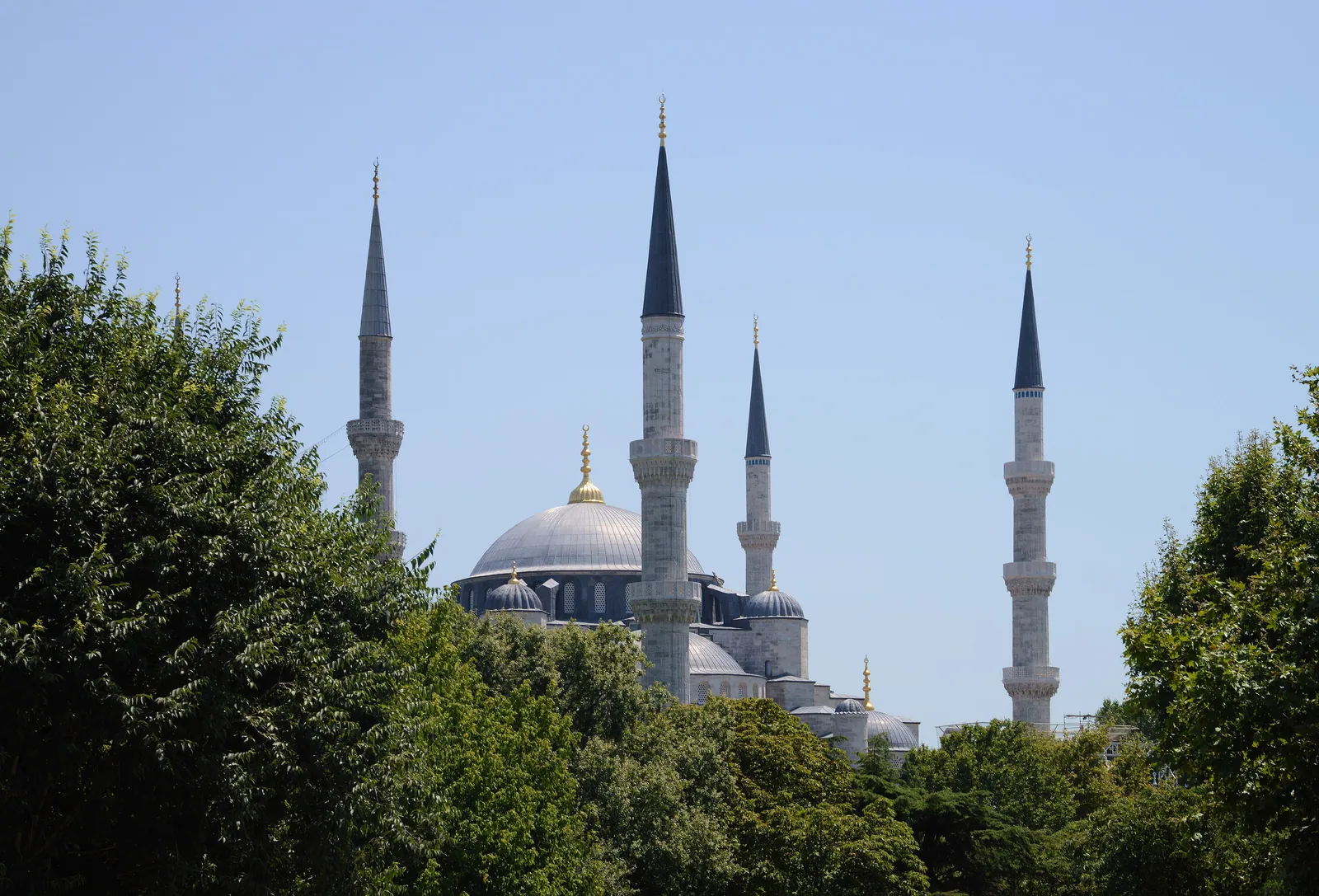
Istanbul, Where Two Continents Meet
Istanbul is the only great city built on two continents, divided and joined by a single strait of water. Here is how the Bosphorus shapes a place that has been the capital of three empires.
Istanbul straddles the Bosphorus, the narrow strait that separates Europe from Asia, which makes it the only city in the world to sit on two continents at once. The European side holds the old imperial core — the palaces, the great mosques, the bazaars — while the Asian side, quieter and more residential, faces it across roughly a kilometre of fast blue water.
To understand Istanbul, start with that water. The Bosphorus is not a backdrop; it is the reason the city exists, the corridor that made it the hinge between the Mediterranean and the Black Sea, between Europe and Asia, for more than two and a half thousand years. A traveller who grasps the geography grasps the city.
A strait that made an empire
The Bosphorus is a strait about thirty kilometres long and, at its narrowest, only some seven hundred metres wide. It connects the Sea of Marmara to the Black Sea, and through the Marmara and the Dardanelles, the Black Sea to the Mediterranean. Whoever held this water held the only sea route between two great basins — and the overland bridge between two continents.
Greek colonists understood this early, founding Byzantium on the European promontory around 660 BC. Constantine made it his capital in 330 AD, and as Constantinople it became the heart of the Roman and then the Byzantine world for more than a thousand years. After 1453 the Ottomans inherited the same geography, and the same logic, ruling their empire from the same hills. Three empires chose this spot for one reason: the strait.
Reading the European shore
The historic peninsula, on the European side, is where Istanbul keeps its grandest set pieces. Within walking distance of one another stand Hagia Sophia, the Blue Mosque, the Topkapı Palace of the sultans, the sunken Basilica Cistern and the covered streets of the Grand Bazaar. This is Sultanahmet, and it rewards slow, repeated walking rather than a single forced march.
Across the Golden Horn — the inlet that forms the peninsula's northern edge — lies Beyoğlu, the nineteenth-century European quarter, with the Galata Tower, the long pedestrian boulevard of İstiklal, and the city's most energetic cafés and music. The two areas are joined by the Galata Bridge, itself lined with fishermen at every hour, and crossing it on foot is one of the simplest pleasures the city offers.
The Asian side, and why to cross
Many visitors never leave Europe, which is their loss. A short ferry from Eminönü or Karaköy carries you to Kadıköy or Üsküdar on the Asian shore in about twenty minutes, and the crossing itself — gulls wheeling behind the boat, the skyline of minarets receding — is the best-value sightseeing in Istanbul.
Kadıköy is younger, less monumental and thoroughly lived-in: a superb produce market, bookshops, meyhanes and a long café-lined waterfront. Üsküdar is older and more devout, with fine Ottoman mosques and, just offshore, the small Maiden's Tower marooned on its rock. Crossing to Asia and back, you feel the city's doubleness in your own afternoon.
The Bosphorus as a journey in itself
The classic way to take the strait's measure is from the deck of a ferry running its full length toward the Black Sea. From the water you pass beneath the great suspension bridges, slide past the white marble of the Dolmabahçe Palace, and watch the yalıs — the old wooden waterside mansions of Ottoman grandees — give way to fishing villages and green hills.
It is also a working seaway. Vast cargo ships and tankers thread the same narrow channel as the commuter ferries, a reminder that the Bosphorus is still one of the busiest and most strategically charged waterways on Earth. To watch it is to watch the old Silk Road logic continue by other means.
Istanbul on The Silk Road Reborn
On The Silk Road Reborn, Istanbul is the western gateway — the city where the journey east begins, exactly as caravans and merchants once gathered here before striking out across Anatolia. It is a fitting threshold, because Istanbul has always been a place of transition rather than arrival: the point where Europe hands the traveller to Asia.
We give the city enough days to be felt on both sides of the water, and we treat a Bosphorus crossing not as an optional extra but as the central act of understanding the place. From here the route turns inland toward Cappadocia and, eventually, the Caucasus — but it is on this strait that the meaning of the whole journey first comes into focus.
Quick answers
Which continent is Istanbul actually on?
Both. The Bosphorus strait runs through the middle of the city, placing roughly two thirds of the population on the European side and the rest on the Asian side. The historic monuments — Hagia Sophia, the Blue Mosque, Topkapı, the Grand Bazaar — are all on the European shore, but the city as a whole is genuinely transcontinental, and crossing between the two halves is part of the experience.
How do you cross between the European and Asian sides?
The most enjoyable way is by public ferry, which takes about fifteen to twenty minutes and costs very little; routes link Eminönü, Karaköy and Beşiktaş in Europe with Kadıköy and Üsküdar in Asia. There are also two metro lines and three road bridges. For a first crossing, take the ferry — the views of the skyline and the strait are worth the trip on their own.
How many days do you need in Istanbul?
Three full days is a sound minimum to see the major sites of the historic peninsula without rushing, walk Beyoğlu, and make at least one ferry crossing to the Asian side and one along the Bosphorus. Four or five days lets the city breathe and allows for the bazaars, a hammam and time simply spent watching the water.
Let the reading become a route.
When an article sparks something, our planners are the next step. Tell us what you are dreaming of.