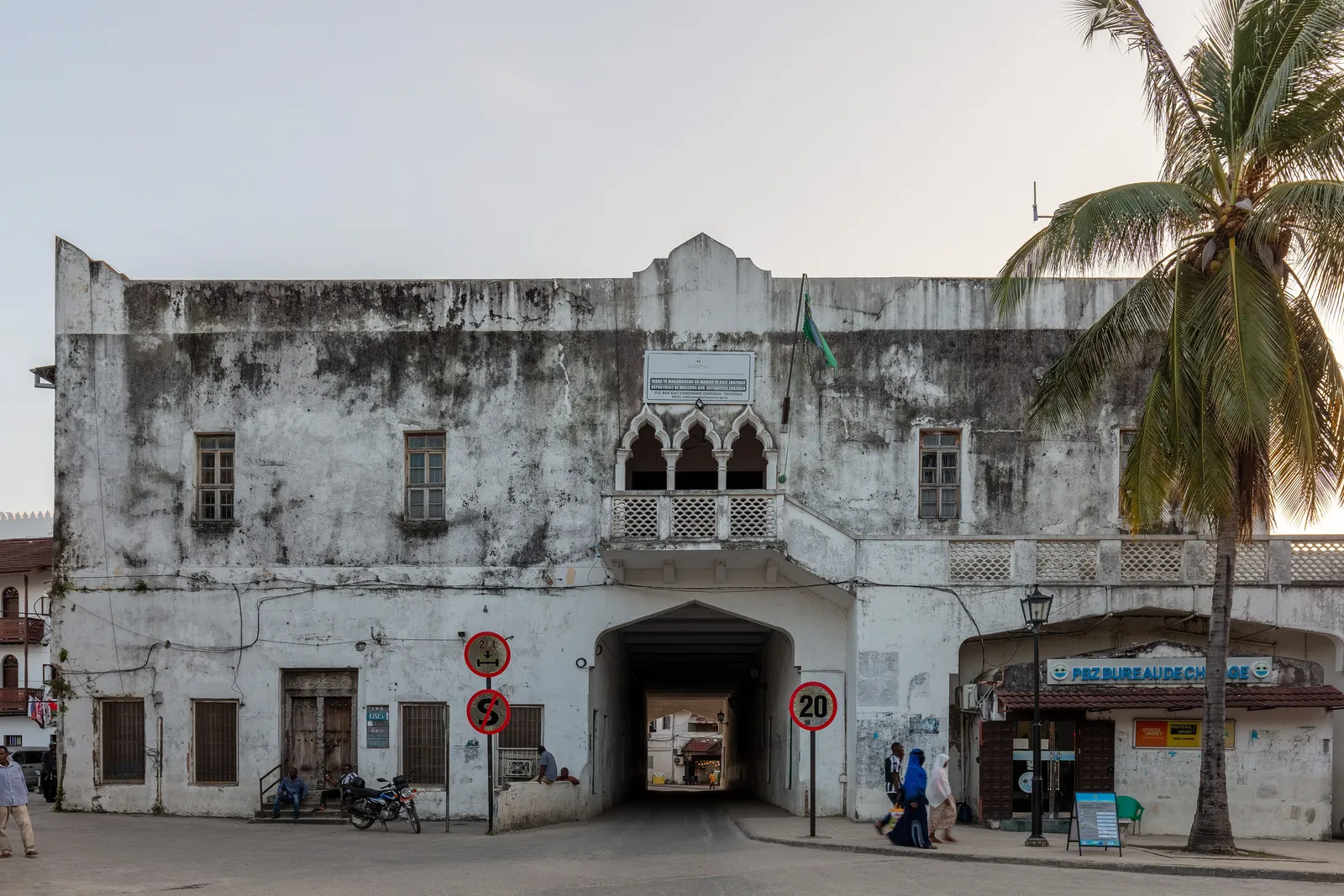
Lamu and the Swahili Coast: Africa's Other Civilisation
For a thousand years, the East African coast was the meeting place of Africa, Arabia, Persia, and India — a maritime world of monsoon traders, coral-stone cities, and dhow captains that produced one of the continent's most sophisticated urban civilisations. Lamu is its best-preserved survivor.
The monsoon winds of the Indian Ocean have been the engine of East African history for well over two thousand years. From roughly October to March, the northeast monsoon blows steadily down the coast from the Arabian Peninsula; from April to September, the southwest monsoon reverses, providing the return passage. Arab, Persian, South Asian, and later Chinese merchants learned to read these winds with precision, loading their dhows with frankincense, dates, cotton, and glazed pottery at ports on the Arabian Sea and arriving on the East African coast weeks later, trading for ivory, gold, slaves, iron, and mangrove poles before riding the reversed monsoon home. The civilisation this seasonal exchange produced — Swahili, from the Arabic word for coast — built cities of coral limestone from Mogadishu to Mozambique Island that combined the architectural idioms of the Islamic world with the materials and aesthetics of coastal Africa, and their descendants still live, trade, and pray in the oldest of those cities today.
Lamu, on a low-lying island off the northern Kenyan coast, is the oldest continuously inhabited Swahili settlement, and the only one whose historical urban fabric has survived largely intact. Its narrow lanes, lined with coral-stone houses whose carved doors and shaded interior courtyards follow centuries-old design principles, are a UNESCO World Heritage Site. There are no cars on Lamu Island — the lanes are too narrow, and the donkey remains the primary beast of burden — and this accident of geography has preserved a townscape that requires no imaginative reconstruction. You arrive by ferry from the mainland, step onto the waterfront, and enter a living city where the architecture, the sound of the call to prayer, the smell of frangipani and salt air, and the sight of dhows crossing the strait combine into an experience of unusual completeness.
The Swahili civilisation: merchants, mosques, and coral towns
Swahili civilisation was not a colonial imposition — it was the organic product of centuries of maritime trade between African coastal populations and merchants and migrants from the Persian Gulf, the Arabian Peninsula, and the Gujerat coast of India. The Swahili language itself reflects this layering: its grammar and vocabulary are Bantu African, but it has absorbed thousands of Arabic, Persian, and Portuguese words over its history, and its script (in the pre-colonial tradition) was Arabic. The result is a culture neither African nor Arab in a simple sense, but distinctly itself: Islamic in religion, African in social structure, and cosmopolitan in its material culture in ways that no single origin story can explain.
At the height of Swahili city-state culture, roughly between the thirteenth and sixteenth centuries, the coast held dozens of independent polities — Kilwa Kisiwani, Mombasa, Malindi, Pate, Zanzibar, Sofala — each controlling a segment of the trade network and competing fiercely with its neighbours. The most prosperous, Kilwa Kisiwani (on an island off the southern Tanzanian coast), was described by Ibn Battuta in 1331 as one of the most beautiful cities in the world. Its Great Mosque, built largely in the fourteenth century, is the largest pre-colonial mosque in sub-Saharan Africa, and its ruins are now a UNESCO World Heritage Site. The Portuguese arrival in 1498 — Vasco da Gama calling at Kilwa and Mombasa on his first voyage to India — disrupted this trade world fundamentally, but did not destroy it; the Swahili coast adapted, absorbed, and continued.
Lamu Old Town: architecture and daily life
Lamu Old Town's approximately 23,000 residents live in a townscape whose essential character has changed little since the eighteenth century. The houses are built of coral rag and plaster, with thick walls that stay cool through the hottest part of the day, and their interiors are organised around a central courtyard or staircase hall that allows air to circulate and maintains privacy in a dense urban fabric. The street-facing facades are relatively plain; the elaboration is inside, in the plasterwork of reception rooms and the carved wooden doors and screens that are the masterworks of Swahili decorative craft. A mature Lamu door — up to four metres tall, with geometric and botanical carving and ornate brass studs — is considered one of the finest expressions of East African artisanship.
Life on the lanes of Lamu moves at a pace that is not somnolence but habit and heat. The fishing dhows leave before dawn; the fish market on the waterfront is active between five and eight in the morning; the main lanes through the old town carry a steady stream of donkeys, schoolchildren in white kanzus, and women in black buibuis. The Riyadha Mosque, built in 1900 by the Hadrami scholar Habib Swaleh, is the spiritual centre of the old town and the site of the annual Maulidi festival, which draws pilgrims from across East Africa and the wider Islamic world. Attending the evening gatherings of Maulidi — the recitation of devotional poetry, the drumming, the processions — is one of the most atmospheric experiences the East African coast offers.
Dhows and the maritime culture of the strait
The dhow is the defining image of the Swahili coast — a broad category of sailing vessel whose variations include the large ocean-going jahazi, the smaller ngalawa outrigger, and the mashua motorised fishing boat, among others. Traditional dhow building, using mangrove poles and coconut-fibre rope (and no nails in the oldest designs), continues on Lamu Island in the village of Matondoni, where craftsmen working without drawings or power tools produce vessels on the beach using techniques transmitted unchanged over generations. A full ocean-going jahazi can take six months to build; the largest carry cargo between Lamu, Mombasa, Zanzibar, and across to Yemen and Oman.
The dhow races held in Lamu during the cultural festival and on other occasions are genuine contests between working boats, not tourist performances — the same vessels used daily for fishing and transport race each other in the strait between the island and the mainland. Sailing on a traditional dhow through the Lamu Archipelago — the cluster of islands and channels that extends north from Lamu toward the Somali border, including the inhabited islands of Pate and Siyu and dozens of uninhabited sand spits fringed with mangrove — is the natural extension of the town experience. The light on the water, the wind in the sail, and the silence outside the main channel offer a register of East Africa that is completely different from the safari world of the interior.
The wider Swahili coast: Mombasa, Kilwa, Zanzibar, and Mozambique Island
Beyond Lamu, the Swahili coast holds a sequence of extraordinary historic sites. Mombasa's Fort Jesus, built by the Portuguese in 1593 and now a UNESCO World Heritage Site, is the finest piece of Portuguese military architecture in East Africa and the site of decades of conflict between Portugal, Oman, and local powers. The old town of Mombasa, behind the fort, retains its Swahili character in its lanes, mosques, and houses, though surrounded now by a major modern city. The Arabuko-Sokoke Forest near Malindi is one of the largest surviving coastal forest remnants in East Africa, a biodiversity hotspot with endemic bird species found nowhere else.
Kilwa Kisiwani, reached by boat from the small mainland town of Kilwa Masoko in southern Tanzania, is the most rewarding of the ruined city-states: the Great Mosque, the Husuni Kubwa palace complex, and the smaller houses scattered through the forest constitute a site of real historical grandeur whose few daily visitors allow for a quality of solitary encounter impossible at better-known sites. The island of Mozambique, at the far southern end of the coast, was the capital of Portuguese East Africa for three hundred years and holds a church built in 1522 that is the oldest European building in the southern hemisphere — a fact that tends to reorganise one's understanding of African history's chronologies.
Food, festivals, and the sensory world of the coast
The cuisine of the Swahili coast is the direct expression of its trading history: biryani and pilau rice brought by Indian Ocean merchants, samaki wa kupaka (fish in coconut-tamarind sauce) that is Swahili in its essence, mandazi doughnuts served at every tea house, and the rich curried dishes whose spice trade origins are audible in every bite. The use of coconut milk — grated fresh coconut pressed through cloth, never from a can in any serious Swahili kitchen — as the base of sauces, rice dishes, and sweets is pervasive and distinct from the food of the African interior. In Lamu, restaurants near the waterfront serve fresh crab, lobster, and snapper grilled over charcoal; the quality of the seafood reflects the continued vitality of the local fishing economy.
The Lamu Cultural Festival, held annually in November, is the most accessible window onto Swahili maritime culture: dhow races, donkey races, taarab music performances (a form that fuses Swahili poetry with Arabic maqam scales and Cuban-influenced instrumentation brought by Omani traders), henna exhibitions, and cooking demonstrations fill three days on the waterfront. The Maulidi festival, whose date shifts with the Islamic calendar, draws pilgrims who come not as tourists but as worshippers, and the distinction is visible and important — the old town during Maulidi is a devotional space, and visitors who understand this are welcome to observe and participate within its terms.
Getting to Lamu and how to structure a coastal journey
Lamu is reached by daily flights from Nairobi's Wilson Airport to Manda Airport, just across the strait from the old town — the flight takes about an hour and a half. A short ferry connects the airport to Lamu waterfront. Road access from Mombasa via the coast road has improved in recent years and is possible in a private 4WD, though the final stretch through Garsen and Witu is long and requires care about security conditions in the region, which fluctuates. Visitors should check current advice before planning a road journey.
A minimum of three nights in Lamu is needed to begin to understand the town, and five or six is better — the unhurried pace rewards unhurried visitors. Combining Lamu with the wider northern Kenyan coast, or with a safari in Samburu or the Laikipia Plateau before heading to the coast, makes a compelling and logistically sensible journey. The other major Swahili coast destinations — Zanzibar, Kilwa, Mozambique Island — are each worth individual trips, but connecting them into a single maritime-culture itinerary produces one of the most historically rich journeys in East Africa, tracing the arc of the Indian Ocean trade world from its northern Kenyan outpost to its southernmost settlements.
Quick answers
Is Lamu safe to visit?
Lamu Old Town and the island itself have been safe for travellers for many years, and the guesthouses and hotels on the waterfront are well-established. The wider Lamu County on the mainland has experienced security incidents related to the Somali border region, and the road from Garsen to Lamu has been subject to periodic incidents. The UK and other governments issue updated travel advice for the region, and checking this before travel is important. The vast majority of visitors who fly into Lamu encounter no security problems.
What is taarab music, and where can I hear it?
Taarab is a form of coastal East African music that fuses Swahili poetry with influences from Arabic maqam music, Indian film song, and later Cuban music introduced via Omani traders. It is primarily associated with Zanzibar, where it developed its most elaborate form, but is also performed in Lamu and Mombasa. The lyrics are typically in Swahili and address themes of love, longing, and social commentary in a highly allusive poetic style. Lamu's taarab groups perform at the Cultural Festival; in Zanzibar, the Dhow Countries Music Academy promotes taarab and other coastal music traditions year-round.
Can I visit Kilwa Kisiwani easily?
Yes, with some planning. Kilwa Masoko is a small Tanzanian coastal town reachable by bus or plane from Dar es Salaam (about five hours by road; there are also periodic domestic flights). From Kilwa Masoko, local boatmen take visitors to Kilwa Kisiwani island. There is no formal accommodation on the island, and most visitors make it a day trip from the mainland. The ruins require at least three hours to walk properly and are most rewarding with a local guide who can explain the historical sequence of the structures.
When is the best time to visit the Swahili coast?
The long rains from late March to May are the least comfortable period on the Kenyan and Tanzanian coast, with high humidity, frequent downpours, and reduced visibility for snorkelling. The short rains in November are lighter and briefer. The best months for travel are June to October (dry, breezy, excellent for sailing) and January to March (dry and hot, ideal for snorkelling and diving). The Lamu Cultural Festival in November and Maulidi (date varies with the Islamic calendar) are worth planning around if possible.
What is the correct dress code in Lamu?
Lamu is a predominantly Muslim community and visitors are expected to dress modestly: shoulders and knees covered for both men and women when walking through the old town. A light linen shirt or cotton blouse and loose trousers or a long skirt are comfortable in the heat and appropriate for the setting. Swimwear is for the beach at Shela, a short walk or boat ride from the old town, not for the waterfront or the lanes. This is not a complicated etiquette — it is the basic courtesy owed to the community.

Let the reading become a route.
When an article sparks something, our planners are the next step. Tell us what you are dreaming of.