How Lima Became One of the Great Food Cities of the World
In a single generation Lima went from an overlooked capital to a city food lovers cross oceans for. The story runs through cold Pacific currents, four hundred years of migration, and a kitchen finally proud of its own pantry.
The short answer is that Lima earned it. The Peruvian capital now regularly places restaurants among the world's most celebrated, and it does so not on imported polish but on its own ingredients — fish from the Humboldt Current, potatoes and chillies from the Andes, fruit from the Amazon. A traveller arriving on Andes to Antarctica steps into a food city at the height of its confidence.
But the rise was not an accident, and it was not only the work of famous chefs. It rests on a deep, multicultural larder built over centuries, on a cold ocean unusually rich in life, and on a national decision — felt in market stalls as much as tasting menus — to treat Peruvian food as something worth taking seriously.
A pantry four cultures deep
Peruvian cooking is layered like the country itself. Beneath everything lies the Andean and coastal indigenous foundation: potatoes in their hundreds of varieties, maize, quinoa, the fierce little ají chillies. Onto this the Spanish brought limes, onions, wheat, chicken and the habit of frying.
Then came the migrations that make Lima's food unmistakable. Enslaved and free Africans shaped the city's hearty, offal-rich comida criolla. Chinese labourers arriving in the nineteenth century created chifa, the Cantonese-Peruvian cuisine now found on nearly every block — lomo saltado, beef stir-fried with soy, chillies and chips, is its most beloved child. Japanese immigrants gave rise to nikkei cooking, which treats Peruvian fish with Japanese precision and is, in many ways, the intellectual engine of the modern Lima kitchen.
No single tradition owns Peruvian food. That plurality is precisely its strength, and it is why a week of eating in Lima never repeats itself.
The cold ocean that feeds the city
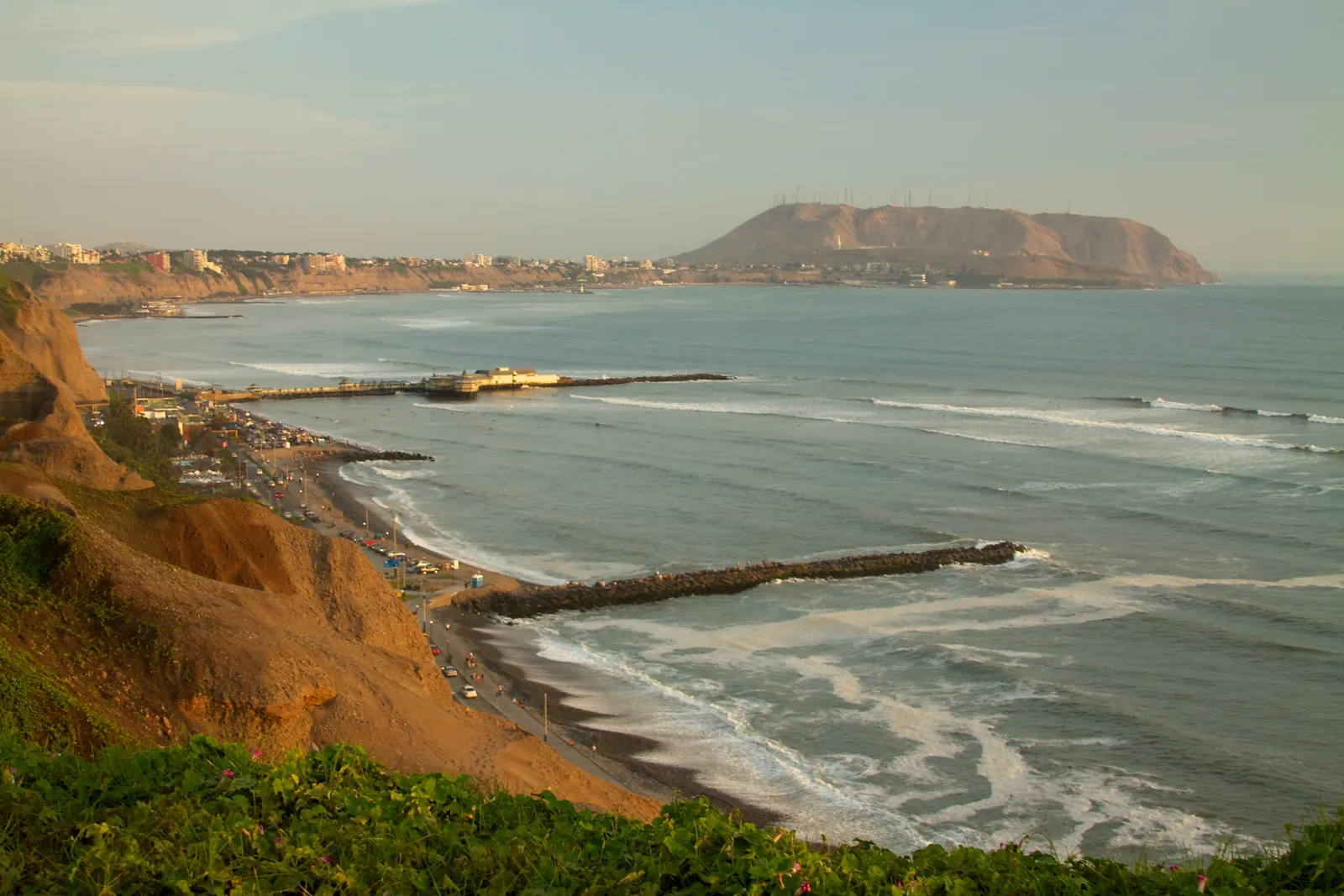
Lima faces the Humboldt Current, a cold upwelling that runs north along the Pacific coast of South America. Cold, nutrient-rich water supports vast quantities of plankton, and plankton supports one of the most productive fisheries on Earth. Peru lands enormous catches, and the variety reaching Lima's markets — corvina, lenguado, bonito, scallops, octopus, sea urchin — is the raw material of the city's signature dish.
That dish is ceviche: raw fish cured briefly in lime juice with chilli, sliced onion and salt, the acidity firming the flesh without heat. The bright, complex liquid left behind has its own name, leche de tigre, and is drunk on its own as a restorative. Ceviche is not a delicacy in Lima so much as a daily fact, eaten at lunch, fresh, and rarely after dark.
The cebicherías and the everyday table
The heart of Lima's food culture is not the tasting menu but the cebichería — an informal, often family-run lunch restaurant built around the morning's catch. Here ceviche arrives alongside its cousins: tiradito, the fish sliced sashimi-thin and dressed without onion; arroz con mariscos, a Peruvian relative of paella stained with ají panca; chicharrón de pescado, lightly battered and fried.
Alongside the seafood runs comida criolla, the home cooking of the coast. Ají de gallina is shredded chicken in a warm, mildly spicy sauce of yellow chilli, walnuts and bread. Causa layers cold whipped potato, tinted gold with ají amarillo, around a filling. Anticuchos — skewers of marinated beef heart grilled over coals — are the great street food of the evening. To understand Lima, eat lunch where the office workers eat.
The new Peruvian kitchen, and why it matters
The international fame is real and deserved. A generation of chefs, working from the early 2000s onward, turned outward to the world and then sharply back toward Peru's own biodiversity — cooking with Amazonian fruits, high-altitude tubers and Andean grains that had never appeared on a fine-dining plate. Some of the most ambitious restaurants now organise their menus by ecosystem and altitude rather than by course.
What matters for a traveller is not the awards but the shift in attitude they reflect. The acclaim gave Peruvians a renewed pride in their own pantry, and that pride flows back down to the markets, the cebicherías and the family kitchen. You feel it in a two-pound lunch as much as in a celebrated dining room.
Eating Lima well on a journey
Lima is the gateway city for travellers heading to Cusco and the Andes, and it rewards even a short stay. Eat ceviche at lunchtime, when the fish is freshest, and treat the leche de tigre as part of the experience. Visit a market — Surquillo is central and approachable — to see the raw scale of the produce. Try at least one chifa and one criollo lunch, because they explain the city better than any single restaurant can.
Drink as the city drinks. The pisco sour — pisco, lime, sugar, egg white, bitters — is the national cocktail, sharp and frothy. Chicha morada, a deep-purple non-alcoholic drink of boiled purple maize spiced with cinnamon and clove, is poured at almost every meal. Both are part of the Peruvian table, and both travel well into the rest of the journey.
Quick answers
Is it safe to eat ceviche in Lima?
At a busy, reputable cebichería, yes. Ceviche is made to order from that morning's catch and eaten fresh, and high turnover is your friend. The lime cure firms the fish but does not sterilise it, so freshness is what matters: choose places that are full at lunchtime and serve ceviche only during the day, and you can eat it with confidence.
What is the difference between ceviche, tiradito and nikkei food?
Ceviche is fish cured in lime with onion and chilli, a dish of indigenous and Spanish heritage. Tiradito slices the fish thinly, sashimi-style, and dresses it without onion, showing a Japanese influence. Nikkei is the broader Japanese-Peruvian cuisine that blends Japanese technique and ingredients with the Peruvian pantry; tiradito is one of its best-known results.
What should I drink with Peruvian food?
The pisco sour is the national cocktail and pairs naturally with ceviche and seafood. For a non-alcoholic option, chicha morada — a sweet, spiced drink made from purple maize — is served almost everywhere. With heartier criollo dishes, a cold local lager is the everyday choice.

Let the reading become a route.
When an article sparks something, our planners are the next step. Tell us what you are dreaming of.