Lodge-to-Lodge Trekking in the Himalaya, Explained
You can walk for days through the highest mountains on Earth and sleep each night in a warm room with a hot meal. Here is how teahouse trekking works, and why it suits a slow-travel journey.
Lodge-to-lodge trekking — often called teahouse trekking — is the simplest way to walk deep into the Himalaya. You carry a light daypack, walk from one village inn to the next, and arrive each afternoon to a bed, a hot drink and a cooked dinner. There are no tents to pitch, no camp to strike, and no need for the heavy expedition logistics most people picture when they imagine the high mountains.
It is the form of mountain travel best suited to a Viajes Globales journey, because it lets the walking stay gentle and unhurried. You move at the pace of the valley, sleep among the people who live there, and let the days build slowly toward the high country rather than racing at it.
What a lodge actually is
A Himalayan lodge is a family-run inn, built and staffed by the community whose valley you are walking through. In the busy trekking regions of Nepal these have evolved over decades from simple shelters into comfortable small hotels: a warm communal dining room heated by a central stove, a kitchen turning out soup, rice, noodles and eggs, and private or twin bedrooms off a corridor.
Standards rise and fall with altitude and remoteness. Lower down, you may find hot showers, charging points and even espresso. Higher up, rooms grow simpler, walls thinner and water colder, and the dining-room stove becomes the warm heart of the evening. Everywhere, the lodge is a working household first and an inn second — which is much of its quiet pleasure.
A day on the trail
Days begin early and unhurried. You breakfast in the lodge as the sun reaches the valley, then walk through the cool of the morning — typically four to six hours, broken by a long lunch stop at a teahouse along the way. Distances are modest by design; in the mountains it is the climbing, not the kilometres, that counts, and a sensible itinerary keeps each day's ascent gentle.
Afternoons are for arriving. You reach the next village with light to spare, claim a room, wash, and settle into the dining room with tea and a book as other walkers drift in. Dinner is early, the talk is easy, and the mountain dark comes down hard and cold. By eight o'clock most of the lodge is asleep.
What you carry, and what you don't
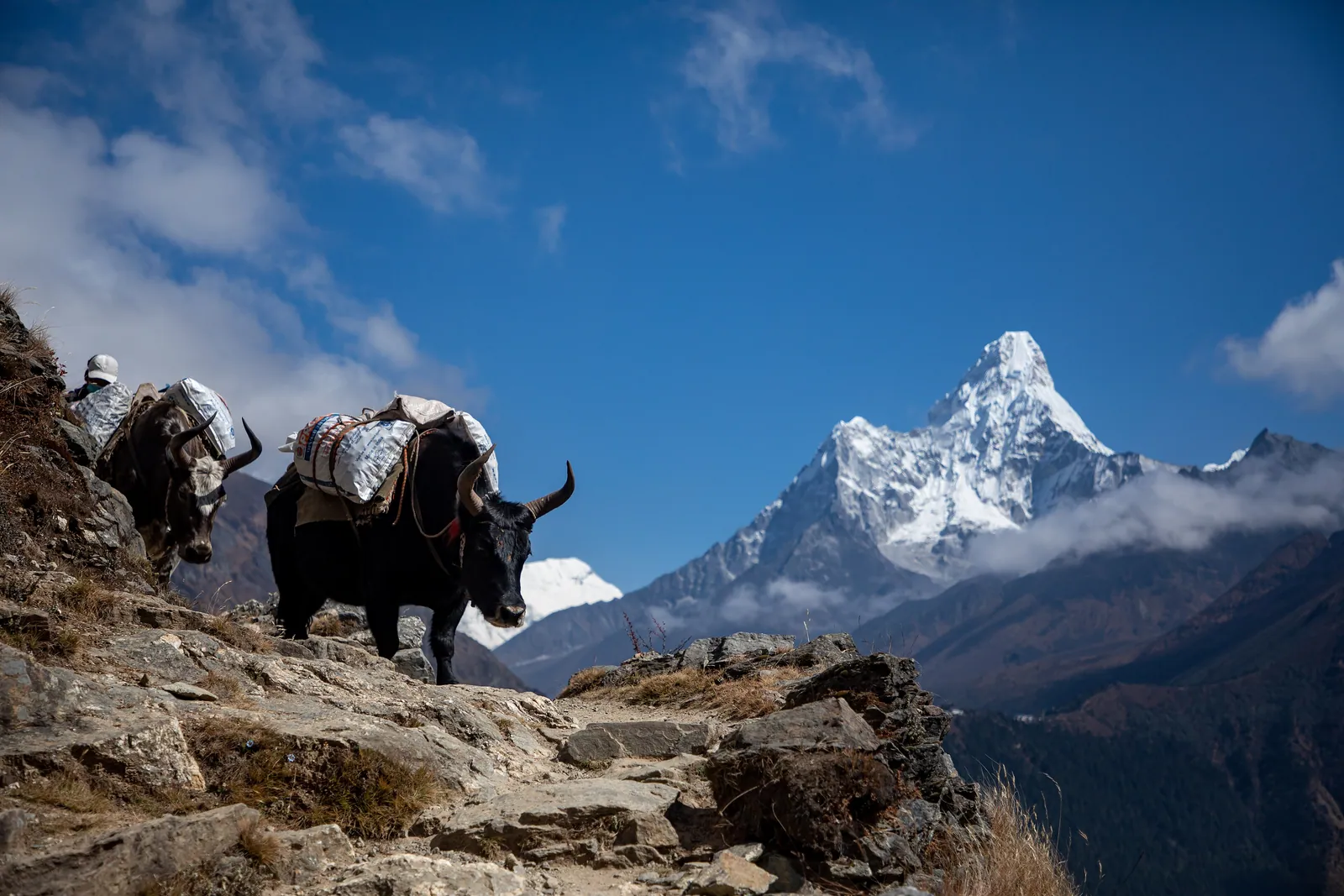
The defining comfort of lodge trekking is the light pack. You walk with only a daypack — water, layers, sun protection, camera, the day's snacks. Your main bag travels separately, carried by porters or pack animals, and is waiting for you at the next lodge. This is not merely convenience; at altitude, walking light is what keeps the days within reach.
Because every lodge feeds you, you carry no stove, no tent, no cookware and very little food. The result is a style of mountain travel that asks far less of your body and your packing than its grand setting suggests — which is precisely why it opens the high Himalaya to ordinary, unhurried travellers.
Eating and sleeping at altitude
Lodge menus across the trekking regions are reassuringly similar, built around what grows and keeps in the mountains: dal bhat, the lentil-and-rice plate that fuels the whole Himalaya and comes with refills; fried rice and noodles; potatoes, eggs, soups and Tibetan bread. It is plain, plentiful, carbohydrate-rich food — which is exactly what the body wants on thin air.
Sleep is the part most travellers underestimate. Lodge bedrooms are unheated, so a good sleeping bag matters even with a bed beneath you, and the first nights at altitude are often broken — normal, and no cause for alarm. Drink well, dress warmly for the night, and treat the early, quiet evenings as part of the rest the mountains are asking of you.
How we fold trekking into a grand journey
On The Long Way East, the Himalayan walking days are deliberately gentle and never the point of the trip on their own. They are woven between the cities and monasteries of the route so that you reach the high valleys already rested and partly acclimatised, and so the trail is an experience to savour rather than a challenge to survive.
We keep groups small, walk with experienced local guides and porters from the valleys themselves, and build the schedule around honest daily ascent limits and rest days. No day involves technical ground or climbing. If the high trail is not for you, the journey is arranged so you can rejoin lower down — the mountains are offered, never imposed.
Quick answers
Do I need to be an experienced hiker for lodge-to-lodge trekking?
No. The walking is non-technical — well-worn paths, no ropes, no climbing — and the difficulty lies in the altitude and the consecutive days rather than in any single stretch. What helps most is steady aerobic fitness built over a few months beforehand and a willingness to walk slowly. Our guides set a deliberately unhurried pace, and itineraries cap each day's ascent.
Will I be warm and comfortable enough in the lodges?
The dining rooms are warm, heated by a central stove, and meals are hot and generous. Bedrooms, however, are unheated, so the comfort of your night depends on a good sleeping bag rather than the building. Lower lodges can be genuinely cosy, with hot showers and charging; higher ones are simpler. We tell you honestly what to expect at each stage.
What happens to my luggage while I walk?
You carry only a daypack. Your main bag is moved ahead each day by porters or pack animals and is waiting at the next lodge when you arrive. We set a weight limit for that bag so the load is fair to the people carrying it, and we advise you on exactly what to keep with you in the daypack for the day's walking.
Let the reading become a route.
When an article sparks something, our planners are the next step. Tell us what you are dreaming of.