Mongolia and the Great Steppe: a Journey into the World's Last Nomadic Heartland
Mongolia is the world's second-largest landlocked country and among the most sparsely populated — a place where the medieval world of the horse, the ger and the open horizon survives into the present with a force that is nothing short of astonishing.
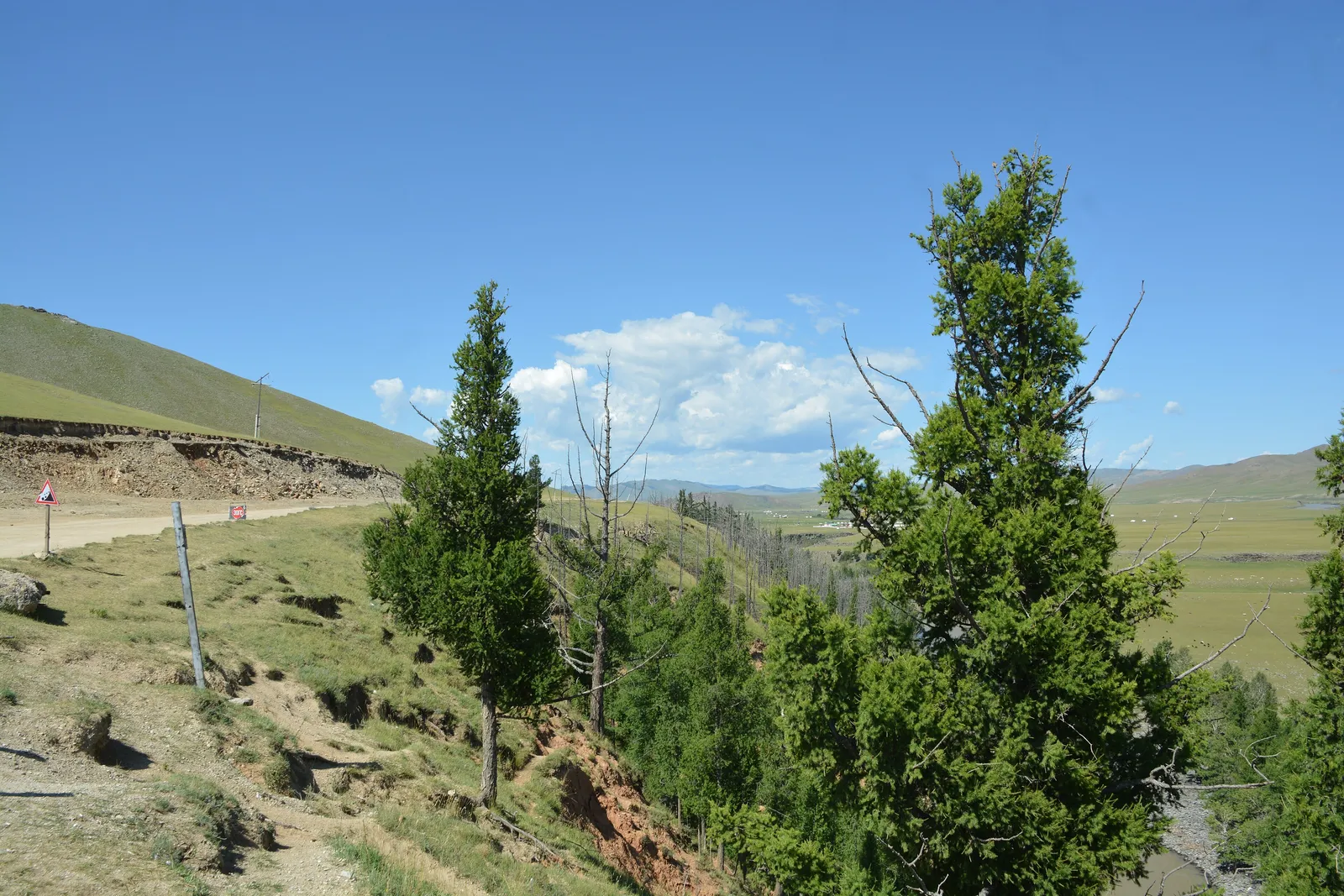
Stand on any ridge in the Mongolian heartland and the view is the same in every direction: grass, sky, and the slow arc of the earth curving away. No telegraph poles, no fences, no villages — just the occasional white dome of a ger glowing against the hillside, a column of smoke rising from its roof vent, a herd of horses grazing in the middle distance. This is one of the few landscapes on the planet that can still produce the sensation of genuine vastness, a feeling that the modern world has not quite managed to reach.
Mongolia is the homeland of Chinggis Khan, the founder of the largest contiguous land empire in history, but it is also something harder to quantify: the last great stronghold of pastoral nomadism, a way of life in which families still follow their animals across the seasons, dismantle and rebuild their homes in hours, and measure wealth in livestock rather than land. To travel here is not to visit a heritage site but to encounter a civilisation that is still, in the most literal sense, on the move.
The land and its logic
Mongolia covers more than 1.5 million square kilometres, roughly three times the area of France, and supports a population of around three and a half million people — fewer than the city of Los Angeles. This arithmetic of emptiness shapes everything. The country divides broadly into the Gobi Desert in the south, the forested mountains of the north, and the central steppe that is Mongolia's geographic and spiritual core: an immense rolling grassland that merges imperceptibly, in every direction, with the sky. The Mongolian language has a word for this, the тал (tal): a flatness so perfect and so total that it becomes a kind of beauty.
The continental climate is extreme at every extreme. Summers on the steppe reach 30 degrees Celsius and fill the grass with wildflowers; winters drop to minus 40, and a dzud — a catastrophic freeze that crusts the grassland under ice — can kill tens of thousands of livestock in a single season. This harshness is not incidental to nomadic culture; it produced it. The ger, with its felt walls and central iron stove, is a feat of portable engineering precisely suited to this range. Mongolian hospitality — the instant offer of fermented mare's milk, dried curd and boiled mutton to any stranger who appears at the door — is not sentiment but survival logic accumulated over centuries.
Ulaanbaatar: the gate and the anomaly
All journeys into Mongolia begin in Ulaanbaatar, a city of some 1.5 million people that holds roughly forty percent of the entire national population — one of the most pronounced urban concentrations in the world. The city sprawls across a river valley at roughly 1,350 metres elevation, ringed by hills and, increasingly, by vast ger districts where recent migrants from the countryside have settled in a nomadic urbanisation that has no clear parallel elsewhere. The centre is Soviet-bloc architecture softened by Buddhist monasteries and brightened by the occasional piece of startlingly contemporary glass.
Gandan Monastery, the largest functioning Buddhist monastery in Mongolia, is the right place to begin: its morning prayer session, attended by maroon-robed monks in a hall thick with incense and the low drone of liturgy, connects the traveller immediately to the spiritual bedrock beneath the steppe. The National Museum of Mongolia, a few blocks away, is small but excellent, its exhibits tracing the arc from the Bronze Age deer stones of the Mongolian highlands through the Xiongnu confederation to the Mongol Empire and the extraordinary material culture it produced. Then leave the city as quickly as you can, because Ulaanbaatar is not Mongolia — it is the door to it.
The ger camp and nomadic hospitality
The standard accommodation in the Mongolian countryside is the tourist ger camp, where visitors sleep in furnished gers — the same round, felt-walled, lattice-framed structure that nomadic families have used for at least a thousand years, arranged in small clusters near a herding family's summer ground. The best camps are not fences separating travellers from Mongolian life but points of contact with it: the family that runs the camp is usually itself a herding family, and time spent with them — watching a child rope a horse at dawn, helping carry water from a stream, being taught to make airag (fermented mare's milk) by the matriarch — is the education that no museum can provide.
Mongolian hospitality has formal protocols worth knowing. Upon entering a ger you move clockwise, sit where directed, accept any food or drink offered with both hands or the right hand supported at the elbow, and do not step on the threshold. Airag, mildly alcoholic and sharply sour, is offered first; refusing is considered impolite, though a small sip is sufficient. Aruul, the small white dried curd tablets, are harder to love but equally central. The meal, almost certainly mutton in some form — buuz (steamed dumplings), tsuivan (hand-pulled noodles with meat), or simply khorkhog (mutton cooked with hot stones in a sealed container over fire) — is an act of generosity that carries a kind of gravity.
Horseback and the open horizon
Mongolia has more horses than people, and the relationship between the two is one of the oldest and most sophisticated in the world. Mongolian horses are small, shaggy and extraordinarily hardy — a breed unchanged in essentials since the time of the empire, capable of subsisting on dry grass through winter and covering vast distances at a canter. Riding one across the steppe, without a fence or a road or any fixed point in sight, is among the genuinely transformative physical experiences available to a traveller in Asia: you understand, suddenly and with your whole body, what it meant to be the fastest civilisation on earth.
The Naadam Festival, held in mid-July, is the great annual expression of Mongolian identity and the perfect frame for a summer visit. The 'three manly games' — wrestling, archery and horse racing — are contested across the country, with the national Naadam in Ulaanbaatar drawing the finest competitors from every aimag (province). The horse races are not short-distance track races but cross-country endurance events of ten to thirty kilometres ridden by children aged five to thirteen, whose lightness in the saddle is considered an advantage. To watch a herd of horses streaming across the open steppe toward a finish line, with a crowd of Mongolians in their best deels (traditional robes) roaring from the hillside, is to witness a culture entirely at home in itself.
The Gobi: silence at the edge of the world
The Gobi Desert occupies roughly a third of Mongolia's territory and extends into China's Inner Mongolia. It is not, for most of its extent, a landscape of sand dunes — the majority is rocky, sparse and austere, a stone plateau broken by saxaul scrub and the occasional flash of a desert spring. The great exception is the Khongoryn Els, a belt of singing sand dunes rising to nearly 300 metres in the Gobi-Altai region: one of the largest dune systems in Central Asia, genuinely spectacular in the low light of morning or evening, when the shadows deepen every ridge into a line of pure geometry.
The Gobi is also fossil country. The Flaming Cliffs of Bayanzag, where the American explorer Roy Chapman Andrews discovered the first known dinosaur eggs in 1923, remain one of the great palaeontological sites of the world, their red sandstone eroded into columns and gullies that glow amber at sunset. Gobi wildlife is thinly distributed but extraordinary: the wild Bactrian camel, one of the rarest large mammals on earth; the snow leopard in the mountain ranges to the west; the Gobi bear, the world's only desert-dwelling bear, of which fewer than a hundred individuals survive. These are animals on the edge of everything, in a landscape that feels the same way.
When to go and how to travel
The Mongolian travel season runs from late May to early September, with the sweet spot being June to August: the steppe is green, the days long and warm, and the Naadam Festival (11–13 July nationally) provides a cultural anchor for any itinerary. May and September can be exquisite — cooler, less crowded, with dramatic light — but come with the risk of unseasonable cold, particularly at night. Winter travel is possible but demanding; temperatures in January average well below minus 20 even in Ulaanbaatar, and the logistics of moving across frozen steppe require specialist preparation.
There are no meaningful train or bus networks in the Mongolian countryside; travel is by four-wheel-drive vehicle on rough tracks, by horse, or on foot. This is not an inconvenience but the point — the absence of infrastructure is what makes the landscape what it is. Our journeys into Mongolia are built around a combination of ger camps, home stays with herding families, and time on horseback that lets the land reveal itself at its own pace. The great lesson of Mongolia is that distance and time are not obstacles but the medium through which the country is understood.
Quick answers
Is Mongolia safe for travellers?
Mongolia is generally safe for travellers. Ulaanbaatar, like any capital city, requires normal urban vigilance, particularly around the central areas at night. Outside the city, the main practical risks are logistical — the remoteness of the steppe means that vehicle breakdowns, river crossings and sudden weather changes require experienced guides and properly equipped vehicles. Travelling with a specialist operator whose guides know the terrain and speak Mongolian is strongly advisable for anyone venturing beyond the capital.
What should I know about eating and drinking in a ger?
Accept everything offered with both hands or the right hand supported by the left, and take at least a small amount even if you cannot finish it. Airag (fermented mare's milk) is mildly alcoholic, with a sour, slightly fizzy taste; suutei tsai (salted butter tea) is an acquired flavour but warms effectively on cold evenings. The food is heavily meat-based — mutton above all — and vegetarians will find the countryside genuinely challenging. Come prepared with supplementary provisions if your diet is restricted.
What is the best way to experience the Naadam Festival?
There are two distinct experiences: the national Naadam in Ulaanbaatar (11–13 July), which is large, organised and internationally attended, and local Naadams in countryside aimag centres, which are smaller, more spontaneous and far more intimate. The countryside version — attending the local Naadam of a provincial centre, perhaps from a nearby ger camp — is usually the more memorable, though it requires planning to be in the right place at the right time. Both are worth seeing if the timing allows.
How should I dress for the steppe in summer?
Mongolian summer weather is highly variable: a warm sunny morning can give way to hail and near-freezing temperatures within hours, and the UV exposure on the open steppe is intense. Bring a combination of light layers for warmth, good sun protection, a waterproof shell, and sturdy footwear for uneven ground. The traditional deel worn by Mongolians is admirably adapted to this range and doubles beautifully as a sleeping garment on cold nights.
Can I travel independently in Mongolia?
Ulaanbaatar is navigable independently and has a growing range of guesthouses and hostels. The countryside is genuinely difficult to navigate alone without Mongolian language, local knowledge and a reliable vehicle — tracks are unmarked, distances are vast, and fuel and water cannot be taken for granted. Most travellers to rural Mongolia work with a guide and driver, either through a local agency or an international operator, and this arrangement is not a constraint but an asset: your guide is the key that opens ger doors.
Let the reading become a route.
When an article sparks something, our planners are the next step. Tell us what you are dreaming of.