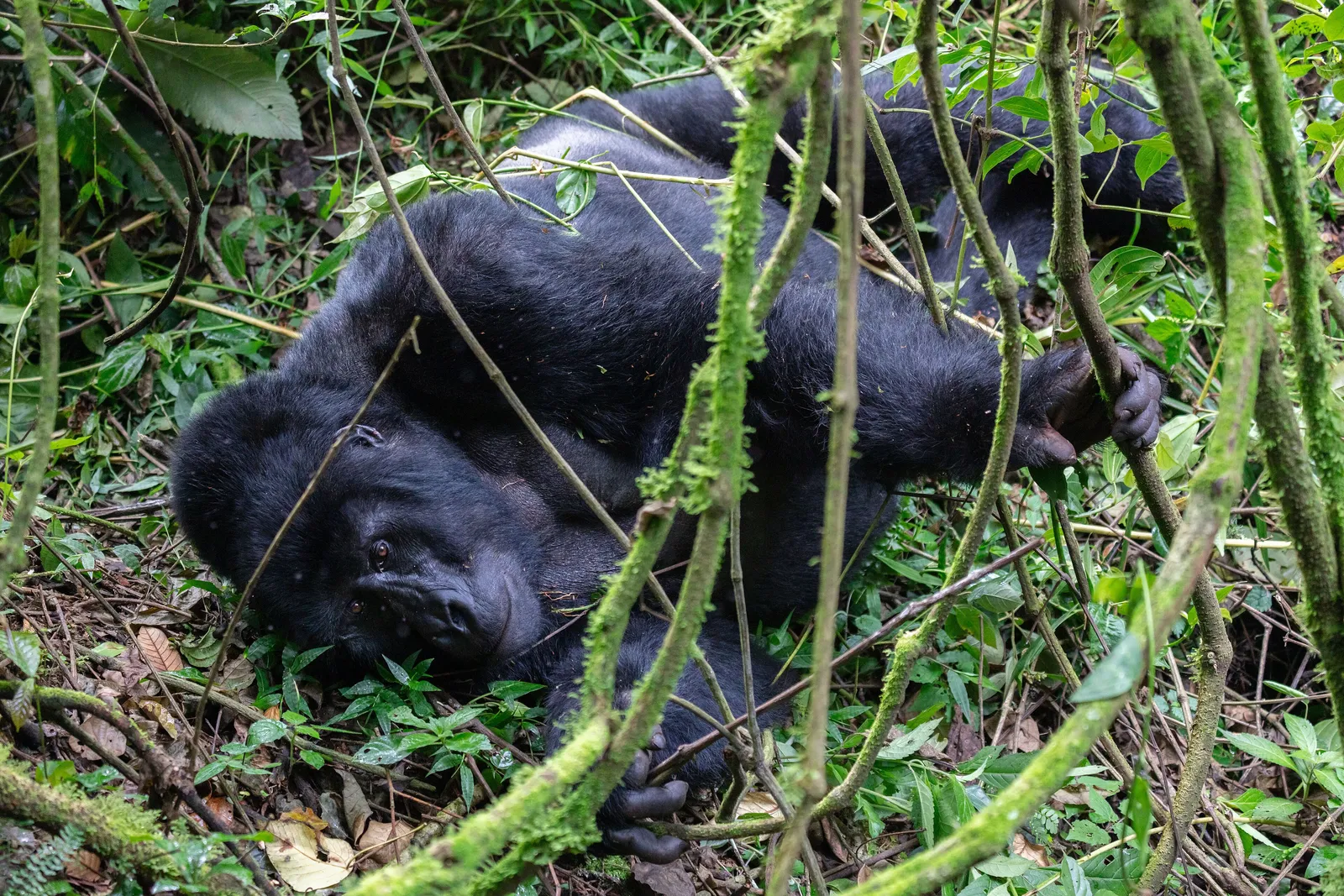
Mountain Gorilla Trekking: Bwindi, the Volcanoes, and an Hour That Changes Everything
Sitting in a forest clearing ten feet from a silverback mountain gorilla is one of the most profound wildlife encounters on Earth — and one of the most carefully managed. Here is how gorilla trekking works, why it matters, and what to expect on the day.
There are roughly 1,000 mountain gorillas left on Earth. Every single one of them lives in a cluster of forests straddling the borders of Uganda, Rwanda and the Democratic Republic of Congo — a sliver of Afromontane forest on the flanks of an old volcanic chain. That geographical fact transforms what might otherwise be a wildlife wish into something achievable: go to the right forest, on the right morning, and the encounter is not a matter of chance but of planning and a willingness to climb.
The hour you are allowed with a habituated gorilla family is unlike any other wildlife experience. These are not animals glimpsed at distance through a telescope. They are enormous, placid, and utterly indifferent to you in a way that feels like acceptance. The silverback may be ten feet away, breaking branches. An infant may be climbing the same tree your guide is leaning against. The sensation — of being among them rather than watching them — rewires something in the traveller that no photograph fully restores.
The mountain gorilla: who they are
The mountain gorilla is a subspecies of the eastern gorilla, distinguished from the lowland gorillas of Congo and Cameroon by its thicker, longer coat — an adaptation to the cold temperatures of its high-altitude home, which typically lies between 2,200 and 4,000 metres. An adult male silverback — so called for the saddle of silver hair that develops across his back at maturity — can weigh up to 220 kilograms, but despite their imposing size mountain gorillas are primarily herbivores, spending most of their day moving slowly through the forest and eating: leaves, stems, bark, and occasionally fruit.
Gorilla society is organized around a dominant silverback who leads and protects the group. Females with young, younger adult males and juveniles complete the family. Groups typically number between five and thirty individuals. The silverback's role is not merely symbolic — he mediates conflicts, leads movement, and is the primary defender against threats. His chest-beat, which can be heard hundreds of metres away, is as much communication as display.
The two great sites: Bwindi and Volcanoes
Bwindi Impenetrable National Park in southwestern Uganda holds roughly half the world's mountain gorilla population. Its name is apt: the forest is dense, steep and tangled, and treks here can be short or, in the more remote sectors, long and exhausting. Bwindi is biodiversity-rich beyond the gorillas — it shelters more tree species than any other forest in East Africa — and encounters here feel ancient and primeval, deep in a rainforest that predates the ice ages.
Volcanoes National Park in northern Rwanda offers a somewhat different experience. The terrain is dramatic — the Virunga volcanoes rise through bamboo belt and Hagenia woodland to open heath above — and the park is more compact and accessible from Kigali. Rwanda's premium pricing for permits reflects a conservation model that channels substantial funds back into the park and surrounding communities. Both sites are extraordinary; the choice often comes down to budget, time, and what kind of forest you want to disappear into.
The permit, the group, and the regulations
Access to habituated gorilla families is strictly controlled by permit. In Uganda, permits are issued by the Uganda Wildlife Authority; in Rwanda, by the Rwanda Development Board. The number of permits is limited to eight visitors per family group per day, and no single group spends more than one hour with the gorillas. These restrictions are not bureaucratic formality — they are the mechanism that keeps the gorillas healthy.
Mountain gorillas are highly susceptible to human respiratory viruses. Every visitor must wear a face covering during the encounter and maintain a minimum distance of seven metres from the animals (though gorillas often close that gap themselves). Anyone with a cold, flu or stomach illness on the day of the trek should not go, and reputable operators will enforce this without apology. The permit fees — substantial, particularly in Rwanda — fund ranger salaries, anti-poaching patrols, community benefit programs and veterinary care. The gorillas exist in part because the permit system makes their presence economically valuable.
What actually happens on trek day
Trekking begins early, typically with a briefing at the park gate at dawn. A group of eight sets out with an armed park ranger, a guide, and often porters — hiring a porter is strongly encouraged both for the practical help on steep terrain and because it provides local employment. The trek to find the gorillas can take anywhere from under an hour to a full day; trackers move ahead to locate the family, and guides communicate by radio to lead your group to them.
When you find the family, the hour begins. The guide will position the group at a respectful distance and indicate where to stand or crouch. Gorillas may be resting, feeding, grooming or playing. Young animals are often curious and may approach the group; the guide will gently redirect anyone who gets too close. Cameras are welcome but flash photography is not. The hour ends firmly: guides enforce the time limit, and the group withdraws quietly, leaving the family undisturbed.
How trekking funds conservation
Mountain gorilla numbers have been rising — from around 620 individuals counted in 2008 to over 1,000 today. This is one of the few genuinely encouraging stories in large mammal conservation, and the permit system is a significant reason why. When local communities receive a share of permit revenue, and when rangers are well-paid and equipped, the incentive structure around the gorillas changes fundamentally: a living gorilla in a functioning park is worth more than any alternative use of the land.
Community development programs funded by trekking revenue have built schools, clinics and water projects in villages around both Bwindi and the Volcanoes. Former poachers have become rangers and trackers. Women's cooperatives produce crafts sold to visitors. The model is not perfect and faces constant pressure from poverty, agriculture and political instability, but it demonstrates what wildlife tourism can be when the economics genuinely reach the people living alongside the animals.
Quick answers
How fit do I need to be to trek for gorillas?
Reasonably fit, but you do not need to be an athlete. Treks range from about an hour to a full day of steep, slippery terrain at altitude. The hardest sectors of Bwindi can be genuinely demanding. Hiring a porter — warmly recommended — removes the strain of carrying your bag on difficult ground. If you have mobility concerns, discuss them with your operator; some families are more accessible than others and some sites are easier overall.
How much does a gorilla trekking permit cost?
Permit prices change periodically and vary by country. Rwanda's permits are the most expensive in the region — currently set at around US$1,500 per person — reflecting its premium conservation model. Uganda's permits are considerably less expensive. Both include the guided trek and the hour with the gorillas. The price, however it feels, funds ranger salaries, veterinary care and community programs that are essential to the gorillas' survival.
Is it safe to be close to mountain gorillas?
Yes, in a properly managed encounter. Habituated gorilla families have grown up with human observers present and are calm and predictable around them. The risks are mostly to the gorillas, not to you — their susceptibility to human disease is the primary concern, which is why health screenings and masks are mandatory. Park rangers and guides are trained to manage the encounter and to intervene calmly if a gorilla approaches too closely.
What is the best time of year to trek for gorillas?
Gorillas can be visited year-round, but the drier months — roughly June to September and December to February — generally make for better trekking conditions. Trails are less slippery, the forest is somewhat clearer, and travel logistics are simpler. The wet seasons bring lush, dense vegetation that can make photography harder but does not affect the gorillas themselves.
Let the reading become a route.
When an article sparks something, our planners are the next step. Tell us what you are dreaming of.