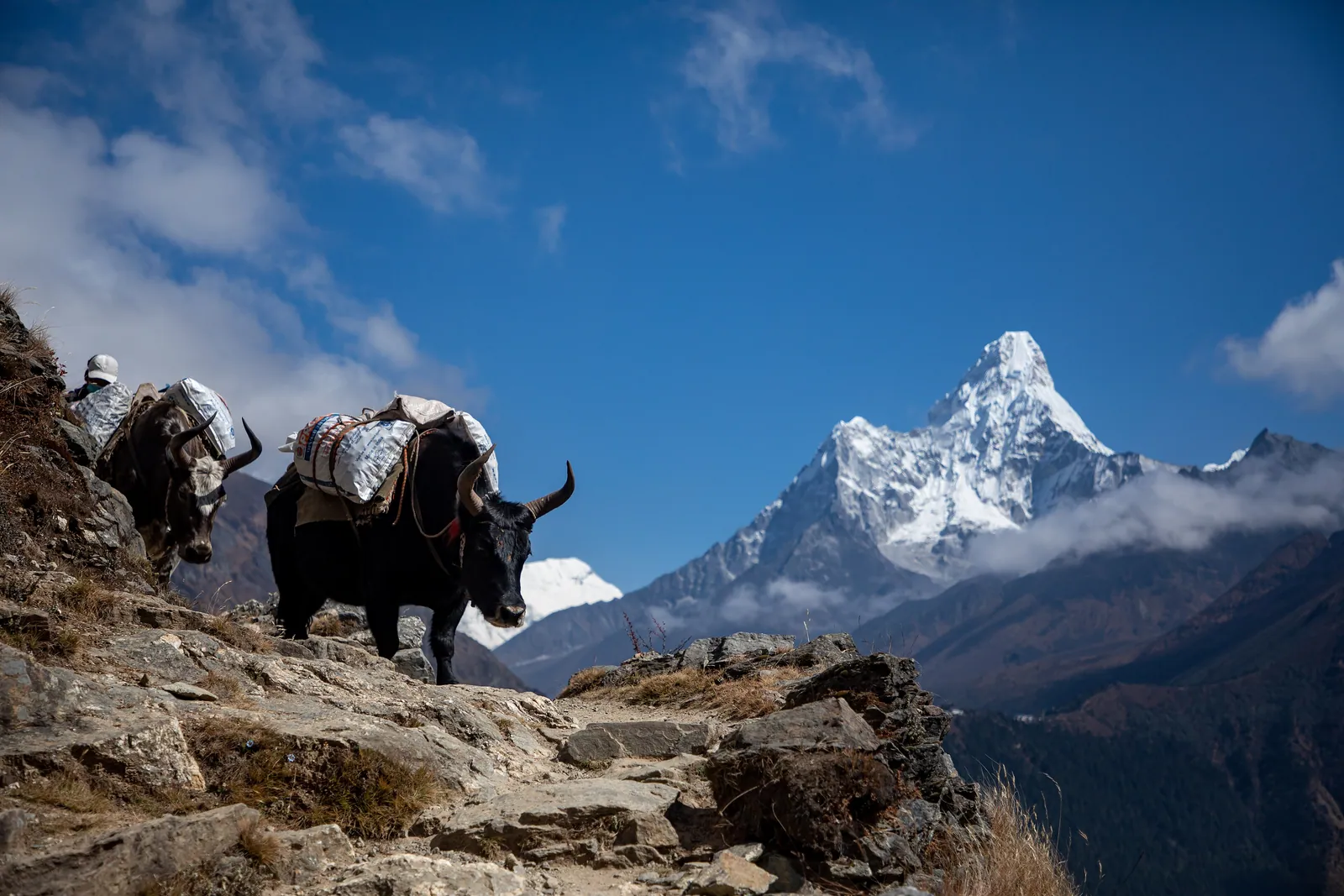
Mountain Monasteries and the Buddhist Himalaya
Across the high Himalaya, whitewashed monasteries cling to ridges and cliffs, alive with prayer flags, butter lamps and the deep note of the horn. A respectful traveller's guide to the living Buddhism of the mountains.
From Ladakh and Tibet through Nepal, Sikkim and Bhutan, the high Himalaya is a Buddhist world. Its visible signature is the monastery — the gompa — set on a ridge or against a cliff, its white walls and gold roof rising above a village, its courtyards loud with horns and ceremony on festival days. These are not museums. They are working religious houses, central to the life of the valleys around them.
For a traveller, the Buddhist Himalaya is one of the great rewards of the mountains, and one that asks for a little understanding in return. A small amount of knowledge — and a respectful manner — turns a monastery from a photogenic stop into a genuine encounter.
Tibetan Buddhism in the mountains
The form of Buddhism that took root across the Himalaya is Tibetan, or Vajrayana, Buddhism — a tradition that spread from India into Tibet from the 7th century and outward along the mountain chain. It absorbed older Himalayan beliefs as it went, which is why its practice is so vivid: a world of protector deities, sacred peaks, pilgrimage and ritual alongside the quiet core of meditation and compassion.
Several schools developed within it, distinguished by lineage and teaching rather than by deep doctrinal division. A traveller does not need to tell them apart. What matters is recognising that Himalayan Buddhism is a living, practised faith — the framework of birth, harvest, marriage and death for millions of mountain people — and not a relic to be observed from outside.
How to read a monastery
A gompa repays slow looking. The main hall, the dukhang, is where monks assemble to chant; its walls are usually covered in murals and thangka paintings depicting buddhas, teachers and the wheel of life. Butter lamps burn before the altar, and the air carries juniper smoke. Around the building you will find prayer wheels — cylinders inscribed with mantras, turned clockwise to release their blessing — and lines of prayer flags fraying in the wind.
Much of the symbolism rewards a guide's explanation: the wheel of life by the door, the meaning of a particular protector, the story a mural tells. On The Long Way East, the monasteries of the Tibetan plateau are visited with people who can read these walls — so that the colour resolves into meaning rather than staying merely decorative.
Prayer flags, stupas and the marks on the land
Buddhism in the Himalaya is written across the whole landscape, not held inside buildings. Strings of five-coloured prayer flags carry mantras on the wind from every bridge, pass and ridge. White stupas — chortens — mark sacred ground and the relics of teachers. Long mani walls, built of stones carved with the mantra om mani padme hum, line the trails.
There is a quiet etiquette to moving among these things, and it is easy to honour. Walk clockwise around stupas, mani walls and monasteries, keeping them on your right; this is the direction of the practice, and following it is a small, welcome courtesy. Never move or take the carved mani stones. The land itself is, in a real sense, part of the temple.
Festivals and the monastic year
The most spectacular expression of mountain Buddhism is the masked festival — known as cham in many regions — when monks perform sacred dances in elaborate costume and carved masks, enacting the triumph of compassion over harm. Whole valleys gather; the dates follow the Tibetan lunar calendar and so shift from year to year.
If a journey's timing allows, a festival is an extraordinary thing to witness, and it is genuinely open to respectful visitors — these are public acts of devotion and celebration. The key is to attend as a guest: to watch quietly, follow local cues on where to stand and when photographs are welcome, and let the community's day belong to the community.
Visiting with respect
The courtesies of a monastery are simple and worth knowing before you arrive. Dress modestly, with shoulders and knees covered. Remove your shoes and any hat before entering a temple hall. Speak quietly, ask before photographing monks, altars or ceremonies, and never use flash near old murals. Walk clockwise. If you make an offering at the altar, a small banknote or a butter-lamp donation is the customary gesture.
On our journeys, monasteries are visited at hours that respect the monks' own routine, often with introductions arranged in advance, and our guides brief every group on local expectations beforehand. A respectful visitor is always welcome in the Buddhist Himalaya — and being a good guest is the surest way to be received as one.
Quick answers
What kind of Buddhism is practised in the Himalaya?
The Himalaya is overwhelmingly home to Tibetan Buddhism, also called Vajrayana Buddhism, which spread from India into Tibet from the 7th century and along the mountain chain through Ladakh, Nepal, Sikkim and Bhutan. It is a living, widely practised faith with several schools, known for its vivid ritual, its monasteries and its strong tradition of pilgrimage and sacred landscape.
How should I behave when visiting a monastery?
Dress modestly with shoulders and knees covered, remove shoes and hats before entering temple halls, and keep your voice low. Walk clockwise around stupas, mani walls and the monastery itself. Ask permission before photographing monks or ceremonies and never use flash near old murals. A small donation or butter-lamp offering is a customary and welcome courtesy.
Can travellers attend Himalayan Buddhist festivals?
Yes — masked monastery festivals are public acts of devotion and respectful visitors are welcome to watch. The dates follow the Tibetan lunar calendar and change each year, so attending one depends on a journey's timing. The etiquette is simply that of a good guest: watch quietly, follow local cues on where to stand, and ask before taking photographs.
Let the reading become a route.
When an article sparks something, our planners are the next step. Tell us what you are dreaming of.