Music as a Way Into a Culture
You do not need a shared language to be moved by a song. A guide to the living musical traditions along our journeys — Andean panpipes, flamenco, Silk Road maqam — and how to find the real thing.
Of all the doors into an unfamiliar culture, music is the one that opens fastest. You can hear a flamenco singer's grief or an Andean panpipe ensemble's lift without a word of the language, and an evening of live music in the place that produced it often teaches more than a museum.
This article is a listener's guide to the musical traditions a traveller meets along our journeys — what each one is, where it comes from, and how to tell a genuine performance from a show staged for tourists. The aim is simple: to help you find the music where it is alive rather than where it is sold.
The Andes: panpipes, charango and the highland sound
The music of the Andean highlands is built around wind and string. The siku, a panpipe traditionally played in interlocking pairs so that two players share a single melody, and the quena, an end-blown notched flute, carry sounds that are pre-Hispanic in origin. The charango, a small ten-stringed instrument developed after the Spanish brought the guitar, adds the bright, rapid strum that anchors much highland music.
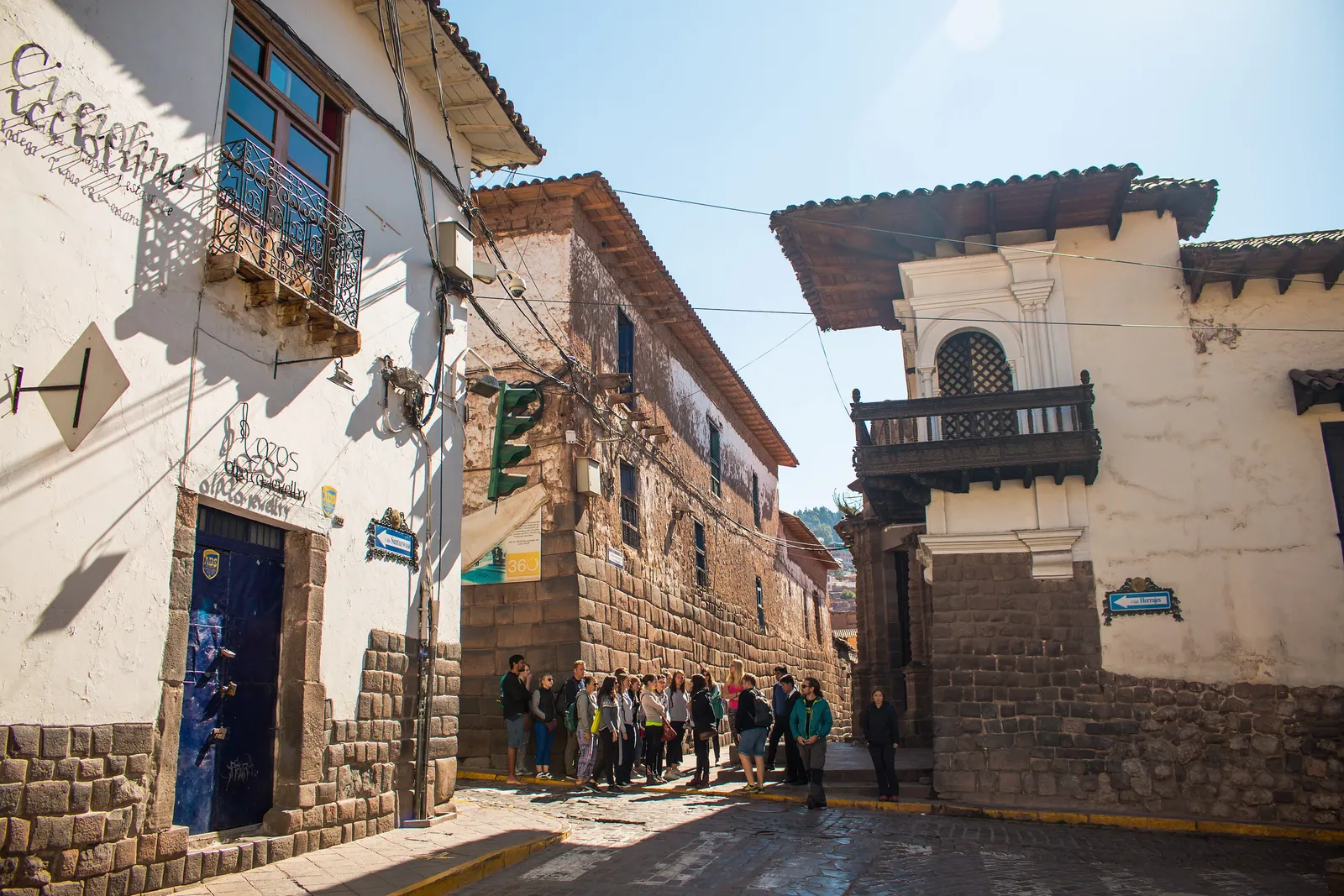
This music is at its truest not on a tourist stage but woven into life — a community festival in the Sacred Valley, a band rehearsing before a saint's day, a procession in Cusco. On Andes to Antarctica, the most memorable encounters with Andean music tend to be the unplanned ones: the sound carrying across a plaza on a festival evening.
Spain: flamenco and the art of duende
Flamenco, born in Andalusia from Romani, Moorish, Jewish and Spanish roots, is one of the great expressive art forms of Europe and is recognised by UNESCO as Intangible Cultural Heritage. It is not only dance: it is the braid of cante (song), toque (guitar) and baile (dance), and at its core is the cante, often raw, often sung in grief or longing.
Flamenco performers speak of duende — a moment of dark, transporting authenticity that cannot be summoned on demand. It is most likely to appear in a small venue, late, before a knowledgeable audience, far from the polished tourist tablaos. In Seville and Granada, ask locally for the peñas, the flamenco clubs, and accept that the real thing keeps its own hours.
The Silk Road: maqam, the long song and the throat
Central Asia carries some of the world's oldest art-music traditions. The shashmaqam — the 'six maqams' of Bukhara and the wider region — is a sophisticated suite tradition of intertwined vocal and instrumental music, recognised by UNESCO, and historically the music of court and city. Its instruments include long-necked lutes such as the dutar and the tanbur.
Further across the steppe, the traditions change again: the Mongolian long song, urtiin duu, stretches a few words across vast, slow melodic lines, and Mongolian and Tuvan throat singing, khoomei, produces two pitches at once from a single voice. On The Silk Road Reborn, hearing this music in the cities and landscapes that shaped it gives it a dimension no recording can.
Japan and the music of restraint
Japanese traditional music tends toward space and restraint rather than density. The koto, a long zither, the shamisen, a three-stringed lute that accompanies song and theatre, and the shakuhachi, a bamboo flute once played by wandering monks as a form of meditation, each prize the single, carefully placed sound and the silence around it.
A traveller is most likely to encounter this music as part of something larger — the hypnotic ensemble of a Noh play, the drums and flutes of a festival procession, the music of a tea-house performance in Kyoto. On The Long Way East, it rewards the same attentive, unhurried listening that Kyoto itself asks for.
Finding the real thing
A few habits help a traveller find music that is alive rather than packaged. Ask local people — a guide, a host, a shopkeeper — where they themselves go to hear music; their answer is rarely the venue on the tourist circuit. Festivals and religious processions are reliable: the music there is for the community, not for ticket-holders.
Be a generous audience. Arrive on time, silence your phone, ask before recording or photographing performers, and contribute when a hat is passed for street musicians. And keep an open ear for the unplanned moment — a band practising, a song from a window, a procession turning a corner. Those are often the performances that stay with you longest.
Quick answers
How do I find authentic flamenco rather than a tourist show?
Ask locally for the peñas — the flamenco clubs — in cities such as Seville, Granada and Jerez, and accept that genuine flamenco keeps late hours and plays to small, knowledgeable audiences. Polished, early-evening tablaos can be enjoyable, but the rawer, unrepeatable performances tend to happen elsewhere. Your guide can point you toward the real venues.
Can I record or photograph musicians?
Often yes, but ask first, and read the setting. In a formal performance or a religious procession, recording may be unwelcome or restricted; in a relaxed venue or with street musicians, a polite request is usually fine. If musicians are playing for tips, contribute. Courtesy and attention matter more than capturing the moment on a phone.
Will I appreciate this music without understanding the language?
Yes — that is much of the point. The grief in a flamenco cante, the lift of an Andean panpipe ensemble, the vast calm of a Mongolian long song all carry across without translation. A little context from a guide deepens the experience, but music is one of the most direct ways into a culture precisely because it bypasses language.

Let the reading become a route.
When an article sparks something, our planners are the next step. Tell us what you are dreaming of.