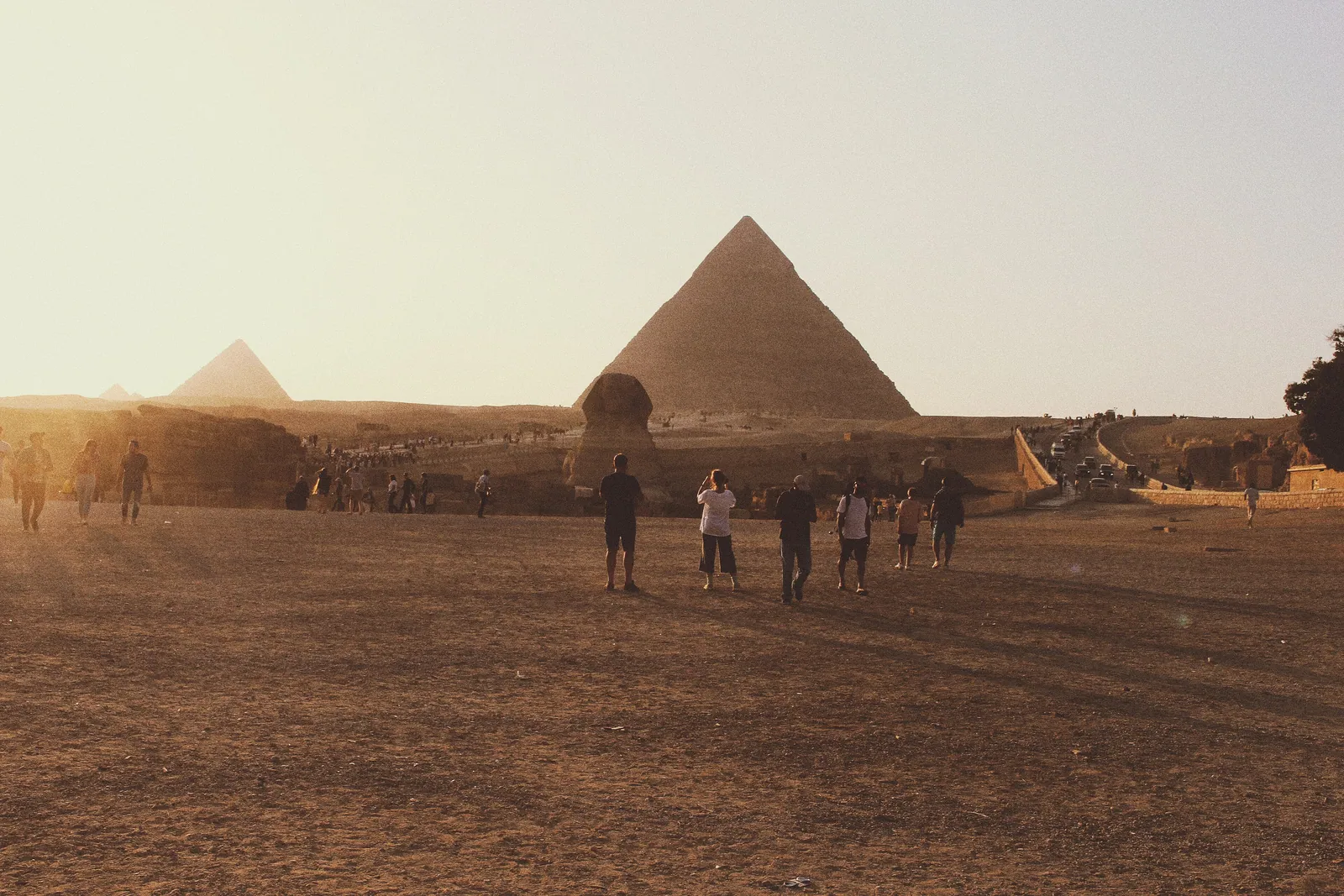
Nubia and the Temples of Lake Nasser
The flooding of ancient Nubia behind the Aswan High Dam created the world's largest artificial reservoir — and prompted one of history's great rescue operations to save the monuments that would have been lost beneath it.
Nubia is the region of the Nile Valley that runs from Aswan in southern Egypt south into Sudan — a stretch of the river that was, for much of antiquity, a distinct civilisation in its own right, home to the kingdoms of Kerma, Napata and Meroe. Ancient Nubia built its own pyramids, developed its own writing system, and at one point fielded pharaohs who ruled all of Egypt. It is among the least appreciated of the ancient world's great cultures.
In the 1960s, the construction of the Aswan High Dam flooded the Egyptian portion of ancient Nubia under what is now Lake Nasser — a reservoir stretching roughly 500 kilometres from Aswan south into Sudan. The rising waters displaced some 100,000 Nubian people and threatened dozens of ancient monuments. The response was an international effort coordinated by UNESCO that relocated twenty temples, including the colossal Abu Simbel and the island temple of Philae — achievements of engineering and cultural rescue that remain remarkable to this day.
The Nubian civilisation
Nubia's history runs parallel to Egypt's and is tightly interwoven with it. The two civilisations traded, fought, allied and at times merged. The Kingdom of Kush, centred on Napata near the fourth Nile cataract, sent its pharaohs northward in the eighth century BCE to found Egypt's Twenty-Fifth Dynasty — a period of Kushite rule over the entire Nile Valley that lasted for decades. Later, the Meroitic kingdom developed a unique script that scholars have partly deciphered but not fully understood.
What Nubian archaeology makes clear is that the upper Nile corridor was not peripheral to ancient civilisation but central to it. Gold, ivory, ebony, incense and enslaved people all moved through Nubia between the African interior and the Mediterranean world. The Nubian kingdoms controlled these trade routes, grew wealthy from them, and built monuments — including their own distinctive small-stepped pyramids — that expressed a culture at once influenced by Egypt and distinctly its own.
The making of Lake Nasser
The Aswan High Dam, completed in 1970 after a decade of construction, was one of the great engineering projects of the twentieth century. It brought year-round irrigation water to Egypt, generated substantial hydroelectric power and ended the annual Nile flood — the geological cycle that had underpinned Egyptian agriculture for millennia. The benefits were real and transformative. So was the cost.
Lake Nasser formed slowly behind the dam, filling over several years through the 1960s and into the 1970s. As it rose, it inundated the entire Nile floodplain in Egyptian Nubia and much of Sudanese Nubia — including ancient villages, cemeteries, Coptic churches and pharaonic temples that had lined the river for thousands of years. The Nubian people were relocated, largely to new settlements on the Kom Ombo plain — a displacement that severed deep ties to land, river and ancestral sites that has not been forgotten by Nubian communities today.
The UNESCO rescue campaign
The threat to Nubia's monuments prompted an international response unprecedented in cultural heritage. Between 1960 and 1980, UNESCO coordinated a campaign in which fifty countries contributed funds and expertise to document, excavate and, in twenty cases, physically relocate ancient temples before the waters rose. It was the first great international cultural rescue operation.
The temples were dismantled stone by stone, transported, and reassembled on higher ground above the waterline. Some were moved within Egypt — Abu Simbel and Philae are the most famous. Others were given to countries that had contributed to the rescue: the Temple of Dendur went to the Metropolitan Museum of Art in New York; the Temple of Debod to Madrid; temples to Turin and Berlin. Nubia's monuments, in effect, scattered across the world — an outcome that saved them while raising still-unresolved questions about cultural property.
Abu Simbel: the greatest relocation
The relocation of Abu Simbel is one of the most audacious engineering achievements of the twentieth century. The two temples — the Great Temple of Ramesses II, with its four colossal seated statues, and the smaller Temple of Nefertari — were cut from the living rock of the cliff in which they had been carved more than three thousand years earlier, sectioned into roughly 1,050 blocks each weighing up to thirty tonnes, and reassembled inside a specially constructed artificial mountain 65 metres higher and 200 metres back from the original site. The operation cost around 80 million dollars in 1960s money and took four years.
One remarkable feature survived the move: the alignment. On 22 February and 22 October each year — dates thought to correspond to Ramesses II's coronation and birthday — the rising sun penetrates the full length of the Great Temple's inner corridor and illuminates the statues in the innermost sanctuary, falling on Ramesses and two of the three other gods but leaving the fourth, Ptah the god of darkness, in shadow. This solar alignment, re-engineered in the relocated building with meticulous precision, was itself a tribute to what the ancient builders had originally achieved.
Nubian culture and identity today
The displacement of Nubian communities from their ancestral lands remains a living issue. Nubians relocated to the Kom Ombo area in the 1960s, and many of their descendants continue to advocate for the right to return to the shores of Lake Nasser, to the sites of villages now beneath the water or cleared above it. Nubian language — there are several related varieties — is still spoken, and Nubian music, architecture and craft traditions are preserved with deliberate care.
In Aswan, the Nubian Museum opened in 1997 and provides the best single introduction to the civilisation that the High Dam partially submerged. Its collection spans Nubian prehistory through the Islamic period, with strong sections on the rescue campaign and on Nubian cultural life. For travellers arriving at Aswan, a morning at the museum before a felucca ride to the island temples reframes the Nile journey: not as a corridor of Egyptian monuments but as a shared river valley with a deeper and more complex human story than any single civilisation can contain.
Quick answers
What happened to the Nubian people when Lake Nasser was created?
Approximately 100,000 Nubian people were displaced from their ancestral lands in Egyptian and Sudanese Nubia as the waters rose behind the Aswan High Dam. Egyptian Nubians were resettled largely in new government-built villages on the Kom Ombo plain, far from the river. The displacement disrupted communities, severed ties to ancestral sites and sparked a Nubian cultural revival movement that continues today.
How was Abu Simbel saved from the rising waters?
Between 1964 and 1968, an international team cut the two temples of Abu Simbel from the cliff in which they had been carved, sectioned them into roughly 1,050 blocks, and reassembled them inside an artificial mountain 65 metres higher and 200 metres back from the original site. The operation, coordinated by UNESCO and funded by fifty countries, preserved both the temples and their original solar alignment.
Can you visit Nubia today?
Egyptian Nubia — the stretch of the Nile above Aswan now largely submerged under Lake Nasser — can be explored by cruise on the lake itself, visiting relocated temples including Abu Simbel, Wadi el-Sebua and Amada. The Nubian Museum in Aswan is the essential introduction on dry land. Sudanese Nubia, with its distinctive small pyramids at Meroe and Nuri, is a separate journey requiring entry into Sudan.
Were any monuments lost to Lake Nasser?
Despite the rescue campaign, not everything was saved. Many archaeological sites, including ancient cemeteries, village ruins and rock inscriptions, were documented but not relocated, and are now beneath Lake Nasser. The scale of what was preserved — twenty relocated temples and a vast documentation effort — is remarkable; so is the scale of what was permanently lost.
Let the reading become a route.
When an article sparks something, our planners are the next step. Tell us what you are dreaming of.