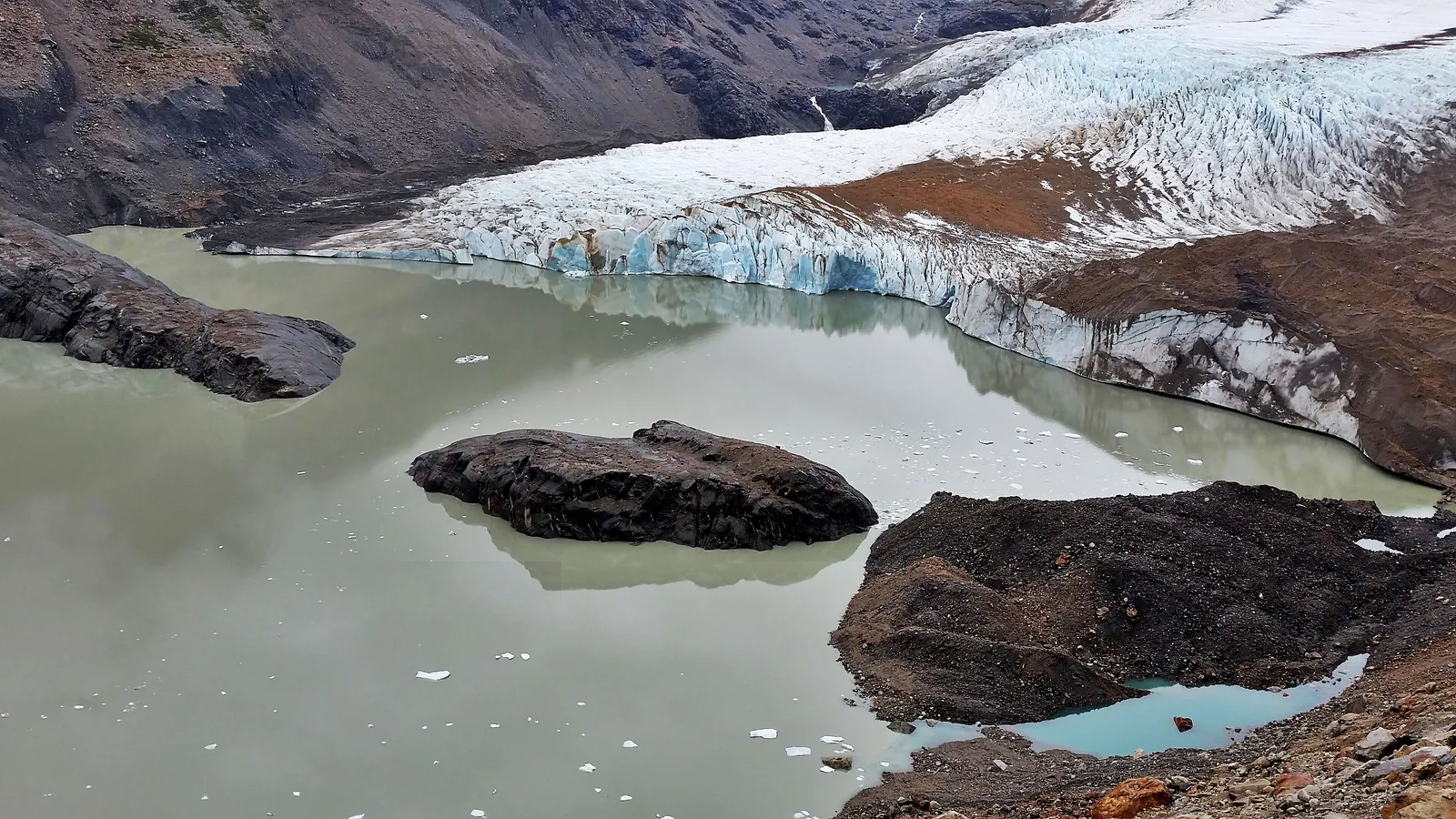
The Lenga Beech Forests of Patagonia
The southern beech forests that cloak the lower flanks of Patagonia's mountains are the hidden scenery of every great walk — and in autumn they turn a colour that stops people mid-stride.
Every photograph of Patagonia focuses on the peaks: the granite spires of Fitz Roy and the Torres del Paine, the immensity of the glaciers, the flat blue of the lakes. What those images rarely show, because it lies below the drama line, is the forest through which every walker first moves. The lenga beech — Nothofagus pumilio — is the dominant tree of the sub-Andean zone on both sides of the range, from Tierra del Fuego north through Patagonia, and the forests it forms are the texture of the landscape that trail users spend most of their time in.
Lenga is a deciduous southern beech, one of several Nothofagus species native to the southern hemisphere whose closest relatives grow not in the northern hemisphere beech forests of Europe and North America but in New Zealand and New Guinea — a living record of Gondwana, the ancient supercontinent. In autumn, the lenga turns: first yellow, then orange, then a deep, sustained crimson that can hold for weeks. It is the most visceral sign of the season in Patagonian trekking country, and many walkers who visit in March and April count the forest colour as one of the defining experiences of the journey.
What makes lenga different from other beeches
Lenga grows at altitude, typically between 500 and 1,800 metres in the southern Andes, replacing the evergreen coihue beech that dominates the lower, wetter slopes. It is adapted to cold, thin-soiled, exposed conditions: it grows slowly, develops a gnarled and spreading habit at the treeline, and at the uppermost limit of its range produces the wind-twisted, multi-stemmed forms known as krummholz — bent wood — where the tree expands laterally to survive the prevailing westerly winds rather than growing upright.
The difference between a lenga forest in the sheltered valley and a lenga stand at the treeline is almost startling. In the valley, the trees grow tall and relatively straight, forming a closed canopy of yellow-green summer leaves. At the treeline, the same species is flattened and knotted, spreading in low mats that a walker steps over rather than under. This plasticity — the same tree in radically different forms depending on exposure — is one of the things that makes lenga forests interesting to spend time in.
The autumn colour and when it happens
Patagonia's austral autumn falls in March and April, and the lenga colour begins at the treeline and works downward. The high-altitude krummholz turns first, often by late February, and the change cascades through the middle slopes through March. The valley forests lag a few weeks behind, and by April the entire hillside can be a mosaic of green, yellow, orange and red, with individual trees in different stages simultaneously.
The colour is not uniform: lenga trees vary in the intensity of their autumn pigmentation, so a hillside in full colour has the texture of pointillist painting, individual trees standing out in deeper red while their neighbours are still yellow. The crimson lenga against the grey granite of the Torres del Paine or the white ice of a glacier is one of the singular visual experiences of the Andes. It also coincides with lower visitor numbers — the peak summer season has passed — and with the shift in the Patagonian wind, which in autumn has intervals of stillness and warm clarity that summer often lacks.
The forest as habitat
Lenga forests are not merely scenic. They are habitat for the species that give Patagonia its wildlife character. The Andean condor nests in the rocky outcrops above the treeline and soars over the forest canopy. The austral parakeet — a small green parrot, incongruous in such a southern latitude — moves through the lenga in small flocks, feeding on seeds and making the forest unexpectedly loud. The green-backed firecrown hummingbird visits the lenga flowers in season.
The forest floor under a mature lenga stand is deep in moss and fungus, the understory sparse below the closed canopy. Ñire, another southern beech species that grows lower and more shrub-like, often forms a transitional zone between the forest and the open steppe. Pumas use the forest edge as cover for watching the guanaco herds in the open ground beyond. Understanding the lenga zone means understanding where Patagonia's wildlife concentrates.
Fire, recovery and the state of the forest
Much of Patagonia's lenga forest has been affected by fire, much of it set historically by settlers clearing land. The characteristic standing dead forest — pale grey trunks without bark or branches, visible from the trail and from a distance — is the aftermath of fires that burned decades ago, followed by regeneration that is still in progress. In Torres del Paine, a large fire in 2011 and 2012 burned a significant portion of the park, and the recovery of the lenga in those areas is visible and ongoing.
Fire-regenerating lenga forest is not uniform ruin: it is a mosaic of dead trunks, new growth, and areas that escaped the flames entirely, and it has its own ecological character. Woodpeckers and other cavity-nesting birds find habitat in the dead trees. The regenerating stands are dense and short, filtering the light differently from mature forest. Hiking through the transition zones between burned and unburned areas is a lesson in ecological resilience.
Walking in the lenga
For a trekker, the lenga forest is shelter and orientation. When the Patagonian wind builds to its famous violence on the exposed ridges, the forest below absorbs it, and a campsite in the trees can be warm and still while the peaks above are screaming. The sound of the wind in a lenga canopy — a sustained, layered rushing that rises and falls with the gusts — is the defining sound of a Patagonian night in a tent.
In the morning, the light through lenga leaves is distinctive: small, rounded, moving constantly. In summer it is green-gold; in autumn it is copper and red. The paths through the forest on the W Trek and O Circuit alternate between open viewpoints and long enclosed stretches where the trees press close, and the transitions between these modes — emerging suddenly onto a lakeside view, or ducking back under the canopy after an exposed ridge — give the walking its rhythm. The lenga is not a backdrop. It is the experience itself.
Quick answers
When do the lenga beech trees turn colour in Patagonia?
Autumn colour begins at the treeline as early as late February and cascades downward through the slopes during March and April. The valley forests reach full colour in April, often coinciding with reduced visitor numbers, cleaner air and intervals of stillness in the Patagonian wind. March and April are increasingly popular months for this reason, combining autumn colour with somewhat less crowded trails.
What is the difference between lenga and coihue?
Both are southern beeches in the genus Nothofagus, native to the southern Andes. Coihue is evergreen and grows lower and in wetter conditions, dominating the rainforest zone of the Chilean Lake District and southern Chile. Lenga is deciduous and grows higher and in colder, drier conditions, forming the forests characteristic of the sub-Andean zone on both sides of the range. In Torres del Paine and Los Glaciares, you walk primarily through lenga.
Is the Patagonian forest related to European or North American beeches?
Not closely. Southern beeches in the genus Nothofagus are more closely related to beeches found in New Zealand, New Guinea and southeastern Australia than to the familiar beeches of Europe and North America. This reflects their Gondwanan origin: the ancestors of these trees were distributed across the ancient southern supercontinent before it broke apart, and the southern hemisphere representatives of the family have evolved separately ever since.
Why are there so many dead trees in the Patagonian forest?
Much of the standing dead timber in Patagonian forests is the aftermath of historical fires, most set by settlers clearing land during the late nineteenth and early twentieth centuries. The trees die in the fire and remain standing for decades as the forest regenerates around them. In Torres del Paine, fires in 2011–2012 burned a significant portion of the park, and the recovery of those areas is still visible on the trail. The dead trunks are not evidence of ongoing damage but of a recovery in progress.
Let the reading become a route.
When an article sparks something, our planners are the next step. Tell us what you are dreaming of.