Photographing People, with Respect
A portrait made with consent and care is among the finest things you can bring home. A photograph taken from a distance, of someone unaware, is rarely either kind or good. Here is how to do the first and avoid the second.
The people you meet on a long journey are not scenery. The most memorable travel portraits — the ones that still hold your attention years later — are almost always made with the subject's knowledge and willingness, in a brief moment of genuine contact. The furtive long-lens shot of a stranger who never knew is, more often than not, both an ethical lapse and a weak photograph.
Photographing people well is mostly not a technical skill. It is a matter of courtesy, patience and a little courage. This article is about how to ask, how to read the answer, when not to ask at all, and how to make the few seconds after consent count. The technique is simple; the respect is the whole craft.
Ask first, and learn to ask without words
The basic principle is consent. Catch the person's eye, smile, lift the camera slightly and raise your eyebrows in question. This wordless request is understood almost everywhere, and it costs you nothing. If the answer is a nod or a smile, you have a portrait and, briefly, a connection. If it is a shake of the head, a turned shoulder or a flat look, you thank them with a gesture and move on without a trace of pressure.
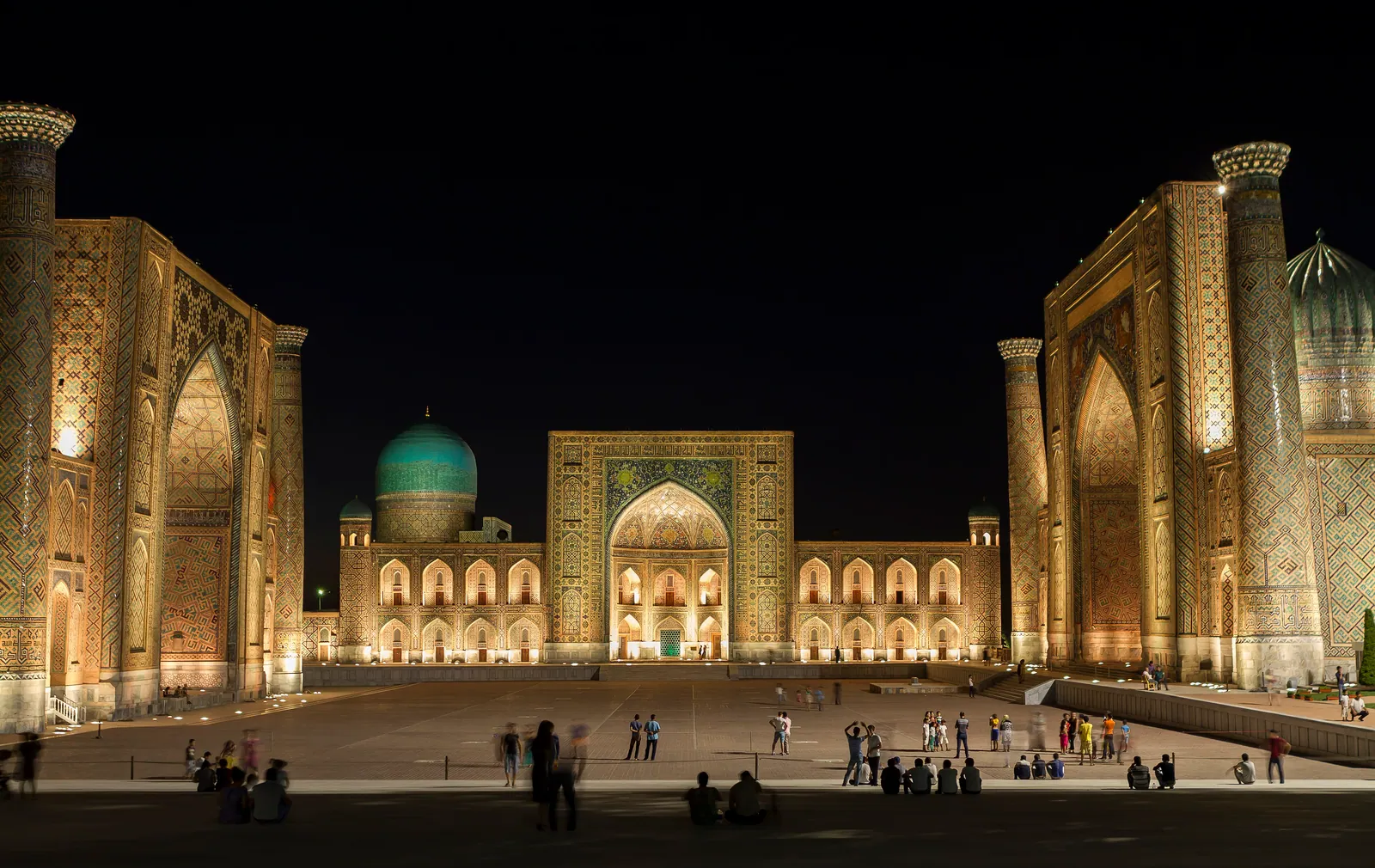
Learn a few words in the local language — please, thank you, beautiful, may I — and the encounter warms immediately. Across the Silk Road, in the markets of Samarkand and Bukhara, a greeting offered first and a camera raised second turns a transaction into a meeting. The asking is not an obstacle to the photograph. Very often it is what makes the photograph worth having.
When not to photograph at all
Consent is not always available to be given, and some moments should simply pass uncaptured. Do not photograph people at prayer or inside a service — in the mosques of the Silk Road, the temples of Kyoto, the rock-hewn churches of the Great Rift. Do not photograph children without a parent's clear agreement. Do not photograph anyone in distress, in poverty, or in any circumstance you would not wish photographed yourself. Be alert to military sites, border posts, airports and government buildings, where photography may be genuinely prohibited.
Markets, ceremonies and festivals occupy a middle ground: a wide shot of a busy scene is generally fine, while a tight portrait of one identifiable person still calls for a glance and a nod. When in doubt, do not. A photograph is never worth a person's discomfort, and your guide can always advise on local sensitivities you cannot be expected to know.
The few seconds after yes
Most travellers, having been granted permission, freeze the encounter dead — they raise the camera and the subject stiffens into a flat, formal pose. The portrait you actually want usually comes a beat later. Take the permitted frame, then keep the camera up, say something warm, and wait two or three seconds for the face to soften back toward itself. That second frame, after the pose relaxes, is the one to keep.
Light the face kindly: open shade or the soft light of early and late day flatters far more than hard noon sun. Get reasonably close — a portrait made from across the street is rarely a portrait at all — and focus on the eyes; if the eyes are sharp, the picture works. A short telephoto, around 85mm equivalent, gives a flattering perspective and a respectful working distance at once.
Context, hands and the environmental portrait
A face alone tells you a person exists; a face in its setting tells you something of their life. The environmental portrait — a weaver among her looms in a Bukhara workshop, a herder of the Great Rift with his cattle, a Kyoto craftsman at his bench — sets the person within their work or their place, and is almost always richer than a tight head-and-shoulders against a blank wall.
Watch the hands. Hands carry age, work and character, and including them adds a quiet honesty to a portrait. Step back enough to show the tools of a trade, the doorway of a home, the goods on a stall. The aim is a photograph that respects the person as a whole human being in a real life — not a face plucked out of context as a souvenir.
Money, copies and the courtesy of afterwards
Payment is a delicate matter. In some places, performers and people in costume photograph for tips, and a small payment is the honest expectation; elsewhere, offering money turns a warm meeting into a transaction and can cause offence. Watch what others do, ask your guide, and read the situation rather than applying a single rule. Never haggle hard over a small tip — the sums are trivial to you and the goodwill is not.
The kindest gesture costs nothing: after you photograph someone, show them the picture on the back of the camera. Faces light up at this, and it returns something of the moment to the person who gave it. If you can, take a name and an address and post a print home — a promise to honour, not to make lightly. Photographing people with respect is, in the end, a small exchange between equals, and the courtesy you bring to it is the truest souvenir of all.
Quick answers
How do I ask to photograph someone if we share no language?
Catch their eye, smile, lift the camera slightly and raise your eyebrows questioningly. This gesture is understood almost everywhere. A nod means yes; a shake of the head or a turned shoulder means no, and you thank them and move on. Learning please and thank you in the local language makes the whole exchange warmer.
Should I pay people I photograph?
It depends entirely on the place. Costumed performers and some market sellers expect a small tip, and paying it is only fair; in other cultures offering money turns a friendly encounter into a transaction and may offend. Watch what local people and your guide do, and read each situation rather than following one fixed rule.
Is it acceptable to photograph people without asking?
A wide shot of a busy public scene is generally fine. A close, identifiable portrait of an individual is not — that always calls for consent. Never photograph people at worship, children without a parent's agreement, or anyone in distress, and avoid military sites and other places where photography may be restricted.
Let the reading become a route.
When an article sparks something, our planners are the next step. Tell us what you are dreaming of.