Photographing the Great Landscapes
A mountain that overwhelms you in person can look strangely flat in a photograph. Here is how to make a landscape image hold the scale, depth and feeling of standing there, from Patagonian granite to Silk Road dunes.
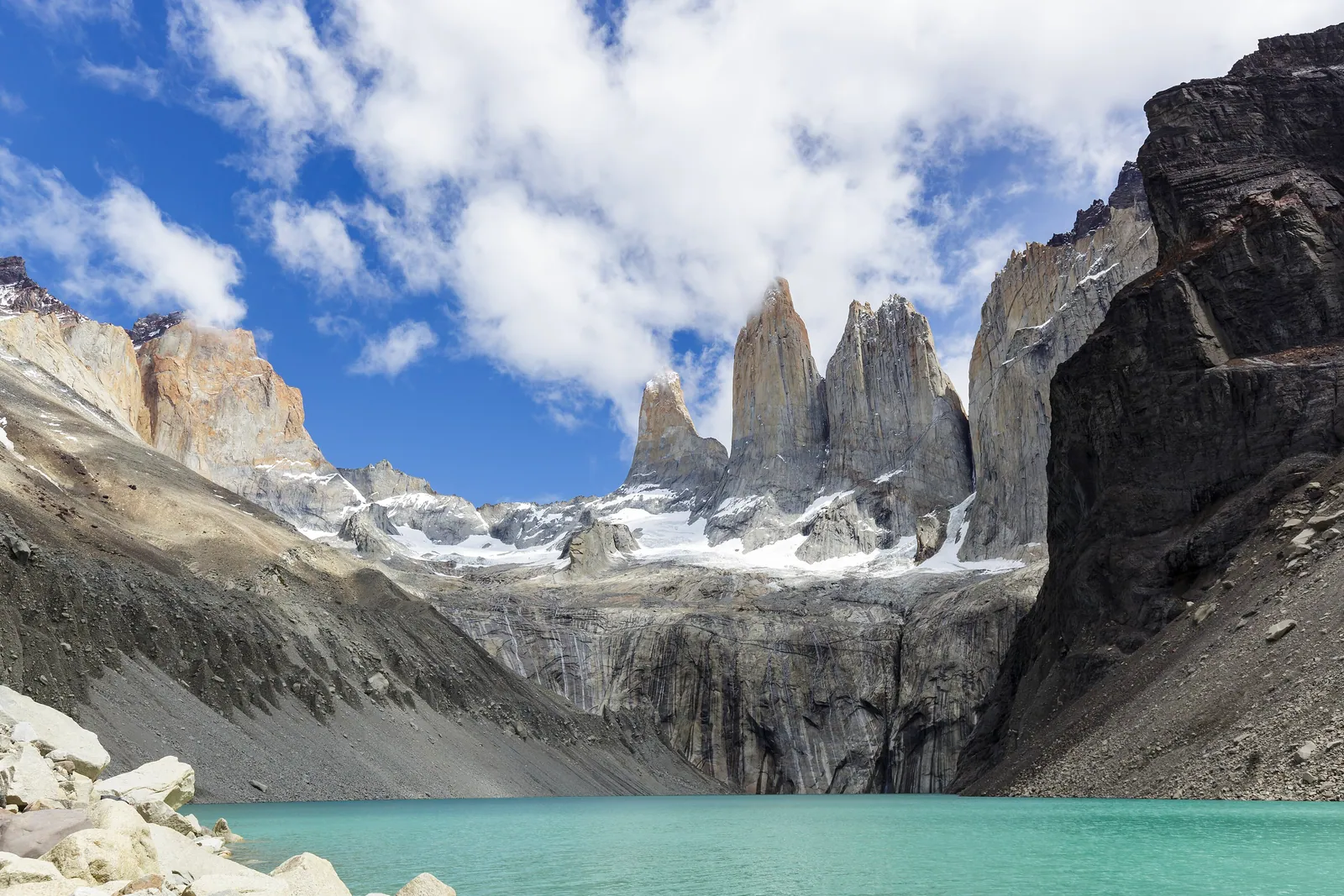
The commonest disappointment in travel photography is the great landscape that shrinks on the screen. You stood beneath the towers of Paine and felt the ground tilt; the photograph shows a grey lump on a grey sky. The fix is rarely a better camera. It is a handful of deliberate choices — about depth, scale, light and the edges of the frame — made before you press the shutter.
A landscape photograph works when it gives the eye a way in and a sense of size. That means putting something in the foreground for the eye to step on, something of known scale to measure the grandeur against, and light that carves shape rather than flattening it. Master those three and the rest is patience.
Build depth with a foreground
A landscape is three-dimensional and a photograph is flat, so the photograph must rebuild the depth deliberately. The simplest tool is a strong foreground: a boulder, a flowering shrub, a curve of trail, a reflecting pool. Place it in the lower third of the frame and the eye reads near, middle and far as distinct planes, which is exactly what creates the sense of looking into a scene rather than at a wall.
Get low and get close to that foreground element — far closer than feels natural. A wide lens exaggerates the gap between near and far, so a rock a metre from the lens becomes a generous doorway into the valley beyond. On the lakeshores of Torres del Paine, a few stones at your feet and the Cuernos behind them will say more about that place than the peaks alone ever could.
Give the eye a sense of scale
Grandeur is invisible without a yardstick. The mind cannot tell whether a ridge is a hundred metres or three thousand unless the picture contains something it already knows the size of. A single walker on a path, a tent, a tree, a vehicle, a building — any of these instantly converts an abstract shape into a measurable one, and the landscape snaps into its true scale.
Place that element small and off-centre. It should be a discovery, not the subject — the viewer's eye finds the lone figure and only then understands how vast the wall of rock behind truly is. This single habit transforms photographs of the Andes, the Himalaya and the great dunes of the Silk Road more than any other.
Let the light do the modelling
Flat overhead light flattens terrain; low, raking light reveals it. Early and late in the day the sun skims across the land, and every ridge, dune and furrow casts a long shadow that the camera reads as three-dimensional form. The dunes near Samarkand and across the Silk Road are mere shapes at noon and become sculpture at dawn. This is why landscape photographers are, by necessity, early risers.
Side light models texture; back light separates layers, rimming ridgelines and turning mist or dust luminous. Front light, with the sun behind you, is the least interesting of the three because it erases shadow. Watch the weather as much as the clock: a shaft of sun breaking through cloud onto one peak, the rest in shade, is the kind of light worth standing in the cold for.
Compose the frame, then edit its edges
Decide where the horizon sits, and decide on purpose. A high horizon gives weight to the land — good for a foreground of detail; a low horizon gives weight to the sky — good for dramatic cloud or a clean dawn. Splitting the frame exactly in half usually pleases no one. Keep the horizon level; a tilted sea or lake quietly unsettles every viewer.
Then patrol the edges. The fault in most weak landscapes is not the centre but the borders: a bright distracting corner, a half-cut rock, a branch poking in. Before you press the shutter, run your eye around all four edges and remove or recompose anything that leaks attention out of the frame. A landscape is as much about what you exclude as what you include.
Settings, stability and the discipline of waiting
For sweeping scenes you usually want most of the frame sharp, so use a middle aperture around f/8 to f/11, focus roughly a third of the way into the scene, and keep the ISO low for the cleanest file. In the dim light of dawn and dusk this means slow shutter speeds, which means stability: brace the camera on a rock or a pack if you have no tripod, and use the self-timer so your finger does not jog the shot. If you can carry a small travel tripod, the great landscapes are where it repays its weight.
The deepest skill, though, is patience. A landscape changes by the minute as cloud, sun and shadow move across it. The unhurried pace of a slow journey is a genuine photographic advantage: arrive early, settle in, and let the light come to you. Beneath Fitz Roy on The Pacific Arc, the travellers who wait out a grey hour are the ones rewarded when the granite finally catches fire at dawn.
Quick answers
Why do my mountain photos look flat and unimpressive?
Almost always because the frame lacks depth and scale. Add a close, strong foreground so the eye reads distinct planes, include something of known size — a person, a tree, a tent — to measure the grandeur against, and shoot in low side light rather than at midday. Those three changes fix most flat landscapes.
Do I need a tripod for landscape photography on a trek?
Not strictly, but it helps in the low light of dawn and dusk when shutter speeds are slow. If weight allows, a small travel tripod is worth carrying. If not, brace the camera on a rock or your pack and use the self-timer. The great landscapes reward stability more than any other subject except the night sky.
What is the best time of day to photograph landscapes?
The hour after sunrise and the hour before sunset, when low-angled light rakes across the land and models every ridge and dune in shadow. Overcast days suit forests, waterfalls and detail. Harsh midday sun is the hardest light for grand scenery, so use those hours for travel, meals and rest.
Let the reading become a route.
When an article sparks something, our planners are the next step. Tell us what you are dreaming of.