How to Read Inca Stonework
The walls of Cusco are not just old — they are a language. Learn to read Inca masonry and you can date a wall at a glance, tell sacred from ordinary, and see why the stones still stand.
Inca stonework is famous for a single trick — joints so tight a knife blade will not enter — but it is far more legible than that one image suggests. The Inca built in recognisable styles, reserved their finest work for their most sacred places, and left clues in every wall about who built it and why.
This is a short field guide to reading those walls in and around Cusco. Once you can tell coursed masonry from polygonal, and Inca foundations from the Spanish arches above them, the whole region opens up: you stop seeing old stone and start seeing intention.
Two styles: coursed and polygonal
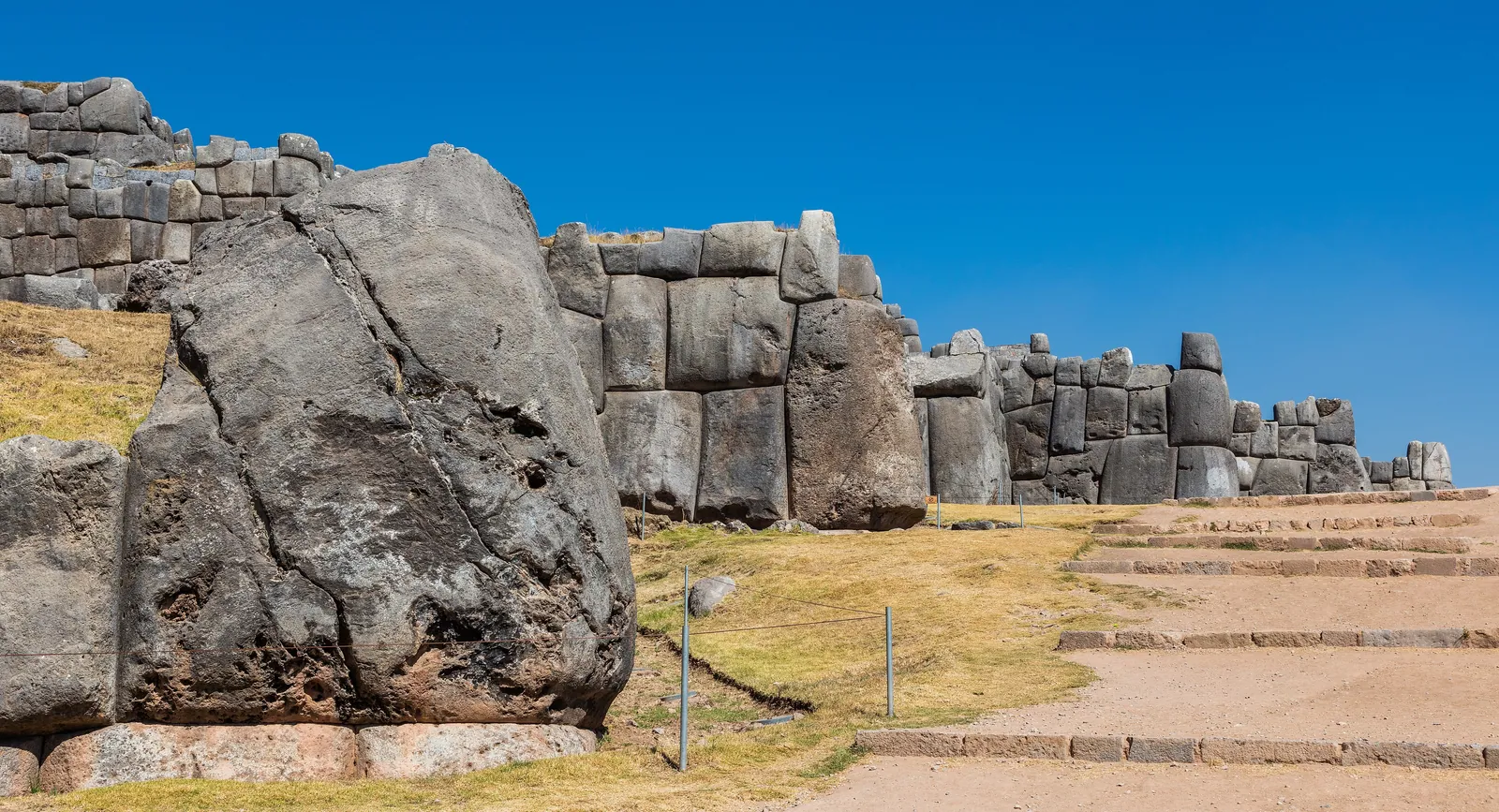
Most Inca walls fall into one of two families. Coursed (or ashlar) masonry uses rectangular blocks laid in neat horizontal rows, the courses often tapering slightly as the wall rises; you see it at Qorikancha, the sun temple, and it tends to mark the highest-status religious buildings. Polygonal masonry uses irregular, many-sided blocks fitted together like a puzzle, each stone cut to its unique neighbours.
Polygonal work is the more astonishing to look at — Sacsayhuamán is its showpiece, with blocks of well over a hundred tonnes — and it was often used for terraces, fortifications and retaining walls. Neither style is simply better; the Inca chose according to purpose and prestige, and learning the difference is the first step to reading a site.
How the joints were actually made
The precision has invited a great deal of myth, but the method is now reasonably well understood. The Inca worked mostly with stone hammers and bronze tools, shaping each block by repeated pounding and abrasion rather than sawing. Crucially, they did not cut stones to a standard size and then assemble them; they fitted each block to the specific stones already in place, dressing it again and again until it seated perfectly.
That bespoke fitting is why no two Inca walls are alike and why the work was so labour-intensive. It is also why the joints are tightest on the most important buildings: the effort was a form of devotion, lavished where it mattered most.
Why the walls survive earthquakes
Cusco sits in seismically active country, and Inca masonry is quietly engineered for it. The walls lean slightly inward, lowering their centre of gravity. Doorways, niches and windows are trapezoidal — wider at the base than the top — a shape that resists shaking far better than a rectangle. The mortar-free joints let individual stones shift a little and resettle rather than cracking.
The proof is written across the city. In major earthquakes, Spanish colonial walls and arches built on top of Inca foundations have failed while the Inca stonework beneath stood unmoved. When you see a colonial building sitting on a base of dark, perfectly fitted blocks, you are looking at the survivor carrying the newcomer.
Reading the sacred clues
Inca walls carry signs of meaning as well as method. Trapezoidal niches set into a wall often marked important interior spaces and may have held offerings or objects of value. Some carved stones — at Qorikancha, at Sacsayhuamán, in the valley — incorporate steps, channels and angled surfaces that align with water, light or the surrounding peaks.
The Inca also built with the landscape rather than against it, shaping outcrops of living rock in place and letting natural stone flow into worked stone. When a wall seems to grow out of the bedrock, that is not laziness or coincidence; it is a deliberate joining of the built and the sacred natural world.
Where to practise reading walls
Cusco itself is the best classroom. Walk Hatun Rumiyoc lane to find the celebrated twelve-angled stone, a single block cut to lock into every neighbour, and run your eye along the polygonal wall it sits in. Qorikancha shows coursed temple masonry at its finest, with the Spanish convent layered directly above. Sacsayhuamán, on the hill, displays polygonal work at monumental scale.
Carry the skill into the Sacred Valley, where Ollantaytambo’s temple-fortress and Pisac’s terraces repay a reading eye, and on toward Machu Picchu, where the contrast between rough utilitarian walls and the exquisite masonry of the temples tells you instantly which buildings the Inca held sacred. On the Andes to Antarctica journey, this is one of the quiet pleasures that grows over the days in the high country.
Quick answers
How did the Inca cut stone so precisely without iron tools?
They shaped blocks mainly by pounding and grinding with harder stone hammers and bronze tools, not by sawing. The key was method rather than technology: each block was fitted individually to the stones already in place, dressed repeatedly until it seated exactly. It was extraordinarily labour-intensive, which is why the finest work is reserved for the most important buildings.
Why do Inca buildings survive earthquakes better than colonial ones?
Inca walls lean slightly inward, use trapezoidal doors and windows that resist shaking, and have mortar-free joints that let stones shift and resettle rather than crack. Spanish colonial structures built on top of Inca foundations have repeatedly failed in earthquakes while the Inca stonework beneath remained intact.
What is the twelve-angled stone?
It is a famous single block in a wall on Hatun Rumiyoc lane in Cusco, cut with twelve distinct angles so that it interlocks flawlessly with all of its neighbours. It is celebrated as a clear, accessible example of the bespoke fitting that defines Inca polygonal masonry.
Let the reading become a route.
When an article sparks something, our planners are the next step. Tell us what you are dreaming of.