Returning to a Place You Already Know: The Second Journey
The first visit gives you the surface. The second visit, arriving with less urgency and no checklist, gives you the place itself. Why going back is often the bolder and more rewarding choice — and what it requires of the traveller.
There is a particular pressure in the first visit to any place of significance. You have invested in the journey — in time, in money, in anticipation — and the place has a reputation that preceded it by years or decades. You arrive with a mental checklist, compiled from guidebooks and conversations and images accumulated over a long approach, and the first days of the visit are spent, in part, confirming or revising that picture. The site was indeed extraordinary. The food was indeed as good as everyone said. The light on the water in the late afternoon was precisely the light that the photographs had promised. The first visit is calibration.
What the first visit almost never provides is depth. The city you have wanted to reach for fifteen years remains, after a week, largely surface: you have learned its main arteries and its famous set-pieces, you have a handful of genuine encounters and a collection of images, and you have — if you are lucky — an understanding of what it would mean to know it properly. The second visit begins where the first one should have ended. You arrive without a checklist. You know roughly where things are. You have particular things you failed to do or understand the first time, and you have things you loved and want to experience again with the additional attention that familiarity makes possible. The second journey is where the place finally becomes yours.
What you can only see on a return visit
The first-time traveller is necessarily a tourist in the deepest sense: they are consuming a place, ticking experiences off a list, managing their time to get through the known highlights before the departure date arrives. This is not a failure of sensibility — it is the structural reality of a first visit to a new place with limited time. The returning traveller is released from this structure. The cathedral is not an obligation but an option. The famous viewpoint can be visited in bad weather, without the photograph, just to feel the space. The restaurant known from last time can be returned to, and the return is itself a small act of homecoming.
The things that only become visible on a return visit are the things that require a baseline to measure against. Has the neighbourhood changed? Is the small hotel still run by the same family? Is the market bigger or smaller than it was? These questions have no meaning on a first visit; they are the pleasures of the returning traveller, who has become, in some modest but real sense, part of the place's history — a person who was there before and has come back, which is different from a person who simply arrives.
The problem with novelty, and why familiarity is underrated
The travel industry is built on novelty. Its fundamental proposition is that the new place is better than the known one — that the undiscovered destination, the unvisited country, the itinerary that covers more ground, is the measure of the worthwhile journey. This creates a structural incentive toward the perpetual first visit: always somewhere new, always something to be experienced for the first time. It is a compelling proposition, and it is not wrong. But it tends to produce travellers who are very widely informed and relatively shallowly connected — who have been to a large number of places and feel at home in almost none of them.
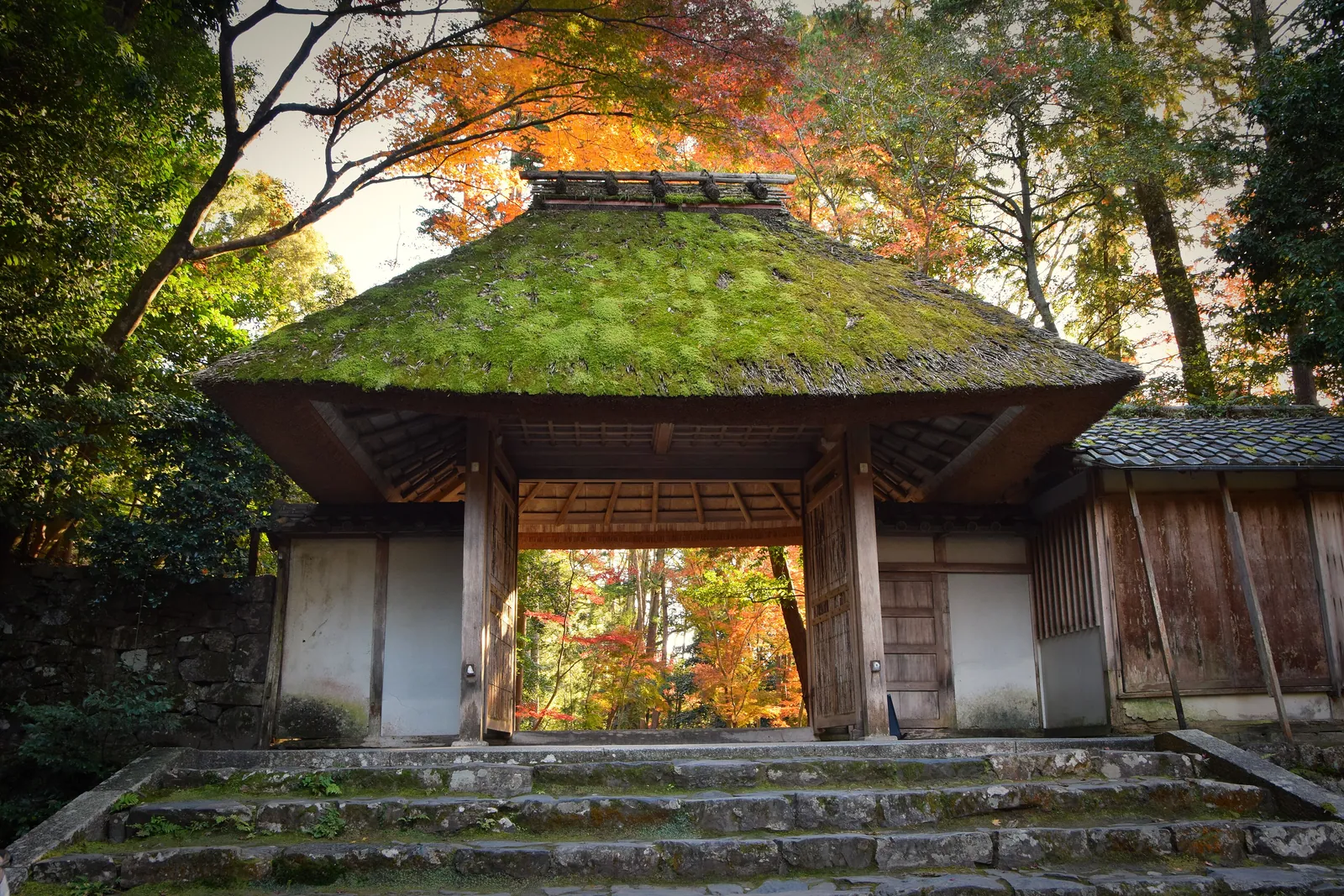
Familiarity, by contrast, allows depth. The writer Jan Morris, who returned to Venice repeatedly over the course of her long career, wrote each time with greater intimacy and greater strangeness, because the city she knew well kept revealing new layers and because her own changing life kept producing new lenses through which to see it. Kyoto, returned to in different seasons, is several cities rather than one. The Sacred Valley of the Incas, visited first as a tourist and returned to as someone who knows the rhythm of the morning markets and the quality of the light over Ollantaytambo in winter, is a different place from the one a bus tour shows you. The repeat traveller's gift is precisely the ability to see what the first-timer cannot.
How the place has changed, and how you have
Every return visit involves two kinds of change simultaneously: the change in the place and the change in the traveller. Cities are dynamic; neighbourhoods shift, restaurants close, new buildings appear, the social character of a street alters. In parts of the world that have undergone rapid development in recent decades — Vietnam, Cambodia, the cities of East Africa, the growing capitals of Central Asia — the interval of five or ten years between visits can produce changes so substantial that the returning traveller is effectively in a different city. This is not always loss: development brings things of value as well as taking things away. But it requires the returning traveller to arrive without the assumption that they already know the place, which is a useful discipline.
The traveller's own changes are both subtler and more profound. You arrive at forty in possession of things you did not have at twenty-five: experience, patience, a different relationship with uncertainty, probably different physical capacities and tolerances. The cathedral that did not move you at twenty-three may stop you in your tracks at forty-five, because you now have a life rich enough in grief and beauty to understand what it is doing. The mountain pass that seemed merely difficult at thirty may seem magnificent at fifty, because you have learned to value the hard-won view. The returning traveller is always meeting both the changed place and their changed self.
When to return: the question of readiness
There is no universally correct interval between a first and second visit, but there is a principle: return when you have something new to bring to the encounter. This can be accumulated reading — a year of studying the history or literature or art of a place before returning to it changes what you can see there as surely as a change of season changes the light. It can be a changed life circumstance: having children and then returning with them to a place you loved solo is a genuinely different journey. It can simply be time — the patience to let a place rest in the imagination long enough that it acquires the depth and mystery it may have lacked at first acquaintance.
Some travellers deliberately plan returns before they have finished their first visit. Standing in the Gion district of Kyoto on a wet November evening, certain that cherry blossom season is another world entirely, one books the return already. At Ollantaytambo, understanding that the festival calendar runs parallel to the tourist calendar and that the two rarely overlap, one makes a note of dates. The most visited places in the world almost all reward the return in ways that reward the first visit differently, and the traveller who has already been somewhere is in the rare position of being able to choose the conditions of the return rather than simply arriving as every first-timer does — into the unknown.
The slower return: going deeper rather than wider
The return visit also makes possible a different kind of itinerary. Instead of covering the greatest possible area in the available time, the returning traveller can choose depth over breadth: spending the whole visit in one neighbourhood, or one valley, or one culinary tradition. The Tokyo traveller who knows the city's geography can dedicate a two-week return entirely to a single neighbourhood — its shops, its residents, its rhythms across a full working week. The Andean traveller who has been through the Sacred Valley at speed can spend a return in one village, walking the same paths daily, watching the light change across the same mountains, until the place yields the quiet knowledge that only the slow and repeated look can produce.
This is the slow travel principle applied to the return journey in its most concentrated form. The goal is not the itinerary optimised for coverage but the relationship deepened by return. Our guides on Andean journeys sometimes mention that returning travellers are the most satisfying companions on the trail, not because they already know the answers but because they are asking the right questions: the second-time questions, the ones that arise only after the first visit has done its work. The first journey plants a question; the second journey begins to answer it.
What returning teaches about travel itself
The discipline of the return visit is, at its core, a discipline of attention over acquisition. The traveller who returns to a place they already know is choosing depth over novelty, relationship over first impression, quality of encounter over quantity of destination. This is a meaningful choice in a world that consistently rewards the opposite — the wider itinerary, the less-visited destination, the journey that can be described in terms of how many countries it covered.
There is something the return teaches that the first visit cannot: that places, like people, reveal themselves gradually and only to those who choose to stay — or to come back. The most rewarding relationships that travellers form with particular places are almost always the product of return: the city that becomes, over many visits, something like a second home; the landscape that becomes familiar enough that you grieve it when you leave; the people who, by the third or fourth visit, are no longer strangers but something closer to friends. This kind of relationship with a place is not available to the traveller who is always somewhere for the first time. It is the quiet reward of choosing to go back.
Quick answers
How long should I wait before returning to a place I have already visited?
There is no fixed answer, but the most rewarding returns are those where enough has changed — either in the place or in you — to make the encounter genuinely new. A minimum of two to three years allows meaningful change in most destinations; five to ten years in fast-developing parts of the world can produce transformations so substantial that the second visit is effectively a first visit to a different city. The right question to ask yourself is not how long to wait but what you will bring to the return that you could not have brought before.
Is it a waste of finite travel time to return to somewhere I have already been?
This reflects the acquisition model of travel — the idea that the goal is to visit the maximum number of places before time runs out. An alternative framework, and one that most experienced travellers arrive at eventually, values depth of experience over breadth of coverage. Most of the world's great travellers and travel writers are characterised not by how many countries they visited but by how deeply they knew a small number of places. Returning is not a waste of travel time; it is how travel time accumulates into genuine knowledge.
What should I do differently on a return visit?
Leave the guidebook behind, or at least the checklist mindset it encourages. Spend time in a single neighbourhood rather than moving across the city. Visit things you did not reach the first time but also revisit things you loved with less urgency and more attention. Talk to people you recognise, even slightly. Eat at the same place more than once. Arrive in a different season if possible. The returning traveller's greatest privilege is freedom from the obligation to cover the ground — use it.
Do guided journeys accommodate the returning traveller's different needs?
Good ones do. Our guides on expeditions that include well-known sites — Machu Picchu, the Sacred Valley, the great ruins of the Silk Road cities — routinely tailor the experience for travellers who have been before, steering toward less-visited elements, providing deeper historical or cultural context, or simply allowing more time at a site that a returning traveller wants to experience without hurry. If you are returning to a destination we visit, let us know before departure; the itinerary has more flexibility than it may appear.
Let the reading become a route.
When an article sparks something, our planners are the next step. Tell us what you are dreaming of.