Samoa and the Heart of Polynesia: Fa'a Samoa, Life as Ceremony
Samoa — the two island groups that divide the central Pacific — is where Polynesian culture lives with the most integrity. The fa'a Samoa, the Samoan way, is a system of communal values, dance and hospitality that has survived intact through two centuries of outside contact.
There are two countries called Samoa in the central Pacific, and their very existence as separate nations is the result of a colonial accident. The Samoa Islands were divided in 1899 between the United States (which retained the eastern group, today American Samoa) and Germany (the western group, today simply Samoa, independent since 1962 and formerly a New Zealand trust territory). Despite this political division, Samoan culture is profoundly one: the fa'a Samoa — the Samoan way, the system of values, hierarchies, obligations and rites that organises life across both island groups — is a thread that no colonial border has managed to cut.
Samoa is often described as the heart of Polynesia, both geographically and culturally. It is the region from which many of the great Polynesian migrations are believed to have departed, towards the Marquesas, Hawaii, New Zealand and Easter Island. Today, with around two hundred and ten thousand people in independent Samoa and around fifty-five thousand more in American Samoa, the islands sustain a culture that serious Pacific travellers recognise as one of the most intact and immersive in the ocean. This is not a destination for passive beach-going — though the beaches are extraordinary — but a place where culture is alive in every village, every ceremony and every conversation.
The fa'a Samoa: the Samoan way
The fa'a Samoa is a total system of social organisation and values that regulates family relationships, local governance, ceremonies, economic obligations and artistic expression in Samoan society. Its basic unit is the aiga, the extended family, which may include dozens or hundreds of people bound by blood or marriage who share land, resources and communal obligations under the authority of the matai, the clan chief elected by the family. The matai is not an automatically inherited title but an office of service and responsibility that the family confers and can revoke.
Community decisions are made at the fono, the assembly of matai, under a carefully codified protocol of speech and listening. This local democratic tradition — preceding any Western notion of representative democracy by centuries — is one of the foundations of the fa'a Samoa and explains the remarkable cohesion of Samoan communities in the face of the pressures of modernity. The fa'a Samoa also governs hospitality: a stranger who arrives in a Samoan village following the correct protocols — announcing themselves, bringing a small gift — will be received with a generosity that many travellers describe as the most genuine they have encountered in the Pacific.
The siva dance and the slit drum: the body as text
Samoan dance — the siva — is one of the richest languages of the Pacific. In its feminine form, the siva wahine, it is a language of hand and arm gestures that narrate stories, describe landscapes and express emotional states with a precision that takes years to learn. In its masculine form, the fa'ataupati — the slap dance — it is a percussion of the body itself in which the dancer strikes his thighs, chest, arms and the floor in a sequence of accelerating rhythm that culminates in a display of muscular control that verges on the acrobatic.
Samoan music combines percussion (the pate, the wooden slit drum, and the lali, the large hollow-log drum), choral singing and, in its more ceremonial forms, the himene: the polyphonic singing that nineteenth-century missionaries encountered on arrival and that Samoan culture adopted and transformed into something entirely its own, profoundly different from its Protestant origins. Evenings of siva in villages — to which visitors who have earned their hosts' confidence are invited — are one of the most memorable experiences in the Pacific.
The pe'a: the sacred tattoo
The pe'a is the Samoan full-body male tattoo, covering from the waist to below the knees in a dense network of black geometric motifs. It is one of the most elaborate cultural tattoos in the world and one of the most painful to receive: the traditional application, using combs of boar tusks or bone mounted on wood and driven with a mallet, takes weeks or months in daily sessions. The pe'a is not ornamental but an act of commitment to the fa'a Samoa: receiving it is a declaration of service to family and community, and failing to complete it is a dishonour.
The equivalent female tattoo, the malu, covers the thighs and is equally geometric but of a different design. The Samoan tattoo tradition is the oldest in the Pacific — the English word tattoo itself derives from the Samoan tatau — and it has survived without interruption while other Polynesian tattoo traditions were lost to colonisation and missionary influence. Seeing a pe'a bearer in a ceremonial context — in the traditional dress of white tapa or fine fibre mats — is an encounter with an aesthetic that has no counterpart anywhere else in the world.
The geography: Upolu, Savai'i and island nature
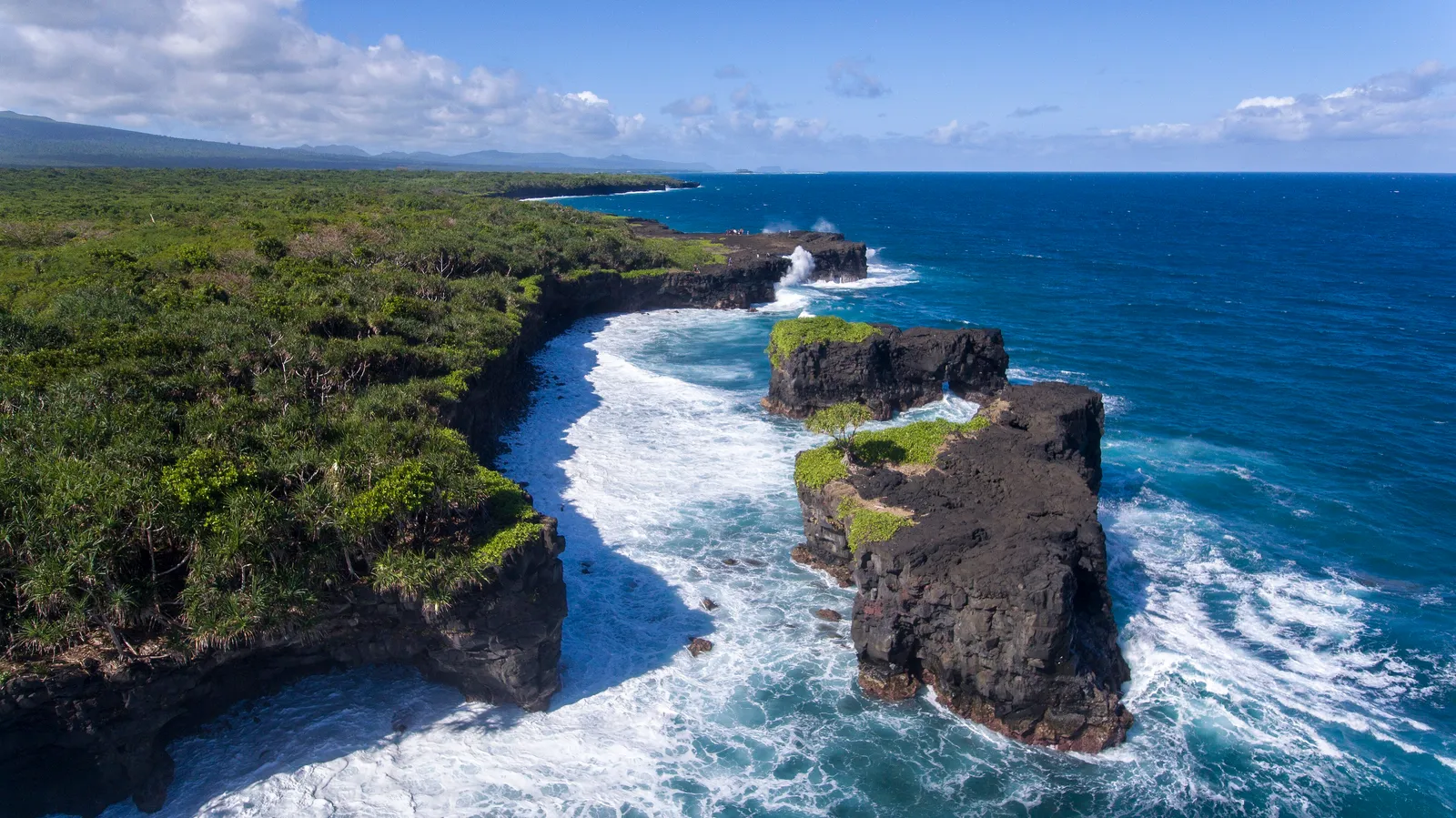
Samoa has two main islands: Upolu, where the capital Apia is located, is the more urbanised and more populous; Savai'i, larger and less developed, is the one travellers with time prefer. Savai'i has in its interior the lava flows of twentieth-century eruptions — the last major eruption was in 1911 — that ran to the sea, destroying several villages and creating a coast of black volcanic rock that contrasts with the turquoise blue of the reef lagoon. The rainforests of Savai'i's interior harbour the Samoan broadbill (Myiagra albiventris) and several endemic pigeon species.
Samoa's beaches are of fine white sand — on Upolu, the beach at Lalomanu on the south-east coast has a reputation as one of the most perfect in the Pacific — but beach tourism is not the main driver of the Samoan experience. The travellers who most enjoy Samoa are those who spend time in the villages, swim in the to sua — natural pools connected to the sea through lava caves — and walk in the interior to the waterfalls of the O Le Pupu-Pu'e National Park.
Robert Louis Stevenson and the history of contact
The Scottish writer Robert Louis Stevenson chose Samoa for his final years. He arrived on Upolu in 1890 and built his home, Vailima, in the hills above Apia; he died there in 1894 and was buried on the summit of Mount Vaea, from which the ocean is visible in every direction. His tomb carries the lines of his own poem 'Requiem', and the house has been restored as a museum. Stevenson was one of the first European writers to describe Samoan life with something approaching respect and ethnographic observation, and his love of the islands is well documented in his letters.
The history of European contact with Samoa was less destructive than on many other Pacific islands — the late arrival of missionaries and colonists, and the cultural resilience of the fa'a Samoa, cushioned some of the most violent impacts — but it was not without its traumas. The war between colonial powers (Germany, the United States and Britain) that culminated in the 1899 partition, forced recruitment for copra plantations and the introduction of disease left scars that Samoan oral history preserves. Samoa's independence in 1962 was the first in the South Pacific and is still celebrated as a moment of national pride.
How to visit Samoa with respect and depth
Samoa is accessible by flight from Auckland (around three hours) and Sydney (around four hours), with connections also from Hawaii and Fiji. Apia on Upolu has all the necessary services; Savai'i is reached by ferry from Upolu in approximately one hour. The most interesting accommodation are the faleoloa — wooden bungalows on stilts at reef lagoon beaches, generally run by local families — which combine basic comfort with the opportunity to spend time directly with the owners.
The protocol of visiting villages matters greatly in Samoa. Respectful dress — the lavalava, a cotton pareo, for men and women alike — is positively valued; shoulders and knees should be covered in village interiors and in churches, which here are the heart of communal life. Sunday is sacred in Samoa: most businesses close, villages empty for religious services and the afternoon is for family rest. Respecting the character of the Samoan Sunday — avoiding intrusive tourist activity — is the most basic demonstration that you are here to learn, not to consume.
Quick answers
What is the difference between Samoa and American Samoa?
Samoa is an independent state since 1962. American Samoa is an unincorporated territory of the United States, meaning its residents are US nationals but not full US citizens. The two share the same Samoan language and the fa'a Samoa, but have administrative, economic and some cultural differences as a result of their distinct colonial histories (New Zealand and American). For travellers they require different documents or visas.
When is the best time to visit Samoa?
The dry season runs from May to October, with less rain, clearer skies and cooler temperatures (around 25–27 degrees). The wet season (November–April) can bring cyclones and heavy rain, but also lush vegetation. The Teuila Festival in September, which includes fautasi (longboat races), siva and traditional craft exhibitions, is one of the best times to see the fa'a Samoa in full expression.
Is the pe'a still practised today?
Yes. The pe'a is a living rite of passage in Samoa, both on the islands and in the large Samoan diaspora in New Zealand, Australia, Hawaii and the United States. Master tattoo artists (tufuga ta tatau) are figures of great prestige and the best have waiting lists of several years. New pe'a are made every year in Samoa and in the diaspora, and the rite has experienced a revival of interest among young Samoans in recent decades.
Is travel to Samoa expensive?
Samoa is relatively affordable by Pacific island standards. Accommodation options range from beach faleoloa (inexpensive) to luxury lagoon resorts. Local food — roast suckling pig from the lovo, palusami (taro leaves in coconut cream), fresh tuna poke — is cheap and of high quality. The main costs are the international flights, which typically route through Auckland or Sydney.
Can I learn some Samoan before I go?
English is official in Samoa alongside Samoan, and it is widely understood in towns and in tourist businesses. In villages, basic Samoan — talofa (hello), fa'afetai (thank you), o ai mea e te fia 'ai? (what would you like to eat?) — is met with a genuine pleasure that goes beyond politeness. Online learning resources are available; even a few well-pronounced phrases open doors in Samoa in ways that any experienced traveller will recognise.
Let the reading become a route.
When an article sparks something, our planners are the next step. Tell us what you are dreaming of.