South Georgia: The Wildlife Kingdom at the Edge of Antarctica
South Georgia is the most wildlife-dense landmass on Earth, a mountain spine rising from the Southern Ocean that is home to millions of seabirds, vast colonies of king penguins and the final chapter of Shackleton's great journey.
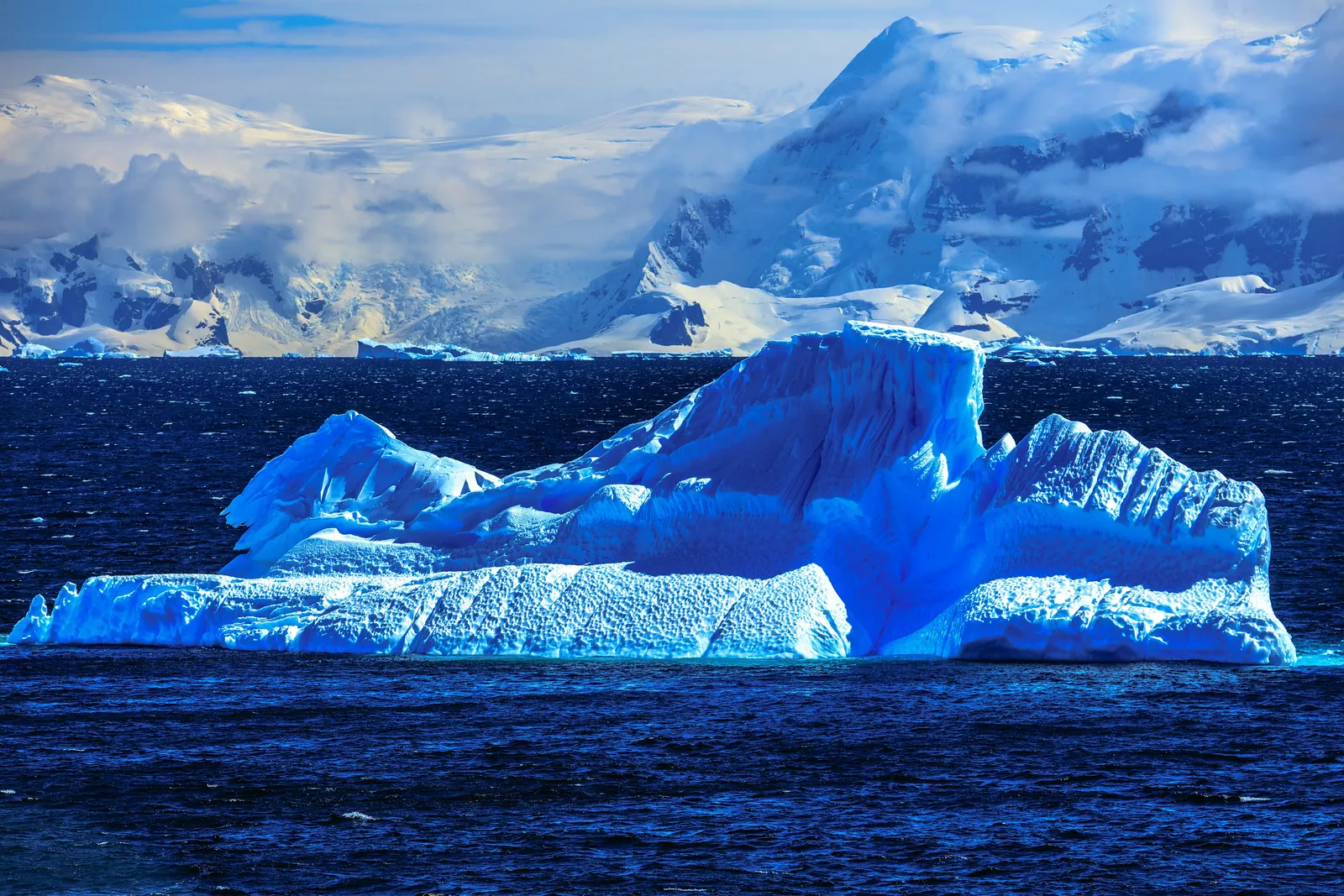
There is a moment, approaching South Georgia by sea, when the scale of what lies ahead becomes impossible to ignore. The island rises abruptly from the ocean — a serrated ridge of glaciated peaks running 170 kilometres long — and the noise reaches the ship before the shore does: the overlapping calls of tens of thousands of birds and seals carrying across the water like a roar. South Georgia is not a quiet place. It is one of the loudest, most densely populated wildlife spectacles on the planet.
The island sits roughly 1,400 kilometres east-southeast of the Falklands, in the cold waters of the Southern Ocean, and it is visited by a small number of expedition vessels each season. It is not part of a standard Antarctic Peninsula voyage; it requires either an extension or a dedicated itinerary that crosses open ocean in each direction. For travellers willing to make that commitment, South Georgia repays them with wildlife encounters that are difficult to describe without sounding implausible — and a human history no less dramatic than the landscape.
King penguins: the colony at Gold Harbour and St Andrews Bay
South Georgia holds roughly half of the entire world population of king penguins, the second-largest penguin species, in colonies that must be seen to be believed. At St Andrews Bay, the largest colony, somewhere between 150,000 and 400,000 birds gather on the beach and backing plain — a shimmering orange-and-black mass stretching so far into the valley that the far edge disappears into haze. The ambient noise is extraordinary, a constant low roar of trumpeting calls.
King penguins breed on an unusual eighteen-month cycle, which means that at any point in the season a colony contains adults incubating eggs, adults with grey, woolly chicks, and immaculately plumaged birds ready to breed again. Walking along the colony edge with guides — at the respectful distances IAATO guidelines require — is one of the most disorienting wildlife experiences available anywhere. The birds treat passing humans as essentially irrelevant, which only deepens the sense of having stepped into a world that does not need us.
Elephant seals and fur seals: the beach as obstacle course
South Georgia's beaches are shared between the penguins and two seal species that together represent another layer of sheer biological abundance. Southern elephant seals, the largest seals in the world, haul out here in enormous numbers. The bulls, reaching up to four metres and 2,200 kilograms, are formidable at close range; the pups, born in spring and weaned within weeks, are endearing and bold. A beach in October or November, when the bulls are fighting for harem control, is a spectacle of noise, blubber and occasional genuine menace.
Antarctic fur seals, nearly hunted to extinction in the nineteenth century, have recovered in extraordinary numbers — some estimates put the South Georgia population at around three million. They are smaller and faster than elephant seals, territorial near the tussock grass at the beach edges, and the species responsible for making many South Georgia landings a matter of reading body language carefully and keeping respectful distance. A curious pup, however, can be one of the most charming encounters of a Southern Ocean voyage.
The seabirds: albatrosses, petrels and the tussock beyond
South Georgia hosts more breeding seabirds than almost anywhere else on Earth. The wandering albatross nests on the higher slopes, including on the famous ridge above Salisbury Plain where pairs court through extended, wing-spreading dances before committing to decades-long bonds. These are the largest flying birds in the world by wingspan — up to 3.5 metres from tip to tip — and watching one land or launch at close range is humbling in a way that photographs struggle to convey.
Twelve species of albatross breed in South Georgia's wider area, alongside millions of petrels, prions, terns and sheathbills. The island's tussock grass, waist-high and dense, shelters nesting burrows for diving petrels and South Georgia pipits — the southernmost songbird in the world, found nowhere else. In the interior, elephant bird paths through the tussock read like trails; in truth, they are seal highways worn smooth over generations.
Grytviken: the ghost station and Shackleton's grave
At Grytviken, on the sheltered arm of King Edward Cove, the ruins of a shore-based whaling station stand as the most complete industrial relic of the Southern Ocean's whaling era. The station processed its last whale in 1965 and was abandoned shortly after. What remains — rusted boilers, enormous oil tanks, a flensing plan still strewn with whale bones — gives a visceral sense of the industrial scale at which the Southern Ocean's whale populations were reduced.
A few hundred metres from the station, in a small, fenced churchyard, is the grave of Ernest Shackleton, who died of a heart attack aboard his ship at Grytviken in January 1922, at the outset of his last voyage south. The grave is simple — a granite headstone in a garden maintained with quiet dignity — and visiting it closes the loop of one of the great stories of human endurance. It was to South Georgia that Shackleton and five companions rowed in an open boat after the loss of Endurance, crossing 1,300 kilometres of the world's most violent sea to raise the alarm at the whaling station. The island was both the target of that desperate journey and its end.
Getting to South Georgia and planning a visit
South Georgia is administered by the United Kingdom as part of the British Overseas Territory of South Georgia and the South Sandwich Islands. All visitors must hold a permit, issued by the South Georgia Heritage Trust through the Government of South Georgia and the South Sandwich Islands; reputable expedition operators arrange these as part of the itinerary.
Reaching the island typically means crossing the Scotia Sea from the Falklands or extending southward from an Antarctic Peninsula voyage. Seas in this stretch of the Southern Ocean can be demanding, and voyages should be planned around expedition vessels — ice-strengthened, stabilised ships with experienced crews and naturalist teams. The island's weather is famously changeable: clear, calm mornings can give way to rain and squalls within hours. This is not a limitation; it is the character of the place, and itineraries that build in multiple days allow conditions to play out across different bays.
Conservation and the island's recovery
South Georgia is a conservation success story on a remarkable scale. In the early twentieth century, introduced rats and mice devastated the island's burrowing seabird populations, killing eggs and chicks across huge areas of tussock. A decade-long project to eradicate rodents across the entire island, completed by 2015, used poison bait stations across more than 1,000 square kilometres of terrain — one of the largest invasive-species removal operations ever carried out.
The results have been striking. South Georgia pipits are returning to areas they had not nested in for decades. Burrowing petrels are recolonising beaches they had abandoned. The island's ecological restoration is still unfolding, and visiting it today is to witness a landscape in active recovery — a meaningful counterpoint to the ruin visible at Grytviken, and evidence that deliberate, sustained conservation effort can reverse extraordinary damage.
Quick answers
How do you visit South Georgia?
South Georgia is reached only by sea, typically on expedition vessels crossing from the Falkland Islands or extending from an Antarctic Peninsula voyage. All visitors require a permit, arranged through reputable operators. The island has no airport, no permanent civilian population and no tourist infrastructure ashore, so the ship serves as hotel, transport and base throughout. Expect at least two to three days at the island to visit multiple sites.
When is the best time to visit South Georgia?
The expedition season runs from roughly October to March. November and December bring the elephant seal pups and the height of the king penguin courtship and breeding activity. January and February see the most wildlife activity overall, including well-grown penguin chicks and the aftermath of elephant seal pupping. Each month has its own character; the island is rarely less than spectacular.
What is Ernest Shackleton's connection to South Georgia?
After his ship Endurance was crushed by pack ice in 1915, Shackleton led his crew to survival and eventually sailed 1,300 kilometres in an open boat to reach South Georgia, crossing the island's mountains on foot to raise the alarm at the Grytviken whaling station. He died at Grytviken on a later expedition in 1922 and is buried there, in a small churchyard that expedition visitors can pay their respects at today.
Is South Georgia dangerous to visit?
South Georgia is a wild and remote environment, not a dangerous one for travellers on reputable expedition ships. Fur seals near the tussock can be territorial; elephant seal bulls during the breeding season are best given wide berth; the terrain is uneven. Landings are always guided, groups are small, and experienced naturalists manage the shore time. The ocean crossings to and from the island can be rough, and standard seasickness preparation applies.
Let the reading become a route.
When an article sparks something, our planners are the next step. Tell us what you are dreaming of.