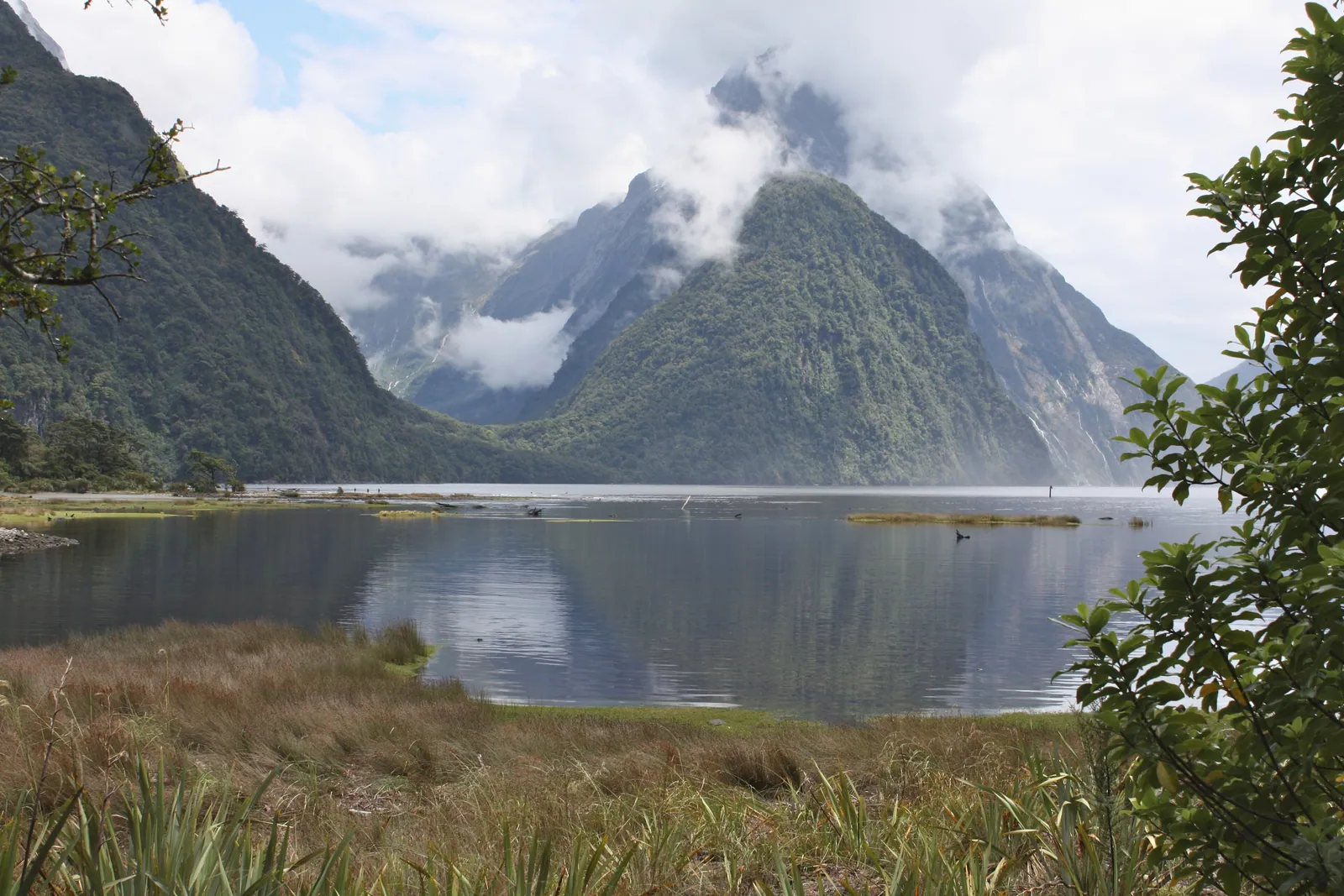
Stewart Island / Rakiura: Where New Zealand Goes Wild
Across the Foveaux Strait from the South Island, Rakiura is New Zealand's third island and one of its best-kept secrets — a national park of forest, beach and birdlife where the kiwi still walks after dark.
Most travellers to New Zealand reach the South Island and, if they are thorough, make it to Te Anau and Milford Sound. A smaller number go one step further — take the hour-long ferry across the Foveaux Strait from Bluff, or the twenty-minute flight, and arrive on Stewart Island. The island the Māori call Rakiura, the Land of Glowing Skies, is 85 percent national park and 1,746 square kilometres of ancient podocarp forest, windswept coastline, inlets and bays, with a permanent human population of roughly 400 people. It is one of the last places in New Zealand where the natural world substantially outweighs the human one.
It is also one of the few places in the world where a traveller has a realistic chance of watching a wild kiwi in daylight — or in the long southern dusk that passes for night in summer. The island's isolation and almost complete freedom from introduced mammalian predators in much of its area have given its native birds a respite that the New Zealand mainland lost long ago. For a serious naturalist, and for any traveller who wants to understand what New Zealand looked like before human settlement, Rakiura is not an afterthought. It is the point.
The kiwi: New Zealand's national bird in its natural element
New Zealand has five species of kiwi; Rakiura is home to the southern tokoeka, a robustly built bird of the South Island kiwi group that behaves somewhat differently from its mainland cousins — uniquely among kiwi, it forms long-term family groups, with older offspring helping to raise younger ones. The island's population is large enough that encounters, especially at dusk and after dark on the beaches and bush margins around Halfmoon Bay and Mason Bay, are relatively reliable compared with anywhere else in the country.
A kiwi encounter requires patience and quiet. The birds emerge after dark on most nights in the wilder parts of the island, probing the sand for sand hoppers and invertebrates with their uniquely long, flexible bills — the only bird bill in the world with nostrils at the tip rather than the base. At Mason Bay, reached by a day's walk through forest or a water taxi from Oban, kiwi have been observed foraging on the open beach in late afternoon, a behaviour extraordinarily rare on any populated stretch of New Zealand coast.
The forest: podocarps and birds that fill the gaps
Rakiura's forest is ancient by New Zealand standards — the interior is dominated by rimu, miro and totara, large podocarp trees that form a canopy many of the island's birds depend on. The undergrowth is thick with ferns, mosses and the dense, wet bush that defines the subantarctic fringe of the New Zealand archipelago.
The forest is full of sound. Bellbirds, tūī, kererū (New Zealand pigeons) and kākā parrots — increasingly rare on the mainland — are common and conspicuous. South Island robins hop close underfoot on the tracks, entirely without fear. Fernbirds skulk at the edges of wetlands. The absence of many of the introduced mammals that have decimated native bird populations elsewhere in New Zealand means Rakiura's forest functions closer to its pre-human state than almost anywhere else in the country accessible to ordinary travellers.
The Rakiura Track and Mason Bay
Rakiura's only Great Walk, the Rakiura Track, is a 32-kilometre, three-day loop from Oban through coastal forest, over Port William and North Arm huts, and back along the coast. It is the easiest of the New Zealand Great Walks and the one most suited to birdwatchers — the huts are small, the wildlife is close, and the track moves through different habitats at a pace that allows proper attention.
Mason Bay, on the island's west coast, requires either a longer inland tramp or a water taxi from Oban followed by a walk across open sand dunes. The bay is vast, wild and largely unsheltered — a long arc of beach backed by dunes, tussock and forest, swept by the prevailing westerlies. It is the island's best kiwi habitat and the place most serious visitors make for. The journey to Mason Bay, in a small boat threading the island's inlets, is itself a condensed lesson in Rakiura's ecology.
The southern lights and the glowing skies
The island's Māori name, Rakiura, is commonly translated as Land of Glowing Skies and is widely understood to refer to the aurora australis — the southern lights that sweep across the sky above Rakiura on clear nights, particularly in the winter months. The island sits at roughly 47 degrees south latitude, far enough into the auroral zone that displays, though not nightly, are a genuine seasonal feature.
Summer nights on Rakiura are also remarkable for different reasons: at the summer solstice the sky never fully darkens, and the prolonged twilight that southern latitudes produce is the same light that makes kiwi watching possible. The luminous dusk — too light to need a torch, too dim to be day — can last for hours, and it gives the island a quality of light entirely unlike anywhere else in New Zealand. The glow the Māori named the island for is real, and in a good southern summer it is one of the more affecting experiences of a Pacific journey.
Getting to Rakiura and practical matters
Stewart Island is reached from Bluff, the southernmost town of the South Island, by the Foveaux Express ferry (approximately one hour) or by small aircraft from Invercargill (approximately twenty minutes). The island's single settlement, Halfmoon Bay at Oban, has a handful of lodges, a general store and the visitor centre for Rakiura National Park. It is not a destination that rewards rushing: most visitors stay two to four nights, which gives time for the Rakiura Track, a trip to Mason Bay and an evening or two watching for kiwi.
The Foveaux Strait is a notoriously rough crossing — short but busy with swells — and the ferry does not operate in very heavy weather. Flying is the more reliable option in uncertain conditions. The island's weather is genuinely unpredictable, cycling rapidly between rain, wind and brief, dazzling sunshine. It is the southern edge of New Zealand's temperate zone, and it feels like it — bring waterproofs, layers, and the expectation that whatever the sky is doing when you arrive will not be what it is doing by lunch.
Quick answers
How likely am I to see a wild kiwi on Stewart Island?
Considerably more likely than anywhere else in New Zealand. Kiwi are present in large numbers on Rakiura and are active on beaches and bush margins after dark on most nights. Mason Bay offers the best chances, including occasional daylight sightings, and the beaches near Oban produce encounters most evenings. Guided night walks with local operators significantly improve the odds. There are no guarantees, but Stewart Island is regarded as the best place in the country for a wild kiwi encounter.
Do I need to be a serious hiker to visit Stewart Island?
No. The Rakiura Track is the easiest Great Walk in New Zealand and is very manageable for fit walkers without specialist experience. The short walks from Oban, including Observation Rock and the Ackers Point lighthouse track for little blue penguins, require only ordinary fitness. For Mason Bay you need either a longer walk (roughly 12 kilometres one way from the track) or a water taxi, which many visitors take.
When is the best time to visit Stewart Island?
Summer (December to February) offers the longest days, the most accessible tracks and the best kiwi-watching conditions on the beaches. Autumn and spring are quieter and often have settled weather between fronts. Winter is raw but sometimes produces aurora australis displays and has the smallest number of visitors. The island is small enough that it is never truly crowded, even in peak season.
Is Stewart Island part of the same itinerary as Fiordland and Milford Sound?
They are geographically close — Stewart Island lies just across the Foveaux Strait from Bluff, which is a three-hour drive from Te Anau — but they are typically separate experiences requiring separate days. A journey that includes both Fiordland and Rakiura needs a minimum of five to six days in New Zealand's deep south. For travellers who value wildlife and wilderness over scenery alone, combining them is one of the most rewarding things New Zealand offers.
Let the reading become a route.
When an article sparks something, our planners are the next step. Tell us what you are dreaming of.