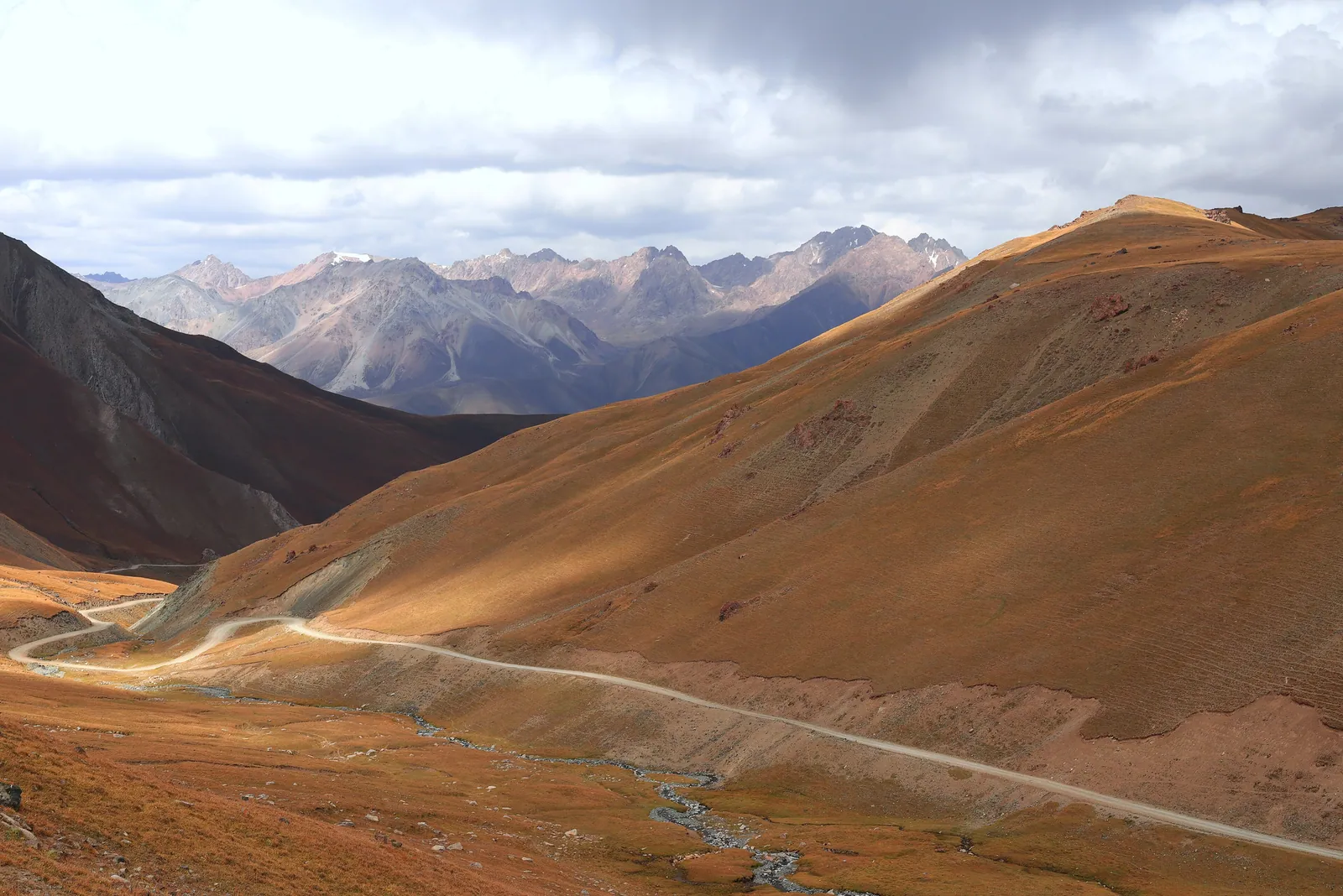
Talking to Strangers on a Long Journey
Fast travel removes the conditions that make a conversation with a stranger possible. A slow journey restores them — and with them one of the oldest and richest pleasures of going somewhere.
The advice not to talk to strangers is the first piece of social instruction many of us receive, and it is among the first a long journey quietly dismantles. On a slow overland crossing — a train that runs for two days, a shared minibus over a high pass, a ferry that takes a night and a morning — the stranger sitting beside you is not a threat to be avoided. They are, very often, the most interesting part of the day.
Fast travel makes conversation structurally unlikely. An airport is designed for transit, not encounter; a short flight is over before anyone has settled into ease; and the faint anxiety of a tight connection keeps the mind elsewhere. But a journey that genuinely takes its time — one measured in days rather than hours — creates something different: the long, unstructured proximity that turns strangers into brief companions, and sometimes into more than that.
This essay is about that transformation: what slow travel does to the chances of real human contact, why those encounters matter, and the small art of opening a conversation across a distance of language and culture.
What a slow journey does to proximity
The sociology of a long journey is unlike almost any other setting. You are placed next to someone you did not choose, for a stretch of time you cannot shorten, in a space too small for sustained mutual ignoring. This sounds like a recipe for awkwardness, and sometimes it is. But more often it is a recipe for the most effortless conversation either of you will have all week.
Shared circumstance is a powerful social solvent. The broken-down bus, the long wait at a border post, the sudden mountain storm that holds everyone in a teahouse: these situations dissolve the usual distances between people faster than any formal introduction. You are already in the same predicament; the conversation begins because it would be stranger not to have it.
Language is not the barrier it appears
The most common thing a traveller says before a conversation with someone who speaks a different language is that they cannot have one. This is almost never true. Language is a system for exchanging information; a conversation is something older and more various than that. A shared map, a photograph, a gesture toward the mountains and a raised eyebrow, the universal grammar of pointing at food and pulling an expression — these are conversation, conducted through the channels that existed before any particular tongue.
Something else is also true: even a handful of words in someone's language — enough to say good morning, to name a dish, to ask how far — opens a door that fluency alone does not explain. It signals effort, and effort signals respect, and respect is the beginning of genuine exchange. A traveller who has learned twenty words of Uzbek before crossing the steppe is not prepared to discuss philosophy; they are prepared to be liked, which is the more useful starting point.
The conversation you remember
Ask travellers about the encounters they remember longest from a grand journey, and almost none of them name the famous sites. They name a conversation: the engineer on the overnight train who explained what he was building and why; the shepherd's wife who appeared with tea and flatbread at a mountain pass and, through a translator and a good deal of mime, managed to tell them everything about her winter; the retired professor encountered in a teahouse in Khiva who had once, in another life, studied at a university in Birmingham, and who still read English novels.
These conversations are memorable because they are the texture of a place from the inside — not the monument but the person standing in front of it, with opinions and a life and a curiosity about you that mirrors yours about them. A photograph can record a facade; only a conversation can record what it is actually like to live somewhere, and the slow journey provides the time in which that conversation can unfold at its own pace.
The art of starting and the art of listening
Starting is simpler than it looks. A smile is not culturally neutral but it is universally comprehensible as a signal of non-threat. Offering food, accepting food, commenting on the weather outside the window, producing a map: all of these are conversation-openers that require no shared vocabulary. The other person's willingness to engage is the first piece of information you receive about them, and it is always interesting.
Listening well across a language gap requires a particular patience — not the patience of waiting to speak, but the patience of allowing meaning to arrive by indirect routes. When the grammar is approximate and the shared vocabulary is twelve words, you learn to read the face and the hands rather than the sentence. This is slower and more demanding than ordinary listening, and it produces a more complete understanding of the person than a fluent exchange often does, because you are attending to everything.
What the encounter leaves behind
The traveller and the encountered stranger will, almost certainly, never meet again. Their time together is bounded by the length of the journey, and when the train reaches the station or the minibus reaches the town, each of them walks away into a world the other will not see. This impermanence is not a failure of the encounter; it is part of its character.
A conversation that is complete in itself, that asks nothing of the future and owes nothing to the past, has a particular lightness and a particular honesty. There is no point in performing; there is no return visit to protect. What you say is what you think. The stranger you talked to on the Tian Shan road will carry a version of you in their memory, and you will carry a version of them, and both versions will be truer than many that accumulate across years of careful friendship. Speed removes the conditions for this. Slowness restores them.
Being the stranger who is talked to
The conversation works in both directions, and it is worth remembering that you are also a stranger to be approached — a curious one, arriving from somewhere incomprehensible, carrying objects and assumptions that may be as interesting to them as theirs are to you. Children are invariably the most willing conversationalists, and they will often do the work of opening a dialogue that adults on both sides would hesitate to begin.
Being the object of curiosity is a form of hospitality offered to you, and it deserves a generous response. The traveller who retreats behind sunglasses and a headset, choosing the comfort of their own world over the discomfort of an unplanned exchange, is refusing something real. The traveller who stays open — who is willing to be looked at, asked about, mimed at, laughed at and laughed with — is the one who comes home having actually been somewhere, rather than merely passed through it.
Quick answers
How do you start a conversation with someone who speaks a different language?
Simpler than it sounds: a smile, an offered piece of food, a gesture toward something outside the window, a produced map. Shared circumstance — a delayed train, a rain shelter, a long wait — does much of the work by itself. Even ten or twenty words of the local language, used imperfectly, signal effort and goodwill and open far more doors than silence does.
Is it rude to approach locals with conversation in cultures that value privacy?
Context matters more than culture. In a setting of shared, extended proximity — a long train journey, a shared minibus, a teahouse in a remote area — conversation is almost universally welcome and is often initiated by the local rather than the traveller. The signals for privacy are the same everywhere: headphones in, face down, posture closed. Read them the same way you would at home.
How do you cope when the language barrier is total?
By accepting that you are not, in fact, having a conversation about abstract ideas, and that this is fine. The conversation you can have — through gesture, expression, map, photograph, shared food, mutual pointing and universal mime — is a genuine one. It communicates curiosity, goodwill and presence, which are the essentials. Translation apps have improved enormously and are a legitimate bridge; using them with patience and good humour on both sides works better than most people expect.
Should I be cautious about what I share with strangers on a journey?
Ordinary caution applies — do not share travel documents, valuables or detailed itineraries with someone you have just met. Beyond that, a long journey makes you a good judge of character over hours rather than minutes, and most people who begin a conversation on a train or a bus do so out of ordinary human curiosity. Err on the side of openness; the risks are small and the rewards are disproportionate.
What are the best settings for unexpected encounters on a long journey?
Sleeper trains, long-distance bus and minibus rides, teahouses and simple guesthouses in remote areas, shared meals in small restaurants, and waits at borders or mountain passes. These are places where proximity and time combine. The grander the setting — the famous temple, the crowded market — the less likely the genuine encounter; the humbler and more practical the context, the easier the conversation.

Let the reading become a route.
When an article sparks something, our planners are the next step. Tell us what you are dreaming of.