The Camera Worth Carrying Across the World
On a journey of many weeks and many climates, the right camera is the one you will actually lift to your eye. Here is how to choose a kit that is light enough to live with and good enough to keep.
The best camera for a grand journey is not the one with the largest sensor or the longest specification sheet. It is the one small enough that you carry it every day, simple enough that you can work it without thinking, and tough enough to survive Patagonian rain, Atacama dust and Himalayan cold. For most travellers that means one capable body and two lenses — not the four-lens outfit that ends the trip at the bottom of a bag.
Before you buy anything, be honest about how you photograph. If your phone already pleases you, a recent phone plus a little knowledge will carry a whole journey. If you want reach for wildlife, low-light control for temples and the night sky, or large prints to hang at home, a dedicated camera earns its weight. This article helps you decide, and then helps you pack.
First, the honest question: phone or camera
Modern phones are extraordinary, and for a great many travellers they are enough. Their computational processing handles tricky light, they are always in a pocket, and they make the act of photographing invisible — which matters more than any lens when you are among people. The case for carrying a separate camera rests on three things a phone still does poorly: genuine optical reach for distant wildlife, control in very low light, and the file quality that survives a large print.
If none of those three matter to you, stop here and travel light: a phone, a cleaning cloth, a small power bank and the discipline to look properly. If one or more does matter, read on — but carry the camera knowing exactly which jobs you bought it for.
Bodies: mirrorless, and the sensor-size trade
If you are buying, buy mirrorless. Compared with an older DSLR it is lighter, the autofocus is better, and you see the exposure before you press the shutter. The remaining decision is sensor size, and it is genuinely a trade rather than a ranking. A full-frame sensor gathers the most light and is superb for the night sky over the Atacama, but the bodies and lenses are larger and heavier. An APS-C or Micro Four Thirds system is meaningfully smaller and lighter, costs less, and is excellent in all but the dimmest conditions.
For a journey that crosses many climates and is walked, not driven, weight is not a detail — it is the whole game. A traveller is far better served by a compact APS-C kit carried happily every day than by a full-frame outfit left in the hotel. Choose the system you will not resent on the third week.
Lenses: the two-lens journey
Two lenses cover almost everything. The first is a standard zoom — roughly 24-70mm equivalent — which handles streets, markets, landscapes, food and most portraits. It will live on the camera perhaps eighty percent of the time. The second depends on your journey. For the wildlife of the Great Rift or the seabirds and whales of Beyond the Blue, add a telephoto reaching 200mm equivalent or longer. For cities, temples and interiors — the heart of The Long Way East — a small, fast prime such as a 35mm or 50mm earns its place by gathering light and forcing you to compose with your feet.
A third lens is a luxury that usually becomes a burden. The discipline of two lenses is not a compromise; it sharpens your eye, because a fixed set of focal lengths teaches you to see in them. Carry less, and you photograph more.
The small things that decide the trip
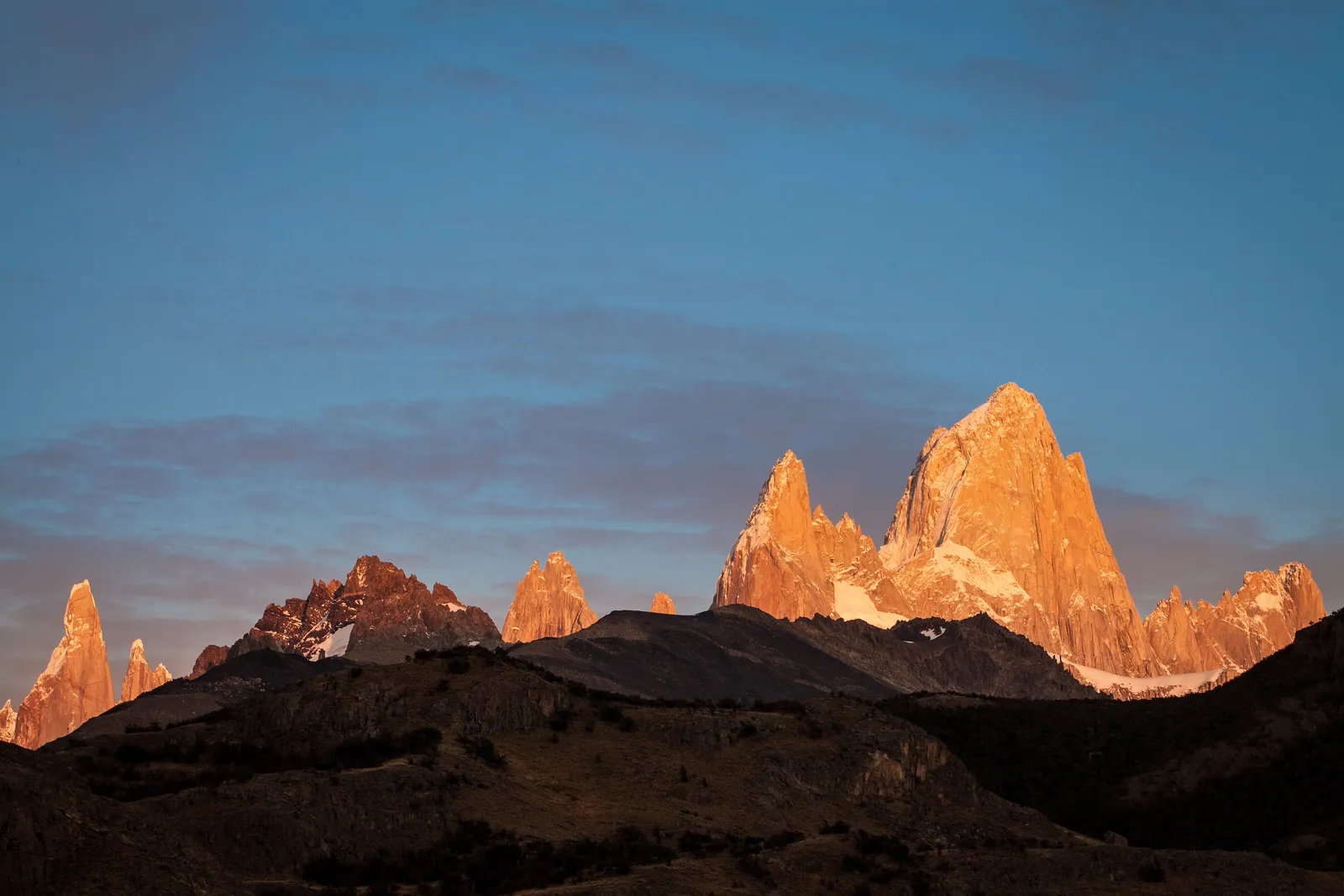
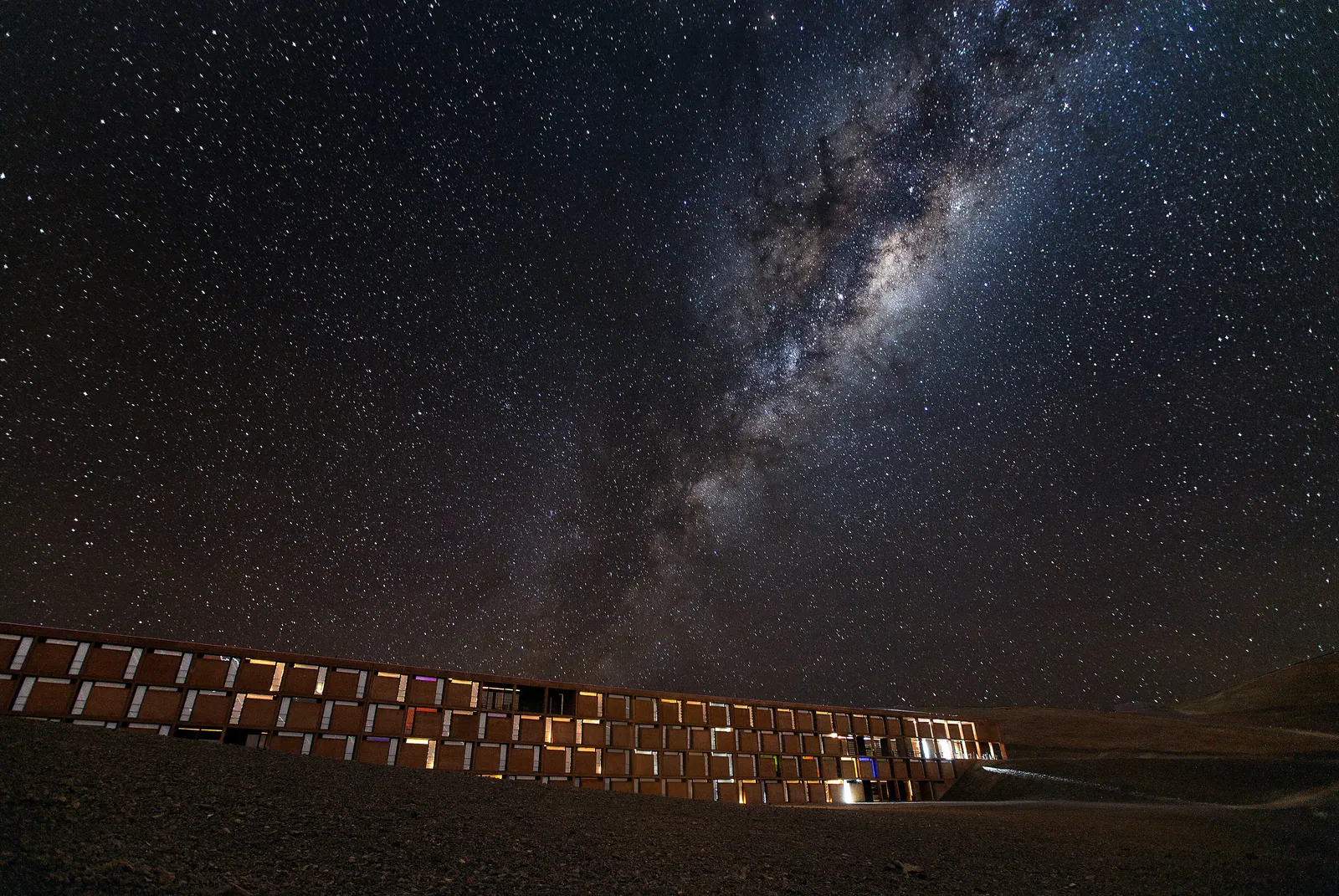
Spare batteries are the single most important accessory. Cold drains them fast — a frigid dawn beneath Fitz Roy on The Pacific Arc, or a night under the stars — so carry at least two spares and keep them in an inner pocket, warm against your body. Bring enough memory cards to never delete in the field, and a means of charging that matches the plugs of every country on your route, which on a multi-continent journey may be three or four standards.
Add a microfibre cloth and a blower for the dust of the Silk Road and the Atacama, and a simple rain cover, or even a plastic bag and an elastic band, for Patagonia and the Great Rift's wet season. A lightweight, properly padded bag that you can carry all day completes the kit. None of this is glamorous, and all of it is the difference between a camera that works on day forty and one that does not.
Weight, security and the rhythm of a long journey
Weigh your finished kit before you commit to it. A body, two lenses, charger, spares and bag that together exceed roughly three kilograms will, by the second week, quietly change how often you reach for it. The aim is a kit you forget you are carrying until the moment you want it. When in doubt, leave the lens behind.
On security, the rule is calm rather than fear. A modest, unbranded bag attracts less attention than an obvious camera holdall. Keep the camera on a strap across your body in crowded markets, back up your files often so a loss is a loss of hardware and not of memory, and check that your travel insurance covers the replacement value of the kit. A camera is a tool for paying attention. Carry it so that attention, not anxiety, is what you bring to each new place.
Quick answers
Is a phone really good enough for a trip of a lifetime?
For many travellers, yes. A recent phone produces excellent files in good light, is always with you, and lets you photograph people unobtrusively. It struggles only with distant wildlife, very low light and very large prints. If those three jobs do not matter to you, a phone plus a little technique will document a whole grand journey beautifully.
Should I buy a new camera specially for the journey?
If you buy one, do it at least two months before departure and use it daily until the controls are second nature. A journey is the worst place to learn an unfamiliar camera. If you already own a capable camera you enjoy using, take that — familiarity is worth more than any upgrade.
How do I keep a camera safe in dust, rain and cold?
Carry a simple rain cover or a plastic bag for downpours, a blower and microfibre cloth for dust, and keep spare batteries warm in an inner pocket in the cold. When moving a cold camera into a warm room, leave it sealed in its bag for an hour so condensation forms on the bag, not the lens.
Let the reading become a route.
When an article sparks something, our planners are the next step. Tell us what you are dreaming of.