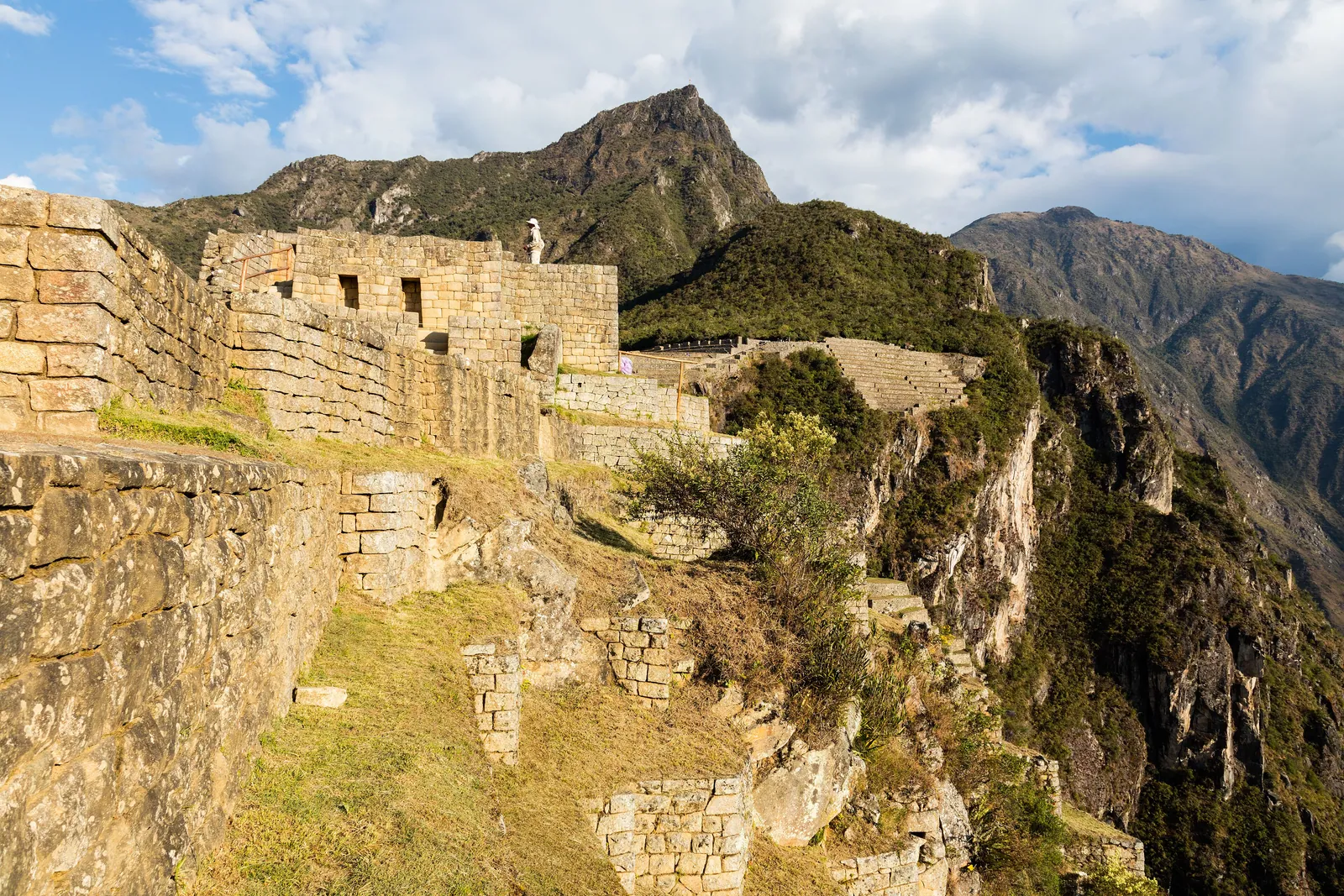
The Classic Inca Trail, Explained
Four days, forty-three kilometres and a finish line unlike any other. Here is how the most famous trek in the Americas actually works — the permits, the passes, the cloud forest and the gate at Intipunku.
The Classic Inca Trail is a four-day, three-night walk that follows an original Inca road for roughly 43 kilometres from the Urubamba valley to Machu Picchu. It is not the only way to reach the citadel, nor the hardest trek in Peru, but it is the one that delivers you on foot through the Sun Gate at dawn — the single most evocative arrival in Andean travel.
It is also strictly rationed. Only 500 people may start the trail each day, guides and porters included, which leaves roughly 200 places for travellers. Permits are non-transferable, sell out months ahead, and cannot be bought once you are in Peru. If the Inca Trail is the reason you are coming, it must be the first thing you book.
The route, day by day
The trek begins at Piscacucho, the trailhead known simply as Kilometre 82, at about 2,600 metres on the Urubamba river. Day one is a gentle valley walk past the hillside site of Llactapata. Day two is the hard one: a long climb to Warmiwañusca, the Dead Woman's Pass, at 4,215 metres — the highest and most demanding point of the route.
Day three is the connoisseur's day, a long but mostly downhill traverse through cloud forest linking a string of Inca sites — Runkurakay, Sayacmarca, Phuyupatamarca — with the trail itself becoming ever more beautifully engineered. Day four is short and early: a pre-dawn start to reach Intipunku, the Sun Gate, and the first sight of Machu Picchu below as the light comes up.
Permits, and why timing is everything
Permits are issued by Peru's Ministry of Culture and sold only through licensed operators; there is no independent walking on the Inca Trail. The annual quota disappears quickly, especially for the dry-season months of May through September, when the most sought-after dates can be gone five or six months in advance.
Every permit is tied to a named passport, so the booking must exactly match your travel document — a renewed passport before departure means paperwork to correct. The trail also closes entirely every February for maintenance and conservation, the height of the rainy season.
How hard is it, really
The Inca Trail is a sustained mountain walk rather than a technical climb. The difficulty is the combination of altitude, consecutive days of effort, and the relentless Inca staircases — thousands of uneven stone steps, punishing on the descents more than the ascents.
Reasonably fit walkers who have acclimatised properly manage it well. The decisive factor is almost never fitness alone but altitude: travellers who arrive straight from sea level and start walking struggle, while those who have spent days in Cusco and the Sacred Valley first tend to enjoy every kilometre.
Life on the trail
You walk the Classic Inca Trail with a team. Licensed guides lead each group, and porters carry the tents, kitchen and shared equipment, moving ahead to have camp standing and a hot meal ready when you arrive. Peruvian regulations cap porter loads and protect their pay and conditions — a system worth supporting by choosing operators who honour it.
Nights are spent at designated campsites along the route, simple but well-placed, often with extraordinary views. The food is generally excellent; the sleep, at altitude and under canvas, less so. It is camping, not lodge trekking, and that rusticity is part of the trail's particular character.
Where it fits in a longer journey
On Andes to Antarctica the Inca Trail sits deliberately in the middle of the route, after days in Cusco and the Sacred Valley have done the work of acclimatisation. By the time you reach Kilometre 82 you are adjusted, rested and ready, and the trek becomes a highlight rather than a trial.
If the four-day commitment or the permit lottery does not suit, there is a graceful alternative: the two-day Short Inca Trail from Kilometre 104, which still walks the final stretch of original road and still arrives through the Sun Gate. It is the same ending, earned on a gentler schedule.
Quick answers
How far in advance should I book the Inca Trail?
For the dry-season months of May to September, aim to secure your permit five to six months ahead; four to five months is usually safe for shoulder-season dates. Permits are capped at 500 starts per day, sell strictly in order, and cannot be purchased after you arrive in Peru.
Is the Inca Trail closed at any time of year?
Yes. The Classic Inca Trail closes for the whole of February each year for maintenance and conservation, coinciding with the wettest part of the rainy season. Machu Picchu itself stays open in February, reached by train, so the citadel can still be visited.
What is the highest point of the Inca Trail?
The Dead Woman's Pass, Warmiwañusca, at 4,215 metres, reached on the second day. It is the trek's hardest stretch and the main reason proper acclimatisation in Cusco and the Sacred Valley beforehand matters so much.
Let the reading become a route.
When an article sparks something, our planners are the next step. Tell us what you are dreaming of.