The Long Lunch: Eating Slowly on a Journey
The meal table is not a refuelling stop. On a slow journey it is the deepest form of cultural encounter available — and the one most easily rushed away.
Every culture in the world has food, and almost every culture in the world has strong feelings about how it should be eaten: at what pace, with whom, in what order, with how much silence or noise or ceremony around it. The meal is not just the food. It is a performance of values — of what a people believes about time, about hospitality, about the proper relationship between pleasure and work — and a traveller who eats only for fuel misses the performance entirely.
Fast travel reinforces the refuelling habit. The airport sandwich, the hotel buffet consumed between a check-in and a meeting, the hurried lunch squeezed between a morning museum and an afternoon monument: these are experiences of eating that have been stripped of their meaning, leaving only the calories. They are not the fault of the places they happen in. They are the fault of the pace.
A slow journey offers an alternative: the long meal, eaten in the middle of the day or the evening, in a place chosen for something other than convenience, with enough time to eat at the pace the culture intends. This article is a case for that meal, and a practical guide to finding and inhabiting it.
Why the meal table is the deepest encounter
Sharing food is among the oldest human activities, and it carries more social information per hour than almost any other form of encounter. Who sits where, who serves first, whether the host eats with you or watches you eat, how many dishes arrive and in what order, whether conversation is expected to be loud or quiet, whether a compliment to the cook is given to the cook or only to the host — every one of these details is a piece of cultural information that no guidebook can fully convey, because it can only be received through experience.
A slow traveller who eats in locally owned restaurants and family-style guesthouses, who accepts invitations to eat in homes, who lingers past the point at which the plate is clear, accumulates this information over weeks. The pattern of a cuisine begins to emerge — not just the ingredients and the flavours, but the philosophy. Why does Japanese kaiseki serve so many small dishes in such precise sequence? Why does the Uzbek plov sit on a single communal plate? Why does Ethiopian injera require you to eat from your neighbour's portion as well as your own? These are not questions about food; they are questions about culture, and the meal is where the answers live.
The pace at which food should be eaten
Almost every non-Anglo-Saxon food culture has a longer relationship with the meal than the traveller arriving from a fast-food context expects. The Moroccan lunch in a family home may run for two or three hours; the Georgian supra, the feast that is also a philosophical conversation, may run all afternoon; the Japanese kaiseki progresses through twelve or fifteen courses at a pace that is deliberate and contemplative. In the Andes, the shared Sunday lunch is the social centre of the week, not a prelude to other activities.
The pace is not self-indulgence. It is the mechanism through which the meal does its social work. Eating slowly forces conversation; conversation at the table is the occasion for the kind of sustained, wide-ranging exchange that sustains a culture's relationships. Rushing a meal is not just bad for digestion; it is a refusal of the social purpose the meal was designed to serve. The traveller who finishes first and asks for the bill has, in many cultures, signalled that they wished not to be there at all.
How to find the right table
The right table is almost never the most visible one. In every city and town on a slow overland journey, the restaurant that faces the main tourist street, with the laminated menu in four languages and the tout at the door, is the least connected to the actual food culture of the place. The right table is found a street or two in, following the locals rather than the guidebook, in a room that looks like it has been feeding its neighbourhood for a generation rather than its visitors for a season.
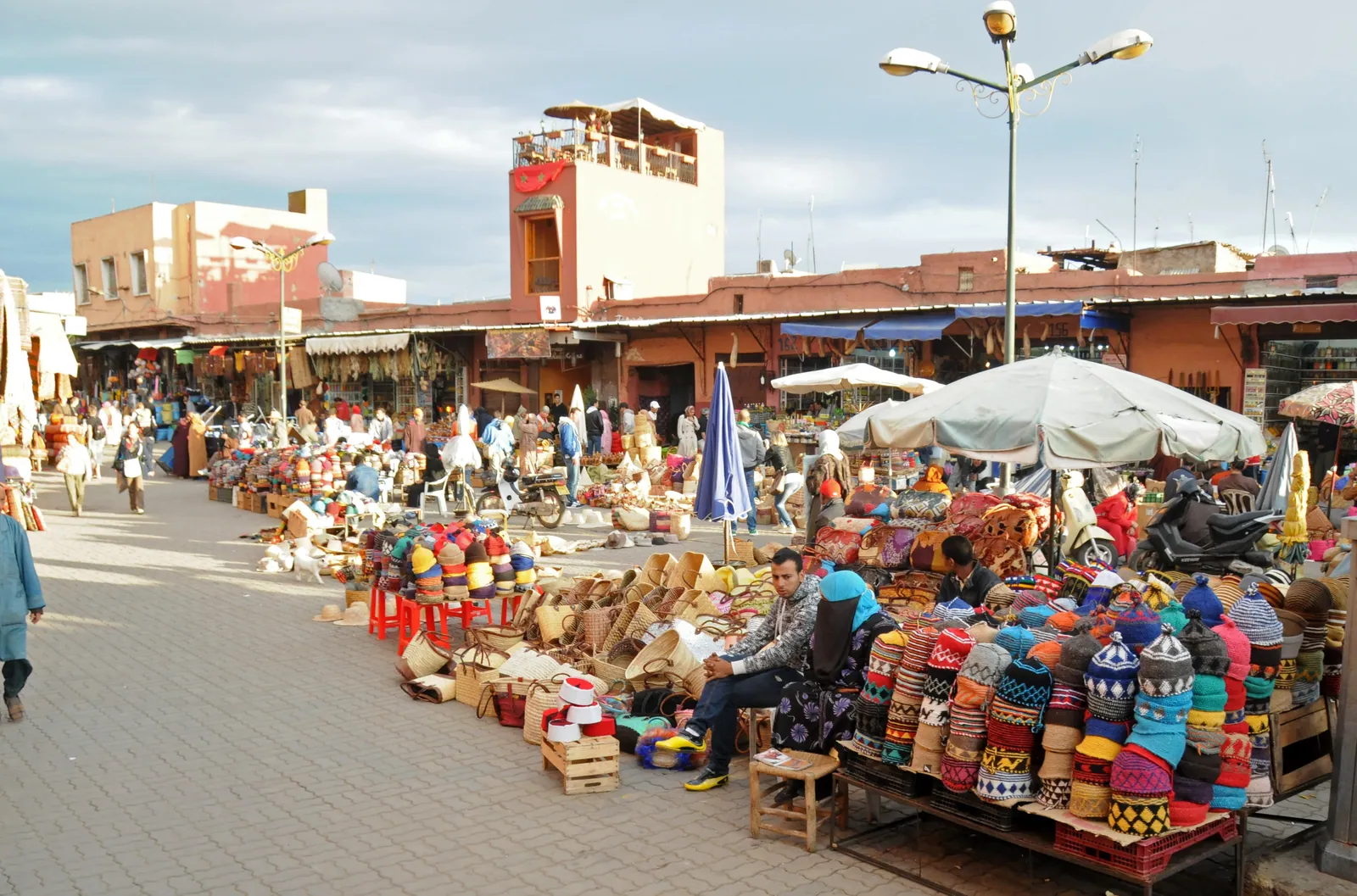
The best introduction to a food culture is almost always the market. Every serious market has a food section — a cluster of stalls where the working people of the town eat, for a fraction of the price and with none of the performance for tourists. Sitting at one of these stalls, eating what the person next to you ordered, is one of the cheapest and most reliably authentic meals available anywhere in the world. The uncertainty about what will arrive is part of the meal's value: it surrenders control to the place, which is precisely the posture a slow traveller should be in.
Eating in homes, and what it asks
The invitation to eat in a local home is one of the great gifts available on a slow journey, and it should be accepted whenever it is offered — which, in the Central Asian tea-and-bread cultures, the Andean highland communities, the Ethiopian highland villages, and the Moroccan riads that cross over into family life, is more often than a traveller initially expects. The home meal is almost always the best food in the area, made with the same ingredients a cook has been working with their whole life.
It asks something in return. The guest who accepts a home meal owes attention, genuine appreciation, and a willingness to eat things that may be unfamiliar or even uncomfortable. It is not the occasion for a lengthy interrogation of ingredients. It is the occasion to eat with gratitude, to ask questions that express curiosity about the culture rather than anxiety about the food, and to understand that accepting a second helping is, in most of the world's hospitality cultures, the appropriate expression of thanks.
The long lunch as the centre of a slow day
On a grand journey, the long midday meal has a structural virtue beyond its cultural value: it anchors the day. A day built around a proper lunch — one that runs from noon to two or three, eaten somewhere worth being, at a pace that invites conversation — turns out to be an extraordinarily productive one. The morning is dedicated to the most demanding sights or walking; the meal provides a natural pause for recovery and for the kind of unhurried conversation in which local knowledge transfers; the afternoon is slower and more contemplative, suited to the galleries and temples and back streets that reward a rested eye.
This is how much of the world ate before the working day was organised by office hours, and it is the rhythm that a slow journey restores. The rest day on an itinerary, discussed elsewhere, is often best anchored by a long lunch: it turns a day with no programme into a day with one very good thing at its centre, which turns out to be quite enough.
Ordering well in an unfamiliar kitchen
The simplest and most reliable rule for ordering in an unfamiliar food culture is to do what the room is doing. The dish that appears on four tables in five, brought out without fanfare in portions that suggest it is the daily staple rather than the showpiece: that is the thing to order. It will almost certainly be better than the item at the top of the menu in large type, which is usually there because it is the one the kitchen thinks foreigners want.
Asking the cook or waiter what they recommend, especially if you can phrase it in the local language, is the second-best strategy. The answer tells you what the kitchen is proud of that day, which is valuable information, and the act of asking begins a conversation that can improve every element of the meal that follows. The traveller who orders with genuine curiosity rather than defensive familiarity, who tries what arrives with an open palate, and who takes the time to ask what it is and why it is made this way: that traveller is eating well. The traveller who orders the thing most like what they eat at home is paying restaurant prices to eat in a smaller version of the world they already know.
Quick answers
Is it safe to eat at market stalls and family guesthouses in remote areas?
Generally yes, with ordinary caution: food that is cooked fresh and served hot is the safest option anywhere in the world, regardless of setting. Simple, busy stalls with high turnover carry lower risk than elaborate restaurants with slow-moving refrigerated displays. The variables that matter are temperature and freshness, not the formality of the setting. Our article on eating and drinking safely on the road covers the specifics in detail.
How do I politely decline food I cannot eat for dietary or health reasons?
Briefly, firmly, and without lengthy explanation. In most hospitality cultures, a medical or religious restriction stated simply — I am unable to eat this, it is not permitted for me — is respected without further discussion. Extended apologies and explanations of Western dietary philosophies are rarely received as intended. If you have a serious allergy, learn the key phrase in the local language before arrival; our guides on any Viajes Globales journey can help communicate it clearly.
What if I genuinely do not enjoy the local cuisine?
Eat what you enjoy and be honest with yourself about what you are missing. Most grand journey routes pass through food cultures with wide enough ranges to suit almost any palate — there is always bread, there is usually something grilled, and the staple protein of a region is almost always its best-prepared dish. The goal is not to force an enthusiasm you do not feel but to remain curious enough to try things you might not choose at home. Occasional discomfort at the table is a small part of the price of a real journey.
How do I know whether to leave a tip, and how much?
Tipping norms vary enormously across the regions our journeys cross. In some, a tip is expected and its absence is noticed; in others, tipping is not customary and may cause embarrassment. Our separate guide on tipping and gratuities covers this in full for each region. At a basic level: in a family-run place, a small gift of appreciation — a local sweet, a sincere thank-you in the local language — is often received more warmly than money.
Let the reading become a route.
When an article sparks something, our planners are the next step. Tell us what you are dreaming of.