The New Zealand Subantarctic Islands: The Forgotten Southern Arctic
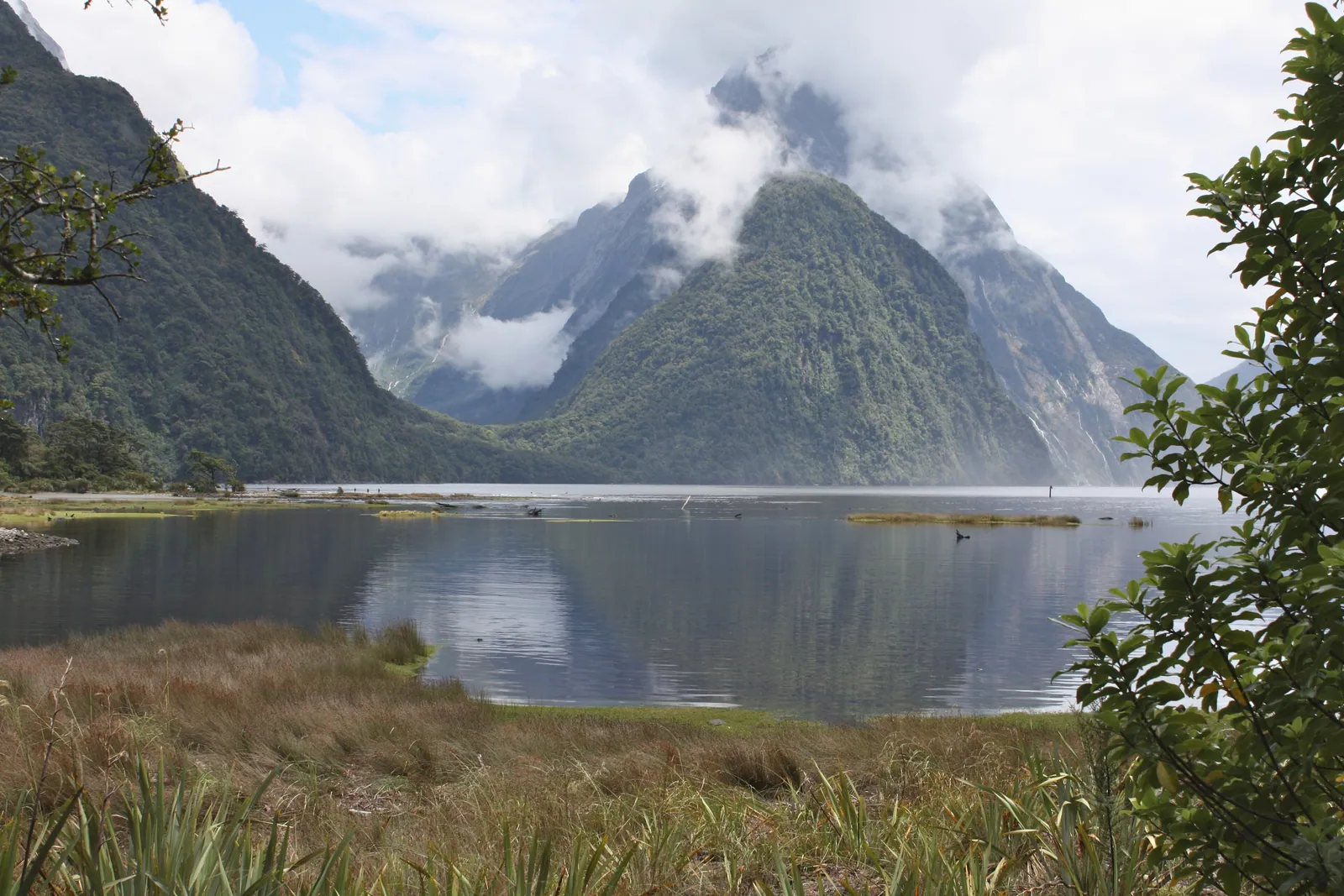
South of the 46th parallel, New Zealand's subantarctic islands are a World Heritage wilderness inhabited only by millions of seabirds, penguins, seals and sea lions. Few expeditions in the Pacific are as remote or as wild.
There are five island groups that constitute New Zealand's subantarctic heritage: the Snares, the Bounty Islands, the Antipodes, the Auckland Islands and the Campbell Islands. Together, UNESCO inscribed them as Natural World Heritage in 1998. None has permanent residents, none has any tourist infrastructure, and access to most of them is strictly regulated to protect ecosystems that have never known introduced terrestrial predators — a state of ecological pristineness that grows rarer each year across the South Pacific. To reach them from the southern tip of New Zealand requires two to four days of open-ocean sailing in an expedition ship, crossing the seas of the Antarctic Circumpolar Current.
What awaits the traveller who makes this crossing has no equivalent in the world of more accessible nature travel. On the Auckland Islands, the New Zealand sea lion — Phocarctos hookeri, one of the rarest pinniped species on Earth — lolls on the beaches where it breeds; erect-crested penguins and Snares penguins nest at densities that seem almost improbable; southern royal albatrosses, grey-headed albatrosses and black-browed mollymawks pass centimetres from the ship's railing on wingspans that can exceed three metres. Few expeditions anywhere in the South Pacific produce a comparable saturation of wild life.
The five islands: distinct profiles
The Snares, closest to the South Island of New Zealand at around 200 kilometres, are small, forested and home to the world's largest colony of procellariid seabirds relative to their size: millions of Snares prions, Snares petrels and Snares penguins nest among the olearia forest. Landing on shore is not permitted, but zodiacs skirting the coast offer wildlife sightings of a density impossible to find anywhere else. The Bounty Islands are inhospitable towers of bare granite where erect-crested penguins and Bounty shags crowd onto every horizontal centimetre of rock.
The Auckland Islands are the largest and most expedition-visited group: Port Ross, at the northern end, offers a sheltered anchorage from which the coast, the rata forest — the endemic Metrosideros umbellata — and the seal and penguin colonies can be explored by zodiac. The Campbells are more open and windswept, and harbour the only breeding colony of southern royal albatross (Diomedea epomophora) that can be visited under controlled conditions. The Antipodes, the most remote of all, hold a density of erect-crested penguins and procellariids that makes a visit feel almost dreamlike.
The albatrosses: the most extreme aerial life
No bird embodies the spirit of the subantarctic islands better than the albatross. New Zealand's subantarctic islands are the breeding home of several species, among them the southern royal albatross (Diomedea epomophora) and the northern royal albatross (Diomedea sanfordi) — two of the largest-winged birds on earth, with spans of up to 3.1 metres — the grey-headed albatross (Thalassarche chrysostoma), the black-browed mollymawk and the grey-cheeked mollymawk. On the Campbell Islands, the southern royal albatross nests in the coarse summit grass, building towers of mud and vegetation on which the bird incubates for eleven months.
Albatross flight is among the most hypnotic spectacles in nature: using the wind shear above the waves — the technique called dynamic soaring — an albatross can cover thousands of kilometres a day without barely beating its wings. Satellite-tracking rings have recorded circumnavigation of the Southern Ocean in fewer than forty days. Watching a southern royal albatross glide metres from the ship, its enormous wings barely disturbed by the gale, is an image that stays.
The New Zealand sea lion
Phocarctos hookeri — the New Zealand sea lion, or whakahao — is one of the rarest pinnipeds on Earth, with an estimated population of around ten thousand individuals. The Auckland Islands are its main breeding ground: in the southern hemisphere summer (December–February), adult males — weighing up to 300 kilograms — establish territories on the beaches and defend harems of females while newborn pups take their first steps in the water. The species nearly went extinct through sealing in the nineteenth century and its recovery is slow but positive.
What makes observing sea lions on the Auckland Islands especially memorable is the total absence of fear towards humans, the consequence of generations without any regular human presence. The animals approach with the same mixture of curiosity and self-possession as a domestic dog; juveniles play with each other and with any floating object the zodiac brings within reach. It is one of the few places on Earth where interaction with large wild marine mammals has a spontaneity and equality of terms that is genuinely exhilarating.
Human history: shipwrecks, sealers and the Enderby Settlement
The Auckland Islands were not always uninhabited. Maori of the Motu Motu canoe reached the islands — which they call Maungahuka — at some point before European contact, although no lasting permanent settlement was established. From 1807, whalers and sealers began frequenting the islands, and between 1849 and 1852 there was an attempt at colonisation by the firm of Enderby and Sons, which established the Enderby Settlement in Port Ross with around two hundred people. The project failed due to cold, isolation and the difficulty of farming in subantarctic conditions, and the colonists were evacuated.
The most dramatic legacy of the islands is that of shipwrecks. Dozens of ships were lost on the cliffs of the Auckland and Campbell Islands during the nineteenth century — the trade route between Australia and Cape Horn passed close to these islands — and survivors who made it ashore sometimes waited months or years before being rescued. Following a particularly tragic wreck in 1864, the New Zealand government established emergency provision caches on the islands for the shipwrecked. The ruins of some of these structures and of the Enderby Settlement itself are still visible on the beaches of Port Ross.
Crossing the southern seas to arrive
The passage from Bluff or Invercargill — at the southern tip of New Zealand's South Island — to the Auckland Islands takes around thirty-six hours of sailing, crossing the seas that correspond to the famous Roaring Forties and the Furious Fifties. These are the same oceans that nineteenth-century sailing ships feared and that racing yachtsmen still respect: the westerly winds of the Antarctic Circumpolar Current generate long swells of several metres even in moderate conditions, and the weather changes fast.
The expedition ships that operate these routes are designed and equipped for these conditions, but the passage each way is an inseparable part of the experience. Many passengers remember it not as a toll to be paid but as the moment of greatest immersion in the character of these oceans: the feeling of being far from land, in waters the world ignores, watching giant petrel and prion off the bow and feeling the ship work against the swell is the perfect prelude to the pristineness that awaits on arrival.
Regulation and the ethics of visiting
New Zealand's subantarctic islands are maximum-protection reserves under New Zealand law (the Reserves Act and the Conservation Act), and the Department of Conservation (DOC) issues a very limited number of annual visit permits. Expedition ships operating here must comply with strict protocols: maximum numbers on shore at any one time, biosecurity procedures to prevent the introduction of seeds, insects or rodents in boots and clothing, and minimum distances from breeding colonies.
These protocols are not an obstacle to the experience but its enabling condition. The pristineness of the Auckland Islands — free of rats and cats in most of their extent, without walking tracks or tourist infrastructure — exists precisely because access has always been limited and regulated. The traveller who visits these islands bears the responsibility of understanding that they are part of an active conservation system, and that the privilege of being here is conditional on the commitment to the rules that make it sustainable.
Quick answers
When can you visit the New Zealand subantarctic islands?
The expedition season runs from October to January, coinciding with the austral summer. November and December are the months of greatest faunal breeding activity: breeding colonies are at their peak, sea lion pups are born in December and penguins have chicks. January offers slightly more stable sea conditions. In the austral winter the islands are practically inaccessible due to weather.
Is a special permit required?
Yes. The subantarctic islands are nature reserves and World Heritage areas administered by New Zealand's Department of Conservation (DOC). Commercial expedition ships operating these routes manage the necessary permits — which are limited in number — and individual travellers do not apply for them directly. DOC sets strict conditions regarding the number of simultaneous visitors, biosecurity protocols and accessible zones.
Is there a risk of seasickness on the crossing?
The crossing to the subantarctic islands traverses open water with frequent swells, and it is among the roughest routinely offered in expedition tourism. It is worth being honest about this. The ships are designed for these conditions and their motion patterns are gentler than on smaller vessels, but seasickness is a real possibility that should be factored in. The onboard doctors carry effective medication, and most passengers who experience discomfort on the first day adapt to the motion within one or two days.
What makes these islands different from the Galapagos or Antarctica?
New Zealand's subantarctic islands are ecologically more remote and less visited than the Galapagos, and have a different fauna profile: the emphasis here is on procellariids (albatrosses, petrels, prions) and pinnipeds rather than reptiles or the penguins of the Galapagos. Compared with Antarctica, they have vegetation (rata forest, ferns, tall herbs) and a greener, more jungle-like character, though they share the radical isolation and extraordinary marine wildlife.
Let the reading become a route.
When an article sparks something, our planners are the next step. Tell us what you are dreaming of.