The Pilgrimage: Walking Toward Something
The pilgrimage is the oldest form of purposeful travel: a journey defined not by destination alone but by the act of walking itself. What the great pilgrimage routes of the world still offer, to the devout and the secular alike, is harder to name — and more worth seeking.
Across every major religious tradition, across every inhabited continent, human beings have walked long distances toward places they believed to be sacred. The impulse is so ancient and so widespread that it seems to precede any particular faith: archaeologists find evidence of pilgrimage at sites far older than any surviving religion. Something in the human body seems to know that arriving on foot at a place of meaning is different from arriving any other way — that the walk is not merely the means of getting there but is itself the thing being done.
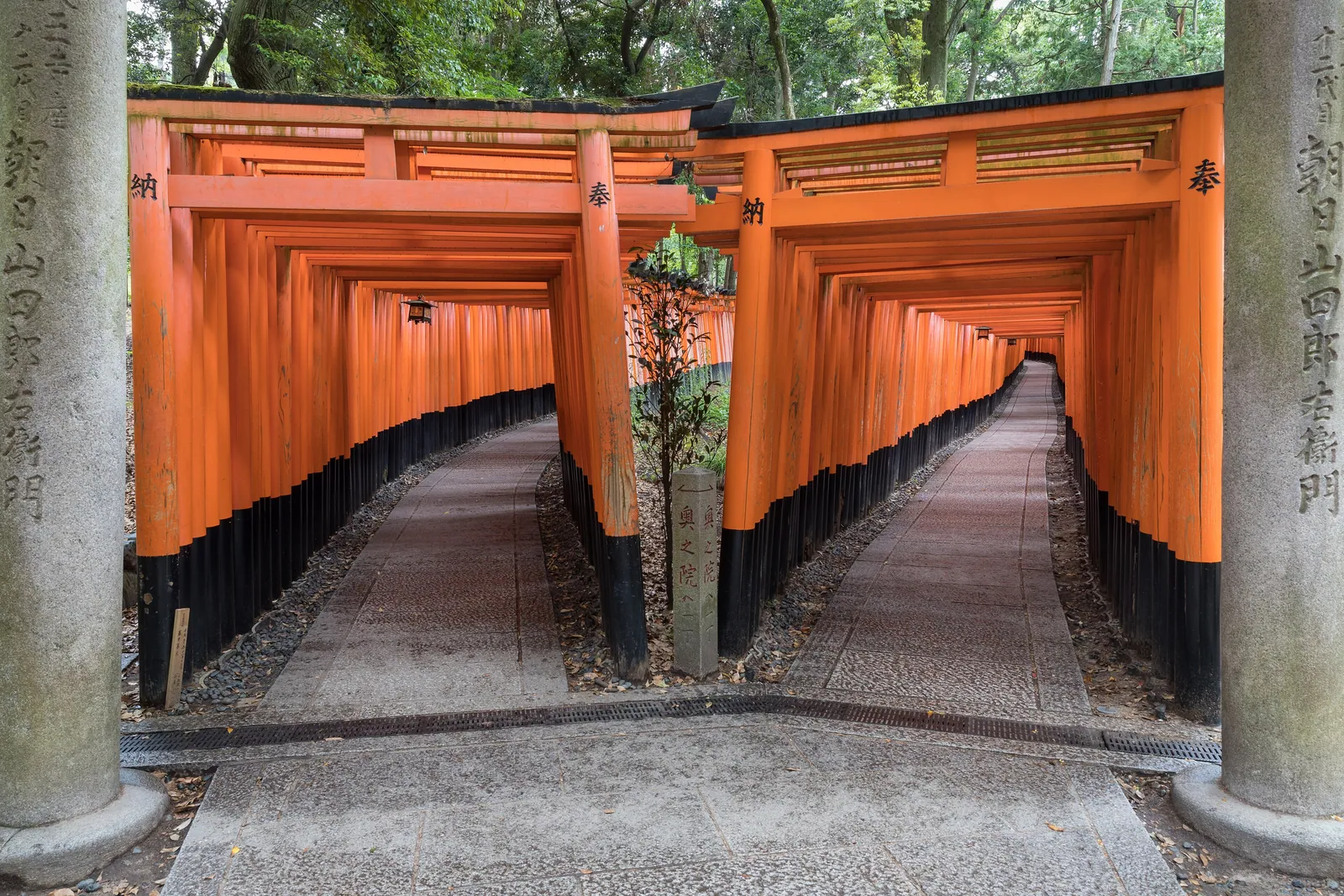
Today millions of people walk pilgrimage routes every year, the majority of them for reasons that are not straightforwardly religious. The Camino de Santiago in northern Spain attracts well over 300,000 registered pilgrims annually, and surveys of those walkers consistently show that a large proportion describe their motivation as personal or spiritual rather than Catholic. The Kumano Kodo in Japan's Kii Peninsula, the only pilgrimage route other than the Camino to hold UNESCO World Heritage status for its cultural significance as a pilgrimage route, draws walkers from around the world to forests and mountain shrines that have been sacred for more than a thousand years. What these walkers are seeking is various and private, but something about the pilgrimage form — the stripped-down simplicity, the physical discipline, the slow accumulation of distance — seems to offer it.
What makes a pilgrimage different from a long walk
The distinction between a pilgrimage and a long-distance trek is partly one of intention and partly one of infrastructure. A trek is generally outward-facing — you go to see something: a mountain, a wilderness, a landscape. A pilgrimage is, at least in its traditional form, inward-facing as well: the destination matters, but so does the interior work that the walking is supposed to produce. The route itself has meaning; the physical difficulty is not incidental but purposeful, a form of bodily commitment to whatever the journey is for. This is why pilgrims have historically walked barefoot, or in deliberately uncomfortable conditions, or kept silence for days at a time — not as suffering for its own sake but as a way of making the body a participant in the purpose.
For the secular walker, this distinction can feel academic, but it shapes the experience in ways that are surprisingly practical. The great pilgrimage routes were laid down over centuries by communities of walkers, and the infrastructure they created — the waymarked paths, the refuges and pilgrim hostels, the water sources and resting places — is designed for people who are walking day after day for weeks, not for weekend hikers. The Camino Francés across northern Spain, for instance, is around 780 kilometres from Saint-Jean-Pied-de-Port to Santiago de Compostela, and the entire route is dense with albergues (pilgrim hostels) charging a few euros a night. The pilgrimage route is a social as well as a physical infrastructure.
The Camino de Santiago: Europe's great walking tradition
The Camino de Santiago is not a single route but a network of routes converging on the cathedral city of Santiago de Compostela in the northwestern corner of Spain, where tradition holds that the remains of the apostle James are buried. The most-walked route, the Camino Francés, enters Spain over the Pyrenees and traverses the breadth of northern Spain — through the wine country of La Rioja, the high meseta of Castile, the green hills of Galicia — in roughly a month of steady walking. It is a landscape of extraordinary variety, and the experience of walking it with a large, fluid community of fellow pilgrims from many countries is unlike any other kind of travel.
The Camino has been walked for at least a thousand years, and the practice of carrying a scallop shell — the traditional badge of the Santiago pilgrim — goes back at least to the twelfth century. The credential, a paper document stamped at churches and hostels along the way, records the journey and earns the Compostela certificate at the end. But the bureaucracy of the Camino is less important than what the route does to the people on it: it creates, with a consistency that surprises almost everyone, a temporary community of strangers stripped of their ordinary roles, moving together through the same rain and the same sunsets, arriving each day somewhere new. The writer and pilgrim Paulo Coelho walked the Camino Francés in 1986, and his account of the journey made the route famous in the Portuguese-speaking world. Since then, the Camino has never stopped growing.
The Kumano Kodo: Japan's sacred mountain routes
If the Camino is a pilgrimage shaped by the open road and the company of strangers, the Kumano Kodo is its contemplative counterpart. The network of trails in the Kii Peninsula south of Osaka leads through ancient cedar forest to three Grand Shrines — the Kumano Sanzan — which have been places of worship for over a thousand years, drawing emperors, monks, aristocrats and ordinary pilgrims in a tradition of repeated return. The walk to Kumano is not a one-time journey but a practice, something that many Japanese have done repeatedly across a lifetime.
The Nakahechi route, the most accessible and most walked of the Kumano paths, runs through green mountain valleys with a quality of stillness that is partly natural and partly centuries of accumulated reverence. The forest is dense and dark; the stone-paved paths are worn smooth by the feet of an uncountable number of walkers. The small way-stations and rest huts that punctuate the route were established by local communities to serve the pilgrims and have been maintained for centuries. Walking here, you are aware at every step of being inside a tradition — not as a tourist observing it from outside, but as a participant in something that has been going on since before any living memory.
The body's logic: why walking to a place matters
There is a physiological argument for pilgrimage that has nothing to do with faith. Walking for six to eight hours a day, day after day, produces biochemical changes — in mood, in sleep quality, in the quality of attention — that are well-documented and are not produced by other forms of moderate exercise in the same way. The repetition of footfall, the slowly changing landscape, the low-level physical demand that is enough to occupy the body without taxing it, create conditions in which the thinking mind relaxes its grip and other kinds of awareness become available. Monks who build walking meditation into their practice — as Zen and Theravada Buddhist traditions both do — understood this long before neuroscience confirmed it.
The pilgrim's pace — between twenty and thirty kilometres per day for most walkers on established routes — is also the pace at which the human body is most naturally at home over multi-day distances. We were not designed to sit for eight hours or to sprint for eight hours; we were designed, by whatever process one finds credible, to walk. The pilgrimage is one of the very few forms of contemporary travel that fully respects this. After the first week of physical adjustment, most long-distance pilgrims report a shift in how they experience time: the days feel longer, more spacious, more fully inhabited. This is the pilgrimage's most reliable gift.
Practical matters: how to begin a pilgrimage
The entry point to the Camino Francés is Saint-Jean-Pied-de-Port in the French Basque Country, easily reached by train from Bayonne. The route to Santiago takes most walkers between twenty-five and thirty-five days, covering thirty to thirty-five kilometres daily. Accommodation in the albergue network is inexpensive and often requires no advance booking except at busy periods in summer. The main practical requirement is a pair of well-broken-in boots and the discipline not to walk too far in the first few days. Blisters, not fitness, are what end most Camino journeys early.
For the Kumano Kodo, the nearest city is Osaka or Kyoto, with the Kii Peninsula accessible by JR train. The Nakahechi route is typically walked over three to five days, with accommodation in small minshuku guesthouses and dedicated pilgrim lodges. The pace is slower and the stages shorter than the Camino, and the walking is more strenuous through the mountain sections. A combination of the Kumano Kodo and the Camino is recognised as the Dual Pilgrim route, and those who complete both receive a combined certificate from the pilgrimage authorities of both routes — one of the rarer distinctions available to the long-distance walker.
What the pilgrim brings home
The most reliable outcome of a long pilgrimage is not transformation, which most pilgrims feel too self-conscious to claim, but reorientation. Something about sustained walking in a purposeful direction, over enough days, produces a clearer view of what matters and what does not. Problems that felt urgent before departure tend to look different after three weeks of reduced contact with ordinary life. Relationships whose quality was obscured by noise become clearer. Work and obligations that had been treated as emergencies reveal themselves as routines. This is not mystical; it is what most long journeys do to most people, but the pilgrimage — with its explicit purposefulness, its physical austerity and its community of fellow travellers — seems to produce this effect with unusual consistency.
What the pilgrim also brings home is the knowledge that they can walk a very long way. This sounds modest, but it is not. The discovery of one's own physical endurance — the proof that the body is more capable than it seemed and that difficulty is, over time, something one adjusts to — changes a person's relationship with effort in ways that extend far beyond walking. It is one of the oldest lessons travel can teach, and the pilgrimage is its purest form.
Quick answers
Do I need to be religious to walk a pilgrimage route?
Not at all. A large proportion of people who walk the Camino de Santiago and the Kumano Kodo are not practising members of the traditions the routes are associated with. The routes are open to anyone, the infrastructure serves all walkers regardless of faith, and most pilgrims report that the walk is meaningful without requiring any particular belief. It helps, perhaps, to hold the journey with some intentionality — to be walking toward something, even if that something is only clarity — rather than treating it as a long-distance trail indistinguishable from any other.
How fit do I need to be to walk the Camino Francés?
Reasonably fit but not athletically fit. The Camino Francés is long — around 780 kilometres — but flat for most of its length, with the main steep sections at the beginning (the Pyrenees crossing) and a few mountain passes in Galicia. Most people complete it without dedicated training, but legs accustomed to multi-day walking and boots that are well broken in are essential. Walking regularly in the months before departure — including some back-to-back days of twenty or more kilometres — is the single most useful preparation.
What is the best time of year to walk the Camino?
Spring (April to June) and autumn (September to October) offer the best combination of manageable temperatures and relatively uncrowded paths. Summer is the busiest period, with albergues full in the evenings and the meseta section oppressively hot midday. Winter is possible and has a quiet beauty, but some mountain sections can be closed by snow and many small albergues close. The great feast of Santiago de Compostela on 25 July draws the largest number of pilgrims, so arriving around that date combines a climactic cultural experience with the densest crowds.
Can I walk just a section of a pilgrimage route rather than the whole thing?
Yes, and this is very common. To receive the Compostela certificate in Santiago, you need to have walked at least the final 100 kilometres of any Camino route, which means many pilgrims start from Sarria in Galicia rather than France or Portugal. There is no ethical obligation to walk the whole route, and many people return year after year to walk successive sections. The Kumano Kodo can similarly be walked in shorter sections, with individual day stages through the most significant parts of the route available to those with limited time.
What should I carry on a pilgrimage walk?
The general rule is a pack weighing no more than ten percent of your body weight, which for most people means between seven and ten kilograms. The classic Camino pilgrim's kit includes a sleeping bag liner (albergues provide blankets), a lightweight rain jacket, a few changes of clothing, sandals for evenings, a first aid kit oriented toward blisters and chafing, and a credencial. A trekking pole is strongly recommended for descents and helps significantly with the daily mileage. Anything that feels heavy at home will feel much heavier by day ten.
Let the reading become a route.
When an article sparks something, our planners are the next step. Tell us what you are dreaming of.