The Tian Shan: Central Asia's Mountains of Heaven
North of the Himalaya, a second great range walls off Central Asia — the Tian Shan, the 'mountains of heaven'. A guide to its high pastures, its nomad summers and the Silk Road passes that crossed it.
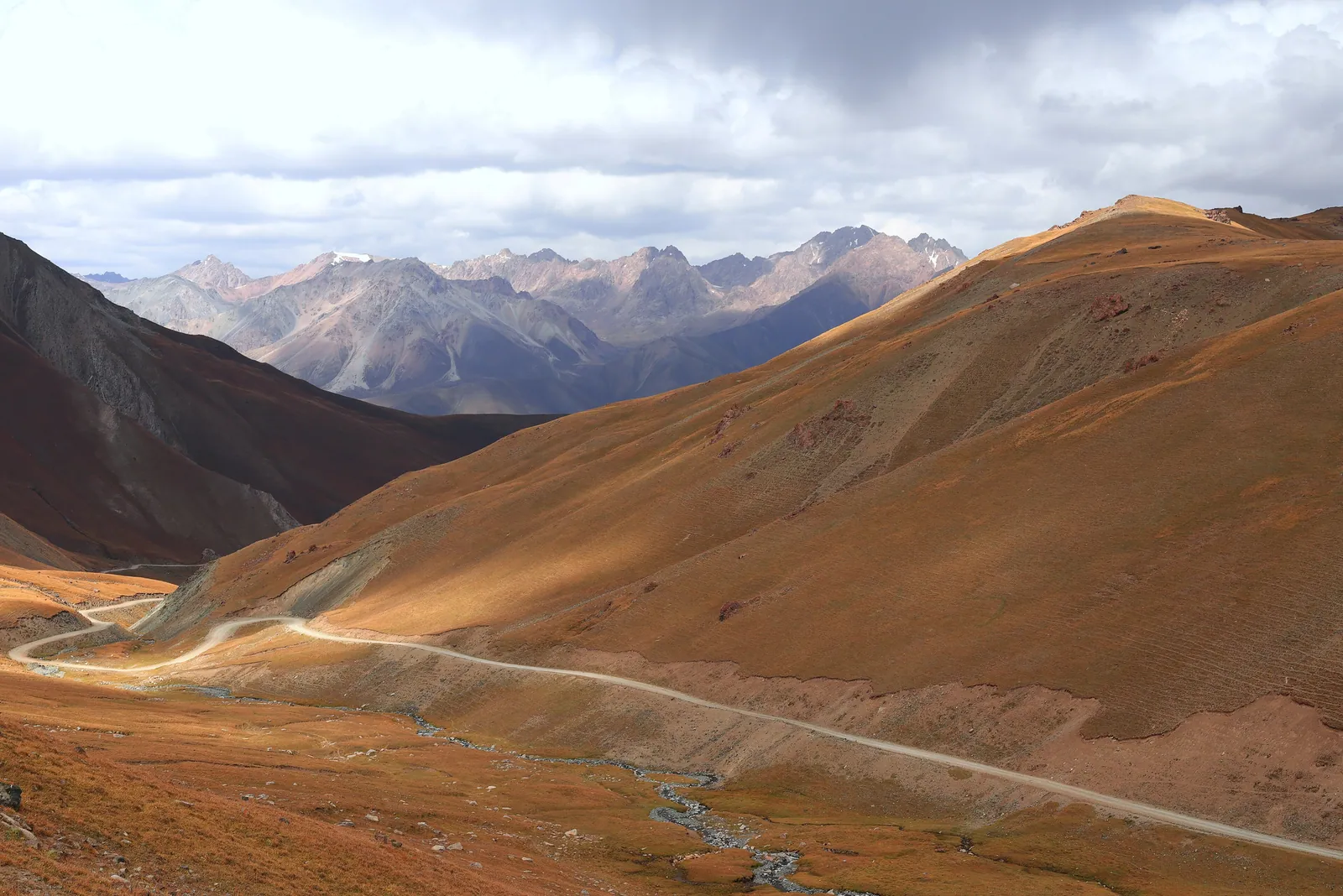
The Himalaya is not the only high mountain world of Asia. Far to the north, arcing some 2,500 kilometres across Kyrgyzstan, Kazakhstan, Uzbekistan and China, runs the Tian Shan — a range whose Chinese name means 'mountains of heaven', or 'celestial mountains'. It is one of the longest and highest ranges on Earth, and one of the great obstacles the Silk Road had to cross.
For a traveller, the Tian Shan offers a different mountain experience from the Himalaya: gentler in altitude, vast in its open pastures, and still shaped by a living nomadic culture. The Silk Road Reborn climbs into it deliberately, and this is a guide to what you find there.
A different range from the Himalaya
The Tian Shan and the Himalaya are both products of the slow collision of continents, but they feel unalike. The Tian Shan's highest summits — Jengish Chokusu, also called Pik Pobedy, and the elegant pyramid of Khan Tengri — rise around 7,000 metres, formidable for climbers but lower than the Himalayan giants. Crucially, the range's pastures and passes that ordinary travellers cross sit far lower, often between 2,000 and 3,500 metres.
That altitude difference changes the journey. Where the high Himalaya demands extended acclimatisation, the travelled parts of the Tian Shan ask only a gentle adjustment. The mountains are no less beautiful for it — snow peaks above, spruce forest and wildflower meadow below — but they are more forgiving to move through.
The jailoo: summer pastures and the nomad year
The defining landscape of the Kyrgyz Tian Shan is the jailoo — the high summer pasture. For a few short months, when the snow has gone and the grass is rich, herding families move up from the valleys with their flocks of sheep, horses and yaks, and live on the open uplands in yurts: round, felt-walled, collapsible homes perfectly suited to a mobile life.
This is not folklore staged for visitors but a working seasonal economy, still practised across the region. Around Song-Köl, a broad alpine lake at just over 3,000 metres, the jailoo fills each summer with grazing herds and scattered white yurts — one of the most peaceful and characteristic scenes in all of Central Asia.
Living among the herders
On The Silk Road Reborn, the Tian Shan stage is spent not in hotels but in herders' yurts on the jailoo, as guests of the families who keep them. A yurt is warmer and more comfortable than its simple frame suggests — thick felt, layered bedding, a stove at the centre — and a night inside one, under enormous mountain stars, is among the most memorable on the whole journey.
Hospitality is the heart of the experience. You share meals of bread, dairy and mutton, and likely a bowl of kymyz, the lightly fermented mare's milk that is the signature drink of the Kyrgyz summer. It is offered with real warmth; accepting at least a taste is the courteous response, and the exchange is the point of staying.
The Silk Road through the celestial mountains
The Tian Shan was one of the hardest sections of the entire Silk Road. Caravans bound between the oasis cities of Central Asia and the markets of China had to thread the range's passes, gambling on weather and snow. The mountains both blocked the route and shaped it, forcing the trade into a small number of crossings that became strategic prizes.
Travelling The Silk Road Reborn, you cross the Tian Shan by road, on the line the caravans were forced to take — the mountains explaining, in your own slow ascent and descent, why this stretch was the merchants' most dreaded. The range is not a backdrop here; it is a chapter of the journey's logic.
When to go, and how it feels
The Tian Shan's travel season is short and clear: roughly June to September, when the snow has retreated, the jailoo is open and the herders are up on the pastures. Outside that window the high roads close and the yurt camps come down. The Silk Road Reborn times its Kyrgyz stage for exactly this summer window, in late spring or early autumn departures.
Physically, the range asks little. Altitude around Song-Köl is enough to notice — a slightly quicker pulse, cooler nights — but well below any danger threshold, and the schedule's gradual climb builds in a gentle acclimatisation. There is no technical walking. What the Tian Shan asks of a traveller is mostly the willingness to slow down and accept a herder's hospitality.
Quick answers
What is the Tian Shan, and where is it?
The Tian Shan is a great mountain range of Central Asia, stretching roughly 2,500 kilometres across Kyrgyzstan, Kazakhstan, Uzbekistan and China. Its name means 'mountains of heaven' or 'celestial mountains'. Its highest peaks reach around 7,000 metres, but the pastures and passes that travellers cross sit much lower, generally between 2,000 and 3,500 metres.
What is a jailoo?
A jailoo is a high summer pasture in the Kyrgyz mountains. For a few months each year, when the snow clears and the grass is rich, herding families move their flocks up to these uplands and live in yurts — round, felt-walled, portable homes. It is a working seasonal way of life, still widely practised, and on The Silk Road Reborn you stay among it.
Is the Tian Shan as high and demanding as the Himalaya?
No. While the Tian Shan's highest summits are serious mountains, the parts travellers cross are far gentler than the high Himalaya. Around Song-Köl the altitude reaches just over 3,000 metres — enough to notice, well below any danger level — and there is no technical walking. The Silk Road Reborn's gradual climb builds in a mild acclimatisation.
Let the reading become a route.
When an article sparks something, our planners are the next step. Tell us what you are dreaming of.