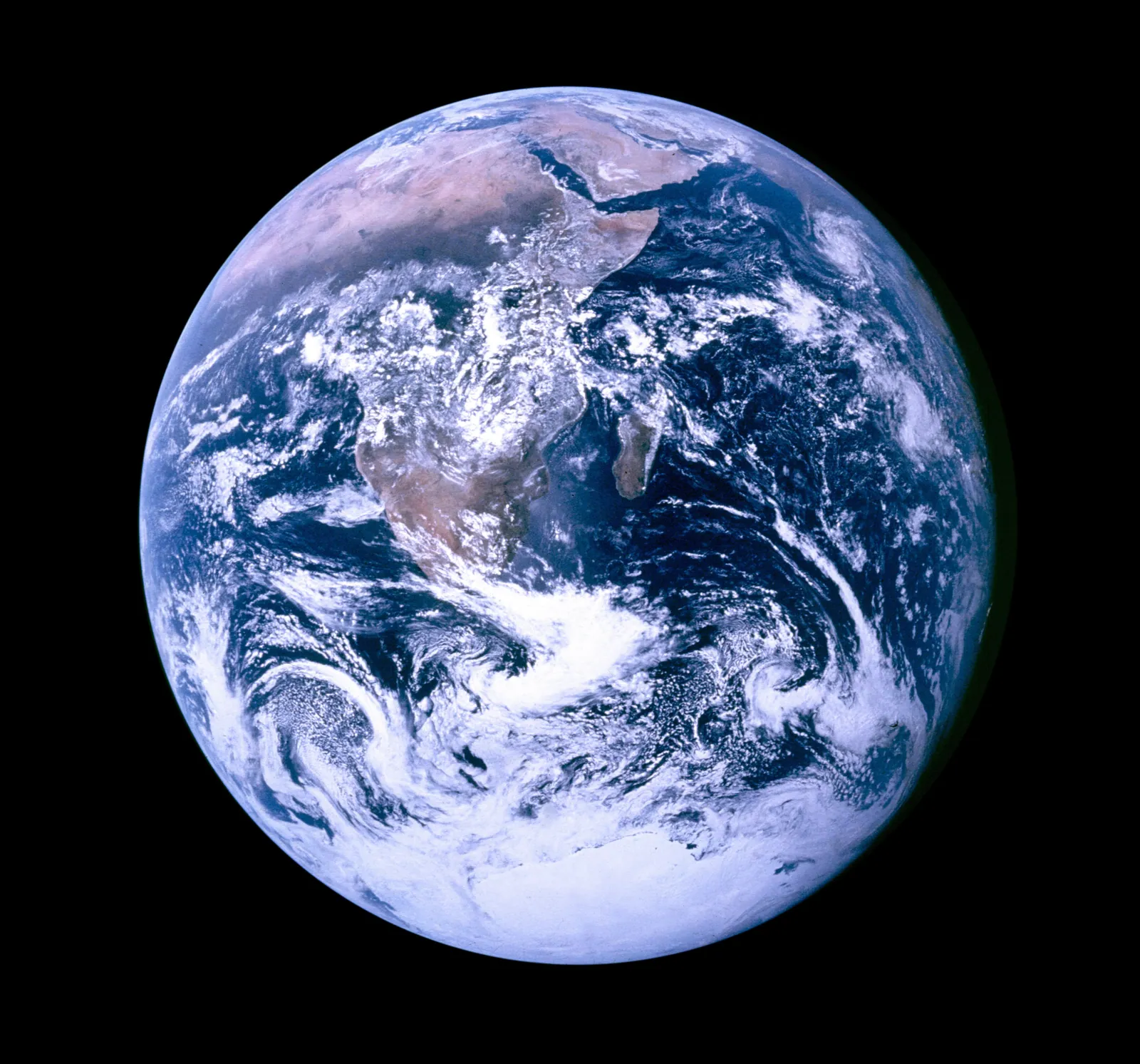
The True Size of the Earth
We know the planet's circumference to the metre, and have almost no feeling for it at all. An essay about scale — and why the Earth's true size can only be learned slowly, with the body.
Ask anyone how big the Earth is and they can tell you: roughly forty thousand kilometres around, a number every schoolchild meets. We have measured the planet with extraordinary precision. And yet almost none of us has any genuine sense of that size — any felt, embodied knowledge of how much world there actually is. The number sits in the mind like a fact about a stranger.
This essay is about that gap between knowing the figure and feeling the distance. It argues that scale is not information but experience, that the true size of the Earth cannot be told to you, only travelled into you — and that recovering a real sense of the planet's bigness is one of the deepest and least advertised rewards of going slowly.
The map made the planet small
Every map and every globe performs the same quiet trick: it makes the Earth a thing you can take in at a glance. This is enormously useful and subtly misleading. A globe sits on a desk; a map folds into a pocket. The planet, so handled, comes to feel like an object of human scale — something graspable, surveyable, roughly known.
Worse, the common map projections distort the proportions while they shrink them, so that whole continents are misremembered in size relative to one another. But the deeper distortion is not which country looks biggest. It is that the map teaches us, wordlessly and from childhood, that the Earth is small enough to hold. It is not. The map is a convenience that costs us our sense of scale.
Speed finished what the map began
If the map shrank the planet on paper, fast travel shrank it in experience. When any city is a day away, the mind quietly concludes that the Earth is, functionally, a day across — small, surveyed, nearly used up. The phrase a small world is spoken as a pleasantry, but it encodes a real and mistaken belief.
The error is in confusing access with size. The Earth has not become smaller; it has become faster to cross. Those are entirely different things, and conflating them leaves the modern traveller with a planet that feels minor — a set of reachable points rather than a vast and barely crossed expanse. The kilometres are all still there. We have simply arranged never to feel them.
Scale is something the body learns
Here is the claim at the centre of this essay: real scale is not a fact you can be given. It is a knowledge the body accumulates by moving through distance at a pace slow enough to register it. You learn how big a mountain is by the hours it takes to walk toward it. You learn how wide a desert is by crossing it and watching nothing change for a long time.
The Long Way East crosses the entire breadth of Asia from Spain, overland and by sea, and somewhere in those weeks a traveller stops merely knowing that Asia is large and starts feeling it — in the legs, in the slow turnover of landscapes, in the sheer unhurried quantity of world that has had to pass. That feeling is the true size of the Earth, and there is no shortcut to it. A shortcut is precisely the thing that prevents it.
The two ends of scale
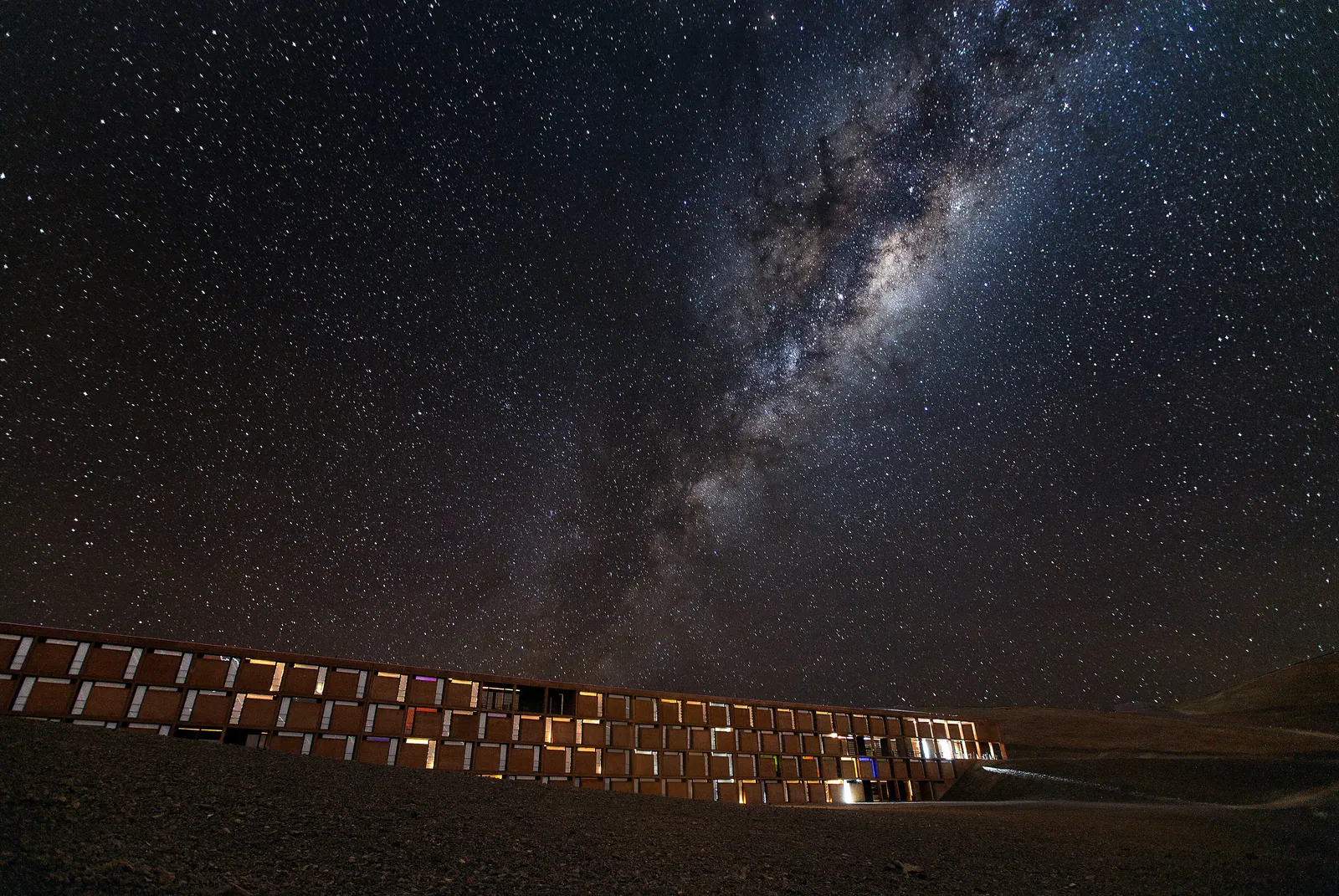
A long slow journey teaches scale at both extremes at once, and that is its peculiar gift. By crossing a great distance under your own momentum you learn how immense the planet is. And by then standing somewhere that overwhelms you — under a sky the desert has emptied of light pollution, beneath a wall of falling water — you learn, in the same journey, how small you are within it.
Beyond the Blue presses both lessons to their limit. It crosses the planet's extremes and then, in a balloon capsule at thirty-five kilometres, lets the traveller see the whole curve of the Earth and the thin blue line of its atmosphere at once. That is scale delivered entire: the planet large enough to bend away in every direction, and fragile enough to be wrapped in a skin of air you could almost touch.
Why a true sense of scale matters
This is not merely an aesthetic point. How big we feel the Earth to be shapes how we treat it and how we hold our own place on it. A planet that feels small and surveyed invites a certain carelessness — a sense that it has all been seen, that nothing remains to be approached with humility. A planet felt in its true vastness invites the opposite.
The traveller who has crossed a continent slowly comes home with a recalibrated instrument. They know, now, in a way no documentary could teach, that the world is far larger than a lifetime can cover and far more various than any summary admits. That knowledge is not discouraging. It is freeing — and it is the quiet, permanent souvenir of having travelled the Earth at the speed the Earth is actually built for.
Quick answers
Why don't I have a sense of the Earth's size when I already know its circumference?
Because scale is experience, not information. A number tells you the planet is forty thousand kilometres around; it gives you no feeling for that distance. Felt scale is accumulated by the body, by moving through distance slowly enough to register it. The figure and the feeling are different kinds of knowledge, and only the second changes how the world seems.
Does a long overland journey really change how large the world feels?
It does, and durably. Crossing a continent under your own slow momentum lets the body accumulate a genuine sense of distance — the hours, the unhurried turnover of landscapes, the sheer quantity of world that has had to pass. Travellers describe returning with a recalibrated instinct for how vast and various the planet actually is.
Let the reading become a route.
When an article sparks something, our planners are the next step. Tell us what you are dreaming of.