The Wildebeest Migration Explained: The Engine of the Serengeti
More than a million wildebeest move in an endless loop across the Serengeti, and the whole ecosystem turns with them. Here is how the migration works, what drives it, and why it matters far beyond the spectacle.
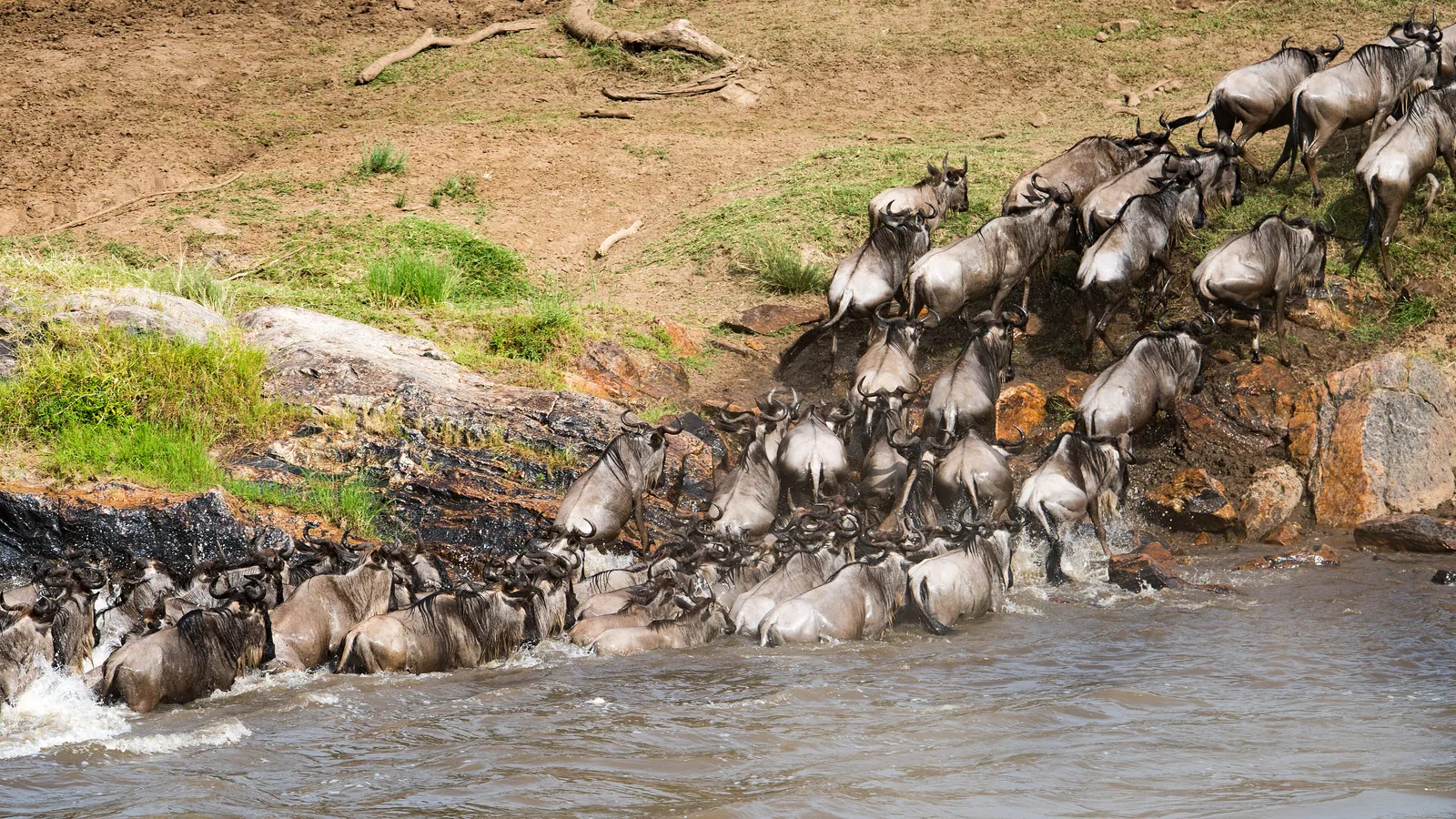
The wildebeest migration is often described as a spectacle, and it is — but it is better understood as a system. Roughly 1.3 million blue wildebeest, with hundreds of thousands of zebra and gazelle alongside, circle the Serengeti-Mara ecosystem every year, and that vast, grinding movement is the engine that keeps one of the planet's great landscapes alive.
This article steps back from the calendar of the herds to explain the migration itself: the animal at its centre, the rain and grass that drive the circuit, the predators that shape it, and the reasons it deserves protection. Understanding the system makes every moment of it — a calving plain, a river crossing, a lion at dawn — far richer to witness on a journey such as The Great Rift.
The animal at the centre: the blue wildebeest
The blue wildebeest, or brindled gnu, is a large grazing antelope of the African plains — ungainly to look at, with its heavy forequarters, sloping back and mournful face, but superbly built for a life of constant movement. It is a bulk grazer, cropping short and medium grasses, and it must drink regularly, which ties its movements tightly to rain and surface water.
Wildebeest are intensely social and find safety in numbers. They are also remarkable breeders: most of the population gives birth within the same few weeks, a synchronised calving that floods the plains with so many vulnerable young at once that predators simply cannot take them all. That single adaptation, more than any other, sustains the migration's enormous scale.
What drives the circuit: rain, grass and minerals
The migration is, fundamentally, a year-round search for the best grazing. The herds follow the rains around the ecosystem in a broad clockwise loop, because rain brings the flush of fresh, nutritious grass that a bulk grazer needs. When the southern short-grass plains green up in the wet season, the herds are there; as those plains dry, the animals move north and west toward grass and permanent water.
There is more to it than rain alone. The volcanic soils of the southern Serengeti plains are rich in the minerals that pregnant and nursing wildebeest require, which is why the herds return there to calve. The migration is best understood not as a fixed route but as a moving response — the herds going wherever the combination of water, grass and minerals is best at that moment.
Predators and the shape of the herd
A river of grazing animals supports a parallel world of predators. Lions, leopards, cheetahs, spotted hyenas and African wild dogs all draw on the herds, while the rivers add crocodiles and the carcasses feed vultures, marabou storks and jackals. Some predators, such as lions, hold territories and take the migration as it passes through; others follow it more closely.
This pressure shapes the herd's every habit. The tight bunching, the synchronised calving, the nervous hesitation at a riverbank, the constant movement itself — all are answers to the problem of being hunted. Predation is not a flaw in the system but part of its design, keeping the herds healthy, the grasslands grazed in balance, and the whole ecosystem in motion.
Why the migration matters to the whole ecosystem
The migrating herds are not just inhabitants of the Serengeti; they actively maintain it. By grazing in immense numbers they keep grasses short and vigorous and prevent any single species taking over. Their dung and urine return nutrients to the soil on a continental scale, and their trampling and movement spread seeds and shape the plant community.
Remove the migration and the landscape itself would change — grass would grow rank, fire patterns would shift, and the predators and scavengers that depend on the herds would collapse with them. The wildebeest are what ecologists call a keystone species: the migration is the process that holds the entire Serengeti-Mara system together.
A spectacle worth protecting
The great migration survives because the Serengeti-Mara ecosystem remains large enough and connected enough for the herds to complete their circuit. That is not guaranteed. Fences, roads, expanding farmland, water extraction and a changing climate all threaten to break the migration's route, and a migration with its corridor severed cannot simply adapt.
Protecting it means protecting the whole connected landscape across two countries, and supporting the parks and communities that steward it. Travelling to see the migration well, with operators who fund that conservation and respect the herds, makes a visitor part of the reason the system endures. The Great Rift is built to witness the migration and to leave its future a little more secure.
Quick answers
How many animals take part in the wildebeest migration?
Roughly 1.3 million blue wildebeest, accompanied by several hundred thousand plains zebra and large numbers of gazelle and other grazers. Together they form the largest movement of land mammals left on Earth, circling the Serengeti-Mara ecosystem of Tanzania and Kenya throughout the year.
What makes the wildebeest migrate?
The search for the best grazing. The herds follow the seasonal rains around the ecosystem, because rain brings fresh, nutritious grass and replenishes water. The mineral-rich volcanic soils of the southern plains also draw the herds back to calve. The migration is a continuous response to where water, grass and minerals are best.
Why do so many wildebeest give birth at the same time?
It is a survival strategy called predator swamping. By calving in a synchronised burst of a few weeks, the herds produce far more vulnerable young at once than the predators of the plains can possibly eat. Most calves therefore survive those critical first weeks, which is central to sustaining the migration's huge population.
Let the reading become a route.
When an article sparks something, our planners are the next step. Tell us what you are dreaming of.