Travelling Lightly in Fragile Places
Deserts, reefs, high paramo and polar coast share a quality: they recover slowly, or not at all. Here is a field guide to moving through fragile country so that the next traveller, and the place itself, inherit it intact.
Some landscapes forgive a careless visitor and some do not. A meadow in a temperate climate will heal a trampled path in a season. A cushion plant on the Andean puna, a coral colony in Raja Ampat, a crust of desert soil in the Namib or a patch of Antarctic moss may take decades to recover from a single boot, or may simply not recover at all. The defining trait of a fragile place is not that it is beautiful. It is that it is slow.
Travelling lightly in such places is a practical skill, not a sentiment. It is a set of specific habits — where you put your feet, what you touch, what you bring in and carry out, how close you go and how long you stay — and those habits are learnable. This article sets out the principles, and the reasoning behind them, so that a traveller can apply them in country they have never seen before.
Why some places cannot absorb us
Fragility usually comes down to slow growth and slow repair. Cold, aridity, thin soils, short growing seasons and extreme isolation all limit how fast a living system can rebuild what is damaged. An Antarctic moss bank may represent centuries of accumulation; a single misplaced footstep can erase a span of growth no living person will see replaced. The same logic governs reef-building corals, desert biocrusts and high-altitude cushion vegetation.
Isolation adds a second danger. Island and polar ecosystems evolved without many of the predators, competitors and diseases found on continents, and they have few defences against new arrivals. A seed caught in a bootlace, a rat that comes ashore from a ship, a spore on unwashed gear — any of these can do damage out of all proportion to its size. In fragile places, the threat a traveller carries is often not their footstep but their luggage.
The principles, briefly
The leave-no-trace tradition compresses into a few durable rules, and they transfer well across very different fragile landscapes. Stay on durable surfaces — established paths, rock, gravel, snow — and off living ground, because concentrating impact on a hard track spares the soft country around it. Carry out everything you carry in, including organic waste, which in cold or arid places does not break down on any human timescale.
Keep your distance from wildlife and let the animal set the terms of the encounter. Leave what you find — stones, bones, plants, artefacts all belong where they lie. Minimise the mark of fire, light and noise. And clean your gear between places, so you are not the vector that moves a seed or a pathogen from one valley, or one continent, to the next. These are not arbitrary courtesies. Each one addresses a specific way fragile country comes to harm.
How the same rules look in different country
The principles are constant; their application changes with the landscape. In Antarctica, travelling lightly means the IAATO discipline: boots and gear scrubbed and inspected before every landing, a respectful distance from wildlife, nothing eaten or left ashore, and walking routes that avoid moss beds and penguin pathways. The continent has no capacity to absorb mistakes, so the rules are correspondingly strict.
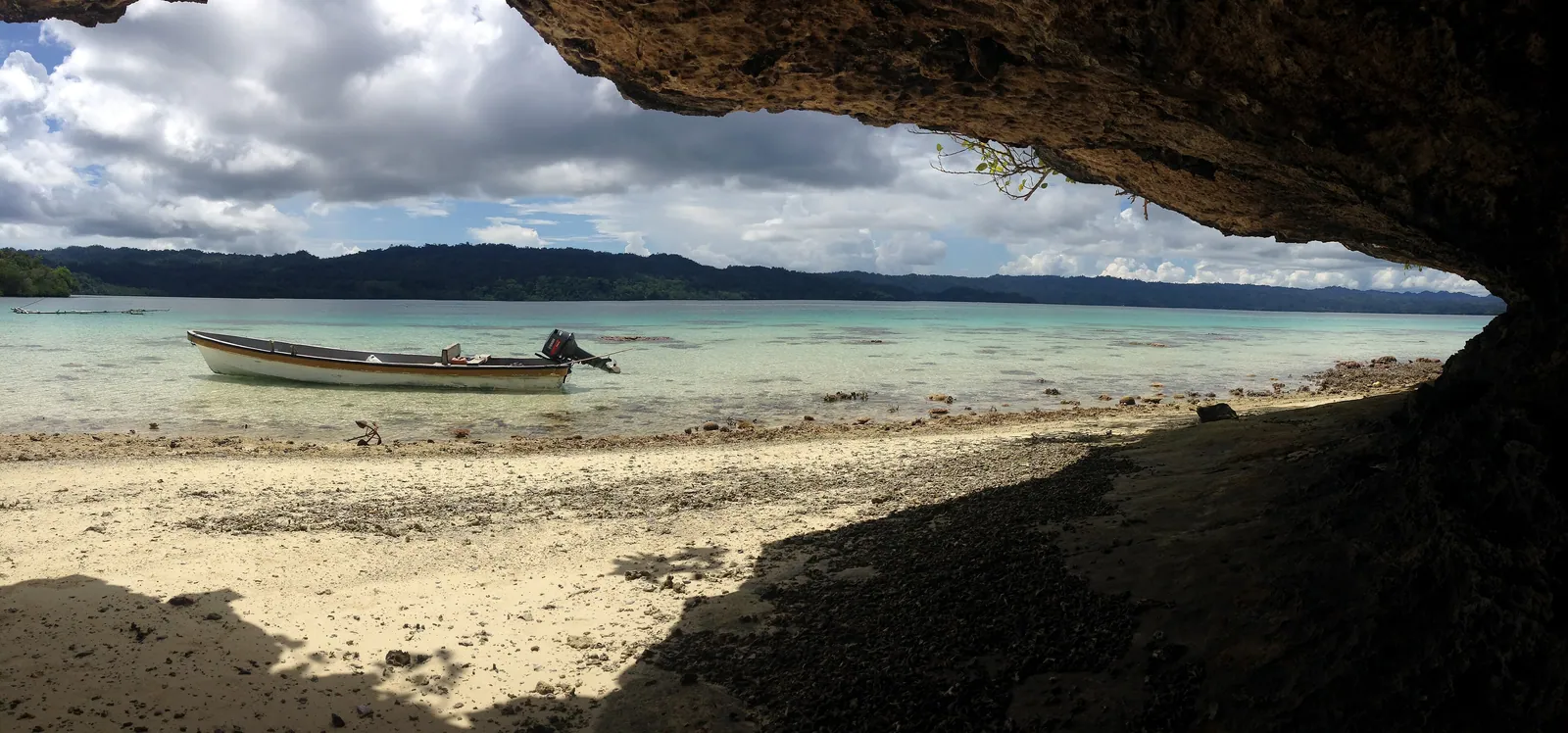
On a reef such as Raja Ampat, lightness is buoyancy control and discipline in the water: not standing on coral, not stirring sediment with careless fins, not touching or chasing marine life, and choosing reef-safe sunscreen so the water itself is not contaminated. On the Andean puna or the Namib, it is staying on the track, never cutting switchbacks, and treating the fragile soil crust as the living thing it is. Different country, the same underlying respect for slowness.
Numbers, timing and the role of the guide
Individual good behaviour is necessary but not sufficient. The aggregate pressure of how many people visit, and when, often matters more than how any one of them conducts themselves. This is why fragile places are increasingly managed by limits — caps on group size, on daily numbers, on the seasons and exact sites that may be visited — and why those limits deserve a traveller's full cooperation rather than their resentment.
It is also why a knowledgeable guide is part of travelling lightly, not a luxury added on top. A good guide knows which ground is durable and which is not, how close is too close for a given animal, where this season's restrictions lie, and how to read the difference between a track that can take traffic and one that is beginning to fail. On our journeys the guides are briefed to enforce these limits even when it disappoints a traveller — because in fragile country, the disappointment heals and the damage does not.
The hardest principle: knowing when not to go
Every other rule assumes the visit happens. The last principle questions that assumption. Some places, in some seasons, are best not visited at all — a breeding site at the wrong time, a habitat already at the edge of what it can bear, a route that has begun visibly to erode. Restraint is the most complete form of travelling lightly, and it should not be treated as a failure of the trip.
We design our journeys to make this choice in advance, so the traveller rarely has to. We route around places that are straining, we travel fragile coasts and reefs in small numbers and in the right seasons, and we are willing to omit a famous site if visiting it well is not possible. A grand journey already asks a great deal of the world. Travelling lightly is how we try to ensure that what it asks, the world can actually afford to give.
Quick answers
What does leave no trace actually mean in practice?
It is a set of specific habits: stay on durable surfaces such as established paths, rock and snow; carry out everything you bring in, including food scraps; keep your distance from wildlife; leave plants, stones and artefacts where they lie; and minimise fire, light and noise. Each rule addresses a real mechanism of harm. In fragile, slow-recovering country, following them is the difference between a place enduring and degrading.
Why is cleaning my gear between places so important?
Because in fragile and isolated ecosystems the worst harm a traveller does is often biological rather than physical. A seed in a bootlace, a spore on unwashed equipment, or a rodent that comes ashore from a ship can establish where there are no natural defences against it. Scrubbing and inspecting boots, bags and clothing between sites — standard practice in Antarctica — prevents you from becoming the vector that moves a species where it should not go.
Why do fragile places have visitor limits, and why should I accept them?
Because the total pressure of how many people come, and when, usually matters more than how well any single visitor behaves. Caps on group size, daily numbers and seasons keep that cumulative load within what a slow-recovering place can bear. The limits are not bureaucracy; they are the mechanism that keeps the place worth visiting at all. Cooperating with them fully, even when one disappoints you, is part of travelling responsibly.
Let the reading become a route.
When an article sparks something, our planners are the next step. Tell us what you are dreaming of.