Watching Wildlife Without Harming It
Wildlife tourism can fund conservation or quietly degrade it, and the difference often comes down to behaviour at the sighting. Here is how to be a guest among wild animals rather than a disturbance.
A wild animal seen well is one of travel's deepest pleasures, and wildlife tourism, done properly, is one of the few forces that gives a living animal more value than a dead one. The income from visitors funds rangers, anti-poaching patrols and protected land; it gives communities a concrete reason to keep habitat intact. When it works, it is conservation's ally.
But it does not work automatically. The same desire that funds protection — to get close, to get the photograph, to be sure of the sighting — can, unchecked, stress animals, alter their behaviour, and erode the very thing people came to see. Watching wildlife responsibly is the discipline of enjoying the encounter without becoming the problem. It is mostly a matter of distance, patience and restraint, and all three can be learned.
The harm is usually invisible to us
Few travellers set out to harm wildlife, and most disturbance is unintentional — which is precisely the difficulty. The signs that an animal is stressed are often subtle and easy for an excited visitor to miss: a raised head and fixed stare, a halt in feeding, young pulled close, an animal moving away or abandoning a path it would otherwise have taken. A sighting can look serene from a vehicle while the animal is, in fact, paying a cost.
Those costs add up. Repeated disturbance can interrupt feeding and rest, separate parents from young, push animals off the best habitat, and burn energy that a creature in a hard season cannot spare. A nesting bird flushed from its eggs, a predator crowded off a kill, a marine mammal made to flee a boat — none of these is dramatic in the moment, but each is a small theft from an animal's narrow margins. The first principle of watching wildlife well is simply to assume your presence has an effect, even when you cannot see it.
Distance, and letting the animal decide
The single most useful rule is to keep your distance and let the animal set the terms. If your presence changes what an animal is doing — if it stops feeding, moves away, or turns its attention to you — you are too close, regardless of what any minimum distance chart says. The animal's behaviour is the real instrument; the chart is only a starting point.
This means approaching slowly and obliquely rather than head-on, never surrounding or cornering an animal, and never positioning yourself between a parent and its young or a predator and its food. It means switching off the engine and the chatter and letting a scene unfold rather than driving at it. Good wildlife watching is patient and a little passive: you put yourself quietly within range and allow the animal to choose how much of itself to show. The finest sightings almost always come to those who wait, not those who pursue.
The temptations to refuse
Some practices should simply be declined, however normalised they have become. Do not feed wild animals: it changes their behaviour, damages their health, draws them into dangerous proximity to people and roads, and can end with a habituated animal being killed as a nuisance. Do not bait or call predators for a better view. Do not ask a guide or driver to break a park's rules, crowd a sighting, or go off-track for a photograph.
Be wary, too, of attractions built on captive or controlled wildlife — places offering guaranteed close contact, handling, or photographs with sedated or trained animals. Many of these involve genuine cruelty behind the scenes, and the demand from well-meaning tourists is what keeps them running. The honest test is whether the animal is free to leave. If it is not, the encounter is entertainment, not wildlife watching, and the responsible choice is not to buy it.
How it looks on our journeys
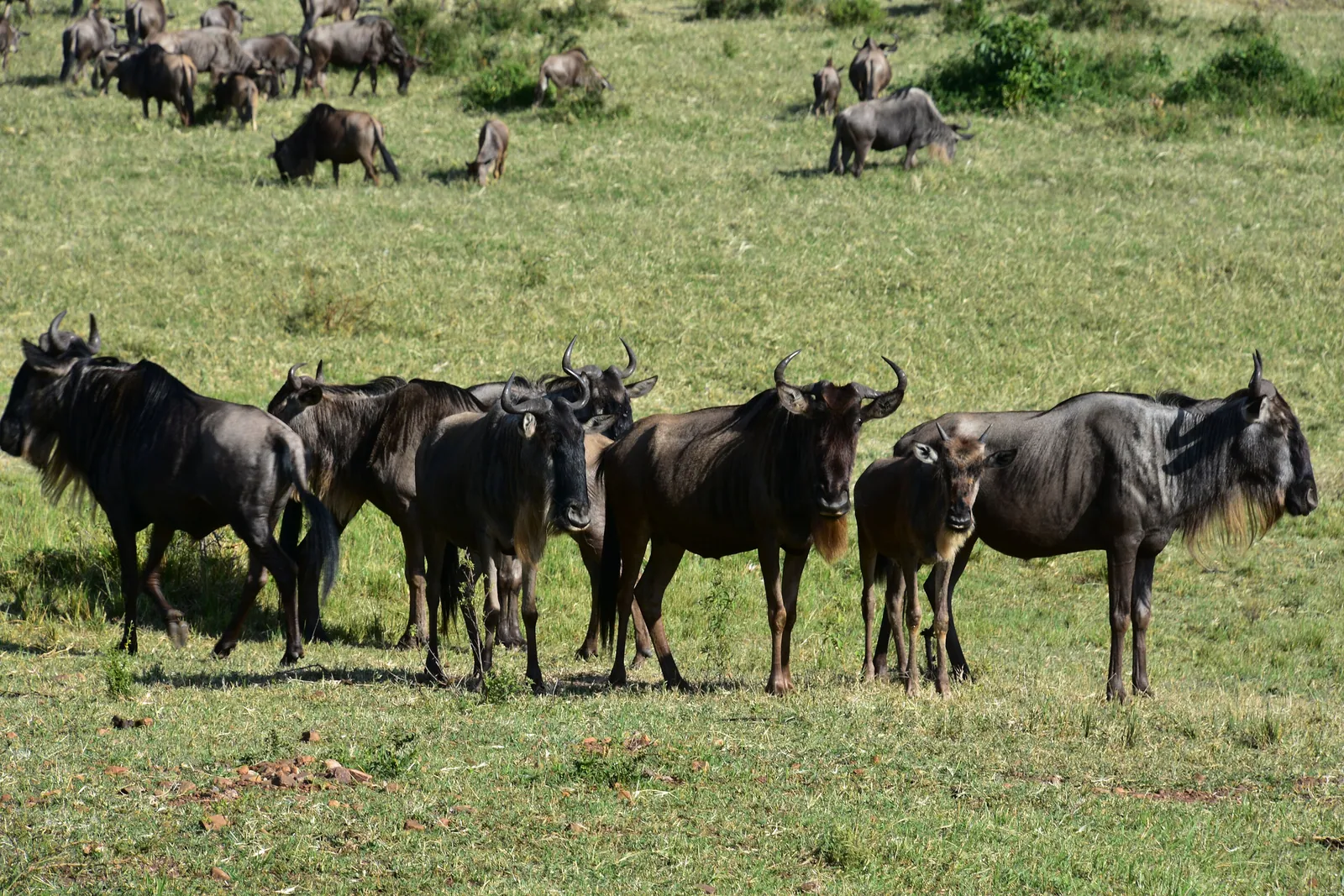
On The Great Rift, the savannah game-viewing follows established practice: a respectful distance from animals, no off-road driving where it is prohibited, a strict limit on how many vehicles gather at a sighting, and engines and voices kept low. Our guides will move a vehicle back, or move it on, when an animal shows the early signs of stress — and they will explain why, because the explanation is part of the journey.
On Beyond the Blue, watching the marine and island wildlife of the Pacific means keeping boats slow and steady near animals, not pursuing dolphins or turtles, not touching or chasing anything underwater, and giving nesting and hauled-out animals a wide berth. In Antarctica the IAATO rules govern every encounter — minimum approach distances, never blocking an animal's path to the sea, and always yielding right of way to the wildlife. Across all of them the principle is the same: we are guests, the sighting is a privilege and not an entitlement, and the animal's welfare outranks the photograph.
Photography, patience and the better souvenir
Much disturbance is driven by the camera — the urge to get closer, to fill the frame, to be certain of the shot. The remedy is not to stop photographing but to change the approach: use a longer lens rather than a shorter distance, accept the picture the animal is willing to give you, and never let the photograph dictate how near you go. A modest image of an undisturbed animal is worth more, in every sense, than a frame-filling one of a stressed one.
There is a quieter reward in this restraint. An animal that has not registered you as a threat behaves naturally, and natural behaviour — the hunt, the grooming, the play, the simple unhurried business of being a wild thing — is far more memorable than a startled glance. The traveller who watches patiently and asks for nothing tends to see the most, and to carry home the encounter rather than merely the file. That is the standard worth holding: leave the animal exactly as you found it, and let that be the measure of a good sighting.
Quick answers
How close is too close to a wild animal?
The animal tells you. Published minimum distances are a useful starting point, but the real test is behaviour: if your presence makes an animal stop feeding, move away, raise its head in alarm or pull its young close, you are too close, whatever the chart says. Approach slowly and never head-on, never come between a parent and young or a predator and its food, and treat any change in the animal's behaviour as the signal to give it more room.
Is it ever acceptable to feed wild animals?
No. Feeding changes natural behaviour, harms animal health, and draws wildlife into dangerous proximity to people, vehicles and roads. Habituated animals often become regarded as nuisances and are killed as a result, so a moment's kindness can end an animal's life. This applies to deliberate feeding and to careless food storage alike. Keep food secured, never offer it, and let wild animals stay wild.
How can I tell if a wildlife attraction is ethical?
Ask whether the animal is free to leave. Genuine wildlife watching observes free-living animals at a distance, on their terms. Attractions offering guaranteed close contact, handling, or photographs with animals frequently rely on captivity, sedation or training that causes real suffering — and tourist demand is what sustains them. If an experience promises certainty and contact rather than patience and distance, treat that as a warning, not a feature.
Let the reading become a route.
When an article sparks something, our planners are the next step. Tell us what you are dreaming of.