What Makes a Walk Great
A great walk is more than a beautiful one. The trails travellers remember for a lifetime share a handful of qualities — of landscape, rhythm and arrival — and knowing them helps you choose well.
A great walk is not simply a scenic one. Plenty of stunning viewpoints can be reached by road, and plenty of famous trails leave walkers underwhelmed. What separates a merely pretty path from a walk people talk about for the rest of their lives is a particular combination: a landscape that changes as you move through it, a daily rhythm the body can settle into, and an ending that feels earned.
Understanding that combination is genuinely useful. It helps you read a route description past the marketing, judge whether a celebrated trail will suit you, and recognise the quieter walks that deserve their place beside the famous ones. This is our attempt to name what makes a walk great — and why slow travel and great walking belong together.
A landscape that unfolds
The first quality of a great walk is that the scenery is not static. You do not simply arrive at a view; you are delivered into it, gradually, by your own effort. The W Trek in Torres del Paine is loved for exactly this — the granite towers do not appear all at once but assemble themselves over a morning's climb, growing and turning as the valley opens. The reward feels proportional to the walk because it was.
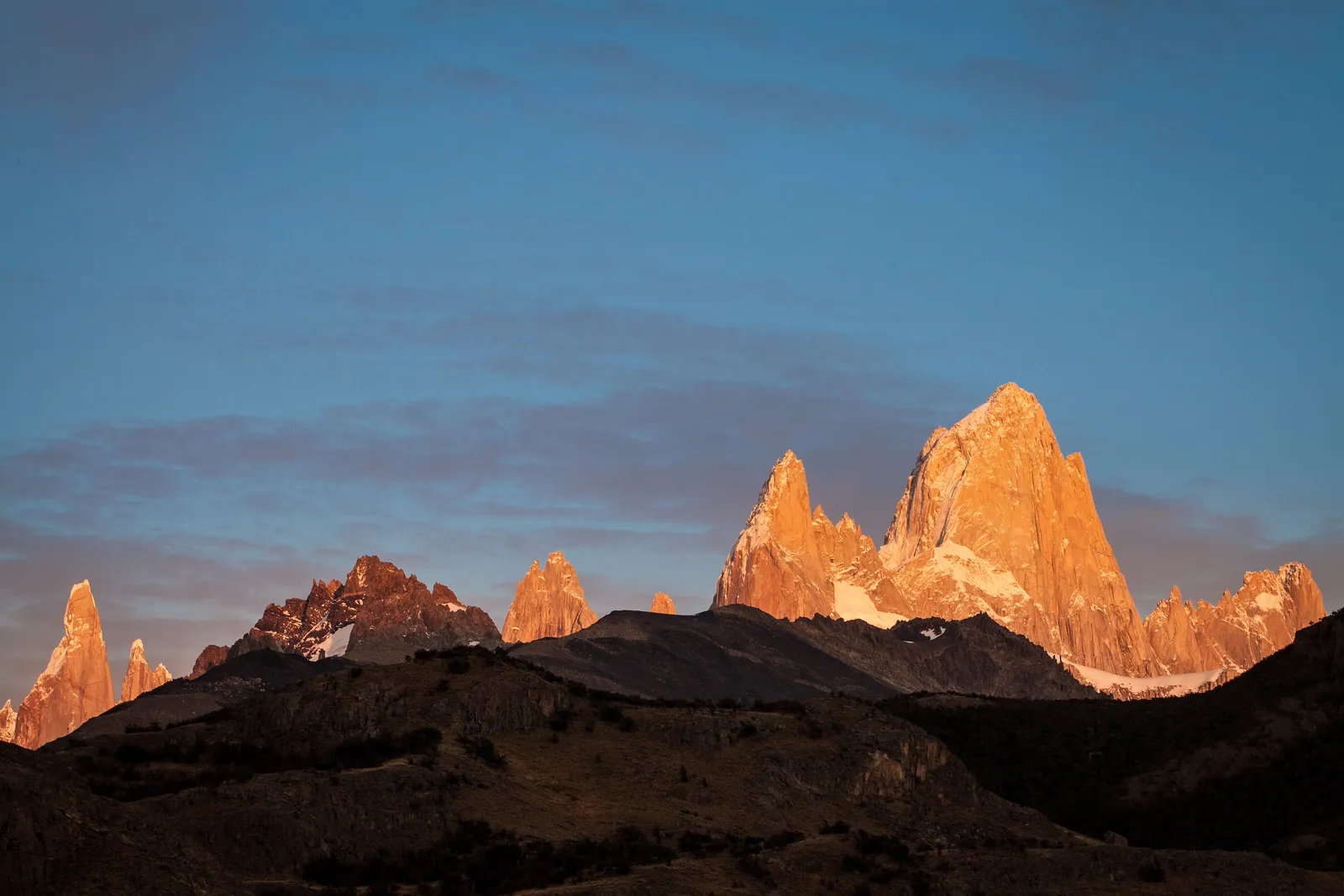
A walk that unfolds also gives you variety within a day. Forest gives way to moraine, moraine to a glacial tarn; a river valley climbs to a pass and drops into a different watershed entirely. This is why the approach to Fitz Roy from El Chalten works so well: hours of lenga forest and lake, then the granite spires of the Fitz Roy massif standing clear above Laguna de los Tres. The contrast is the point.
A rhythm the body can hold
Great multi-day walks are paced so the body can settle into them. The daily distance and ascent are demanding enough to feel like real travel but not so punishing that each day becomes mere endurance. There is a sweet spot — for most walkers, something like five to seven hours of moving, with a genuine lunch stop and time to arrive before dark — and the trails people love tend to sit inside it.
Rhythm also means consistency. A walk that asks for a steady effort day after day becomes, by the third or fourth morning, almost meditative: legs that ached on day one now simply work, and attention turns outward to the country. Walks that lurch between trivial days and brutal ones never let that settling happen. The best routes, and the best itineraries, protect the rhythm.
An ending that is earned
The great walks tend to build toward something — a pass, a summit view, a first sight of a long-anticipated place. The classic Inca Trail saves the Sun Gate and the first view of Machu Picchu for its final morning, after three days of cloud-forest ridges and Inca stone. The arrival lands harder because of everything walked to reach it.
An earned ending is partly about geography and partly about restraint. A route that gives away its best view on the first afternoon has nowhere to go. The walks that stay with people hold something back, and trust the walker to keep moving toward it. The feeling at the end is not only awe at the place but a quiet satisfaction at having walked oneself there.
Solitude, or the right kind of company
Great walks give you time alone with a landscape — or, just as valuably, the easy company of fellow walkers and the people whose country you are crossing. What they do not feel like is a queue. A trail loses something essential when it is so crowded that you are managing other people rather than experiencing the place.
This is partly a matter of timing and partly of route choice. The same famous trail can feel transcendent in the shoulder season and processional at peak. It is also why the lesser-known alternatives — the Lares route rather than the classic Inca Trail, the full O Circuit rather than only the W — earn their reputations. Solitude is not essential to a great walk, but the absence of a crowd very nearly is.
Why slow travel and great walking belong together
A walk needs the right frame around it. Reach a celebrated trailhead jet-lagged, unacclimatised and rushed, and even a great walk will be diminished — you will spend it recovering rather than receiving. The walks on our journeys are placed deliberately: after days of gentler travel, with the body adjusted and the mind unhurried.
On Andes to Antarctica the Patagonian walking comes once you are already attuned to the rhythm of the journey; on The Long Way East the Himalayan trail days are woven between cities so you arrive at the high valleys rested. A great walk is not only a function of the trail. It is also a function of everything you did, and did not do, in the days before you set foot on it.
Quick answers
Does a walk have to be long or hard to be great?
No. Length and difficulty are not what make a walk great — unfolding landscape, a sustainable rhythm and an earned arrival are. Some of the most memorable walks are single days, such as the approach to Laguna de los Tres beneath Fitz Roy. What matters is that the walk delivers you into a landscape by your own effort, at a pace you can hold and enjoy.
How do I tell from a route description whether a walk will be great?
Look for variety within each day, a daily distance and ascent that sound sustainable rather than heroic, and a route that builds toward a clear high point near the end. Be wary of trails that front-load their best scenery or pack in punishing days. Crowding matters too: check the season, since the same trail can feel wonderful or processional depending on when you walk it.
Let the reading become a route.
When an article sparks something, our planners are the next step. Tell us what you are dreaming of.