Where and When to See the River Crossings
The migration's river crossings are the most dramatic wildlife spectacle in Africa — and the hardest to plan for. Here is how the crossings work, which rivers matter, and what it takes to actually witness one.
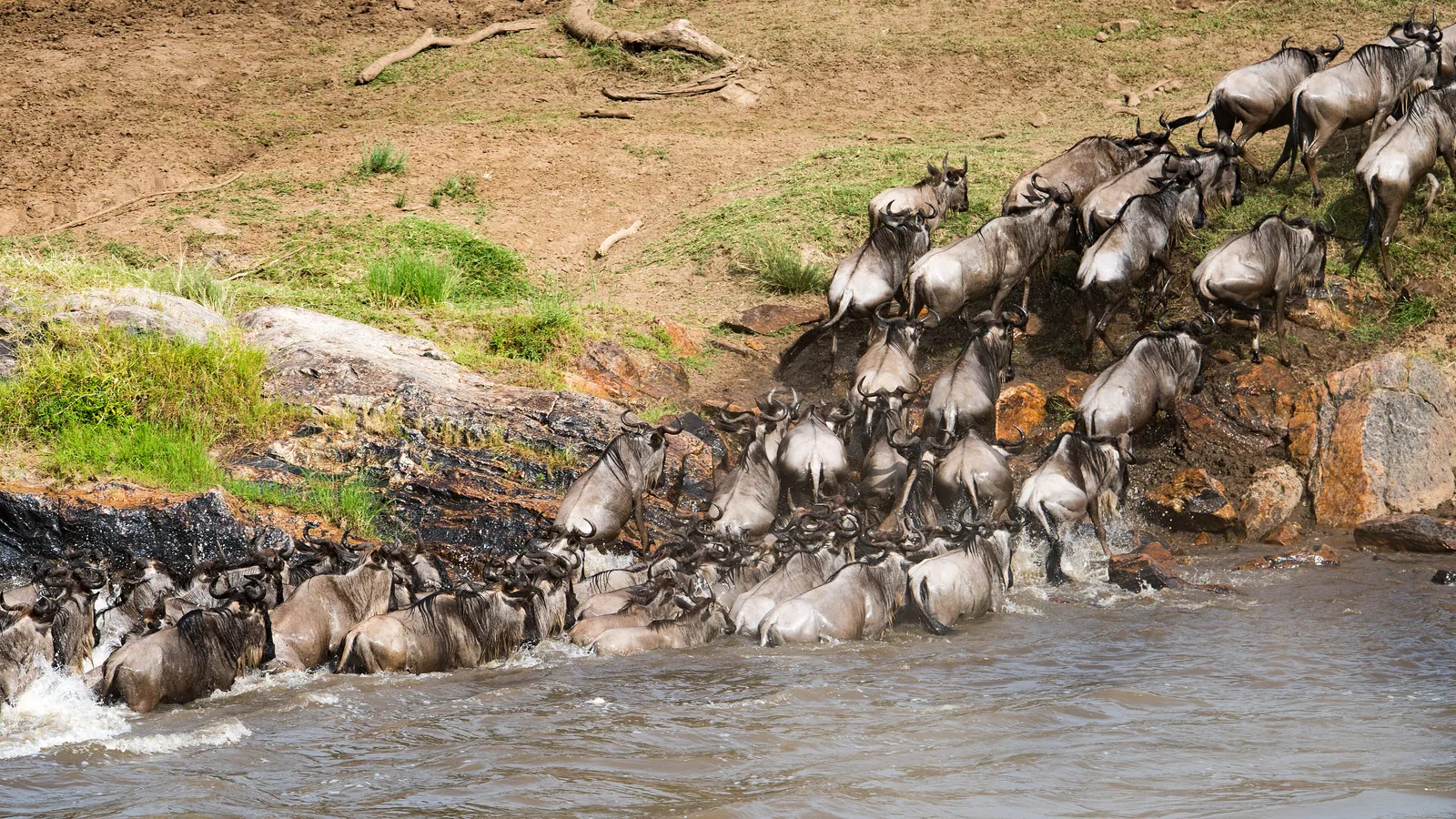
A wildebeest river crossing is the moment the Great Migration becomes the scene everyone has pictured: a column of animals hesitating on a high bank, then a sudden, irreversible plunge into brown water where crocodiles wait. It is genuinely unpredictable. No guide can promise you a crossing on a given afternoon, because the herds themselves do not appear to decide until the instant they move.
What can be planned is the where and the roughly when. Crossings are concentrated on two river systems — the Grumeti in the western Serengeti and the Mara in the north — and each has its season. Place yourself on the right river at the right time of year, allow several days, and the odds tilt firmly in your favour.
Why wildebeest cross at all
The herds do not cross rivers for the spectacle; they cross because grazing and water lie on the far side, and the river is simply in the way. The migration's clockwise loop repeatedly runs up against watercourses, and the wildebeest's instinct to follow fresh grass overrides their evident fear of the water.
Crossings are also a herd phenomenon, not an individual one. Wildebeest take confidence from numbers; a crossing often begins when enough animals have massed that the pressure from behind tips the front rank over the bank. This is why crossings can be explosive once they start, and why a herd may build at the water's edge for hours and then simply walk away.
The Mara River: the famous crossings, August to October
The crossings that have made the migration world-famous happen on the Mara River, in the far northern Serengeti and across the border in Kenya's Maasai Mara. The window is broadly August to October, when the herds are concentrated in the north during the dry season.
The Mara's banks are often steep and undercut, and its pools hold large Nile crocodiles, so the drama here is real and sometimes hard to watch. Crucially, the herds cross the Mara repeatedly and in both directions through these months, chasing rain and grass back and forth across the river — so a single river can offer several crossing opportunities to a patient traveller.
The Grumeti River: the western crossings, June to July
Earlier in the year, around June and July, the migration meets the Grumeti River in the western corridor of the Serengeti. The Grumeti is generally narrower and less of a sheer-banked obstacle than the Mara, so its crossings can be less explosive — but its deep, permanent pools are home to some exceptionally large crocodiles.
The western corridor is also less crowded than the northern Mara region in peak season, which is part of its appeal. For travellers whose journey falls in mid-year, the Grumeti is the river to be near.
What it actually takes to see one
Three things improve your chances more than anything else: time, position and patience. Allow several days in crossing country rather than a single afternoon, because any given day may bring nothing. Be camped close to the river so you can be on a crossing point at first light, when activity is often highest. And accept long, still waits, sometimes with a herd that builds and then disperses.
An experienced guide is the multiplier here. Guides read the herd's body language, share radio reports with other vehicles, and know which bends in the river the wildebeest have favoured in recent days. They also know to hold position quietly: an idling engine or a crowd of vehicles too close to the bank can spook a hesitant herd and turn it back.
Watching a crossing well — and ethically
A crossing is a hard scene. Crocodiles take animals, calves are separated from mothers, and some wildebeest drown or are crushed in the press. This is not cruelty but the ecosystem functioning exactly as it has for millennia; the river's predators and scavengers depend on these weeks. Watching it with respect rather than as mere thrill is part of travelling well.
Good viewing also means good behaviour. Vehicles should keep back from the bank and from the crossing line, never block the animals' route to or from the water, and let the herd choose its moment. On The Great Rift journey, our Serengeti days are timed and positioned for the crossing season, and our guides prioritise the herd's freedom of movement over the perfect photograph.
Quick answers
Can a safari guarantee I will see a river crossing?
No reputable operator will guarantee it. Crossings are spontaneous and weather-driven, and herds can mass at a river for hours without crossing. What a good itinerary can do is place you on the right river in the right season with enough days to make a crossing very likely — but never certain.
Which river is best for crossings, the Mara or the Grumeti?
The Mara River in the northern Serengeti, August to October, offers the most dramatic and most frequent crossings, and the herds cross it repeatedly in both directions. The Grumeti in the west, June to July, suits travellers whose journey falls earlier in the year. Both depend on being there in the right season.
What time of day do crossings happen?
There is no fixed hour, but crossings are often more frequent in the morning, which is why being camped close to the river to reach a crossing point at first light improves your chances. They can, however, occur at any time of day.
Let the reading become a route.
When an article sparks something, our planners are the next step. Tell us what you are dreaming of.