Why We Travel Overland When We Could Fly
A flight erases the distance between two places; an overland journey insists you experience it. Here is the case for the slower line on the map — what it costs, and what it gives back.
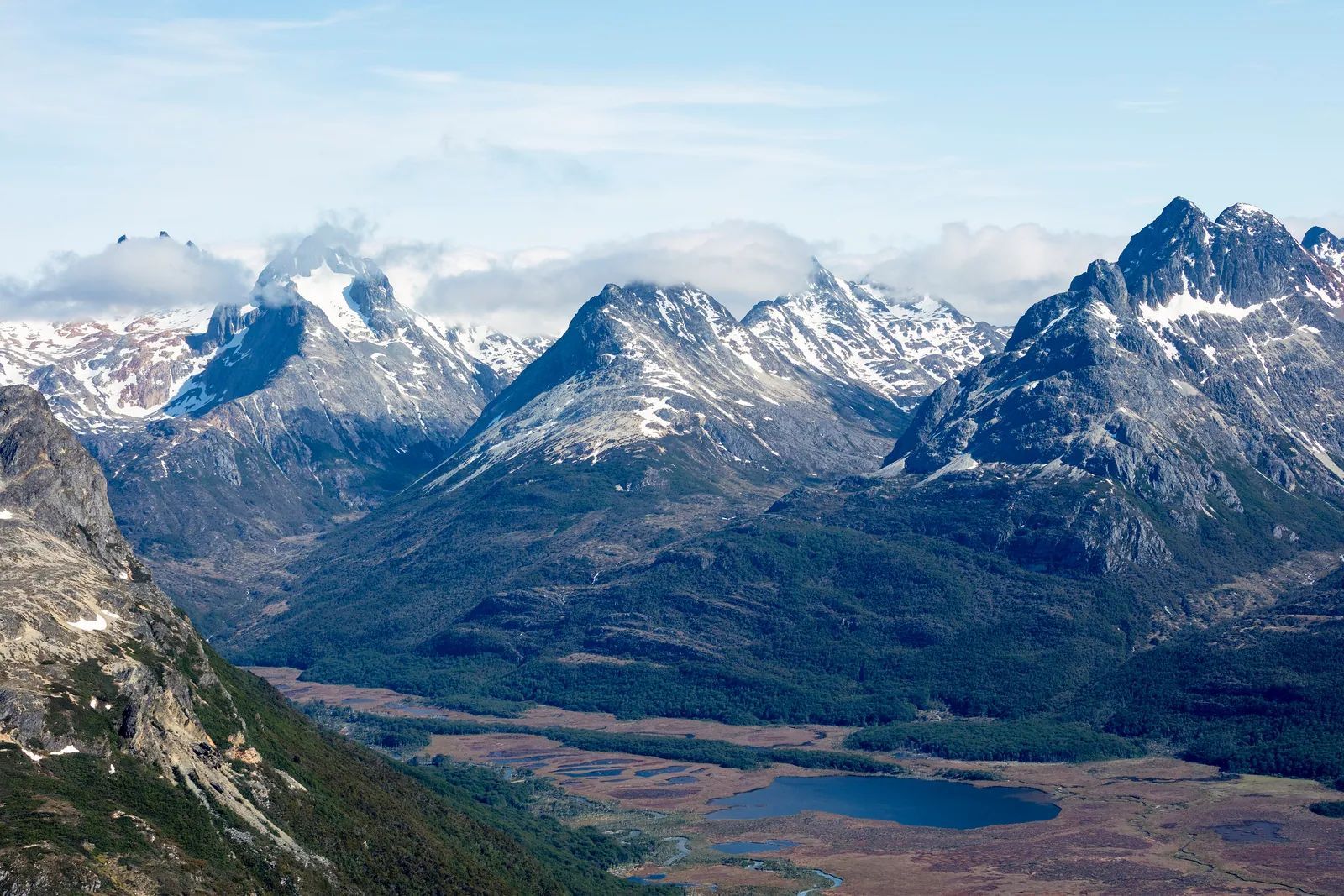
The honest answer is that we travel overland because the space between two places is not empty. A flight treats the ground between Lima and La Paz, or Madrid and Marrakech, as a void to be skipped. An overland journey treats it as the point. The mountains do not arrive all at once; they assemble themselves over hours, foothill by foothill, until you understand in your body why the city ahead sits where it sits.
This is not nostalgia, and it is not a refusal of aircraft — every grand journey uses flights where distance or safety demands them. It is a deliberate choice about proportion. When the travelling itself carries meaning, the days between destinations stop being lost time and become some of the most memorable of the trip. That conviction is the spine of every Viajes Globales journey, and it is worth setting out plainly.
Flight collapses distance; the ground restores it
Geography is a story, and overland travel lets you read it in order. Leave the Peruvian coast and the desert gives way to terraced valleys, then to high puna, then to the altiplano — a continuous argument about altitude, water and human settlement that a two-hour flight reduces to a single unexplained jump. By the time you reach the far side, you have not merely arrived somewhere; you have understood how it connects to where you began.
This is why our journeys read as lines rather than points. Andes to Antarctica descends the spine of a continent; The Long Way East crosses Eurasia from Spain; The Pacific Arc threads a coastline. Each is designed so the route itself is legible — so that a traveller can trace, day by day, the logic of the land.
The pace your senses were built for
There is a measurable reason overland travel feels different, and it has to do with speed. The human eye and mind evolved to process a world moving past at walking pace, or at most the pace of a horse. A train at eighty kilometres an hour is already near the edge of what we can absorb in detail; an aircraft at nine hundred is far beyond it. Slower travel is not merely sentimental — it returns the world to a speed at which it can actually be seen.
It also restores transitions. Arrive in a foreign city by air and you step from a sealed cabin into a sealed terminal into a taxi: the place is presented to you fully formed, without preamble. Arrive by train or ship and the city introduces itself — its outskirts, its working edges, its river or its harbour — so that you meet it on its own terms rather than at its airport.
What overland travel honestly costs you
It would be dishonest to pretend the slower line is free. Overland travel costs time, and time is the scarcest thing most travellers have. A border that an aircraft overflies in minutes can take a land crossing the better part of a morning. Trains are occasionally late; ferries answer to weather; a mountain road may close. Anyone choosing this way of travelling should choose it with open eyes.
It can also cost a degree of comfort. A sleeper berth is not a hotel room, and a long bus through the Andes asks more of the body than a flight. The trade is real. What we would argue is that the costs are front-loaded and the rewards compound: the friction you accept on the day of travel is exactly what makes that day a memory rather than a blank.
The lighter footprint, stated carefully
Overland travel is generally kinder to the atmosphere than flying, and it is fair to say so — but it is worth saying precisely. Per passenger-kilometre, rail and sea travel typically carry a far smaller carbon cost than short-haul aviation, and a packed long-distance train is among the most efficient ways a person can move at all. A grand journey that crosses a continent mostly by land genuinely emits less than the same route flown in segments.
We are wary, though, of overclaiming. Some ships burn heavy fuel; an almost-empty rural train is not efficient; and a journey that ends with a long-haul flight home has a footprint no amount of overland virtue erases. We treat the lower emissions of slow travel as a real benefit and a reason for the design — not as a halo.
How a grand journey is built around the ground
On a Viajes Globales journey the route is not the gap between the highlights; it is one of the highlights. We schedule rail legs, coastal sailings and the occasional long road day as destinations in their own right, with time allowed for them to be enjoyed rather than endured. Where a flight is genuinely the right tool — to cross an ocean, to skip a region with no safe land route, to protect the rhythm of the trip — we use one, and say so.
The result is a journey with a defensible shape. A traveller finishing Andes to Antarctica or The Long Way East should be able to draw the whole route from memory, because they were present for the joins. That is the deepest argument for travelling overland: it is the surest way to come home with a journey you can actually tell as a single, continuous story.
Quick answers
Do your journeys ever use flights?
Yes, where they are clearly the right choice — to cross an ocean, to bypass a region with no safe or sensible land route, or to protect the overall pace of the trip. The principle is not that flying is forbidden, but that the ground is the default: we travel overland wherever the route makes it rewarding, and fly only where it does not.
Isn't overland travel just slower and less comfortable?
It is slower, and on any given travel day it can ask more of you than a flight. We think that is the point rather than a flaw: the time and minor friction you spend are exactly what turn a travel day into an experience. Our itineraries also build in proper rest, so the slower pace is sustainable across a long journey rather than exhausting.
Is overland travel really better for the environment?
Generally yes. Per passenger-kilometre, trains and ships usually emit far less than short-haul flights, and a full long-distance train is one of the most efficient ways to travel. We avoid overstating it, though: fuel type, how full a service runs, and any long-haul flight home all matter. We treat lower emissions as a genuine benefit of slow travel, not a guarantee.
Let the reading become a route.
When an article sparks something, our planners are the next step. Tell us what you are dreaming of.