Suiran, a Luxury Collection Hotel
Luxury · €€€€An intimate Marriott Luxury Collection hotel on the bank of the Ōi River, blending machiya-inspired rooms, private open-air baths and heritage buildings within walking distance of Tenryū-ji.
35°00′N 135°40′E
Arashiyama is a scenic district on the western edge of Kyoto, Japan, famous for its towering bamboo grove, the Zen temple Tenryū-ji — a UNESCO World Heritage Site — the Togetsukyō Bridge over the Katsura, or Ōi, River, and brilliant autumn foliage. A retreat for the imperial aristocracy since the Heian era, it remains one of Kyoto’s most beloved corners.
Arashiyama has been a place of escape for more than a thousand years. The Heian-era aristocracy came west from the capital to its riverbanks and forested hills to compose poetry, watch the moon and flee the summer heat — and the district has never quite shed that air of cultivated leisure. The name itself, “Storm Mountain,” belongs to the wooded slope rising on the far side of the river, a slope that turns to fire in autumn and to drifts of pale cherry blossom in spring.
At its heart sits Tenryū-ji, the foremost of Kyoto’s five great Zen temples, whose fourteenth-century garden was laid out by the monk Musō Soseki to borrow the surrounding mountains as part of its design. Beyond the temple’s north gate, the celebrated bamboo grove closes overhead into a green corridor where the light falls in soft, shifting bands. Add the long wooden span of the Togetsukyō Bridge, the riverboats below it, the monkeys on the hill and the little mountain railway, and Arashiyama becomes a district best unwound slowly, on foot, over a generous day.
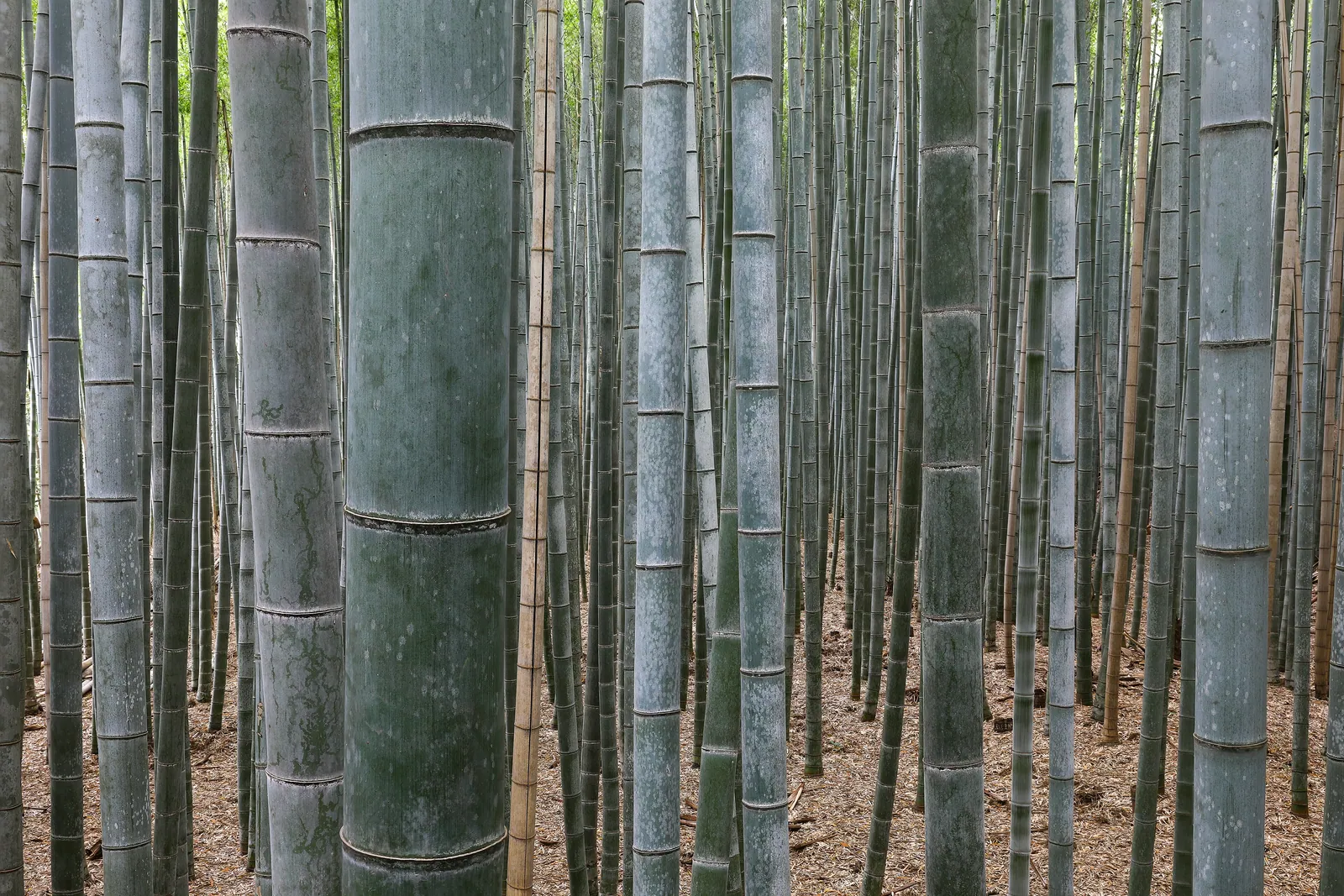
Walk the bamboo path soon after sunrise, before the tour groups arrive. In the early quiet you can actually hear the stalks creak and rustle overhead — a sound long treasured in Japan.
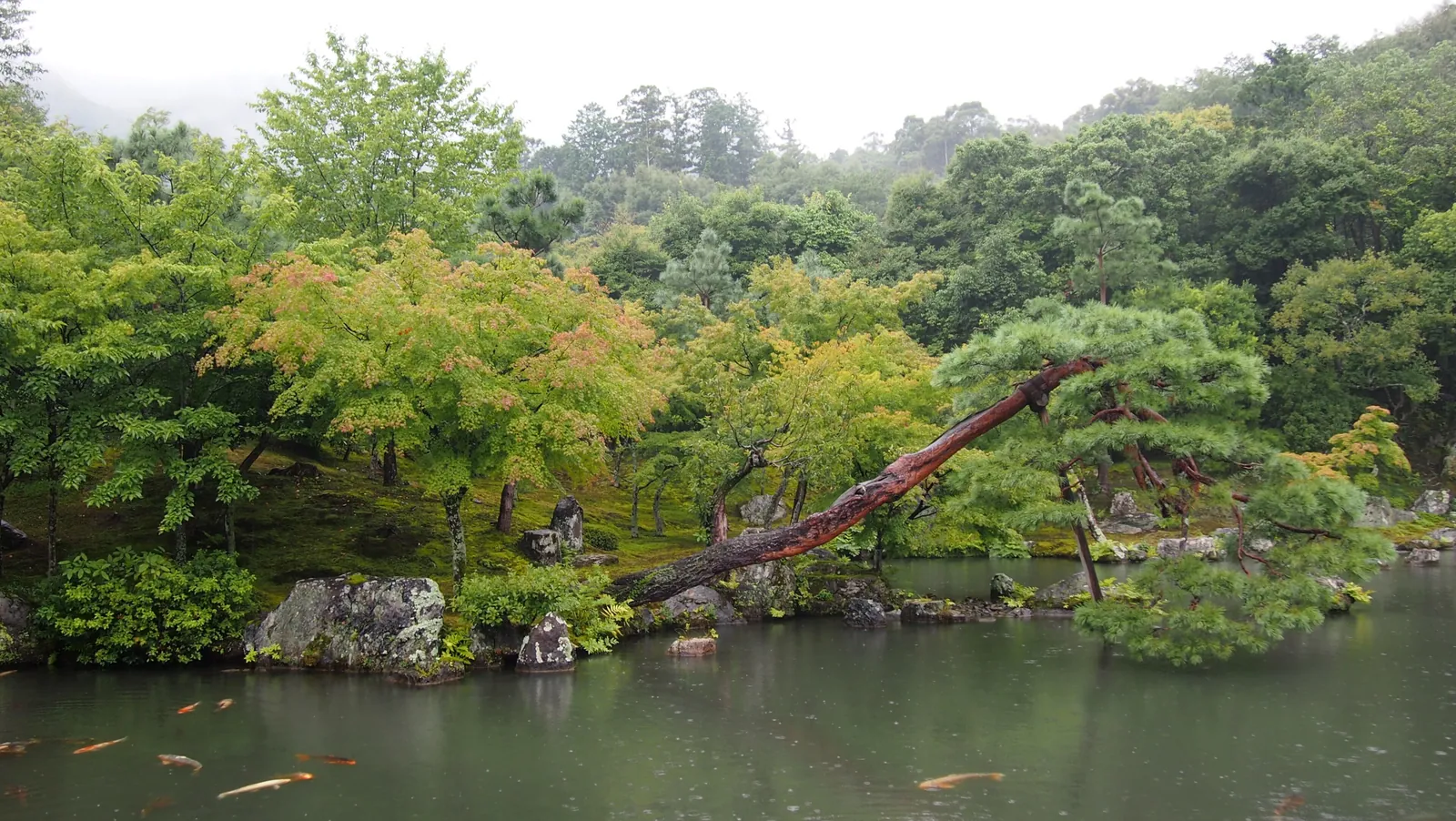
Musō Soseki’s 14th-century garden is designed to fold the hills of Arashiyama into its own composition. Sit on the temple veranda and watch the mountains become part of the view.
An old-fashioned sightseeing railway that rattles along the Hozugawa gorge between Arashiyama and Kameoka — spectacular in autumn, and a fine pairing with a downstream riverboat ride.
A short film to set the scene — sourced from YouTube and credited to its maker.
Hand-picked places to sleep, from the iconic to the characterful — each chosen for position as much as polish.
An intimate Marriott Luxury Collection hotel on the bank of the Ōi River, blending machiya-inspired rooms, private open-air baths and heritage buildings within walking distance of Tenryū-ji.
A secluded retreat on the upper Ōi River, accessible only by the hotel’s own boat. A former Edo-era villa estate turned serene, design-led ryokan among the hills.
A classic Japanese inn on the Ōi River, a short stroll from the bridge, known for tatami rooms with river views, hot-spring bathing and an elaborate kaiseki dinner.
The sights that earn their fame — and a few the crowds miss.
The district’s signature image — a path threading through dense, towering bamboo near Tenryū-ji’s north gate. Best walked at first light, before the crowds gather.
Kyoto’s top-ranked Zen temple, founded in 1339, with a 14th-century pond garden by Musō Soseki that borrows the Arashiyama hills as backdrop.
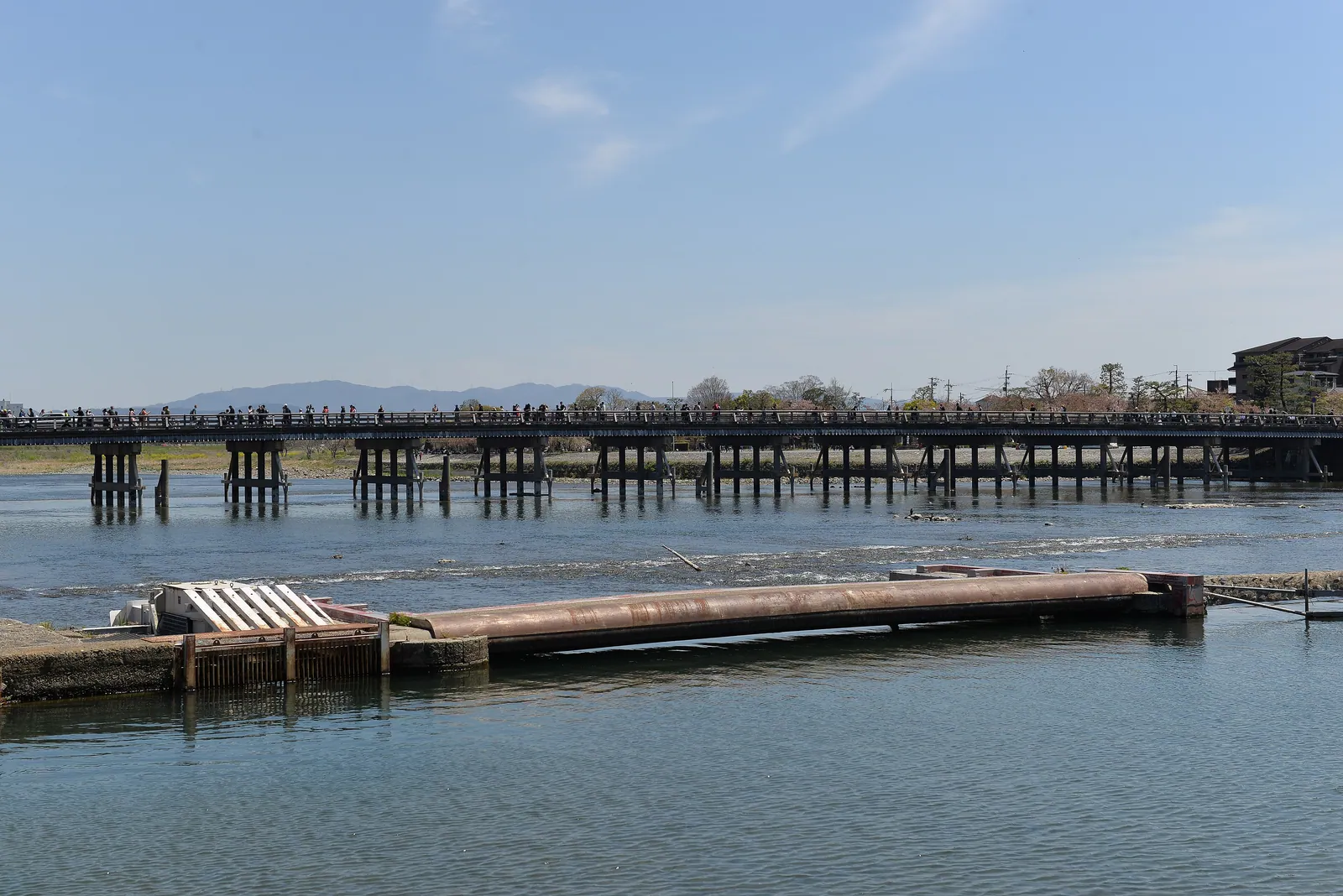
The “Moon Crossing Bridge,” a long wooden span over the Ōi River. The view of mountains, water and riverboats from it is the postcard of Arashiyama.
A short, steep climb leads to a hilltop where wild Japanese macaques roam freely — and where the panorama over Kyoto is among the finest in the city.
From landmark restaurants to the small rooms only locals mention.
A refined restaurant tucked into the wooded hillside above the river, serving multi-course kaiseki built around delicate Kyoto-style tofu, with windows onto the gorge.
A long-loved soba house beside the Togetsukyō Bridge, prized as much for its handmade buckwheat noodles as for the sweeping river-and-mountain view from its windows.
An elegant riverside dining room near the bridge, offering seasonal Kyoto fare and obanzai-style set menus in calm, contemporary surroundings.
| Location | North-western Kyoto, Japan, on the Ōi (Katsura) River |
|---|---|
| Famous for | The bamboo grove, Tenryū-ji and its garden, and the Togetsukyō Bridge |
| Tenryū-ji | Head temple of the Tenryū branch of Rinzai Zen, founded 1339 |
| Recognition | Tenryū-ji inscribed in UNESCO’s Historic Monuments of Ancient Kyoto (1994) |
| Best seasons | Late March–April for cherry blossom; mid-November for autumn colour |
| Getting there | About 20 minutes by JR, Keifuku or Hankyū line from central Kyoto |
Arashiyama is a chapter of The Long Way East.
Mid-November for autumn colour and late March to mid-April for cherry blossom are the two glorious peaks, when the hillsides turn red-gold or pale pink. They are also the busiest weeks. Late spring and early summer bring fresh green and thinner crowds, while winter is quiet, crisp and quietly beautiful.
Go early. The bamboo grove is open at all hours and free to enter, so arriving around or before sunrise — by roughly 7am — gives you the path in near silence. By mid-morning, especially in autumn, it can be shoulder-to-shoulder. Late afternoon eases a little but rarely matches the dawn calm.
It is an easy 20-minute trip. The JR Sagano line runs from Kyoto Station to Saga-Arashiyama; the Keifuku (Randen) tram line and the Hankyū line also serve the district. By car or taxi it is around 30 minutes from the city centre, depending on traffic.
A full, unhurried day. That allows time for the bamboo grove at dawn, Tenryū-ji and its garden, the Togetsukyō Bridge, a hilltop temple or the monkey park, and a leisurely lunch. With an early start you can also fit in the Sagano Romantic Train or a Hozugawa riverboat ride.
Yes, and most travellers do. Arashiyama works beautifully as a day from a Kyoto base, and pairs naturally with the golden pavilion Kinkaku-ji on the city’s north-west side. Many Viajes Globales itineraries give Arashiyama its own slow day within a longer week in Kyoto.
Travel here as a chapter of a grand journey, or as a trip of its own. We will tailor it to your dates and pace.