La Mamounia
Grand hotel · €€€€The legendary palace hotel of Marrakech, set within twenty acres of historic walled gardens — a byword for grandeur since 1923.
31°38′N 7°59′W
Marrakech is a major city of Morocco, set on a plain at the foot of the snow-capped Atlas Mountains. Founded around 1070 by the Almoravids, its red-walled medina is a UNESCO World Heritage Site, listed in 1985. Its restless heart is the great square of Jemaa el-Fnaa.
Marrakech has been a destination for almost a thousand years. Founded by the Almoravids around 1070 as a capital and a caravan terminus, it grew into the imperial city of southern Morocco — a crossroads where the trade of the Sahara met the orchards and snowmelt of the Atlas. Its colour comes from the earth itself: the ramparts, mosques and houses are built and rendered in the same warm ochre pisé, which is why travellers have long called it simply the red city.
To arrive is to step inside a walled medina that still works as it always has. Lanes too narrow for cars open without warning into the souks — quarters organised by trade, where dyers, slipper-makers, lantern-beaters and spice merchants each keep to their own street. At the centre lies Jemaa el-Fnaa, a square that is almost empty by day and, by dusk, becomes a theatre of food stalls, storytellers and musicians. UNESCO recognised that performance as a Masterpiece of the Oral and Intangible Heritage of Humanity. Beyond the walls, the calm of the Ville Nouvelle and the gardens — Majorelle, the Menara, the Agdal — give the city room to breathe.
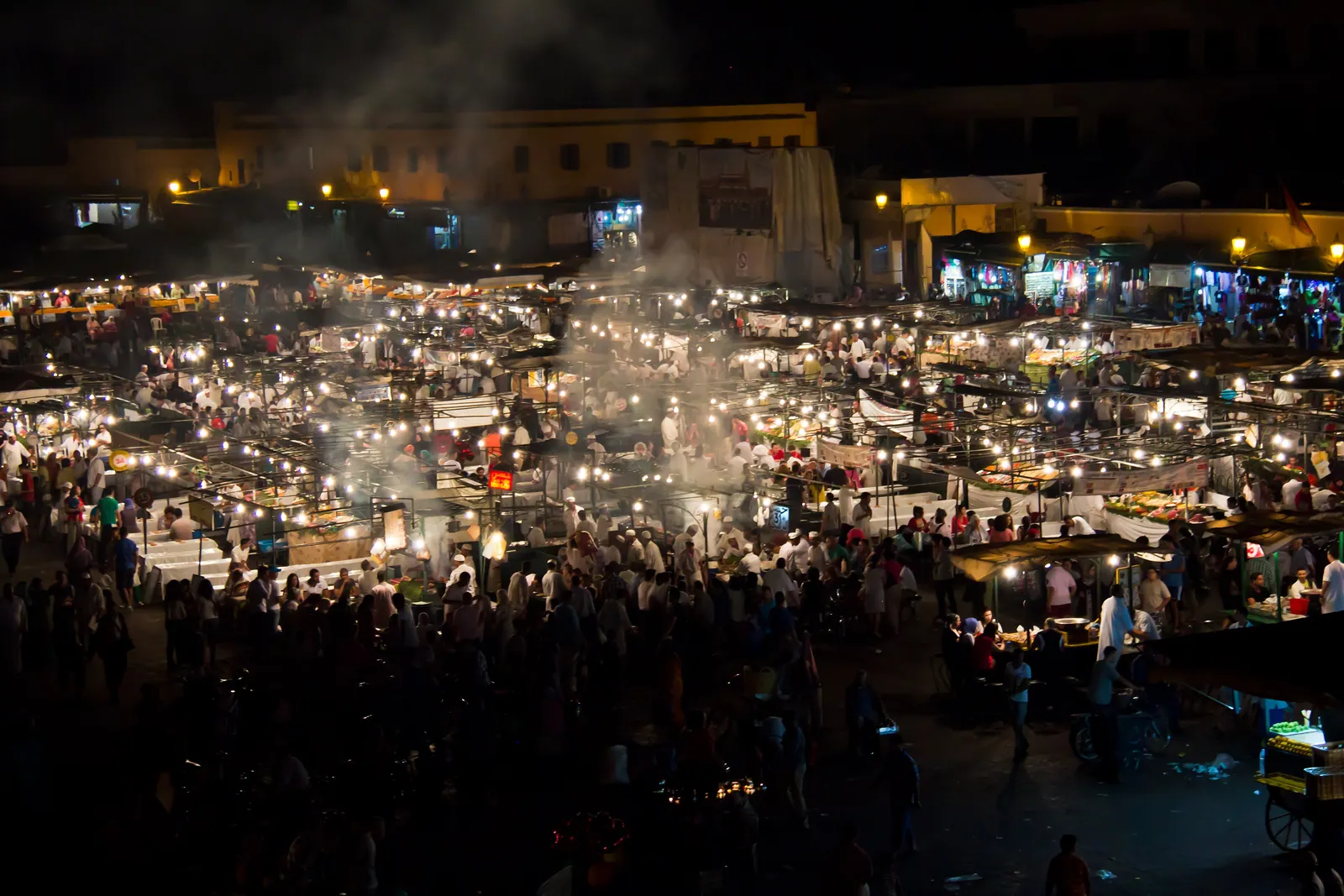
Return to the great square as the light fades, when the food stalls are lit and the storytellers, musicians and snake-charmers gather. It is the city’s living theatre.
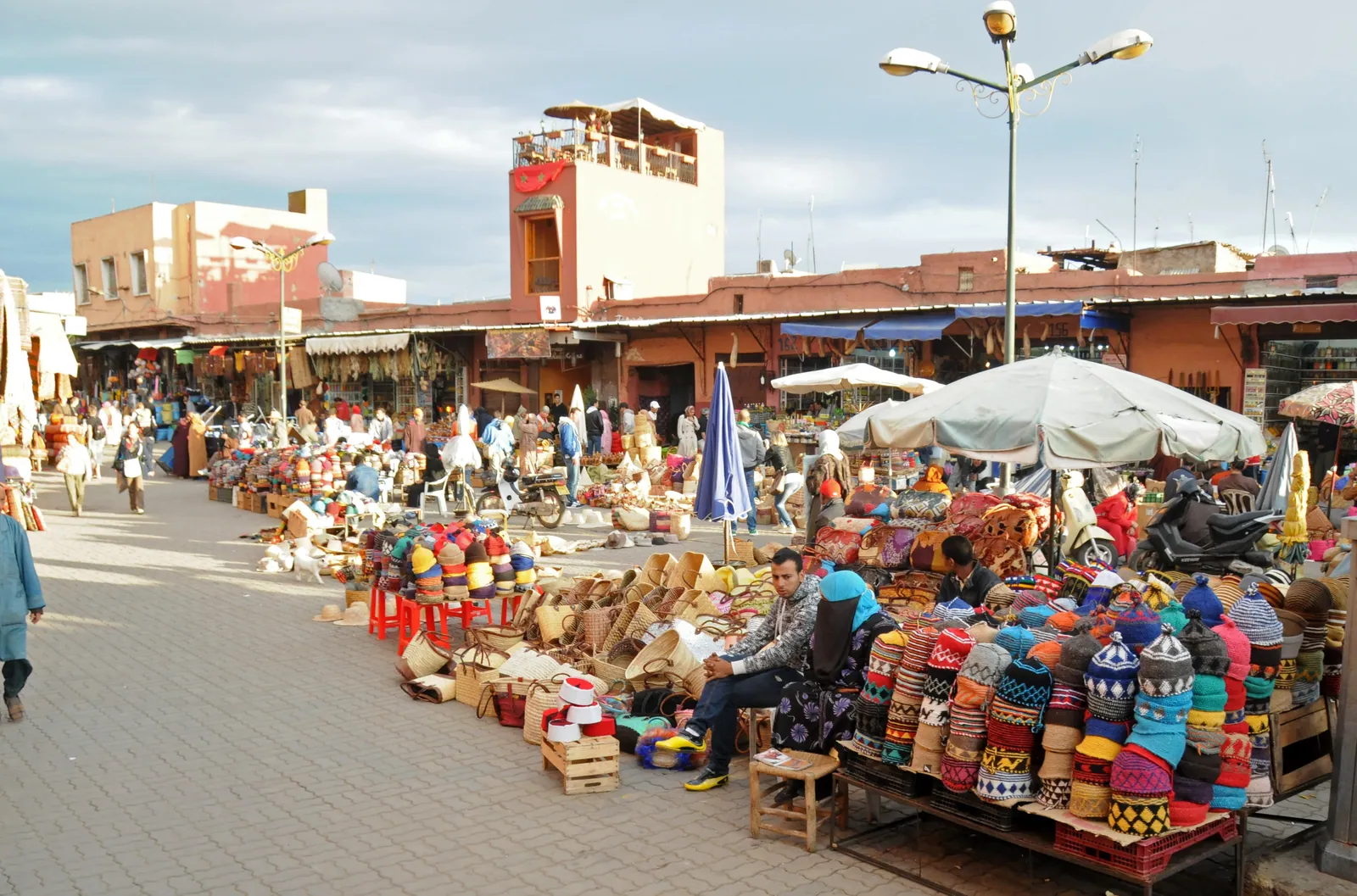
The covered markets are organised by trade — dyers, leather, lanterns, spices. Getting briefly lost is part of the pleasure; the lanes always lead back toward the square.
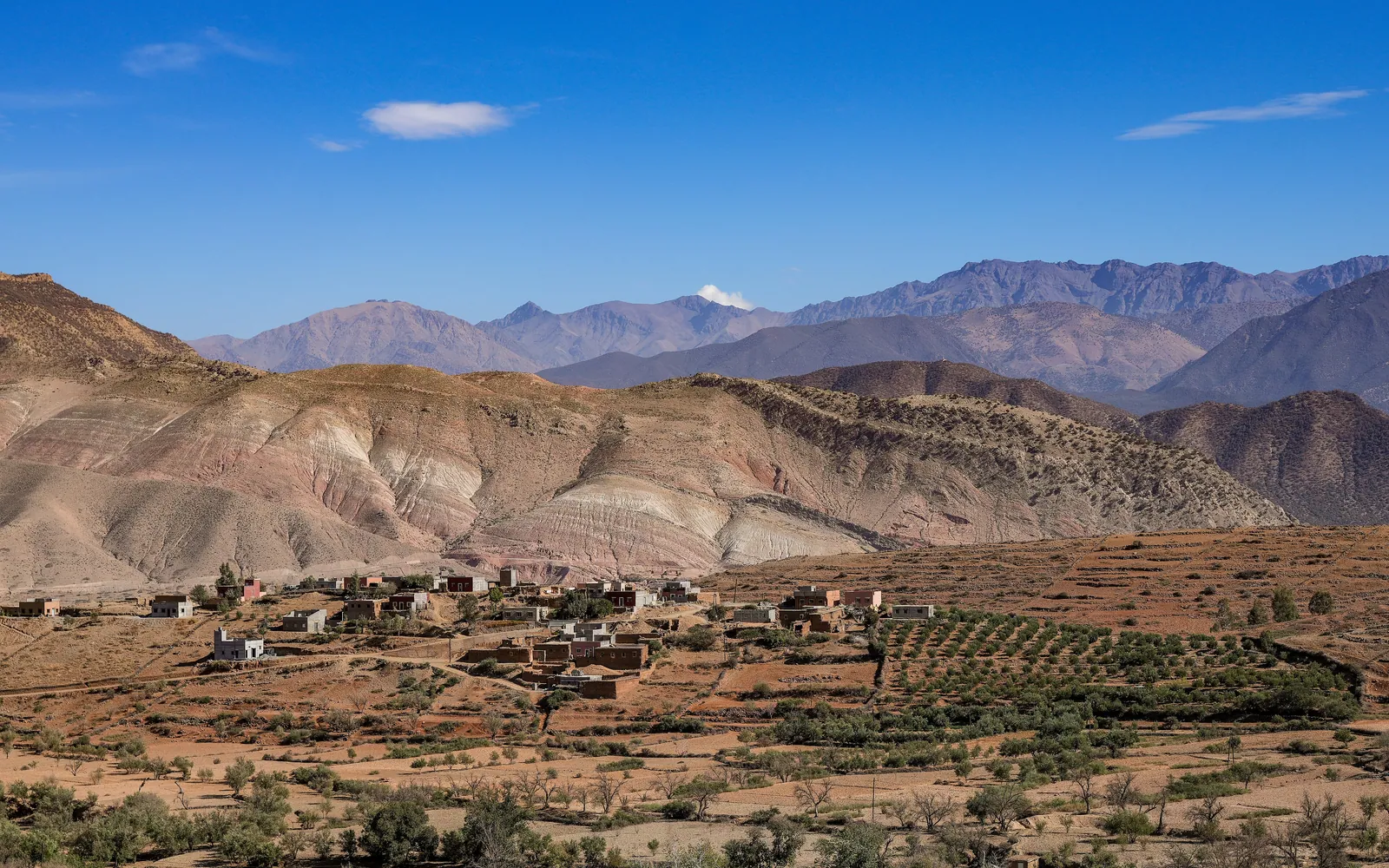
An hour and a half from the medina, the Ourika Valley and the Berber villages of the Atlas offer cool air, walnut groves and a complete change of pace.
A short film to set the scene — sourced from YouTube and credited to its maker.
Hand-picked places to sleep, from the iconic to the characterful — each chosen for position as much as polish.
The legendary palace hotel of Marrakech, set within twenty acres of historic walled gardens — a byword for grandeur since 1923.
A small city of private three-storey riads, each with its own plunge pool and rooftop, built with extraordinary Moroccan craftsmanship.
A rambling, art-filled riad of courtyards, plunge pools and a celebrated rooftop — relaxed, characterful and steps from Jemaa el-Fnaa.
The sights that earn their fame — and a few the crowds miss.
The pulsing heart of Marrakech — quiet by day, a swirl of food stalls, music and storytelling by night, and a UNESCO intangible-heritage site.
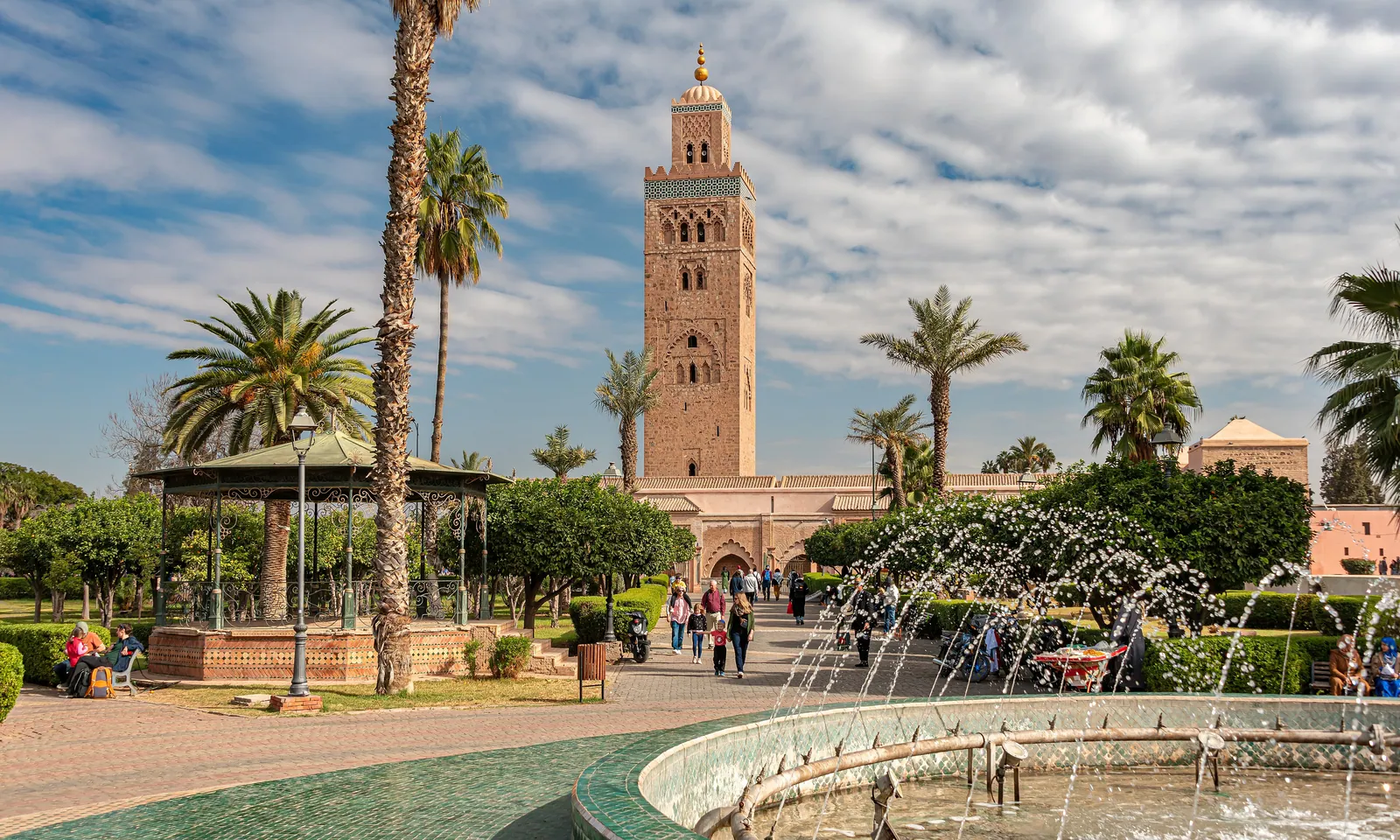
Marrakech’s great 12th-century mosque, its 77-metre minaret the city’s defining silhouette and the model for towers in Seville and Rabat.
A 19th-century palace of courtyards, painted cedar ceilings and tranquil gardens, built to be the finest residence of its age.
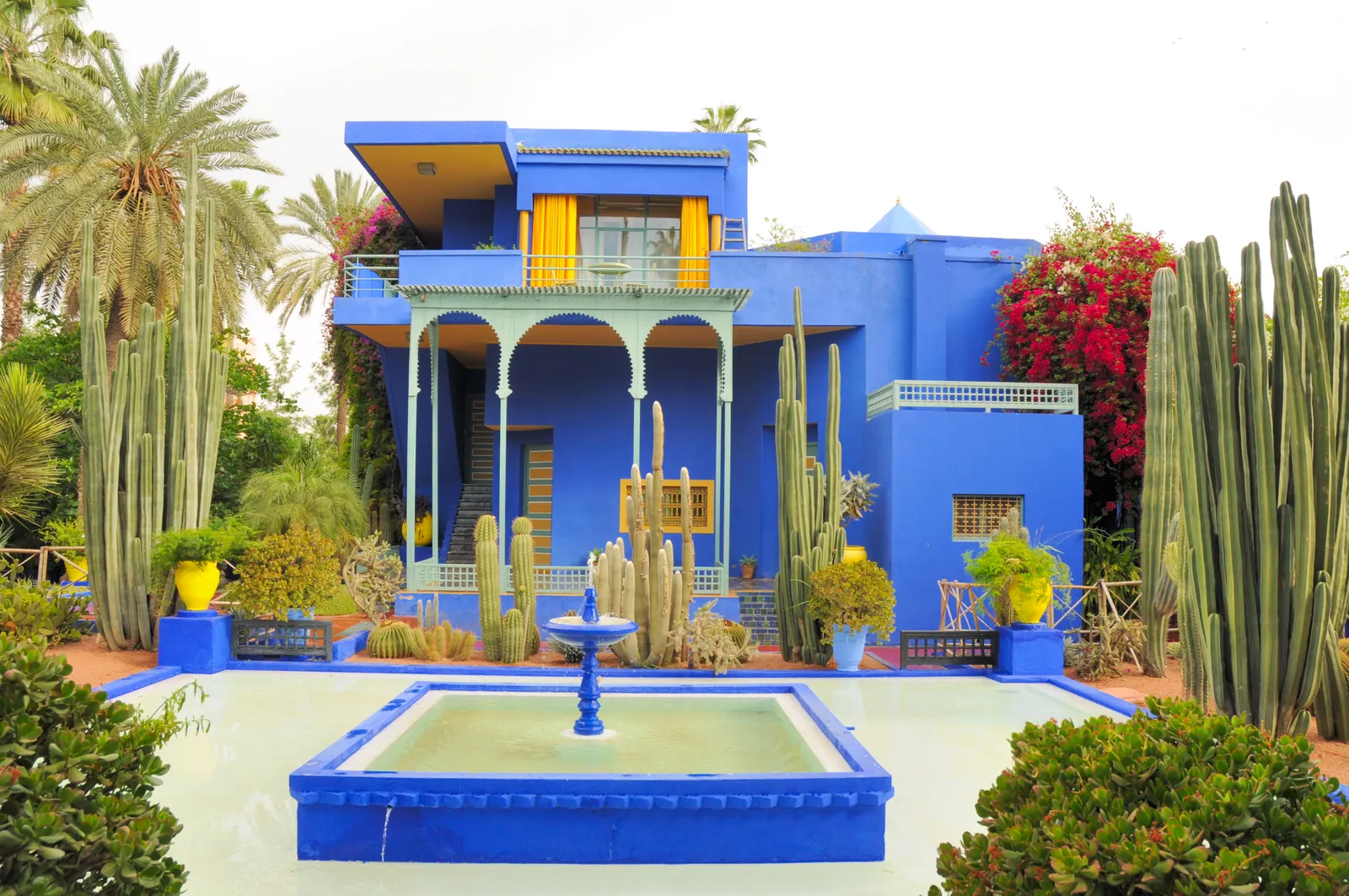
The cobalt-blue garden created by Jacques Majorelle and restored by Yves Saint Laurent, paired with a museum devoted to the designer’s work.
From landmark restaurants to the small rooms only locals mention.
A green, palm-shaded courtyard hidden in the souks, serving fresh, modern Moroccan cooking — a cool retreat from the heat of the lanes.
A rooftop in the spice quarter known for its lighter, contemporary take on Moroccan dishes and long views over the medina.
A celebrated, entirely women-run restaurant serving classic Fassi cooking — its slow-cooked lamb tangia and pastilla are local benchmarks.
| Location | Marrakech-Safi region, on a plain below the High Atlas, central Morocco |
|---|---|
| Founded | Around 1070 by the Almoravid dynasty, as an imperial capital |
| Famous for | Jemaa el-Fnaa, the souks, the Koutoubia Mosque and its red ramparts |
| Recognition | Medina of Marrakesh — UNESCO World Heritage Site (1985) |
| Nickname | The red city, for the ochre pisé of its walls and houses |
| Gateway | Marrakech Menara Airport, just southwest of the medina |
Marrakech is a chapter of The Long Way East.
Spring (March to May) and autumn (September to November) are ideal, with warm, comfortable days for walking the medina. High summer is intensely hot, often above 40°C, best explored early and late. Winter days are mild and pleasant, though desert nights and the Atlas can be cold.
A riad — a traditional house built around an interior courtyard — is the classic Marrakech stay, placing you inside the medina among the lanes and souks. Larger hotels in the Ville Nouvelle offer more space, pools and quiet. Many travellers combine both; Viajes Globales arranges either.
Three to four days is the sweet spot. Two days cover the medina — Jemaa el-Fnaa, the souks, the palaces and the Koutoubia — at a measured pace. A third and fourth allow the gardens, the Ville Nouvelle and an unhurried day trip into the High Atlas or the desert.
On foot. The medina’s lanes are too narrow and crowded for cars, so walking is the only real way to explore, with the Koutoubia minaret as a reliable landmark. Petits taxis serve the wider city, and our local guides help you read the souks without losing the thread.
The High Atlas is the natural escape — the Ourika Valley, Berber villages and the trailheads below Mount Toubkal lie ninety minutes away. Other classic excursions include the waterfalls of Ouzoud, the kasbah of Aït Benhaddou near Ouarzazate, and the Agafay desert on the city’s doorstep.
Travel here as a chapter of a grand journey, or as a trip of its own. We will tailor it to your dates and pace.